Independent recipe reference
Restaurant sauce copycat recipes
Copycat sauces are unofficial home-style recipes that approximate the flavor profiles of well-known restaurant and fast-food sauces using common pantry ingredients, without access to proprietary formulas.
Browse by brand reference
Brand names identify the target only. Every entry remains independent and unofficial.
Unofficial recreation
Cane's Sauce
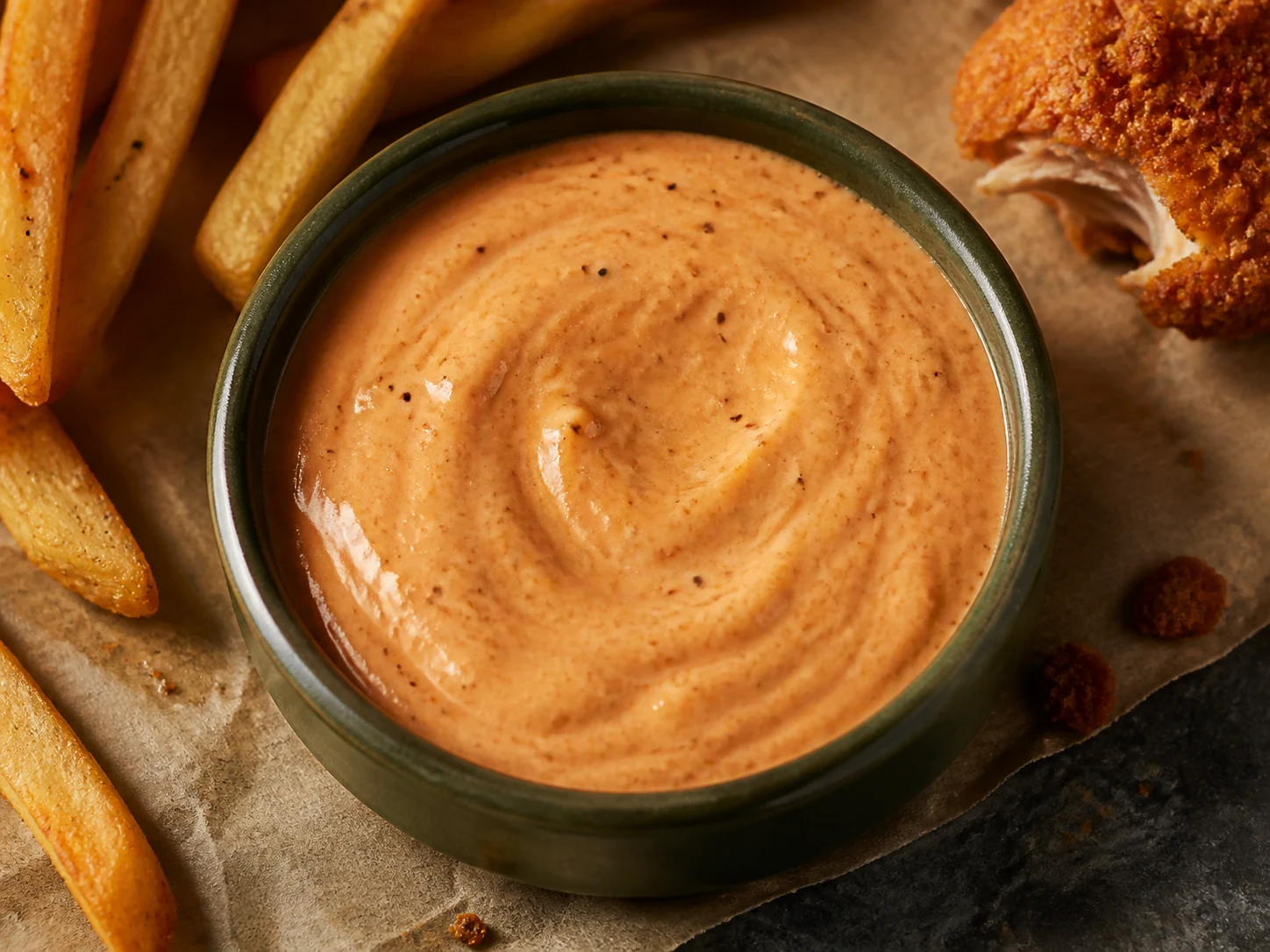
A creamy, peppery dipping sauce associated with Raising Cane's, commonly approximated with mayo, ketchup, and spices.
Unofficial recreation
Canes Sauce
Home-style versions of this tangy, mayo-based sauce aim to replicate Raising Cane's signature dip.
Unofficial recreation
Big Mac Sauce
A Thousand Island-style spread central to McDonald's Big Mac, often recreated with mayo, relish, and mustard.
Unofficial recreation
In and Out Sauce
A tangy, creamy spread inspired by In-N-Out Burger's spread, typically built from mayo, ketchup, and relish.
Unofficial recreation
Chick Fil a Sauce
A smoky-sweet dipping sauce linked to Chick-fil-A, approximated with honey mustard, barbecue sauce, and mayo.
Unofficial recreation
Taco Bell Quesadilla Sauce
Taco Bell Quesadilla Sauce is a creamy condiment that combines a mayonnaise base with pickled…
Unofficial recreation
Buffalo Wild Wings Garlic Parmesan Sauce
Buffalo Wild Wings Garlic Parmesan Sauce is a creamy, savory wing sauce that combines roasted…
Unofficial recreation
Taco Bell Creamy Jalapeno Sauce
Taco Bell Creamy Jalapeno Sauce is a fast-food condiment that combines pureed jalapeños with a…
Unofficial recreation
Taco Bell Chipotle Sauce
Taco Bell Chipotle Sauce is a smoky, creamy condiment that combines chipotle peppers with a…
Unofficial recreation
Dave's Hot Chicken Sauce
Dave's Hot Chicken Sauce is a cayenne-based spice paste that coats Nashville-style fried chicken in…
Unofficial recreation
Burger King Zesty Sauce
Burger King Zesty Sauce is a creamy dipping sauce that combines a mayonnaise base with…
Unofficial recreation
Halal Guys White Sauce
Halal Guys white sauce is a creamy mayonnaise-based condiment that is drizzled over halal-style rice…
Unofficial recreation
Shake Shack Sauce
Shake Shack Sauce is a creamy, mayonnaise-based burger condiment that blends mustard, ketchup, and pickle…
Unofficial recreation
Red Robin Campfire Sauce
Red Robin Campfire Sauce is a branded creamy barbecue dipping sauce that Red Robin describes…
Unofficial recreation
Outback Bloomin Onion Sauce
A spiced, creamy dipping sauce paired with Outback Steakhouse's Bloomin' Onion, recreated with mayo and horseradish.
Unofficial recreation
What is Mcdonald's Breakfast Sauce
An overview of the creamy, tangy condiment McDonald's offers with select breakfast sandwiches and its common ingredients.
Unofficial recreation
Mcdonald's Breakfast Sauce
Home approximations of McDonald's breakfast condiment typically combine mayo, mustard, and mild seasonings.
Selection criteria
Transparent limits on what belongs in the collection.
Entries cover sauces from widely recognized restaurant brands with documented public interest in home recreation.
Inclusion reflects search demand and culinary relevance, not affiliation with or endorsement by any brand.
All recipes are desk-researched approximations; no proprietary formulas, insider sources, or taste-testing claims are made.
What each entry explains
Each entry distinguishes observation, interpretation, and adjustment so readers can see what is known and what is reconstructed.
Flavor map
The intended balance of sweetness, acidity, heat, smoke, fat, and savoriness.
Working formula
A measured home-kitchen draft with ingredient functions and mixing order, without a claim of physical testing.
Adjustment notes
Practical changes for thickness, salt, heat, and available ingredients.
Use the recipe, not the trademark
Brand references are descriptive. Ingredient labels, allergen statements, and commercial formulations can change.
Required disclaimer. Unofficial, based on publicly available information. Sauce Wiki is not affiliated with or endorsed by the referenced brand.
Copycat sauce FAQ
Direct answers about independence, accuracy, and status.
Are copycat sauce recipes the same as the real restaurant versions?
No. Copycat recipes are unofficial home approximations based on publicly available information. Exact proprietary formulas are not disclosed by restaurants, so homemade versions may differ in flavor, texture, or ingredient ratios from the originals.
What ingredients are most commonly used in copycat fast-food sauces?
Most copycat fast-food sauces rely on pantry staples such as mayonnaise, ketchup, mustard, relish, hot sauce, garlic powder, and paprika. The specific combination and proportions vary by the sauce being approximated.
Is it legal to make a copycat sauce at home?
Recreating a sauce at home for personal use is generally legal. Selling a product under a brand's name or trade dress without authorization would raise trademark concerns. Home cooks should not represent their versions as official products.
How should homemade copycat sauces be stored?
Because most copycat sauces contain mayonnaise or other perishable ingredients, store them in a sealed container in the refrigerator and use within five to seven days. Always follow safe food-handling practices and consult product labels for guidance.