Italian · creamy
Creamy Pesto Sauce
Creamy pesto sauce is an Italian-style sauce that combines traditional basil pesto with cream or a cream substitute, producing a richer, milder, and smoother coating for pasta and other dishes.
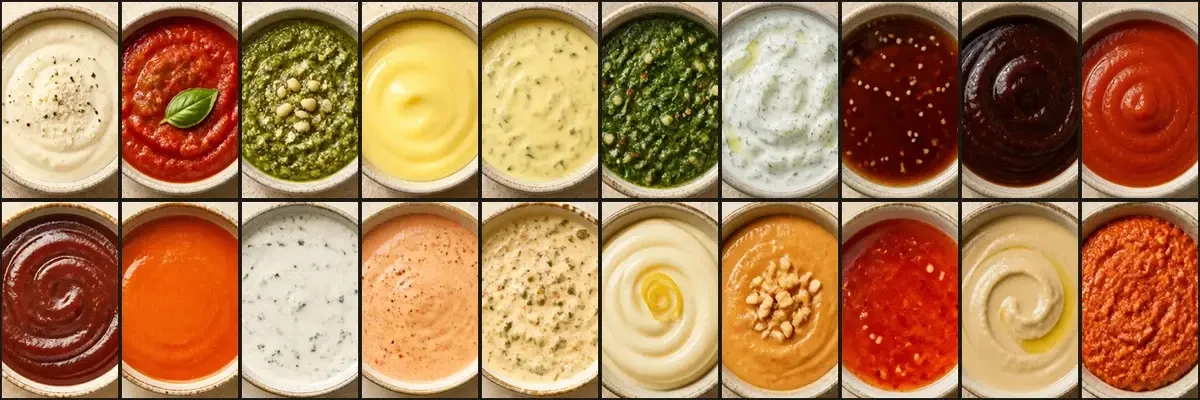
Quick facts
Core identity, dietary fit, and storage ranges in a scannable reference table.
| Origin | Italy; derived from Ligurian basil pesto, with cream additions popularized in Italian-American cooking |
|---|---|
| Base | Basil pesto and heavy cream |
| Primary ingredients | fresh basil, heavy cream, Parmesan cheese, garlic, pine nuts, olive oil |
| Flavor profile | herbaceous, rich, nutty, mildly savory |
| Color | Pale green |
| Consistency | Medium; pourable but coats a spoon and clings to pasta |
| Refrigerator shelf life | 4 days |
| Freezer shelf life | 2 months |
| Vegan | No |
| Gluten-free | Yes |
| Dairy-free | No |
Dietary note
Recipes and labels vary
Check ingredient labels and individual dietary requirements; homemade and packaged versions can differ.
Browse sauces sharing an ingredient
How it’s made
Fresh basil, garlic, pine nuts, Parmesan, and olive oil are blended into a pesto base. Heavy cream is warmed in a skillet, the pesto is stirred in over low heat, and the sauce is seasoned and finished until slightly thickened.
Creamy Pesto Sauce recipe
Fresh basil, garlic, pine nuts, Parmesan, and olive oil are blended into a pesto base. Heavy cream is warmed in a skillet, the pesto is stirred in over low heat, and the sauce is seasoned and finished until slightly thickened.
Ingredients
- 2 cups fresh basil leaves, packed
- 2 garlic cloves
- 3 tablespoons pine nuts
- 1/2 cup Parmesan cheese, finely grated
- 1/4 cup extra-virgin olive oil
- 3/4 cup heavy cream
- 1/2 teaspoon salt
- 1/4 teaspoon black pepper, freshly ground
Method
- Combine basil, garlic, pine nuts, and Parmesan in a food processor. Pulse until finely chopped.
- With the processor running, drizzle in olive oil until a smooth pesto paste forms. Season with salt and pepper.
- Warm heavy cream in a skillet over medium-low heat until it just begins to simmer; do not boil.
- Reduce heat to low and stir in the pesto paste until fully incorporated.
- Simmer gently for 2 to 3 minutes, stirring, until the sauce thickens slightly and coats a spoon.
- Taste and adjust seasoning. Serve immediately over cooked pasta or use as directed.
Common uses
Practical applications with the role this sauce plays in each dish.
Use 01
Pasta sauce
Tossed with fettuccine, penne, or linguine as a quick weeknight main course.
Use 02
Pizza base
Spread over pizza dough in place of tomato sauce before adding toppings.
Use 03
Chicken topping
Spooned over grilled or baked chicken breasts as a finishing sauce.
Use 04
Gnocchi sauce
Coats potato gnocchi evenly due to its medium, clingy consistency.
Use 05
Vegetable dip
Served warm or at room temperature alongside roasted or raw vegetables.
Use 06
Stuffed pasta filling sauce
Used to dress ravioli or tortellini without overpowering delicate fillings.
Use 07
Flatbread spread
Applied to flatbreads or crostini as a base layer before additional toppings.
Use 08
Grain bowl drizzle
Drizzled over farro, quinoa, or rice bowls to add herbaceous richness.
Pairings
Pairing ideas grouped by food role for quick comparison.
Proteins
- grilled chicken breast
- shrimp
- salmon
- Italian sausage
- white beans
Vegetables
- sun-dried tomatoes
- roasted zucchini
- baby spinach
- cherry tomatoes
- artichoke hearts
Carbs
- fettuccine
- penne
- potato gnocchi
- linguine
- flatbread
Creamy Pesto Sauce substitutes
Starting ratios, best uses, and the main functional tradeoff for each alternative.
| Substitute | Ratio | Best for | Notes |
|---|---|---|---|
| Pesto mixed with half-and-half | 1:1 | Lighter pasta dishes | Lower fat content; sauce will be thinner and less rich. |
| Pesto blended with cream cheese | varies | Thicker coating applications | Produces a denser texture; thin with pasta water as needed. |
| Vegan pesto with full-fat coconut cream | 1:1 | Dairy-free pasta | Adds mild coconut undertone; use unsweetened coconut cream only. |
| Pesto stirred into Greek yogurt | varies | Lower-calorie pasta or dips | Do not heat above a gentle warm; yogurt may curdle at high heat. |
| Dairy-free Alfredo sauce with pesto swirled in | varies | Dairy-free creamy pasta | Adjust pesto quantity to taste; flavor profile shifts toward Alfredo. |
Storage
Keep time and temperature guidance visible, and discard sauce when spoilage signs appear.
Refrigerator
Transfer to an airtight container and refrigerate promptly. Use within 4 days. Press plastic wrap directly onto the surface to slow oxidation and browning.
Freezer
Freeze in a sealed container or ice cube tray for up to 2 months. Thaw overnight in the refrigerator and reheat gently over low heat, stirring in a splash of cream if needed.
Signs of spoilage
Discard if the sauce develops an off or sour odor, visible mold, or a gray-brown discoloration throughout.
Creamy Pesto Sauce FAQ
Short, self-contained answers to common questions.
Can creamy pesto sauce be made without heavy cream?
Yes. Common substitutes include half-and-half, full-fat coconut cream, cream cheese thinned with pasta water, or Greek yogurt. Each alternative changes the richness and texture. Avoid boiling yogurt-based versions, as high heat can cause curdling.
Why does creamy pesto sauce turn brown?
Basil oxidizes when exposed to air and heat, causing the green color to darken. Blanching basil briefly before blending, using fresh lemon juice, or pressing plastic wrap directly onto the sauce surface during storage slows browning.
Is creamy pesto sauce gluten-free?
The core ingredients—basil, cream, Parmesan, garlic, pine nuts, and olive oil—are naturally gluten-free. However, cross-contamination is possible with store-bought pesto or pre-grated cheese. Check all product labels if strict gluten avoidance is required.
How do you keep creamy pesto sauce from separating when reheated?
Reheat over low heat while stirring constantly. Add a small splash of heavy cream or reserved pasta water to re-emulsify the sauce. Avoid high heat, which causes the cream to break and the oil to separate from the solids.
Can creamy pesto sauce be frozen?
Yes, for up to 2 months. Cream-based sauces can separate slightly after freezing. Thaw in the refrigerator overnight and reheat gently over low heat, whisking in a small amount of fresh cream to restore a smooth consistency.