Mexican · tomato
Enchilada Sauce
Enchilada sauce is a Mexican chili-based sauce that coats tortillas and baked enchiladas, typically combining dried or fresh chiles, tomatoes, and spices in a smooth, pourable consistency.
Quick facts
Core identity, dietary fit, and storage ranges in a scannable reference table.
| Origin | Mexico, pre-colonial era |
|---|---|
| Base | dried chiles and tomatoes |
| Primary ingredients | dried ancho or guajillo chiles, tomatoes, garlic, onion, cumin, chicken or vegetable broth, oregano |
| Flavor profile | earthy, smoky, mildly spicy, savory |
| Color | deep red to brick red |
| Consistency | medium; smooth and pourable, thin enough to coat tortillas evenly |
| Refrigerator shelf life | 7 days |
| Freezer shelf life | 3 months |
| Vegan | Depends on the recipe or product |
| Gluten-free | Depends on the recipe or product |
| Dairy-free | Depends on the recipe or product |
Dietary note
Recipes and labels vary
Check ingredient labels and individual dietary requirements; homemade and packaged versions can differ.
Browse sauces sharing an ingredient
How it’s made
Dried chiles are toasted and rehydrated, then blended with tomatoes, garlic, onion, and spices. The mixture is strained and simmered in oil with broth until the sauce reaches a smooth, cohesive consistency. Seasoning is adjusted before use.
Enchilada Sauce recipe
Dried chiles are toasted and rehydrated, then blended with tomatoes, garlic, onion, and spices. The mixture is strained and simmered in oil with broth until the sauce reaches a smooth, cohesive consistency. Seasoning is adjusted before use.
Ingredients
- 3 dried ancho chiles, stemmed and seeded
- 2 dried guajillo chiles, stemmed and seeded
- 1 cup whole canned tomatoes
- 3 garlic cloves
- 1/2 medium white onion, roughly chopped
- 1 teaspoon ground cumin
- 1/2 teaspoon dried Mexican oregano
- 2 cups chicken or vegetable broth
- 1 tablespoon neutral oil
- 1 teaspoon, or to taste salt
Method
- Toast dried chiles in a dry skillet over medium heat for 30 seconds per side until fragrant; do not char.

- Transfer toasted chiles to a bowl, cover with boiling water, and soak for 15 minutes until softened.
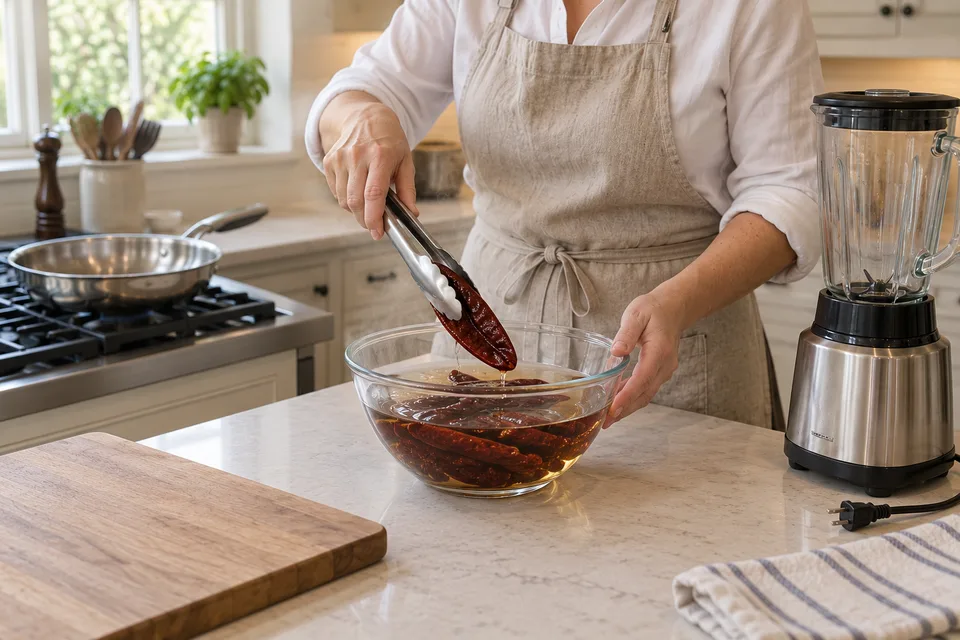
- Drain chiles and transfer to a blender with tomatoes, garlic, onion, cumin, oregano, and 1 cup of broth.
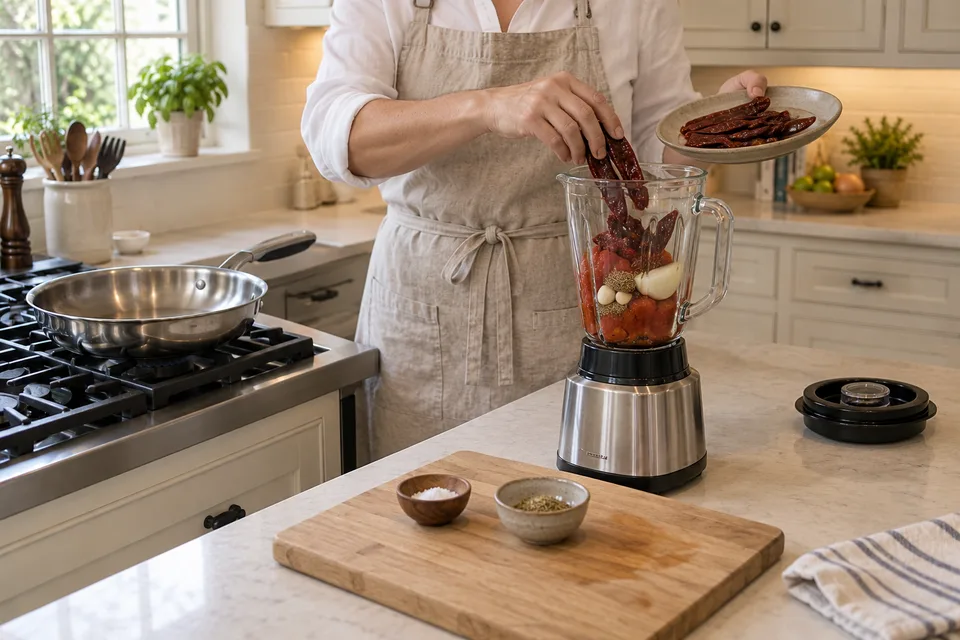
- Blend on high until completely smooth, about 1 minute.
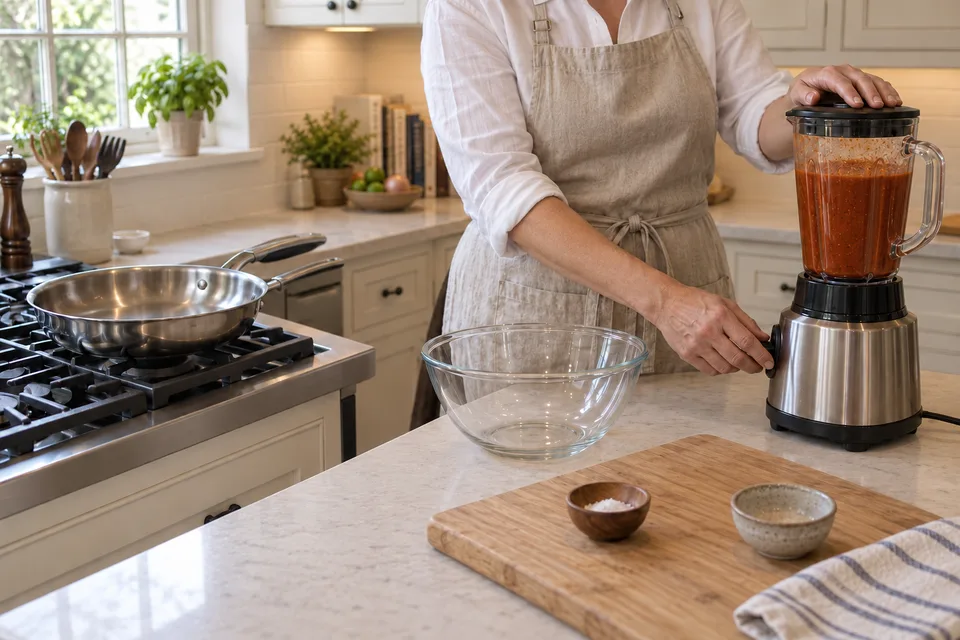
- Strain the blended mixture through a fine-mesh sieve, pressing solids to extract all liquid.
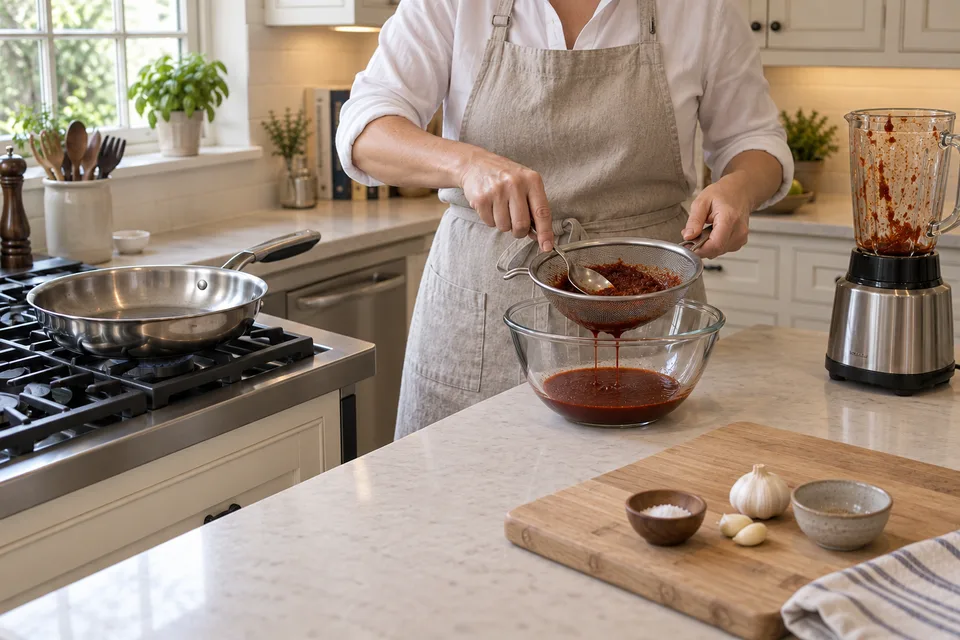
- Heat oil in a saucepan over medium-high heat. Pour in the strained sauce and cook, stirring, for 2 minutes.
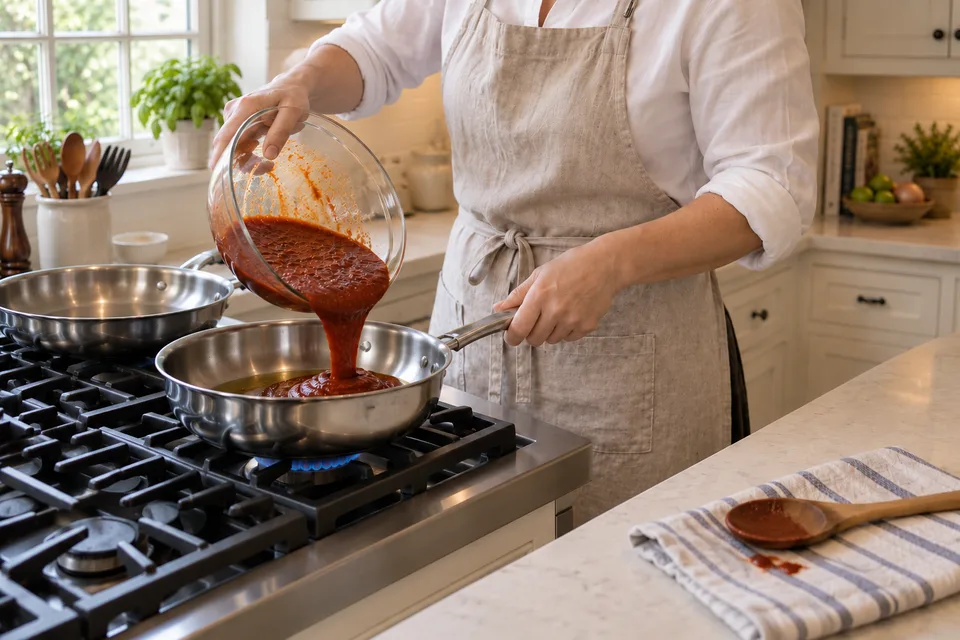
- Add remaining broth, reduce heat to medium-low, and simmer uncovered for 15 minutes until slightly thickened.
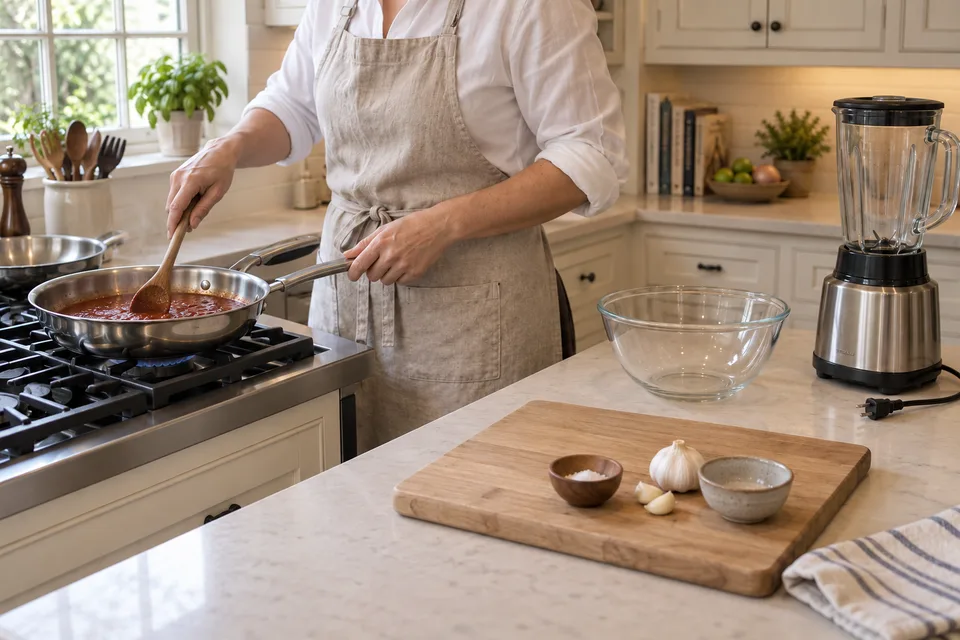
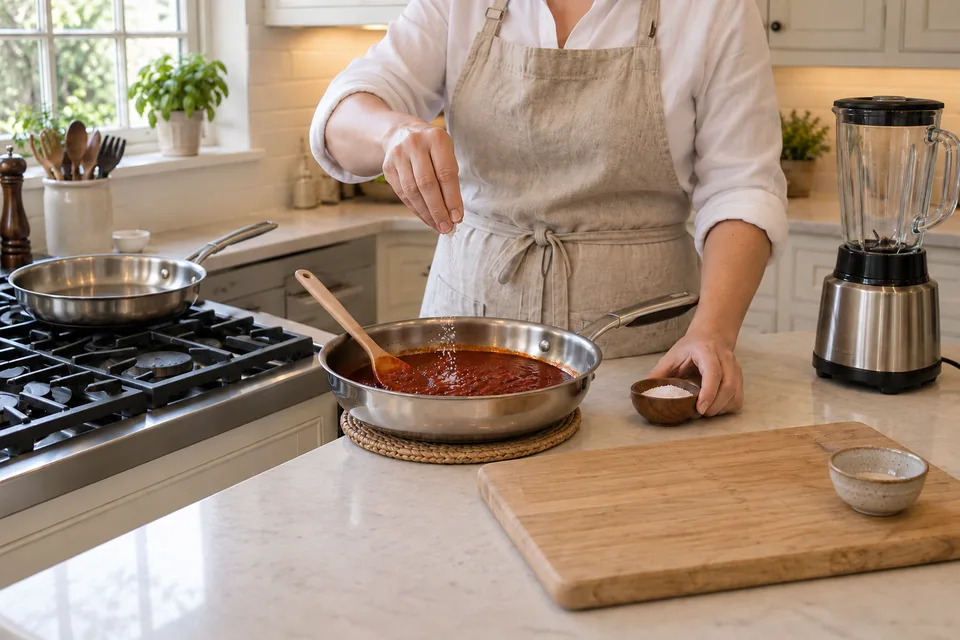
- Season with salt, adjust consistency with additional broth if needed, and remove from heat.
Common uses
Practical applications with the role this sauce plays in each dish.
Use 01
Enchilada coating
Dip or dredge corn tortillas in sauce before filling and rolling to build traditional enchiladas.
Use 02
Baked casserole topping
Pour over assembled enchiladas before baking to keep them moist and infuse flavor throughout.
Use 03
Braising liquid
Use as a braising medium for chicken thighs or pork shoulder to produce tender, sauced meat.
Use 04
Rice cooking liquid
Substitute part of the water when cooking rice to add color and savory chile flavor.
Use 05
Soup base
Stir into chicken or bean soup to add body, chile depth, and a smoky backbone.
Use 06
Huevos rancheros sauce
Spoon over fried eggs and tortillas as a quick alternative to fresh salsa.
Use 07
Tamale topping
Serve warm alongside or over tamales as a traditional accompaniment.
Use 08
Burrito sauce
Drizzle over or inside burritos to add moisture and chile-forward flavor.
Pairings
Pairing ideas grouped by food role for quick comparison.
Proteins
- shredded chicken
- ground beef
- pork carnitas
- black beans
- queso fresco or Monterey Jack cheese
- shrimp
Vegetables
- roasted corn
- sauteed zucchini
- caramelized onions
- roasted poblano peppers
- spinach
Carbs
- corn tortillas
- flour tortillas
- Mexican rice
- refried beans
- masa-based tamales
Enchilada Sauce substitutes
Starting ratios, best uses, and the main functional tradeoff for each alternative.
| Substitute | Ratio | Best for | Notes |
|---|---|---|---|
| Green enchilada sauce | 1:1 | enchiladas and casseroles | Tomatillo-based; flavor is tangier and brighter, color will differ significantly. |
| Mole sauce | 1:1 | baked enchiladas | Richer and more complex; adds chocolate and nut notes not present in red enchilada sauce. |
| Adobo sauce from canned chipotles | varies | braising and rice | Much smokier and spicier; dilute with broth or tomato sauce before substituting. |
| Tomato sauce with chile powder | 1:1 | quick weeknight cooking | Add 1 teaspoon each of cumin and chile powder per cup for closer flavor approximation. |
| Salsa verde thinned with broth | varies | enchiladas and eggs | Tomatillo and herb flavor; works best when a green sauce profile is acceptable. |
Storage
Keep time and temperature guidance visible, and discard sauce when spoilage signs appear.
Refrigerator
Cool completely and transfer to an airtight container. Refrigerate for up to 7 days. Stir before reusing, as the sauce may separate slightly.
Freezer
Freeze in airtight containers or zip-top bags in 1-cup portions for up to 3 months. Thaw overnight in the refrigerator before reheating.
Signs of spoilage
Discard if mold appears, the sauce smells sour or fermented, or the color changes noticeably.
Enchilada Sauce FAQ
Short, self-contained answers to common questions.
What is the difference between red and green enchilada sauce?
Red enchilada sauce is made from dried red chiles and tomatoes, producing an earthy, smoky flavor. Green enchilada sauce uses tomatillos and fresh green chiles, yielding a brighter, tangier taste. Both are used interchangeably in enchilada recipes depending on regional preference.
Can enchilada sauce be made without tomatoes?
Yes. Some traditional red enchilada sauces rely entirely on rehydrated dried chiles and broth, with no tomatoes. Tomatoes add body and mild acidity but are not required. Chile-only versions tend to have a deeper, more concentrated chile flavor.
Is store-bought enchilada sauce gluten-free?
Many commercial enchilada sauces are gluten-free, but formulations vary by brand. Some use wheat-based thickeners. Always check the product label and look for a certified gluten-free designation if you have celiac disease or a gluten sensitivity.
How do you thicken enchilada sauce?
Simmer the sauce uncovered over medium-low heat to reduce and concentrate it. Alternatively, whisk a small amount of masa harina (corn flour) into cold broth and stir it into the simmering sauce. Avoid heavy cream or flour if you want to preserve the traditional flavor.
Can enchilada sauce be used as a pizza sauce?
Enchilada sauce can substitute for pizza sauce in a Mexican-style pizza. Its chile and cumin notes pair well with toppings like black beans, corn, and pepper jack cheese. The flavor is earthier and spicier than standard tomato-based pizza sauce.