American/BBQ · bbq
Homemade BBQ Sauce
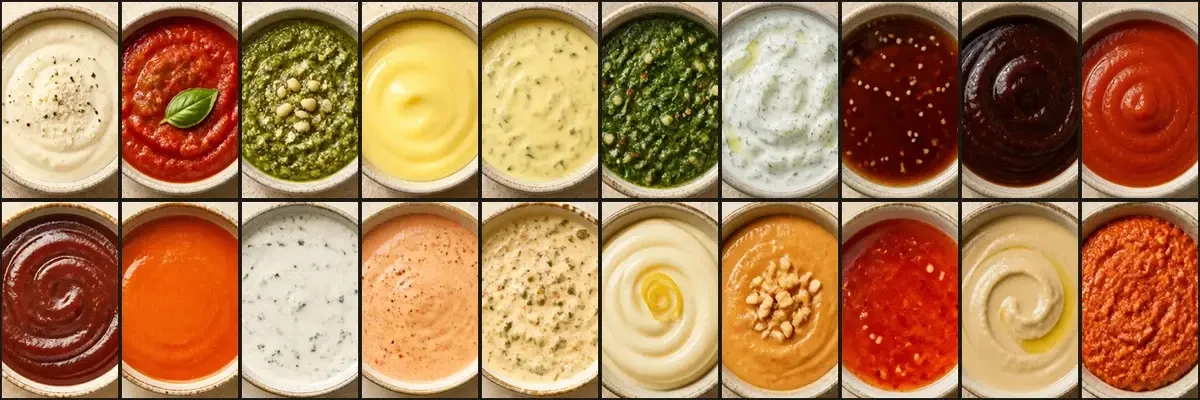
Homemade BBQ sauce is an American condiment that combines a tomato or vinegar base with sweeteners, spices, and aromatics to glaze, marinate, or accompany grilled and smoked meats.
Quick facts
Core identity, dietary fit, and storage ranges in a scannable reference table.
| Origin | United States, regional traditions established by the 19th century |
|---|---|
| Base | Tomato (ketchup or tomato paste) or vinegar |
| Primary ingredients | ketchup or tomato paste, apple cider vinegar, brown sugar, Worcestershire sauce, smoked paprika, garlic, onion powder, mustard |
| Flavor profile | smoky, sweet, tangy, savory |
| Color | Deep reddish-brown |
| Consistency | Medium; pourable but thick enough to coat a spoon |
| Refrigerator shelf life | Not established for this recipe |
| Freezer shelf life | Not established for this recipe |
| Vegan | Depends on the recipe or product |
| Gluten-free | Depends on the recipe or product |
| Dairy-free | Yes |
Dietary note
Recipes and labels vary
Check ingredient labels and individual dietary requirements; homemade and packaged versions can differ.
Browse sauces sharing an ingredient
How it’s made
Aromatics are combined with a tomato or vinegar base, then sweeteners, spices, and acid are added. The mixture simmers until thickened and flavors meld. No special equipment is required beyond a saucepan.
Homemade BBQ Sauce recipe
Aromatics are combined with a tomato or vinegar base, then sweeteners, spices, and acid are added. The mixture simmers until thickened and flavors meld. No special equipment is required beyond a saucepan.
Ingredients
- 1 cup ketchup
- 3 tablespoons apple cider vinegar
- 3 tablespoons brown sugar, packed
- 1 tablespoon Worcestershire sauce
- 1 tablespoon yellow mustard
- 1 teaspoon smoked paprika
- 1/2 teaspoon garlic powder
- 1/2 teaspoon onion powder
- 1/4 teaspoon black pepper
- 1/8 teaspoon cayenne pepper
- 1/4 teaspoon kosher salt
Method
- Combine ketchup, apple cider vinegar, brown sugar, and Worcestershire sauce in a small saucepan over medium heat.
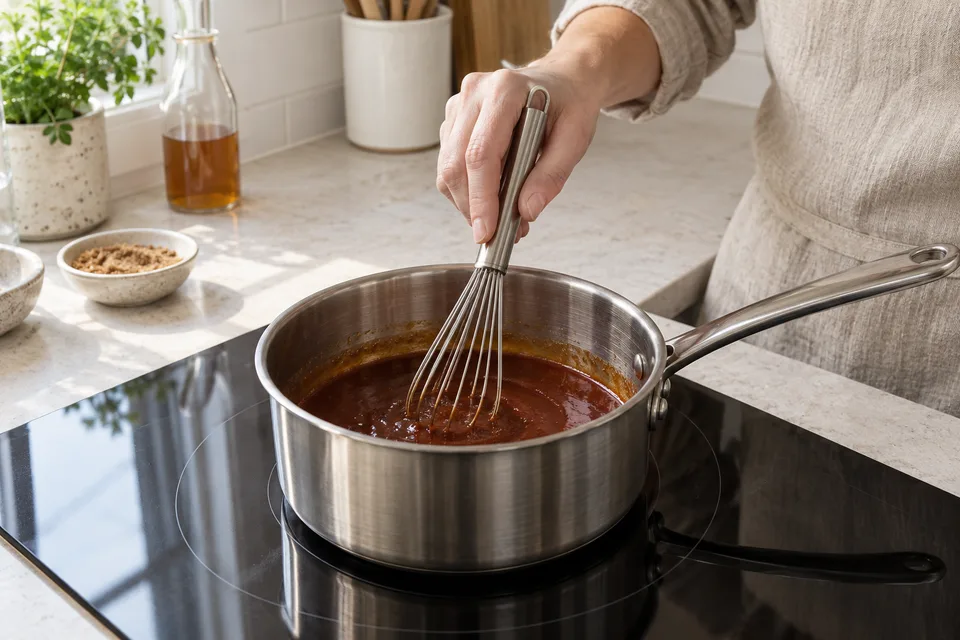
- Whisk in yellow mustard, smoked paprika, garlic powder, onion powder, black pepper, cayenne, and salt until fully incorporated.
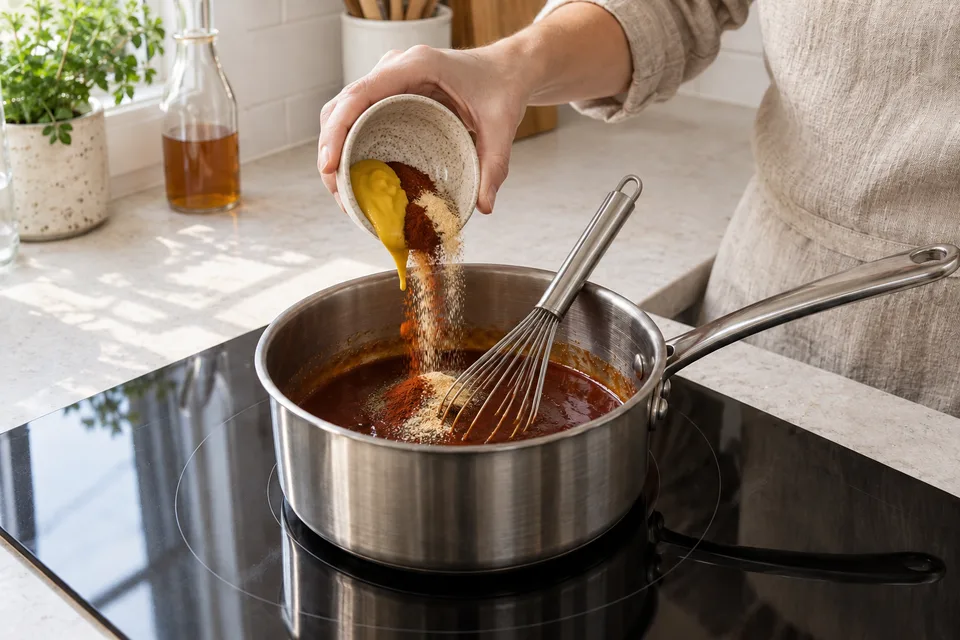
- Bring the mixture to a gentle simmer, stirring frequently to prevent scorching on the bottom.
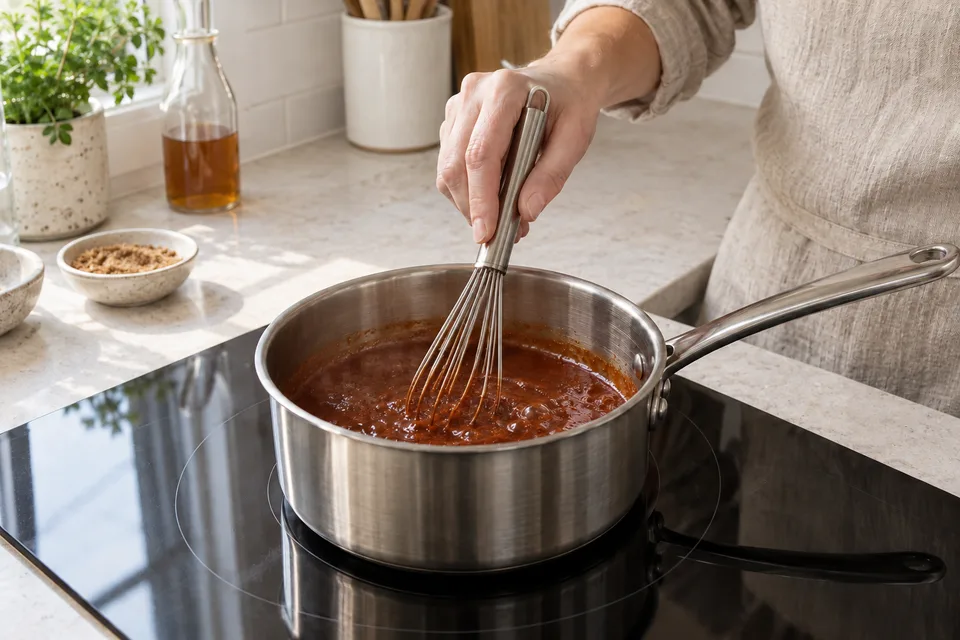
- Reduce heat to low and cook uncovered for 20 to 25 minutes, stirring occasionally, until the sauce thickens and coats the back of a spoon.
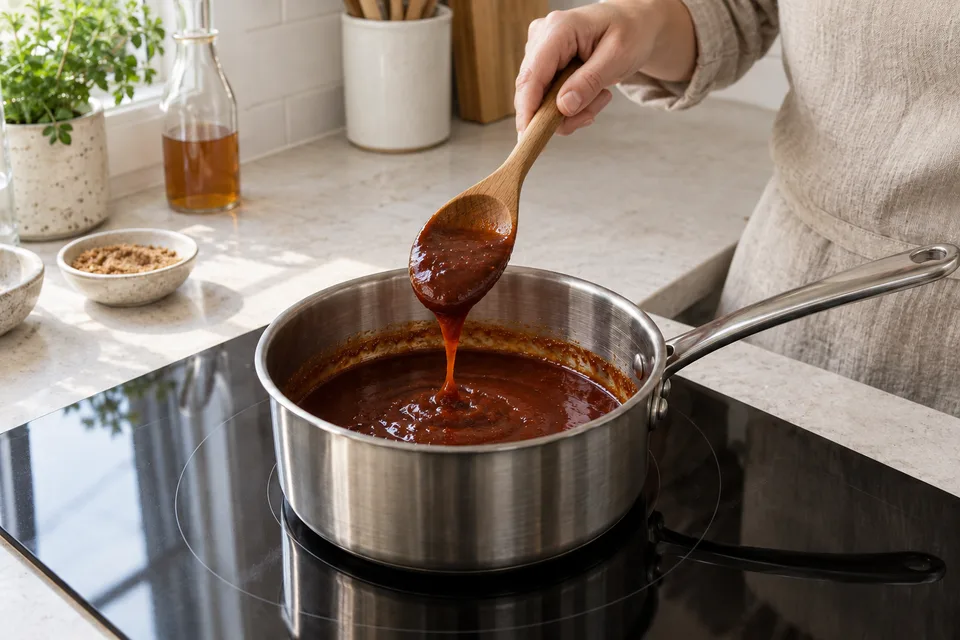
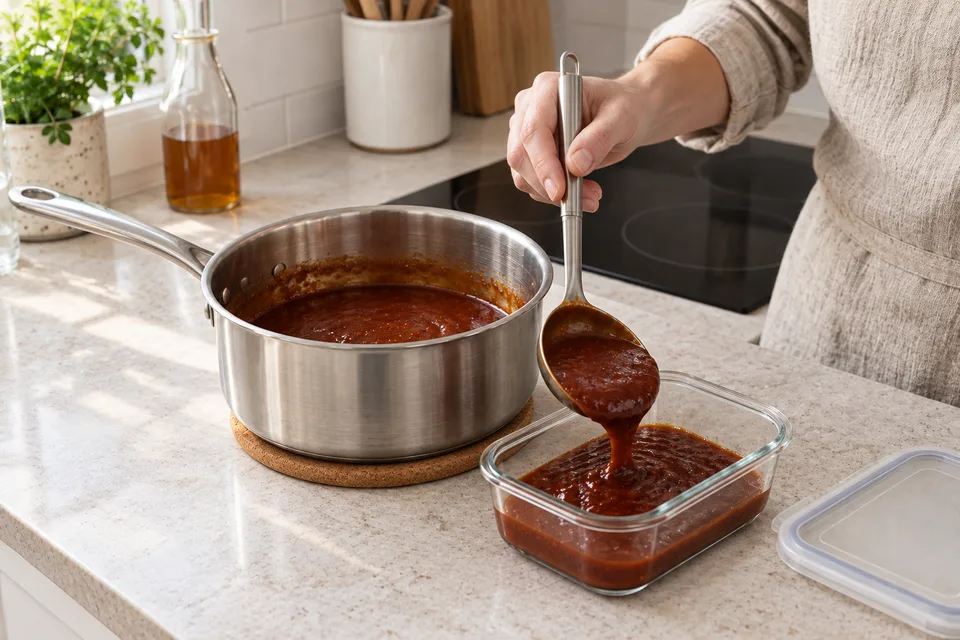
- Taste and adjust sweetness, acidity, or heat as needed. Remove from heat. Serve immediately, or transfer promptly to shallow covered containers and refrigerate within 2 hours of preparation, or within 1 hour above 90°F (32°C). Keep at 40°F (4°C) or below; do not wait for the sauce to reach room temperature.
Common uses
Practical applications with the role this sauce plays in each dish.
Use 01
Grilling glaze
Brushed onto meats during the last few minutes of grilling to build a caramelized, sticky crust.
Use 02
Dipping sauce
Served alongside grilled chicken, ribs, or smoked brisket as a table condiment.
Use 03
Pulled pork sauce
Stirred into or poured over shredded pork shoulder for sandwiches and sliders.
Use 04
Marinade base
Combined with oil and used to marinate chicken, pork chops, or beef ribs before cooking.
Use 05
Pizza sauce substitute
Spread on flatbreads or pizza dough in place of tomato sauce for a smoky BBQ-style pie.
Use 06
Burger condiment
Applied to burger buns or mixed into ground beef patties for added smokiness and moisture.
Use 07
Baked bean flavoring
Stirred into dried or canned beans with bacon and onion before slow baking.
Use 08
Meatloaf glaze
Spread over meatloaf before and during baking to form a tangy, caramelized topping.
Pairings
Pairing ideas grouped by food role for quick comparison.
Proteins
- pork ribs
- smoked brisket
- pulled pork
- grilled chicken thighs
- beef short ribs
- turkey legs
Vegetables
- grilled corn on the cob
- roasted sweet potatoes
- caramelized onions
- grilled bell peppers
Carbs
- brioche buns
- cornbread
- baked beans
- coleslaw-topped sandwiches
- white rice
Homemade BBQ Sauce substitutes
Starting ratios, best uses, and the main functional tradeoff for each alternative.
| Substitute | Ratio | Best for | Notes |
|---|---|---|---|
| Store-bought BBQ sauce | 1:1 | Any application | Convenient but typically higher in sodium and corn syrup than homemade. |
| Honey BBQ sauce | 1:1 | Glazing and dipping | Sweeter profile; reduce added sugar in the recipe if substituting. |
| Hoisin sauce | varies | Glazing pork or chicken | Thicker and more savory; dilute with vinegar to approximate BBQ tang. |
| Tomato paste with vinegar and brown sugar | varies | Cooking and braising | Simpler flavor; add Worcestershire and smoked paprika to improve depth. |
| Carolina vinegar sauce | varies | Pulled pork | Thinner and sharply acidic; omit if a thick, sweet glaze is needed. |
Storage
Keep time and temperature guidance visible, and discard sauce when spoilage signs appear.
Refrigerator
Transfer promptly to shallow covered containers and refrigerate within 2 hours of preparation, or within 1 hour above 90°F (32°C). Keep at 40°F (4°C) or below; do not wait for the sauce to reach room temperature. A validated refrigerator shelf life for this exact homemade recipe is not established here. Prepare only what you need.
Freezer
A recipe-specific freezer storage duration is not established here. Freezing may change the texture; thaw frozen sauce in the refrigerator.
Signs of spoilage
Discard sauce if time or temperature handling limits have been exceeded, even when it looks and smells normal. Also discard it if mold, an off odor or an unusual texture appears. Do not taste food to determine whether it is safe.
Sources
Public references supporting safety-sensitive claims and editorial decisions on this page.
- Leftovers and Food Safety — USDA FSIS fsis.usda.gov
General prompt refrigeration, shallow-container cooling and time/temperature boundaries; not validation of an exact sauce shelf life.
-
Covered refrigerated storage at 40°F or below; appearance and odor cannot establish safety.
Homemade BBQ Sauce FAQ
Short, self-contained answers to common questions.
How long does homemade BBQ sauce last in the refrigerator?
A validated refrigerator shelf life for this exact homemade recipe is not established here. Prepare only what you need. Keep covered at 40°F (4°C) or below and refrigerate promptly. Normal appearance or smell does not prove safety.
Can you freeze homemade BBQ sauce?
A validated freezer storage duration for this exact homemade recipe is not established here. Freezing can change the texture. If freezing sauce, portion it promptly into suitable containers and thaw it in the refrigerator.
Is homemade BBQ sauce gluten-free?
It depends on the ingredients used. Worcestershire sauce often contains malt vinegar derived from barley, which contains gluten. To make a gluten-free version, use a certified gluten-free Worcestershire sauce and verify that all other ingredients are free from gluten cross-contamination.
What makes homemade BBQ sauce different from store-bought?
Homemade BBQ sauce allows control over sweetness, salt, heat and smoke level. Commercial formulations and preservatives vary; use their package storage instructions. A validated shelf life for this homemade formula is not established here.
When should you apply BBQ sauce when grilling?
Apply BBQ sauce during the last 5 to 10 minutes of grilling over direct heat. Adding it too early causes the sugars to burn before the meat is cooked through. For low-and-slow smoking, sauce is typically applied in the final 30 minutes.