Other/Global · dressings
Honey Mustard
Honey mustard is a condiment that combines honey and mustard to produce a sweet, tangy sauce used for dipping, dressing, and glazing.
Quick facts
Core identity, dietary fit, and storage ranges in a scannable reference table.
| Origin | United States, 20th century |
|---|---|
| Base | Mustard and honey |
| Primary ingredients | honey, mustard, mayonnaise, vinegar, lemon juice |
| Flavor profile | sweet, tangy, mild, creamy |
| Color | Golden yellow |
| Consistency | Medium; smooth and pourable, thicker when mayonnaise is included |
| Refrigerator shelf life | Not established for this recipe |
| Freezer shelf life | Not established |
| Vegan | Depends on the recipe or product |
| Gluten-free | Depends on the recipe or product |
| Dairy-free | Yes |
Dietary note
Recipes and labels vary
Check ingredient labels and individual dietary requirements; homemade and packaged versions can differ.
Browse sauces sharing an ingredient
How it’s made
Honey and mustard are whisked together in a ratio typically ranging from 1:1 to 2:1 honey to mustard. Mayonnaise is often added for creaminess, and vinegar or lemon juice for brightness. No cooking is required for the basic preparation.
Honey Mustard recipe
Honey and mustard are whisked together in a ratio typically ranging from 1:1 to 2:1 honey to mustard. Mayonnaise is often added for creaminess, and vinegar or lemon juice for brightness. No cooking is required for the basic preparation.
Ingredients
- 3 tablespoons honey
- 2 tablespoons Dijon mustard
- 1 tablespoon yellow mustard
- 2 tablespoons mayonnaise
- 1 teaspoon apple cider vinegar
- 1/8 teaspoon salt
Method
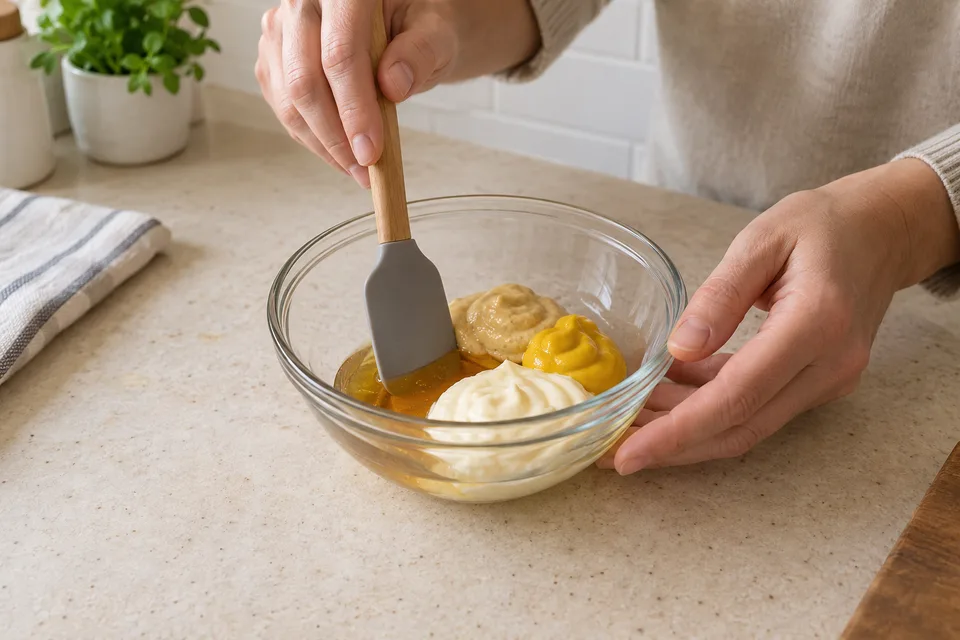
- Combine honey, Dijon mustard, yellow mustard, and mayonnaise in a small bowl.
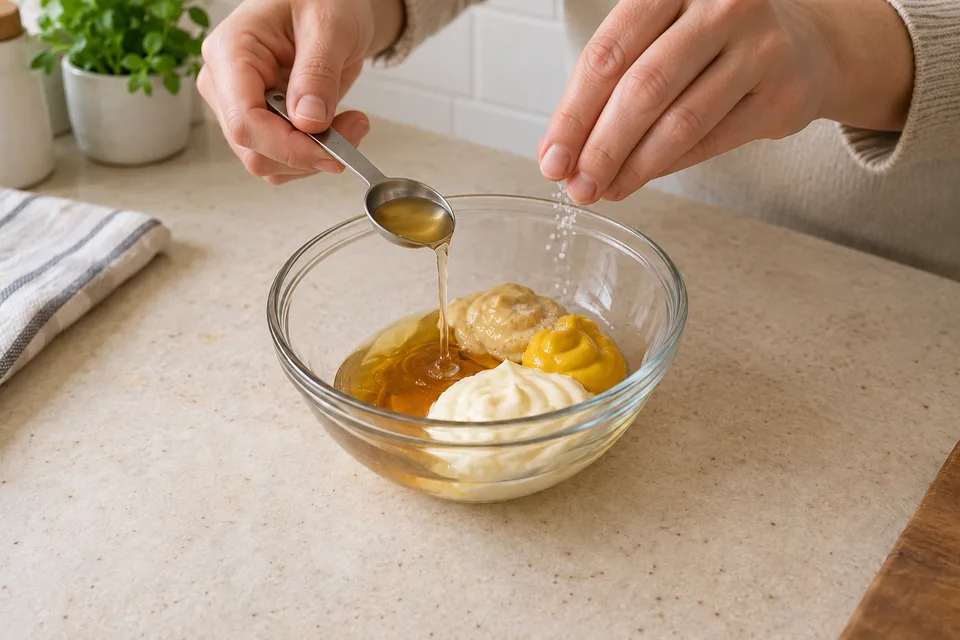
- Add apple cider vinegar and salt.
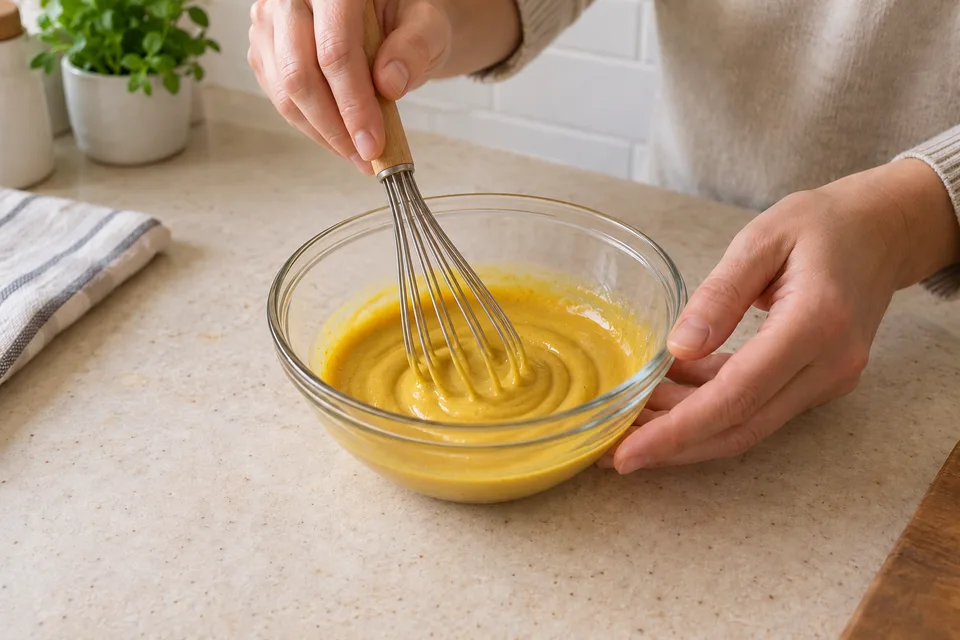
- Whisk all ingredients together until smooth and fully incorporated.
- Taste and adjust honey or mustard to balance sweetness and tang.
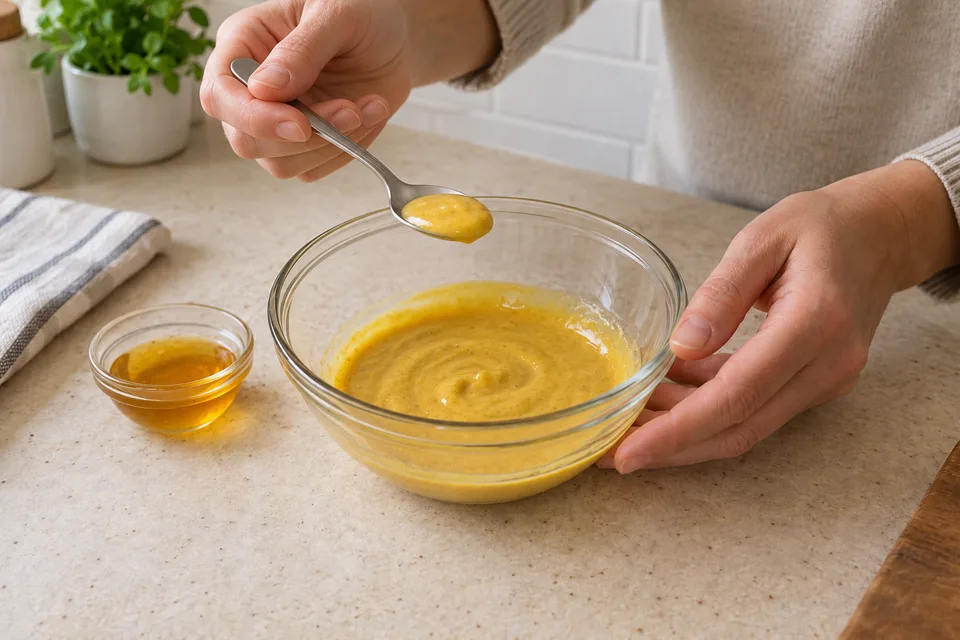
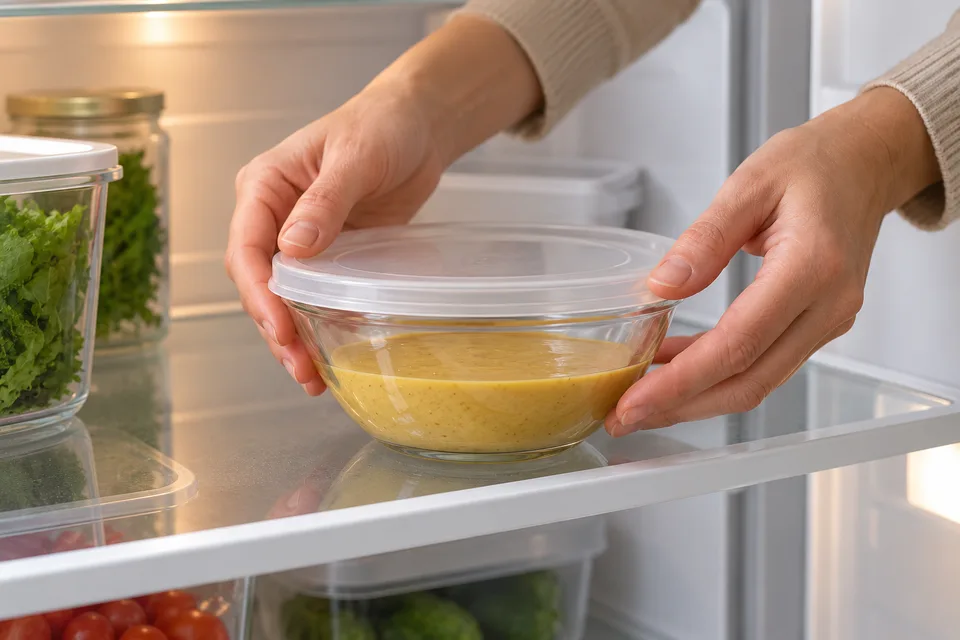
- Refrigerate for at least 15 minutes before serving to allow flavors to meld.
Common uses
Practical applications with the role this sauce plays in each dish.
Use 01
Dipping sauce
Served alongside chicken tenders, nuggets, or fried foods as a sweet-tangy dip.
Use 02
Salad dressing
Thinned with vinegar or water and drizzled over green salads or coleslaw.
Use 03
Sandwich spread
Spread on sandwiches, wraps, and burgers in place of plain mustard or mayonnaise.
Use 04
Chicken glaze
Brushed onto chicken breasts or thighs before baking or grilling for a caramelized coating.
Use 05
Pretzel dip
Paired with soft or hard pretzels as a classic sweet-and-savory snack accompaniment.
Use 06
Marinade base
Combined with oil and garlic to marinate pork, chicken, or salmon before cooking.
Use 07
Vegetable dip
Used as a dipping sauce for raw vegetables such as carrots, celery, and broccoli.
Pairings
Pairing ideas grouped by food role for quick comparison.
Proteins
- chicken tenders
- baked chicken thighs
- pork tenderloin
- salmon
- turkey
Vegetables
- broccoli
- carrots
- Brussels sprouts
- asparagus
- cauliflower
Carbs
- soft pretzels
- potato wedges
- whole-grain bread
- dinner rolls
- pasta salad
Honey Mustard substitutes
Starting ratios, best uses, and the main functional tradeoff for each alternative.
| Substitute | Ratio | Best for | Notes |
|---|---|---|---|
| Dijon mustard with maple syrup | 1:1 | Glazing and dipping | Maple syrup adds similar sweetness; flavor is slightly earthier than honey. |
| Yellow mustard with honey | 1:1 | Dipping and spreading | Sharper and less complex than Dijon-based versions; widely available. |
| Whole-grain mustard with honey | 1:1 | Salad dressings and marinades | Adds texture and a rustic appearance; flavor is more robust. |
| Store-bought honey mustard dressing | 1:1 | Salads and dipping | Convenient but may contain added stabilizers or sweeteners; check label. |
| Agave nectar with Dijon mustard | 1:1 | Vegan preparations | Replaces honey for a vegan-friendly version with a neutral sweetness. |
Storage
Keep time and temperature guidance visible, and discard sauce when spoilage signs appear.
Refrigerator
Keep this homemade sauce in a clean, covered container in the refrigerator at 40°F (4°C) or below. A validated refrigerator shelf life for this exact recipe is not established here. Prepare only what you need; normal smell or appearance does not prove that a stored sauce is safe.
Freezer
Freezing is not recommended. Mayonnaise-based versions separate upon thawing, and texture degrades significantly.
Signs of spoilage
Discard if the sauce develops an off smell, visible mold, or significant color change.
Sources
Public references supporting safety-sensitive claims and editorial decisions on this page.
- Refrigeration and Food Safety — USDA FSIS fsis.usda.gov
General refrigeration guidance and the distinction between spoilage and pathogenic bacteria. Does not validate a shelf life for these homemade recipes.
Honey Mustard FAQ
Short, self-contained answers to common questions.
Is honey mustard gluten-free?
It depends on the mustard used. Some mustards contain gluten-containing ingredients or are processed in shared facilities. Check the label of each ingredient. Homemade versions made with certified gluten-free mustard and plain honey are generally gluten-free.
Is honey mustard vegan?
No, standard honey mustard is not vegan because it contains honey, which is an animal product. A vegan version can be made by substituting agave nectar or maple syrup for honey and using vegan mayonnaise.
What is the ratio of honey to mustard in honey mustard sauce?
A common ratio is 1:1 honey to mustard for a balanced flavor. Increasing honey to 2:1 produces a sweeter sauce, while equal or greater mustard yields a tangier result. Adjust to taste based on the intended use.
How long does homemade honey mustard last in the refrigerator?
A validated refrigerator shelf life for this exact homemade recipe is not established here. Keep the sauce covered at 40°F (4°C) or below and prepare only what you need. Normal smell or appearance does not prove that a stored sauce is safe.
What is the difference between honey mustard sauce and honey mustard dressing?
Honey mustard sauce is typically thicker, made with mustard and honey, and used for dipping or glazing. Honey mustard dressing is thinned with vinegar or oil for pouring over salads. Both share the same base flavor profile.