Jamaican · hot-spicy
Jerk Sauce
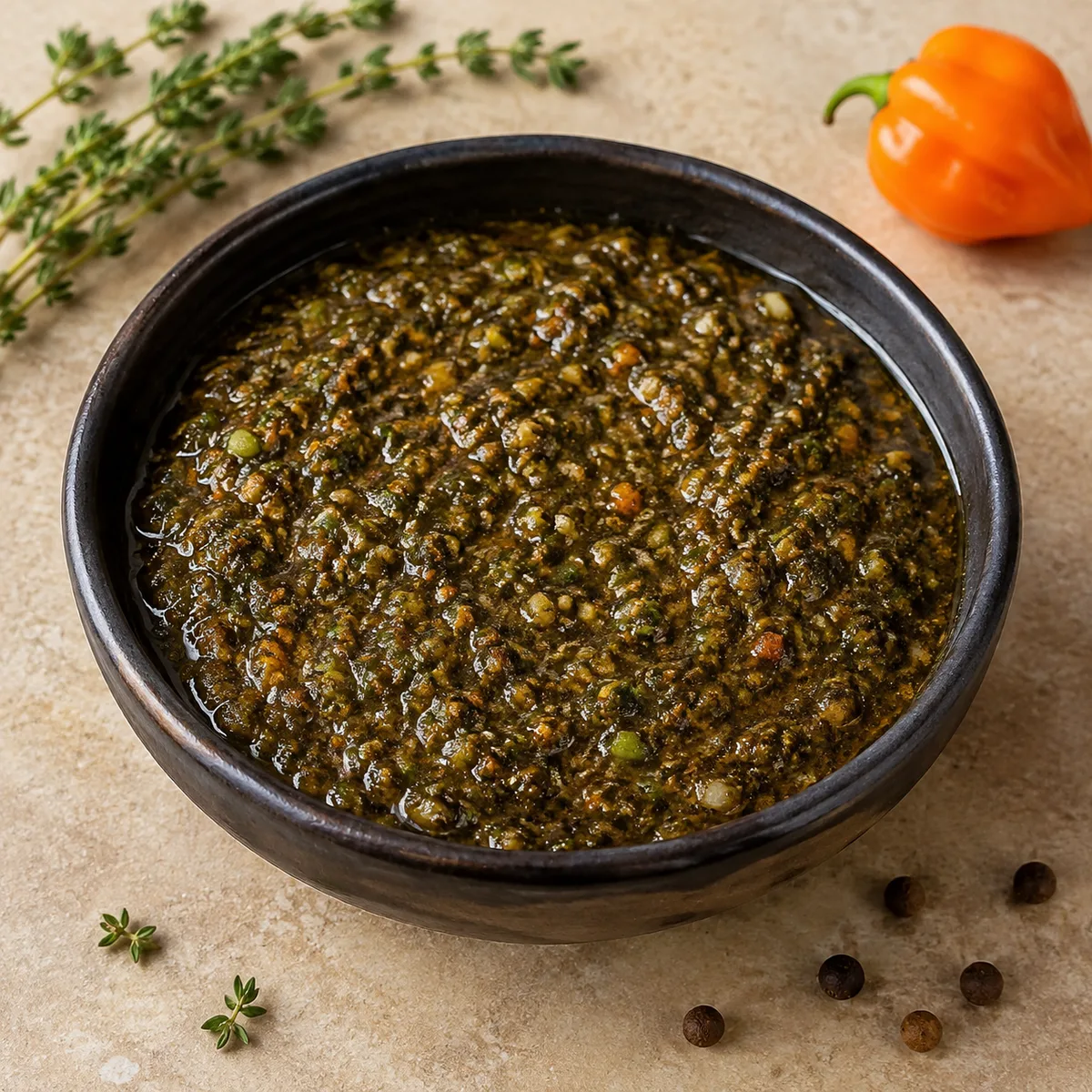
Jerk sauce is a Jamaican marinade and condiment built on Scotch bonnet peppers and allspice that delivers fiery, smoky, and aromatic heat used primarily on grilled or smoked meats.
Quick facts
Core identity, dietary fit, and storage ranges in a scannable reference table.
| Origin | Jamaica, with roots in Maroon cooking traditions dating to at least the 17th century |
|---|---|
| Base | Scotch bonnet peppers and allspice |
| Primary ingredients | Scotch bonnet peppers, allspice berries, thyme, garlic, green onions, ginger, soy sauce, brown sugar |
| Flavor profile | fiery, smoky, aromatic, savory-sweet |
| Color | dark brown to olive green depending on herb content |
| Consistency | medium; pourable but textured with visible herb and pepper bits |
| Refrigerator shelf life | Up to 4 days (homemade) |
| Freezer shelf life | Up to 3 months for quality |
| Vegan | Depends on the recipe or product |
| Gluten-free | Depends on the recipe or product |
| Dairy-free | Yes |
Dietary note
Recipes and labels vary
Check ingredient labels and individual dietary requirements; homemade and packaged versions can differ.
Browse sauces sharing an ingredient
How Is Jerk Sauce Made?
Jerk Sauce recipe
Scotch bonnet peppers, allspice, thyme, garlic, scallions, ginger, soy sauce, brown sugar, and lime are blended into a coarse sauce. Reserve an uncontaminated portion before using the rest as a raw-meat marinade.
Ingredients
- 3 whole Scotch bonnet peppers, stemmed and seeded for less heat
- 4 stalks green onions, roughly chopped
- 4 cloves garlic cloves
- 1-inch piece fresh ginger, peeled
- 2 teaspoons ground allspice
- 1 tablespoon fresh thyme leaves
- 3 tablespoons soy sauce
- 1 tablespoon brown sugar
- 2 tablespoons lime juice, freshly squeezed
- 2 tablespoons neutral oil
- 1 teaspoon black pepper
- 1/4 teaspoon cinnamon
Method
- Combine Scotch bonnet peppers, green onions, garlic, and ginger in a blender or food processor.
- Add allspice, thyme, soy sauce, brown sugar, lime juice, oil, black pepper, and cinnamon.
- Blend until a coarse, pourable paste forms, scraping down the sides as needed.
- Taste and adjust heat by adding more Scotch bonnet or lime juice as desired.
- Use immediately, or refrigerate in a covered container within 2 hours and use within 4 days. Reserve an uncontaminated portion for serving; boil for several minutes before reusing marinade that contacted raw meat or poultry.
What Is Jerk Sauce Used For?
Practical applications with the role this sauce plays in each dish.
Use 01
Chicken marinade
Coat chicken pieces and marinate at least four hours before grilling for deep flavor penetration.
Use 02
Pork marinade
Applied to pork shoulder or ribs before slow smoking over pimento wood or charcoal.
Use 03
Grilling baste
Brushed onto meat during the final minutes of grilling to build a caramelized, spiced crust.
Use 04
Seafood seasoning
Used as a quick marinade for shrimp or fish fillets before grilling or pan-searing.
Use 05
Dipping sauce
Served alongside grilled meats or fried plantains as a bold, spicy condiment.
Use 06
Vegetable seasoning
Tossed with cauliflower, jackfruit, or tofu before roasting as a plant-based application.
Use 07
Burger and sandwich spread
Spread on buns or wraps to add Jamaican-inspired heat to grilled chicken sandwiches.
Use 08
Rice and grain flavoring
Stirred into rice or grain bowls in small amounts to add aromatic spice.
Pairings
Pairing ideas grouped by food role for quick comparison.
Proteins
- chicken thighs
- pork shoulder
- beef short ribs
- shrimp
- salmon
- tofu
Vegetables
- plantains
- corn on the cob
- bell peppers
- sweet potatoes
- cabbage
Carbs
- white rice
- rice and peas
- flatbread
- brioche buns
- festival dumplings
Jerk Sauce substitutes
Starting ratios, best uses, and the main functional tradeoff for each alternative.
| Substitute | Ratio | Best for | Notes |
|---|---|---|---|
| Jerk seasoning paste (dry rub moistened with oil and citrus) | 1:1 | Marinades and grilling | Delivers similar spice profile; add liquid to match sauce consistency. |
| Habanero hot sauce blended with allspice and thyme | varies | Dipping and finishing | Habanero approximates Scotch bonnet heat; add allspice to replicate jerk character. |
| Cajun sauce | 1:1 | Grilled meats | Shares heat and herb notes but lacks allspice and the distinctly Jamaican flavor. |
| Chipotle adobo sauce with added allspice | varies | Marinades | Provides smokiness and heat; stir in ground allspice and thyme to narrow the gap. |
| Korean BBQ sauce | 1:1 | Glazing and dipping | Offers sweet-savory depth but lacks Scotch bonnet heat and allspice aroma. |
How to Store Jerk Sauce
Keep time and temperature guidance visible, and discard sauce when spoilage signs appear.
Refrigerator
Refrigerate the homemade sauce promptly in a covered container at 40°F (4°C) or below and use it within 4 days. Keep any portion that contacts raw meat separate, and follow the marinade safety note in the recipe.
Freezer
For best quality, freeze promptly in airtight portions for up to 3 months. Thaw in the refrigerator. The three-month limit is a quality recommendation for a freezer held at 0°F (-18°C).
Signs of spoilage
Discard the sauce when its storage time or temperature limit has been exceeded, even if it looks and smells normal. Also discard it if mold, an off odor, or an unusual texture develops. Do not taste food to determine whether it is safe.
Sources
Public references supporting safety-sensitive claims and editorial decisions on this page.
- Grilling and Food Safety — USDA FSIS fsis.usda.gov
USDA FSIS advises marinating meat and poultry in the refrigerator, reserving sauce before raw-meat contact, and boiling used marinade for several minutes before reuse.
- Leftovers and Food Safety — USDA FSIS fsis.usda.gov
USDA FSIS advises refrigerating perishable leftovers promptly at 40°F or below, using them within 3 to 4 days, and freezing them for 3 to 4 months.
-
FDA advises the two-hour refrigeration rule, a refrigerator temperature at or below 40°F, and notes that unsafe food may still look and smell normal.
Jerk Sauce FAQ
Short, self-contained answers to common questions.
What makes jerk sauce different from other hot sauces?
Jerk sauce is defined by the combination of Scotch bonnet peppers and allspice, which gives it a distinctive warm, aromatic heat not found in most hot sauces. Thyme, green onions, and ginger add herbal complexity that sets it apart from vinegar-forward or chili-only hot sauces.
Is jerk sauce gluten-free?
It depends on the formulation. Many recipes include soy sauce, which typically contains wheat. Using certified gluten-free tamari in place of soy sauce makes the preparation gluten-free. Always check labels on store-bought versions, as formulations vary by brand.
How hot is jerk sauce?
Heat level varies by recipe and the amount of Scotch bonnet pepper used. Scotch bonnets rate 100,000 to 350,000 Scoville heat units, making traditional jerk sauce significantly hotter than most commercial hot sauces. Seeding the peppers or reducing their quantity lowers the heat.
Can jerk sauce be used as a marinade and a finishing sauce?
Yes. Jerk sauce works as both. As a marinade, it penetrates meat over several hours before cooking. As a finishing sauce, it is brushed on during the last few minutes of grilling or served at the table. Do not reuse marinade that has contacted raw meat without cooking it first.
What can I substitute for Scotch bonnet peppers in jerk sauce?
Habanero peppers are the closest substitute, sharing a similar fruity heat profile and comparable Scoville range. Serrano or jalapeño peppers can be used for a milder result but will noticeably reduce the heat and alter the flavor character of the sauce.
What is jerk sauce made of?
Jerk sauce is commonly made with Scotch bonnet peppers, allspice, thyme, scallions, garlic, ginger, soy sauce, brown sugar, and citrus juice. The mixture is blended into a coarse, aromatic sauce used as a marinade or finishing condiment.
Does jerk sauce contain sugar?
Many jerk sauce recipes include a small amount of brown sugar to balance citrus, soy sauce, and chile heat, but sugar is not universal. Check packaged labels or adjust a homemade recipe according to the desired sweetness and browning.