Other/Global · tomato
Passata Sauce
Passata is an uncooked tomato purée that is strained to remove seeds and skins, producing a smooth, pourable base used in Italian and European cooking.
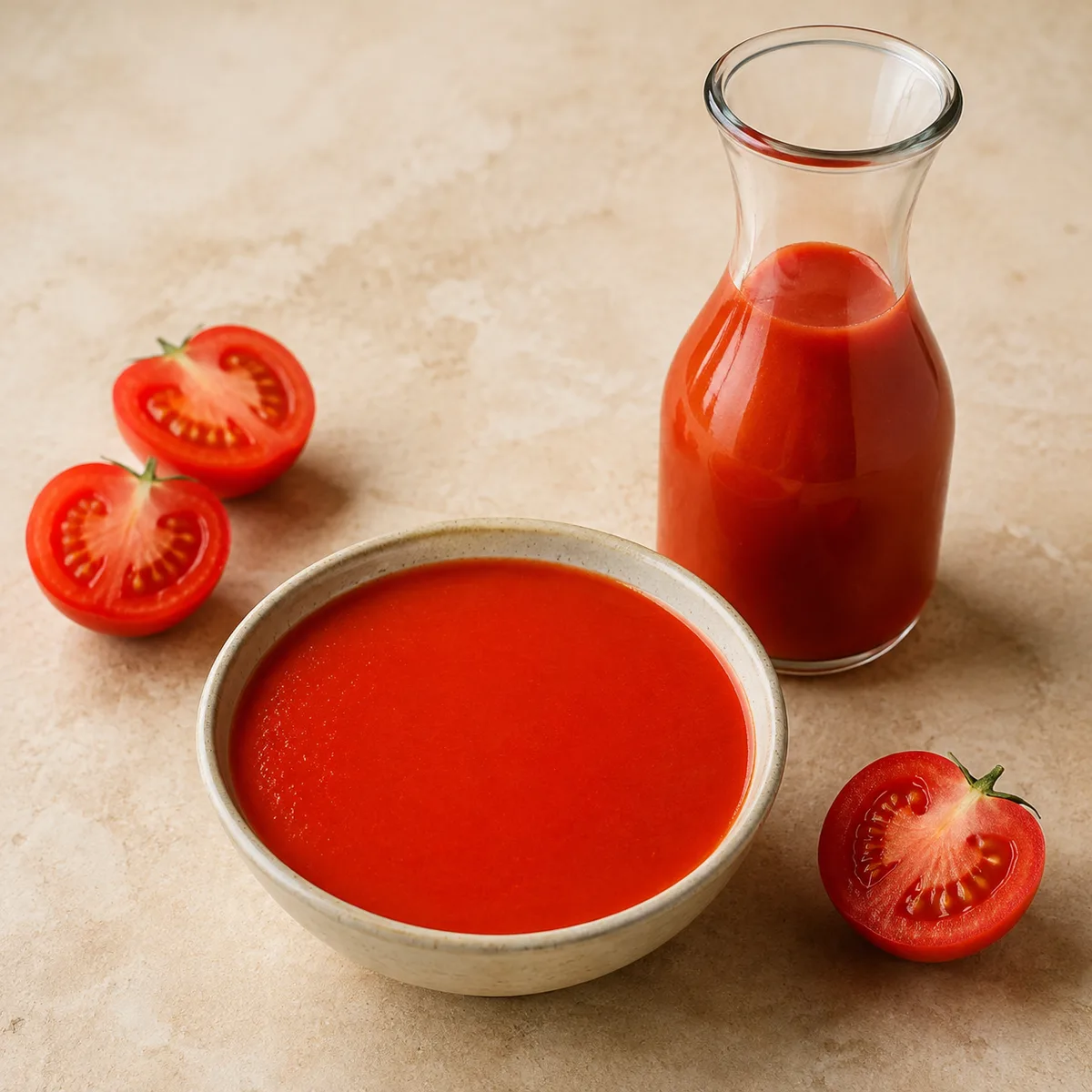
Quick facts
Core identity, dietary fit, and storage ranges in a scannable reference table.
| Origin | Italy, 19th century |
|---|---|
| Base | fresh tomatoes |
| Primary ingredients | ripe plum tomatoes, salt |
| Flavor profile | bright, fresh, mildly sweet, lightly acidic |
| Color | deep red-orange |
| Consistency | thin to medium; smooth and pourable with no chunks |
| Refrigerator shelf life | 3 to 4 days (homemade) |
| Freezer shelf life | Up to 3 months for quality |
| Vegan | Yes |
| Gluten-free | Yes |
| Dairy-free | Yes |
Dietary note
Recipes and labels vary
Check ingredient labels and individual dietary requirements; homemade and packaged versions can differ.
Browse sauces sharing an ingredient
How Is Passata Made?
Passata Sauce recipe
Ripe tomatoes are briefly blanched, peeled, and passed through a food mill or fine sieve. This fresh passata is intended for immediate use, refrigeration, or freezing; it is not a shelf-stable canning recipe.
Ingredients
- 2 lbs ripe plum tomatoes
- 1/2 tsp fine sea salt
Method
- Score a shallow X on the bottom of each tomato with a paring knife.
- Blanch tomatoes in boiling water for 30 to 60 seconds, then transfer immediately to an ice bath.
- Peel away the loosened skins and remove the core from each tomato.
- Pass the peeled tomatoes through a food mill fitted with a fine disc, or press through a fine-mesh sieve, discarding seeds and remaining solids.
- Stir in salt and taste, adjusting as needed.
- Use immediately, or transfer to covered refrigerator or freezer containers, leaving headspace for freezing. Refrigerate within 2 hours and use within 4 days. A clean jar alone does not make this recipe shelf-stable; use a complete research-tested process for home canning.
What Is Passata Used For?
Practical applications with the role this sauce plays in each dish.
Use 01
Pasta sauce base
Used as the starting liquid for marinara, arrabbiata, and other Italian pasta sauces.
Use 02
Pizza sauce
Spread directly on pizza dough as a quick, uncooked tomato base before toppings.
Use 03
Braising liquid
Added to braises for chicken, pork, or meatballs to build a light tomato-forward cooking sauce.
Use 04
Soup base
Stirred into minestrone or tomato soup to add body and fresh tomato flavor without chunks.
Use 05
Shakshuka base
Used as the tomato foundation for poached-egg dishes, seasoned with spices and aromatics.
Use 06
Lasagna and baked pasta
Layered into baked pasta dishes where a smooth, even tomato layer is preferred over chunky sauce.
Use 07
Stew enrichment
Stirred into vegetable or legume stews to add tomato depth without altering texture significantly.
Pairings
Pairing ideas grouped by food role for quick comparison.
Proteins
- ground beef
- Italian sausage
- chicken thighs
- poached eggs
- white fish
Vegetables
- eggplant
- zucchini
- bell peppers
- spinach
- mushrooms
Carbs
- spaghetti
- rigatoni
- pizza dough
- polenta
- crusty bread
Passata Sauce substitutes
Starting ratios, best uses, and the main functional tradeoff for each alternative.
| Substitute | Ratio | Best for | Notes |
|---|---|---|---|
| Canned crushed tomatoes | 1:1 | cooked sauces and braises | Blend smooth before using; flavor is slightly more cooked and concentrated. |
| Canned whole peeled tomatoes, puréed | 1:1 | pasta sauces | Crush or blend and strain seeds for closest texture match. |
| Tomato purée (US style) | 1:1 | general cooking | Thicker than passata; thin with a small amount of water if needed. |
| Canned tomato sauce | 1:1 | quick weeknight sauces | Often pre-seasoned; reduce added salt and herbs accordingly. |
| Fresh tomatoes, blanched and puréed | 1:1 | homemade preparations | Closest in flavor; requires blanching, peeling, and straining before use. |
How to Store Passata
Keep time and temperature guidance visible, and discard sauce when spoilage signs appear.
Refrigerator
Refrigerate fresh passata promptly in a covered container at 40°F (4°C) or below and use it within 3 to 4 days. If it has been above 40°F for more than 2 hours, or more than 1 hour above 90°F (32°C), discard it.
Freezer
For best quality, freeze promptly in airtight portions for up to 3 months, leaving headspace for expansion. Thaw in the refrigerator. This recipe is not shelf-stable without a complete research-tested canning process.
Signs of spoilage
Discard the passata when its storage time or temperature limit has been exceeded, even if it looks and smells normal. Also discard it if mold, an off odor, or an unusual texture develops. Do not taste food to determine whether it is safe.
Sources
Public references supporting safety-sensitive claims and editorial decisions on this page.
-
NCHFP's research-tested shelf-stable tomato sauce process requires heating, acidification, specified headspace, and jar-size and elevation-specific processing.
- Leftovers and Food Safety — USDA FSIS fsis.usda.gov
USDA FSIS advises refrigerating perishable leftovers promptly at 40°F or below, using them within 3 to 4 days, and freezing them for 3 to 4 months.
-
FDA advises the two-hour refrigeration rule, a refrigerator temperature at or below 40°F, and notes that unsafe food may still look and smell normal.
Passata Sauce FAQ
Short, self-contained answers to common questions.
What is the difference between passata and tomato paste?
Passata is a thin, uncooked strained tomato purée. Tomato paste is cooked down to a thick, concentrated form with a much stronger, deeper flavor. They are not interchangeable at equal ratios; tomato paste requires dilution when substituted for passata.
Is passata the same as crushed tomatoes?
No. Passata is fully smooth with seeds and skins removed. Crushed tomatoes retain chunks and seeds. Passata produces a silkier texture in sauces. Blending and straining crushed tomatoes can approximate passata, but the flavor may be slightly more cooked.
Can passata be used directly on pizza without cooking?
Yes. Passata is commonly spread raw onto pizza dough before baking. Its thin consistency and fresh tomato flavor make it well suited for this use without pre-cooking.
Does passata contain added ingredients?
Traditional passata contains only tomatoes and salt. Some commercial products add basil or citric acid. Always check the label if you need a plain tomato base or have dietary restrictions.
How long does homemade passata last in the fridge?
Refrigerate homemade passata promptly at 40°F (4°C) or below and use it within 3 to 4 days. For shelf-stable storage, use a complete research-tested tomato-sauce canning recipe with its required acidification and processing instructions.
How do you use passata to make pasta sauce?
Cook garlic or onion briefly in olive oil, add passata, season with salt and herbs, and simmer until the flavor develops and the sauce reaches the desired thickness. Passata is already smooth, so no blending or straining is needed.