Chinese · stir-fry
Potsticker Sauce
Potsticker sauce is a Chinese-style dipping sauce that combines soy sauce, rice vinegar, and aromatics to complement pan-fried or steamed dumplings with salty, tangy, and savory flavor.
Quick facts
Core identity, dietary fit, and storage ranges in a scannable reference table.
| Origin | China |
|---|---|
| Base | Soy sauce |
| Primary ingredients | soy sauce, rice vinegar, sesame oil, garlic, ginger, scallions, chili flakes |
| Flavor profile | salty, tangy, savory, mildly spicy |
| Color | Dark brown |
| Consistency | Thin; a pourable liquid with visible aromatics |
| Refrigerator shelf life | Not established for this recipe |
| Freezer shelf life | Not established for this recipe |
| Vegan | Yes |
| Gluten-free | Depends on the recipe or product |
| Dairy-free | Yes |
Dietary note
Recipes and labels vary
Check ingredient labels and individual dietary requirements; homemade and packaged versions can differ.
Browse sauces sharing an ingredient
How it’s made
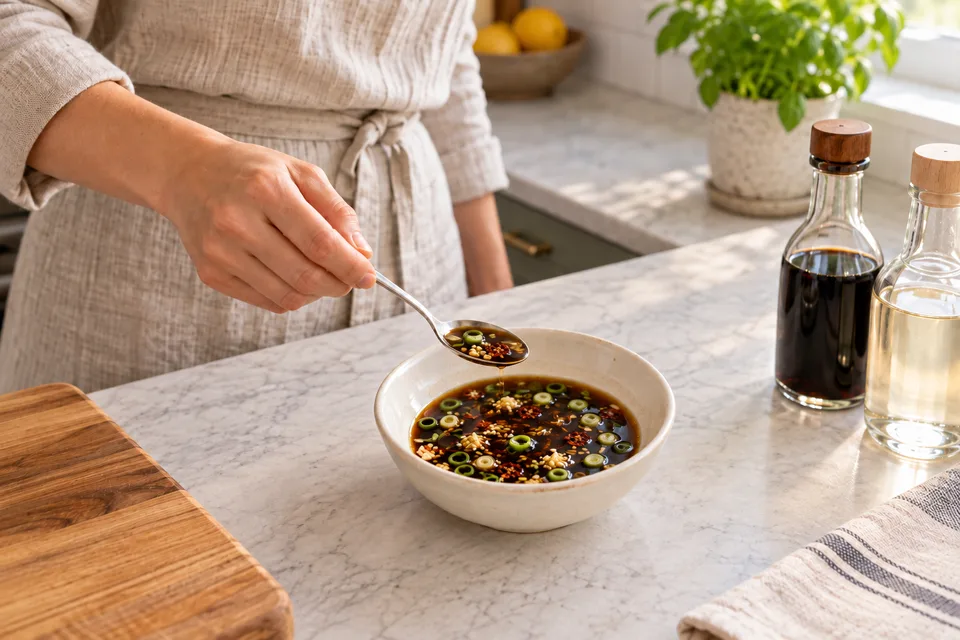
Soy sauce and rice vinegar form the base. Sesame oil, minced garlic, fresh ginger, and scallions are stirred in. Optional chili flakes or chili oil add heat. The sauce requires no cooking and is ready immediately after combining.
Potsticker Sauce recipe
Soy sauce and rice vinegar form the base. Sesame oil, minced garlic, fresh ginger, and scallions are stirred in. Optional chili flakes or chili oil add heat. The sauce requires no cooking and is ready immediately after combining.
Ingredients
- 3 tablespoons soy sauce
- 1 tablespoon rice vinegar
- 1 teaspoon toasted sesame oil
- 1 clove garlic, minced
- 1/2 teaspoon fresh ginger, grated
- 1 tablespoon scallions, thinly sliced
- 1/4 teaspoon red chili flakes
- 1/2 teaspoon sugar
Method
- Combine soy sauce and rice vinegar in a small bowl and stir to mix.
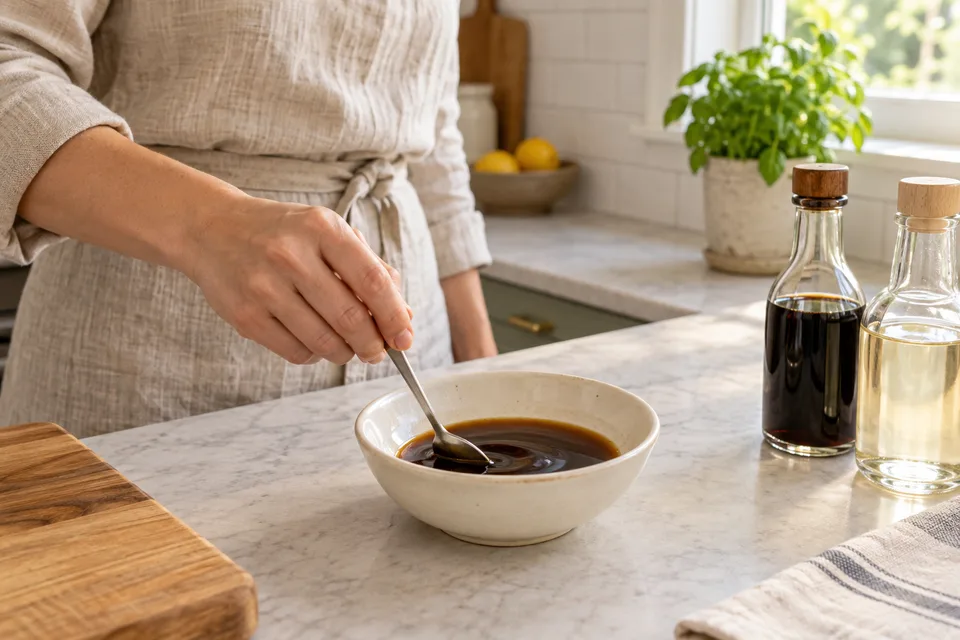
- Add sesame oil, minced garlic, and grated ginger; stir to incorporate.
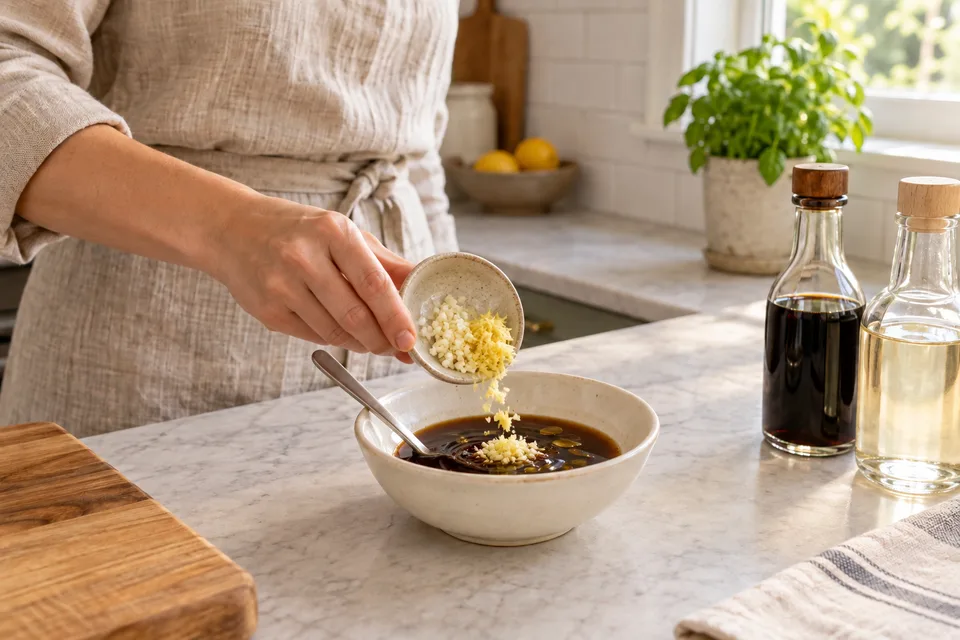
- Stir in sliced scallions, chili flakes, and sugar until sugar dissolves.
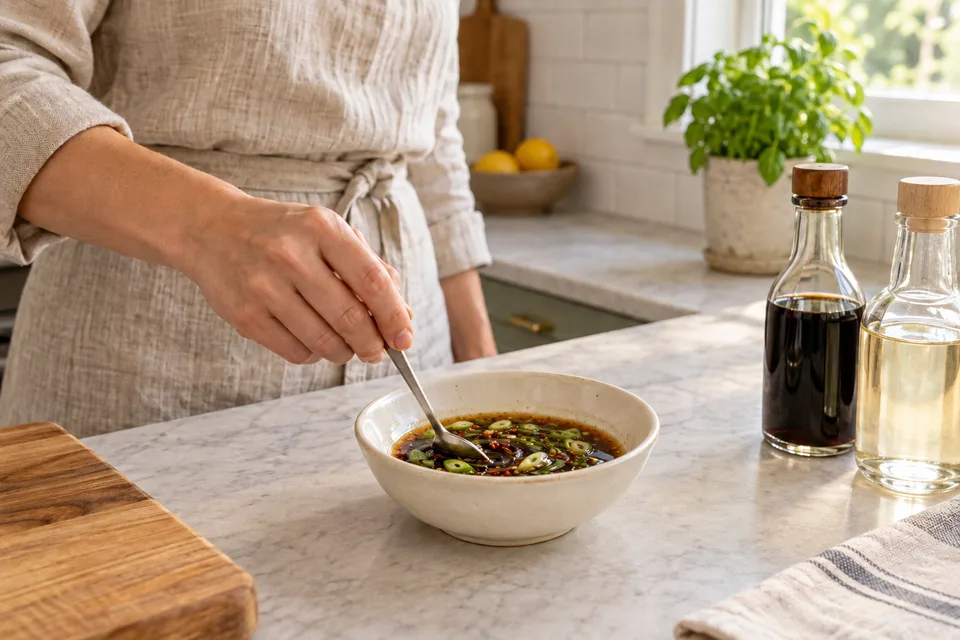
- Taste and adjust vinegar or chili flakes to preference.
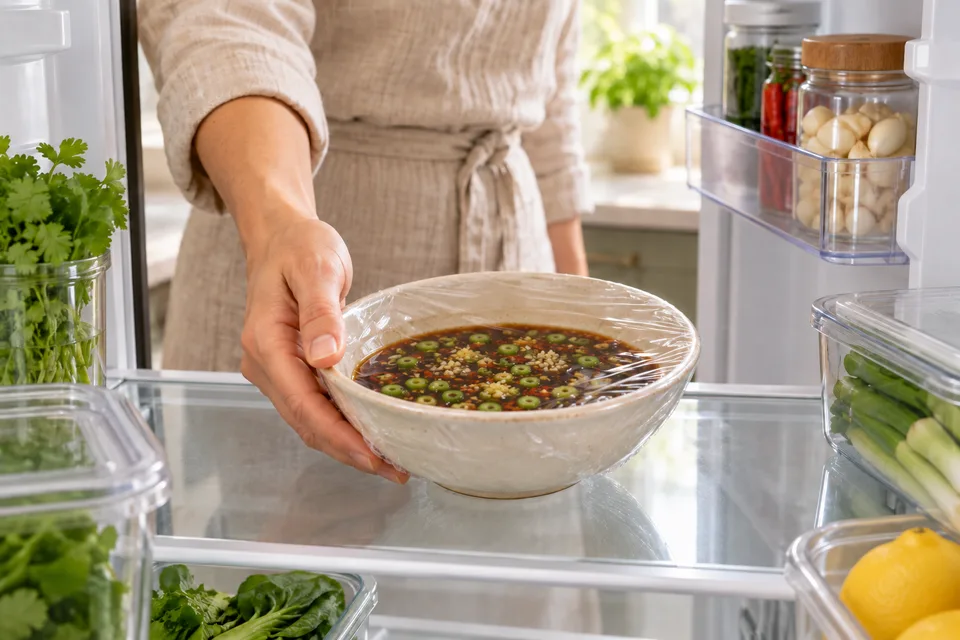
- Serve immediately alongside potstickers, or transfer promptly to shallow covered containers and refrigerate within 2 hours of preparation, or within 1 hour above 90°F (32°C). Keep at 40°F (4°C) or below; do not wait for the sauce to reach room temperature.
Common uses
Practical applications with the role this sauce plays in each dish.
Use 01
Dumpling dipping sauce
Served alongside pan-fried or steamed potstickers as a primary dipping condiment.
Use 02
Steamed dumpling accompaniment
Pairs with har gow, shumai, or other steamed dumplings to add salt and acidity.
Use 03
Spring roll dip
Used as a lighter alternative to sweet-and-sour sauce for fresh or fried spring rolls.
Use 04
Noodle dressing
Tossed with cold sesame noodles or soba to add savory, tangy depth.
Use 05
Stir-fry finishing sauce
Drizzled over finished stir-fried vegetables or tofu just before serving.
Use 06
Lettuce wrap sauce
Spooned into Asian-style lettuce wraps filled with ground meat or mushrooms.
Use 07
Marinade base
Used as a quick marinade for chicken, shrimp, or firm tofu before grilling or sautéing.
Use 08
Rice bowl condiment
Drizzled over steamed rice bowls with vegetables or protein for added umami.
Pairings
Pairing ideas grouped by food role for quick comparison.
Proteins
- pork potstickers
- chicken dumplings
- shrimp dumplings
- tofu
- steamed fish
Vegetables
- bok choy
- edamame
- cucumber slices
- steamed broccoli
- shishito peppers
Carbs
- steamed white rice
- soba noodles
- rice paper wrappers
- wonton wrappers
- cold sesame noodles
Potsticker Sauce substitutes
Starting ratios, best uses, and the main functional tradeoff for each alternative.
| Substitute | Ratio | Best for | Notes |
|---|---|---|---|
| Dumpling sauce (store-bought) | 1:1 | Direct dipping | Closest commercial equivalent; sodium levels vary by brand. |
| Hoisin sauce thinned with rice vinegar | varies | Richer dipping | Sweeter and thicker; dilute with vinegar to approximate potsticker sauce texture. |
| Tamari with rice vinegar | 1:1 | Gluten-free dipping | Tamari is wheat-free; add sesame oil and ginger to match flavor profile. |
| Ponzu sauce | 1:1 | Citrus-forward dipping | More citrusy and lighter; lacks sesame and ginger notes of traditional potsticker sauce. |
| Sweet chili sauce with soy sauce | varies | Sweeter dipping | Adds sweetness and heat; less savory than the soy-vinegar base. |
Storage
Keep time and temperature guidance visible, and discard sauce when spoilage signs appear.
Refrigerator
Transfer promptly to shallow covered containers and refrigerate within 2 hours of preparation, or within 1 hour above 90°F (32°C). Keep at 40°F (4°C) or below; do not wait for the sauce to reach room temperature. A validated refrigerator shelf life for this exact homemade recipe is not established here. Prepare only what you need.
Freezer
A recipe-specific freezer storage duration is not established here. Freezing may change the texture; thaw frozen sauce in the refrigerator.
Signs of spoilage
Discard sauce if time or temperature handling limits have been exceeded, even when it looks and smells normal. Also discard it if mold, an off odor or an unusual texture appears. Do not taste food to determine whether it is safe.
Sources
Public references supporting safety-sensitive claims and editorial decisions on this page.
- Leftovers and Food Safety — USDA FSIS fsis.usda.gov
General prompt refrigeration, shallow-container cooling and time/temperature boundaries; not validation of an exact sauce shelf life.
-
Covered refrigerated storage at 40°F or below; appearance and odor cannot establish safety.
Potsticker Sauce FAQ
Short, self-contained answers to common questions.
What is potsticker sauce made of?
Potsticker sauce typically combines soy sauce, rice vinegar, and sesame oil with aromatics such as garlic, ginger, scallions, and chili flakes. Sugar is sometimes added to balance acidity. Proportions vary by recipe and personal preference.
Is potsticker sauce the same as dumpling sauce?
The two terms are largely interchangeable. Both describe a soy sauce and rice vinegar dipping sauce for dumplings. Some commercial products labeled dumpling sauce may include additional sweeteners or thickeners not found in a basic homemade potsticker sauce.
Is potsticker sauce gluten-free?
Standard soy sauce contains wheat, making most potsticker sauce recipes not gluten-free. Substituting tamari or a certified gluten-free soy sauce produces a comparable gluten-free version. Always verify that all other ingredients, including chili flakes, are also gluten-free.
How long does homemade potsticker sauce last?
A validated refrigerator shelf life for this exact homemade recipe is not established here. Prepare only what you need. Keep covered at 40°F (4°C) or below and refrigerate promptly. Normal appearance or smell does not prove safety. Freezing may change the texture of the fresh aromatics.
Can potsticker sauce be used as a marinade?
Yes. The soy sauce base provides salt and umami, while rice vinegar acts as a mild tenderizer. It works well as a short marinade—30 minutes to 2 hours—for chicken, shrimp, or tofu before grilling, pan-frying, or baking.