American/BBQ · creamy
Remoulade Sauce
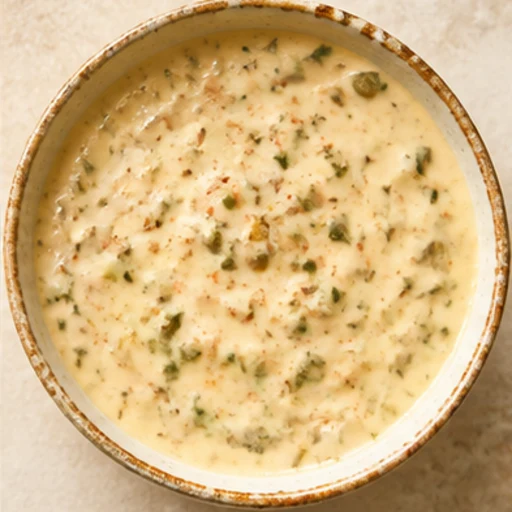
Remoulade sauce is a cold, mayonnaise-based condiment that typically includes mustard, herbs, and seasonings, used as a dipping sauce or spread across French and American Creole cuisines.
Quick facts
Core identity, dietary fit, and storage ranges in a scannable reference table.
| Origin | France, 17th century; adapted into Louisiana Creole cuisine in the United States |
|---|---|
| Base | Mayonnaise |
| Primary ingredients | mayonnaise, Creole or Dijon mustard, hot sauce, paprika, celery, garlic, lemon juice, parsley |
| Flavor profile | tangy, savory, mildly spicy, herbaceous |
| Color | Pale yellow to orange-pink depending on paprika and mustard content |
| Consistency | Thick; creamy and spreadable with visible herb and vegetable flecks |
| Refrigerator shelf life | 7 days |
| Freezer shelf life | Not established |
| Vegan | No |
| Gluten-free | Depends on the recipe or product |
| Dairy-free | Yes |
Dietary note
Recipes and labels vary
Check ingredient labels and individual dietary requirements; homemade and packaged versions can differ.
Browse sauces sharing an ingredient
How it’s made
Mayonnaise is combined with mustard, hot sauce, paprika, minced garlic, celery, and fresh herbs. The mixture is stirred until uniform and refrigerated for at least 30 minutes to allow flavors to meld. No cooking is required.
Remoulade Sauce recipe
Mayonnaise is combined with mustard, hot sauce, paprika, minced garlic, celery, and fresh herbs. The mixture is stirred until uniform and refrigerated for at least 30 minutes to allow flavors to meld. No cooking is required.
Ingredients
- 1 cup mayonnaise
- 2 tablespoons Creole or whole-grain mustard
- 1 teaspoon hot sauce
- 1 teaspoon smoked paprika
- 2 cloves garlic, minced
- 1 stalk celery, finely diced
- 2 tablespoons fresh parsley, chopped
- 1 tablespoon lemon juice
- 1 teaspoon Worcestershire sauce
- 1/4 teaspoon kosher salt
- 1/4 teaspoon black pepper
Method
- Combine mayonnaise and mustard in a medium bowl and whisk until smooth.
- Add hot sauce, smoked paprika, Worcestershire sauce, and lemon juice; stir to incorporate.
- Fold in minced garlic, diced celery, and chopped parsley.
- Season with salt and black pepper; taste and adjust seasoning as needed.
- Cover and refrigerate for at least 30 minutes before serving to allow flavors to develop.
Common uses
Practical applications with the role this sauce plays in each dish.
Use 01
Seafood dipping sauce
Served alongside fried or boiled shrimp, crab cakes, and fried catfish as a classic accompaniment.
Use 02
Po'boy spread
Spread on French bread rolls for Louisiana-style shrimp or oyster po'boy sandwiches.
Use 03
Crab cake topping
Dolloped over pan-seared or baked crab cakes as a finishing sauce.
Use 04
Burger condiment
Used in place of standard mayonnaise on burgers to add tangy, spiced flavor.
Use 05
Vegetable dip
Served as a dipping sauce for raw or roasted vegetables and fried appetizers.
Use 06
Salad dressing base
Thinned with lemon juice or buttermilk and used to dress coleslaw or potato salad.
Use 07
Fried food accompaniment
Paired with fried green tomatoes, hush puppies, or onion rings as a dipping condiment.
Use 08
Grilled fish topping
Spooned over grilled or blackened fish fillets to add creaminess and acidity.
Pairings
Pairing ideas grouped by food role for quick comparison.
Proteins
- shrimp
- crab cakes
- fried catfish
- blackened salmon
- oysters
- chicken tenders
Vegetables
- fried green tomatoes
- celery sticks
- roasted asparagus
- artichokes
Carbs
- French bread
- hush puppies
- waffle fries
- po'boy rolls
- crackers
Remoulade Sauce substitutes
Starting ratios, best uses, and the main functional tradeoff for each alternative.
| Substitute | Ratio | Best for | Notes |
|---|---|---|---|
| Tartar sauce | 1:1 | Seafood dipping | Milder and less spiced; lacks the Creole heat and mustard depth of remoulade. |
| Aioli | 1:1 | Spreading on sandwiches | Garlic-forward and creamy; add mustard and paprika to approximate remoulade flavor. |
| Thousand Island dressing | 1:1 | Burger condiment | Sweeter and less herbaceous; works as a quick substitute in casual applications. |
| Cajun mayo | 1:1 | Dipping fried foods | Simpler preparation; stir Cajun seasoning into plain mayonnaise as a fast alternative. |
| Spicy mustard | varies | Sandwiches and wraps | Thinner and sharper; use less and combine with mayo for closer texture. |
Storage
Keep time and temperature guidance visible, and discard sauce when spoilage signs appear.
Refrigerator
Store in an airtight container in the refrigerator for up to 7 days. Keep away from raw proteins to prevent cross-contamination.
Freezer
Freezing is not recommended. Mayonnaise-based sauces separate upon thawing, resulting in an unacceptable texture.
Signs of spoilage
Discard if the sauce develops an off or sour odor, visible mold, or significant liquid separation.
Remoulade Sauce FAQ
Short, self-contained answers to common questions.
What is the difference between French remoulade and Louisiana remoulade?
French remoulade is typically mayonnaise-based with capers, cornichons, and herbs. Louisiana Creole remoulade is spicier and often includes mustard, paprika, hot sauce, and celery, giving it a more assertive, orange-tinted character.
Is remoulade sauce gluten-free?
It depends on the ingredients used. Mayonnaise and most fresh vegetables are naturally gluten-free, but Worcestershire sauce and some hot sauces may contain gluten. Check all labels when preparing for someone with a gluten sensitivity or celiac disease.
Can remoulade sauce be made ahead of time?
Yes. Remoulade actually improves when made a day in advance, as refrigeration allows the flavors to meld. Store it covered in the refrigerator and use within 7 days.
What does remoulade sauce taste like?
Remoulade is tangy, savory, and mildly spicy with herbaceous notes from parsley and a slight sharpness from mustard and lemon juice. Louisiana-style versions carry more heat and a smoky undertone from paprika.
What foods pair best with remoulade sauce?
Remoulade pairs best with fried or boiled seafood, particularly shrimp and crab cakes. It is also commonly used on po'boy sandwiches, alongside fried green tomatoes, and as a dipping sauce for fried appetizers.