Other/Global · dipping
Sauce for Salmon
Sauce for salmon is a broad category of condiments and pan sauces that complement salmon's rich, fatty flavor through bases such as butter, cream, citrus, herbs, or miso.
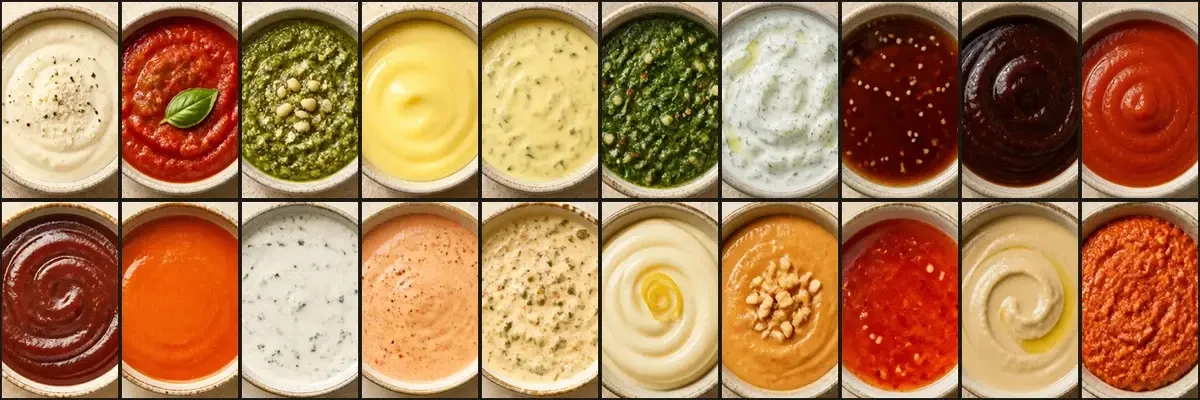
Quick facts
Core identity, dietary fit, and storage ranges in a scannable reference table.
| Origin | No single origin is established |
|---|---|
| Base | varies by formulation — common bases include butter, cream, citrus juice, or miso |
| Primary ingredients | butter or olive oil, lemon juice or zest, garlic, fresh herbs such as dill or parsley, capers or mustard |
| Flavor profile | bright, savory, herbaceous, rich |
| Color | varies — pale yellow to golden for butter-based; white for cream-based; dark for miso or soy-based |
| Consistency | medium; most preparations coat the back of a spoon without being heavy |
| Refrigerator shelf life | 4 days |
| Freezer shelf life | 2 months |
| Vegan | Depends on the recipe or product |
| Gluten-free | Depends on the recipe or product |
| Dairy-free | Depends on the recipe or product |
Dietary note
Recipes and labels vary
Check ingredient labels and individual dietary requirements; homemade and packaged versions can differ.
Browse sauces sharing an ingredient
How it’s made
A classic lemon-butter sauce for salmon is made by sautéing garlic in butter, deglazing with white wine and lemon juice, then reducing briefly. Fresh herbs are stirred in off heat. Cream-based and miso-based variations follow similar reduction methods with their respective bases.
Sauce for Salmon recipe
A classic lemon-butter sauce for salmon is made by sautéing garlic in butter, deglazing with white wine and lemon juice, then reducing briefly. Fresh herbs are stirred in off heat. Cream-based and miso-based variations follow similar reduction methods with their respective bases.
Ingredients
- 4 tablespoons unsalted butter
- 3 cloves garlic, minced
- 1/4 cup dry white wine
- 2 tablespoons fresh lemon juice
- 1 teaspoon lemon zest
- 1 tablespoon capers, drained
- 2 tablespoons fresh dill, chopped
- 1/4 teaspoon kosher salt
- 1/8 teaspoon black pepper
Method
- Melt 1 tablespoon of butter in a small saucepan over medium heat.
- Add garlic and cook, stirring, for 1 minute until fragrant but not browned.
- Pour in white wine and lemon juice; bring to a simmer and cook for 3 minutes until slightly reduced.
- Reduce heat to low and whisk in remaining 3 tablespoons of butter one tablespoon at a time until emulsified.
- Stir in lemon zest, capers, and dill. Season with salt and pepper.
- Remove from heat and spoon over cooked salmon fillets immediately.
Common uses
Practical applications with the role this sauce plays in each dish.
Use 01
Pan sauce
Spooned directly over seared or baked salmon fillets as a finishing sauce.
Use 02
Dipping sauce
Served alongside salmon for dipping at the table, especially with grilled or poached preparations.
Use 03
Poaching liquid finish
Drizzled over salmon that has been poached in court-bouillon or broth.
Use 04
Pasta sauce
Tossed with pasta and flaked cooked salmon for a quick weeknight dinner.
Use 05
Grain bowl dressing
Used to dress salmon over rice, farro, or quinoa bowls.
Use 06
Canapé topping
Dolloped onto smoked or cured salmon bites served as appetizers.
Use 07
Sandwich spread
Spread on bread or rolls for salmon burgers or open-faced sandwiches.
Use 08
Roasting glaze
Brushed onto salmon before or during oven roasting to add moisture and flavor.
Pairings
Pairing ideas grouped by food role for quick comparison.
Proteins
- Atlantic salmon fillet
- sockeye salmon
- king salmon
- trout
- halibut
Vegetables
- asparagus
- roasted broccolini
- sautéed spinach
- green beans
- cucumber
Carbs
- roasted baby potatoes
- steamed white rice
- farro
- egg noodles
- crusty bread
Sauce for Salmon substitutes
Starting ratios, best uses, and the main functional tradeoff for each alternative.
| Substitute | Ratio | Best for | Notes |
|---|---|---|---|
| Dill sauce for salmon | 1:1 | herb-forward applications | Yogurt or sour cream base; tangier and cooler than butter sauces. |
| Hollandaise sauce | 1:1 | rich, brunch-style presentations | Egg-yolk emulsion; richer and more labor-intensive than a simple butter sauce. |
| Miso glaze | varies | roasted or broiled salmon | Umami-forward; reduce quantity as flavor is more concentrated. |
| Pesto | 1:1 | herb-based finishing | Oil-based; adds basil and nut flavor; works well at room temperature. |
| Teriyaki sauce | varies | glazing and grilling | Sweeter and saltier; adjust salt in the dish accordingly. |
Storage
Keep time and temperature guidance visible, and discard sauce when spoilage signs appear.
Refrigerator
Store cooled sauce in an airtight container for up to 4 days. Butter-based sauces will solidify when chilled; reheat gently over low heat, whisking to re-emulsify.
Freezer
Freeze in a sealed container for up to 2 months. Cream-based sauces may separate upon thawing; whisk vigorously while reheating over low heat to restore texture.
Signs of spoilage
Discard if the sauce develops an off or sour odor, visible mold, or an unusual slimy texture.
Sauce for Salmon FAQ
Short, self-contained answers to common questions.
What is the best sauce to serve with salmon?
There is no single best sauce; the choice depends on preparation method and flavor preference. Lemon-butter and dill-based sauces are widely used for baked or pan-seared salmon. Miso glaze suits broiled preparations, while cream sauces pair well with poached salmon.
Can I make a sauce for salmon ahead of time?
Yes. Most salmon sauces can be made up to 4 days ahead and refrigerated in an airtight container. Butter-based sauces should be reheated gently over low heat and whisked to restore their emulsion before serving.
What sauces for salmon are dairy-free?
Miso-soy glaze, teriyaki sauce, chimichurri, and citrus-herb vinaigrettes are common dairy-free options. Always verify individual ingredient labels, as some prepared sauces may contain hidden dairy derivatives.
How do I thicken a sauce for salmon?
Reduce the sauce by simmering uncovered to concentrate it, or whisk in cold butter a tablespoon at a time to build body through emulsification. A small slurry of cornstarch and cold water can also thicken cream-based sauces without altering flavor significantly.
Does lemon juice go in salmon sauce?
Lemon juice is a common ingredient in many salmon sauces because its acidity balances the fish's natural richness. It is used in butter, cream, and herb-based preparations. The amount varies by recipe; start with 1 to 2 tablespoons and adjust to taste.