Other/Global · stir-fry
Soy Sauce Substitute
Soy sauce substitutes are ingredients or blends that replicate soy sauce's salty, savory, umami character in recipes when soy sauce is unavailable, restricted by diet, or avoided due to allergens.
Quick facts
Core identity, dietary fit, and storage ranges in a scannable reference table.
| Origin | No single origin is established |
|---|---|
| Base | Varies by substitute; common bases include coconut sap, liquid aminos, or beef broth |
| Primary ingredients | coconut aminos, tamari, liquid aminos, Worcestershire sauce, fish sauce, miso paste, mushroom broth |
| Flavor profile | salty, savory, umami, slightly sweet depending on substitute |
| Color | Light amber to dark brown depending on substitute used |
| Consistency | thin; most substitutes are pourable liquids similar to soy sauce |
| Refrigerator shelf life | Not established for this recipe |
| Freezer shelf life | Not established for this recipe |
| Vegan | Depends on the recipe or product |
| Gluten-free | Depends on the recipe or product |
| Dairy-free | Depends on the recipe or product |
Dietary note
Recipes and labels vary
Check ingredient labels and individual dietary requirements; homemade and packaged versions can differ.
How it’s made
Most soy sauce substitutes are either single-ingredient products used as direct swaps or simple blends combining a salty base with umami-boosting ingredients. A common DIY blend combines beef or vegetable broth with salt, molasses, and a small amount of vinegar to approximate soy sauce's depth.
Soy Sauce Substitute recipe
Most soy sauce substitutes are either single-ingredient products used as direct swaps or simple blends combining a salty base with umami-boosting ingredients. A common DIY blend combines beef or vegetable broth with salt, molasses, and a small amount of vinegar to approximate soy sauce's depth.
Ingredients
- 1/2 cup low-sodium beef broth or vegetable broth
- 1 tablespoon apple cider vinegar
- 1 teaspoon molasses
- 1 teaspoon fine salt
- 1/4 teaspoon garlic powder
- 1/8 teaspoon ground ginger
Method
- Combine broth, apple cider vinegar, molasses, salt, garlic powder, and ground ginger in a small saucepan.
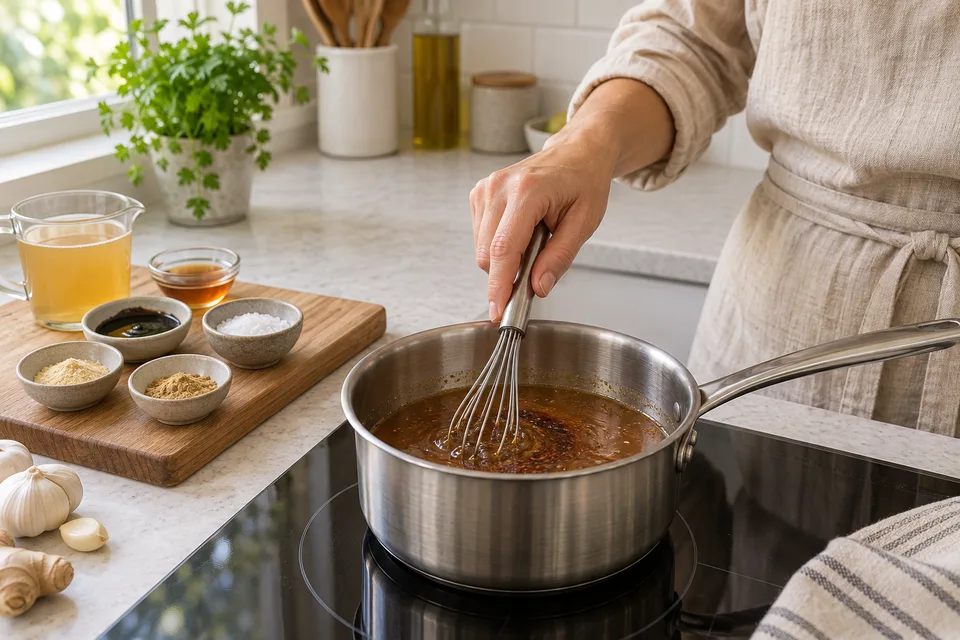
- Bring to a simmer over medium heat, stirring until salt and molasses fully dissolve.
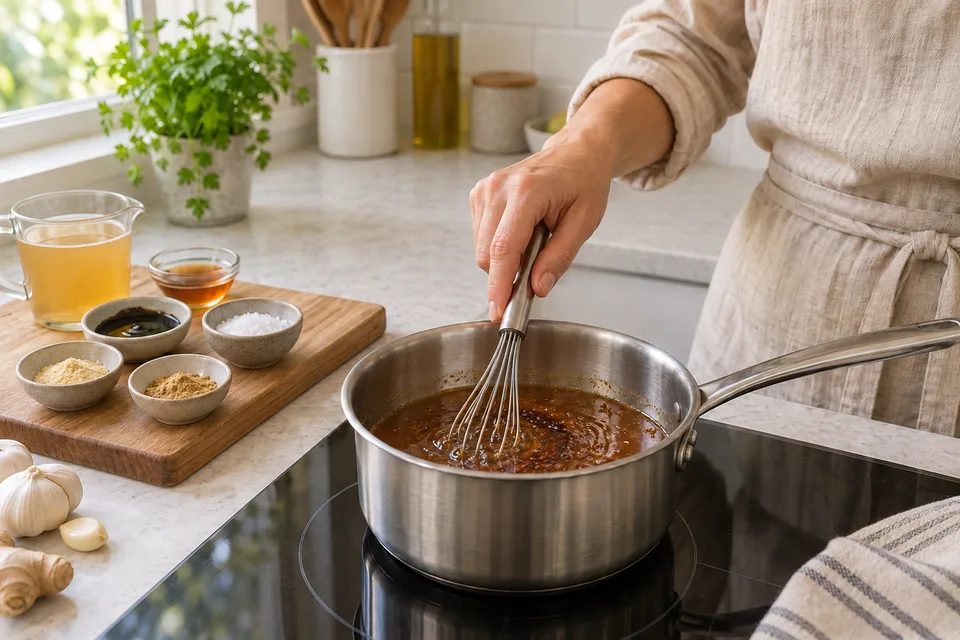
- Reduce heat to low and simmer for 8 to 10 minutes until the liquid reduces slightly and flavors meld.
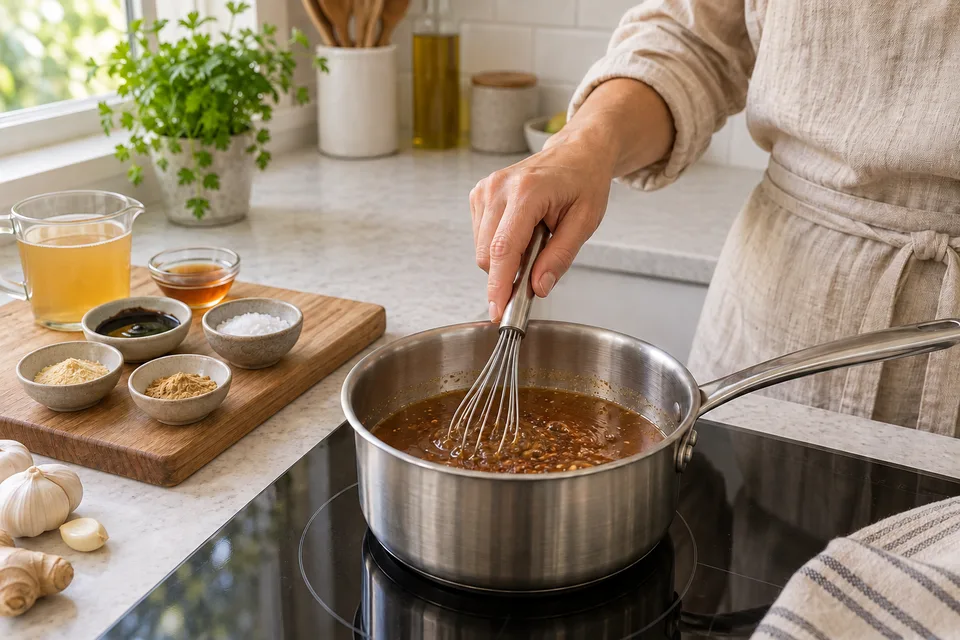
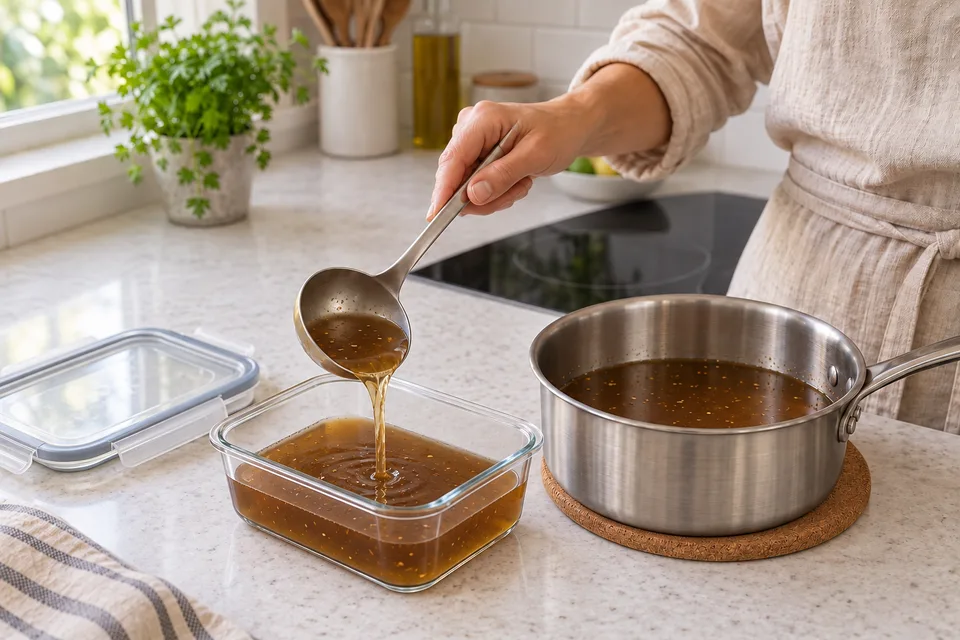
- Remove from heat. Use immediately, or transfer promptly to shallow covered containers and refrigerate within 2 hours of preparation, or within 1 hour above 90°F (32°C). Keep at 40°F (4°C) or below; do not wait for the sauce to reach room temperature.
Common uses
Practical applications with the role this sauce plays in each dish.
Use 01
Stir-fries
Replaces soy sauce in vegetable or protein stir-fries, providing salt and umami without soy.
Use 02
Marinades
Used in meat and tofu marinades to deliver savory depth when soy sauce is not suitable.
Use 03
Dipping sauces
Blended into dipping sauces for dumplings, spring rolls, or sushi as a soy-free alternative.
Use 04
Fried rice
Seasons fried rice dishes, maintaining the characteristic savory color and flavor of the finished dish.
Use 05
Salad dressings
Adds umami and salt to Asian-style vinaigrettes and grain bowl dressings without soy allergens.
Use 06
Soups and broths
Deepens flavor in ramen, noodle soups, and broth-based dishes when soy sauce is restricted.
Use 07
Glazes
Incorporated into glazes for roasted meats or vegetables to provide a caramelized, savory coating.
Use 08
Braising liquids
Added to braising liquids for pork, chicken, or tofu to build umami without traditional soy sauce.
Pairings
Pairing ideas grouped by food role for quick comparison.
Proteins
- chicken thighs
- beef flank steak
- tofu
- shrimp
- pork tenderloin
- salmon
Vegetables
- bok choy
- broccoli
- snap peas
- mushrooms
- bell peppers
- napa cabbage
Carbs
- steamed white rice
- soba noodles
- rice noodles
- fried rice
- udon noodles
Soy Sauce Substitute substitutes
Starting ratios, best uses, and the main functional tradeoff for each alternative.
| Substitute | Ratio | Best for | Notes |
|---|---|---|---|
| Coconut aminos | 1:1 | All-purpose soy sauce replacement | Slightly sweeter and lower in sodium; soy-free and gluten-free. |
| Tamari | 1:1 | Gluten-free cooking | Closest flavor match; check label to confirm gluten-free status. |
| Worcestershire sauce | 1:1 | Marinades and meat dishes | Adds tanginess; not vegan and may contain gluten depending on brand. |
| Fish sauce | varies | Umami-forward savory dishes | Use sparingly; much more pungent and not suitable for vegan diets. |
| Miso paste dissolved in water | varies | Soups, dressings, and marinades | Mix 1 tablespoon miso with 1 tablespoon water per tablespoon of soy sauce. |
| Liquid aminos | 1:1 | General cooking and seasoning | Soy-derived but not fermented; gluten-free with a milder, less salty flavor. |
Storage
Keep time and temperature guidance visible, and discard sauce when spoilage signs appear.
Refrigerator
Transfer promptly to shallow covered containers and refrigerate within 2 hours of preparation, or within 1 hour above 90°F (32°C). Keep at 40°F (4°C) or below; do not wait for the sauce to reach room temperature. A validated refrigerator shelf life for this exact homemade recipe is not established here. Prepare only what you need.
Freezer
A recipe-specific freezer storage duration is not established here. Freezing may change the texture; thaw frozen sauce in the refrigerator.
Signs of spoilage
Discard sauce if time or temperature handling limits have been exceeded, even when it looks and smells normal. Also discard it if mold, an off odor or an unusual texture appears. Do not taste food to determine whether it is safe.
Sources
Public references supporting safety-sensitive claims and editorial decisions on this page.
- Leftovers and Food Safety — USDA FSIS fsis.usda.gov
General prompt refrigeration, shallow-container cooling and time/temperature boundaries; not validation of an exact sauce shelf life.
-
Covered refrigerated storage at 40°F or below; appearance and odor cannot establish safety.
Soy Sauce Substitute FAQ
Short, self-contained answers to common questions.
What is the best soy sauce substitute for people with soy allergies?
Coconut aminos is widely considered the most practical soy-free option. It is made from coconut sap, is gluten-free, and works as a 1:1 swap in most recipes. Fish sauce or a homemade broth-based blend are additional soy-free options, though each has a distinct flavor profile.
Can I use Worcestershire sauce instead of soy sauce?
Yes, Worcestershire sauce can replace soy sauce in a 1:1 ratio in marinades and meat dishes. It adds tanginess and umami but has a more complex flavor. It is not vegan and may contain gluten, so check the label if those factors matter.
Is tamari the same as soy sauce?
Tamari is a Japanese soy sauce variant made with little or no wheat, giving it a richer, less salty flavor than standard soy sauce. Most tamari is gluten-free, but labels should be checked. It substitutes for soy sauce at a 1:1 ratio in nearly all applications.
How does coconut aminos compare to soy sauce in cooking?
Coconut aminos is slightly sweeter and lower in sodium than soy sauce. It works well as a 1:1 substitute in stir-fries, marinades, and dressings. The sweetness is noticeable in some dishes, so a small pinch of salt can help balance the flavor when needed.
Can I make a soy sauce substitute at home without any specialty ingredients?
Yes. A simple blend of beef or vegetable broth, salt, a small amount of molasses, and apple cider vinegar approximates soy sauce's salty, savory depth. The result is less complex than fermented soy sauce but functional in cooked dishes such as stir-fries, soups, and marinades.