Indian · dipping
Tikka Masala Sauce
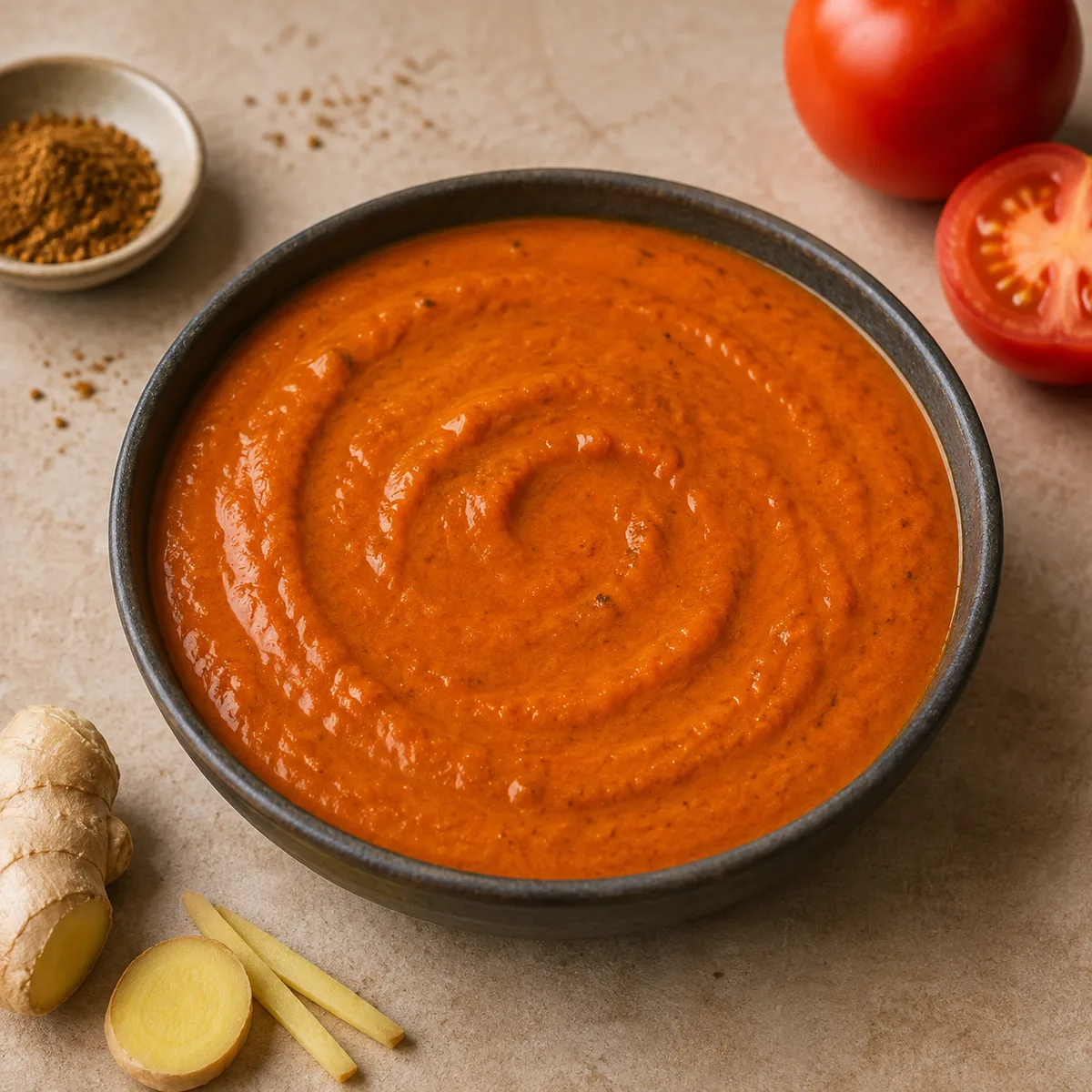
Tikka masala sauce is a creamy, spiced tomato-based sauce used in South Asian cooking that combines aromatic spices, onion, and cream or yogurt to coat grilled or roasted meat and vegetables.
Quick facts
Core identity, dietary fit, and storage ranges in a scannable reference table.
| Origin | South Asia; widely associated with Indian and British-Indian cuisine, 20th century |
|---|---|
| Base | Tomato and cream |
| Primary ingredients | tomatoes, heavy cream or yogurt, onion, garlic, ginger, garam masala, cumin, coriander, turmeric, chili powder, oil or butter |
| Flavor profile | rich, mildly spiced, tangy, creamy |
| Color | Deep orange to reddish-orange |
| Consistency | Medium; smooth and velvety with a coating texture |
| Refrigerator shelf life | Up to 4 days (homemade) |
| Vegan | No |
| Gluten-free | Yes |
| Dairy-free | No |
Dietary note
Recipes and labels vary
Check ingredient labels and individual dietary requirements; homemade and packaged versions can differ.
Browse sauces sharing an ingredient
How it’s made
Onion, garlic, and ginger are sautéed in oil or butter, then whole and ground spices are bloomed. Tomatoes are added and simmered until broken down. The mixture is blended smooth, then cream or yogurt is stirred in and the sauce is simmered to a coating consistency.
Tikka Masala Sauce recipe
Onion, garlic, and ginger are sautéed in oil or butter, then whole and ground spices are bloomed. Tomatoes are added and simmered until broken down. The mixture is blended smooth, then cream or yogurt is stirred in and the sauce is simmered to a coating consistency.
Ingredients
- 2 tablespoons neutral oil or unsalted butter
- 1 medium yellow onion, finely diced
- 4 garlic cloves, minced
- 1 tablespoon fresh ginger, grated
- 1½ teaspoons garam masala
- 1 teaspoon ground cumin
- 1 teaspoon ground coriander
- ½ teaspoon turmeric
- ½ teaspoon chili powder
- 2 tablespoons tomato paste
- 1 can (14.5 oz) crushed tomatoes
- ½ cup heavy cream
- 1 teaspoon, or to taste kosher salt
- ½ teaspoon sugar
Method
- Heat oil or butter in a large skillet over medium heat. Add onion and cook, stirring occasionally, until softened and lightly golden, about 8 minutes.
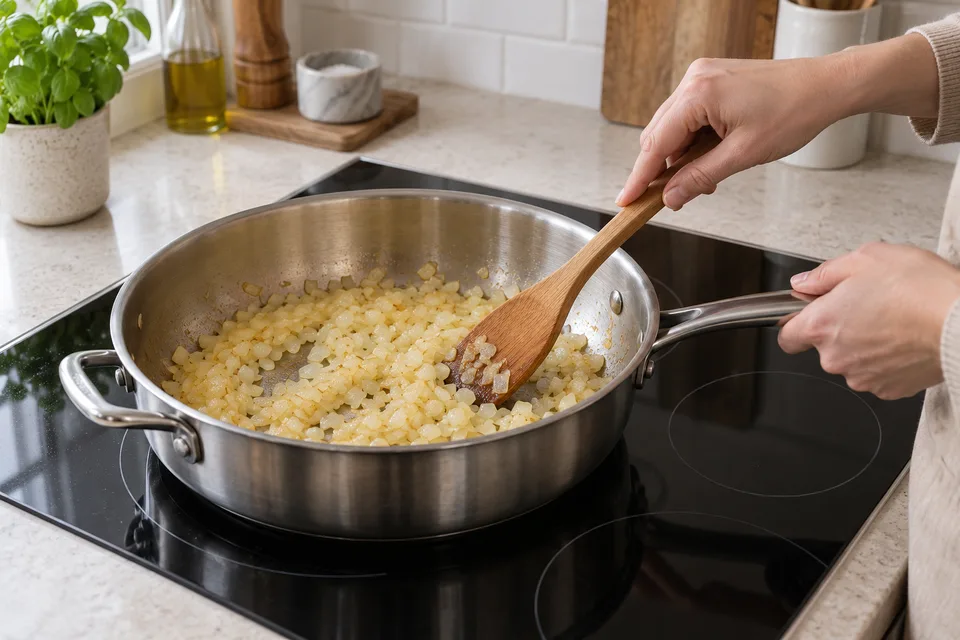
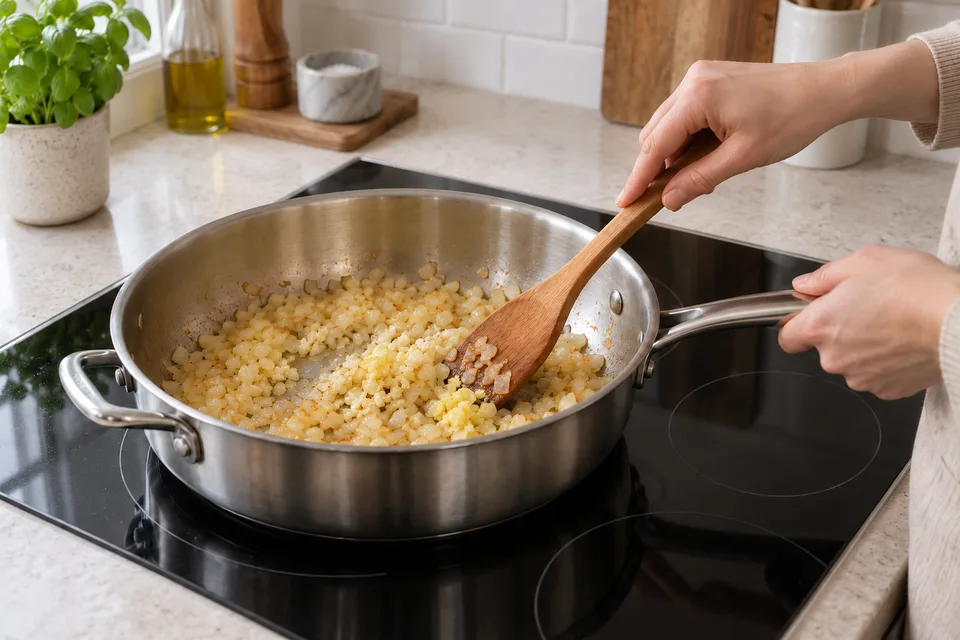
- Add garlic and ginger; cook 1 minute until fragrant.
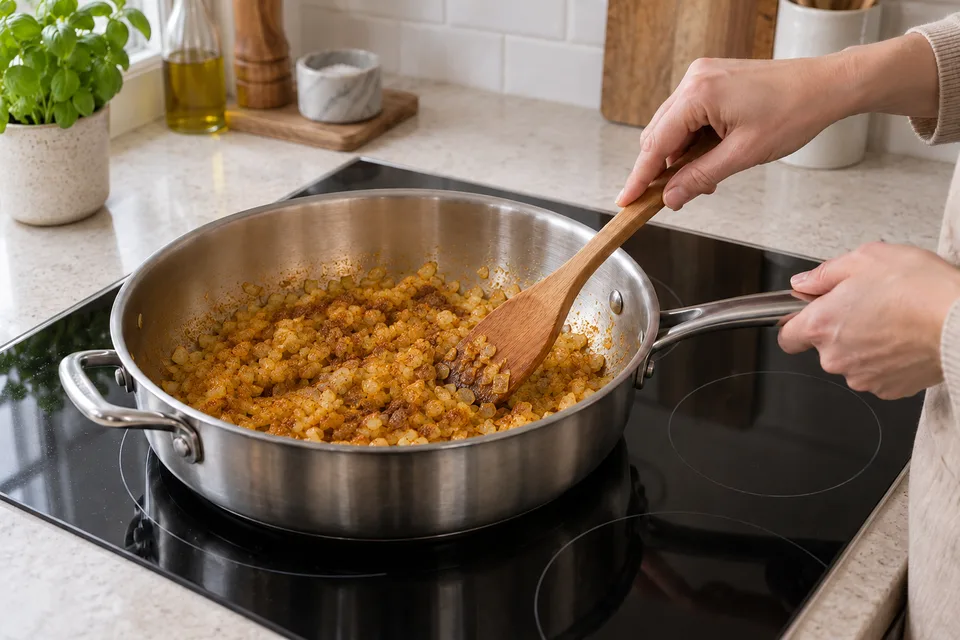
- Stir in garam masala, cumin, coriander, turmeric, and chili powder. Cook 1 minute, stirring constantly, to bloom the spices.
- Add tomato paste and stir to combine with the spice mixture; cook 2 minutes.
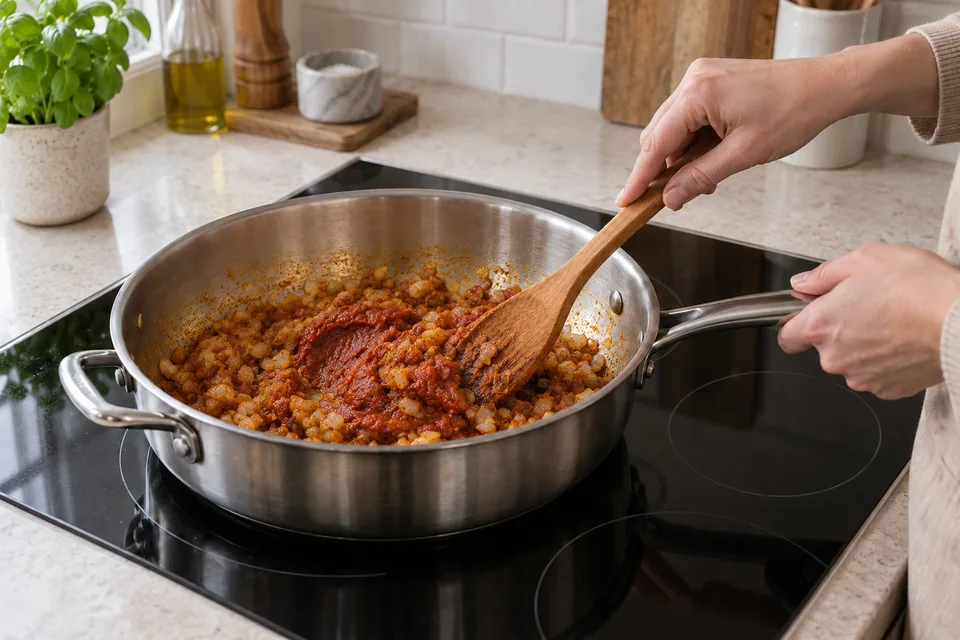
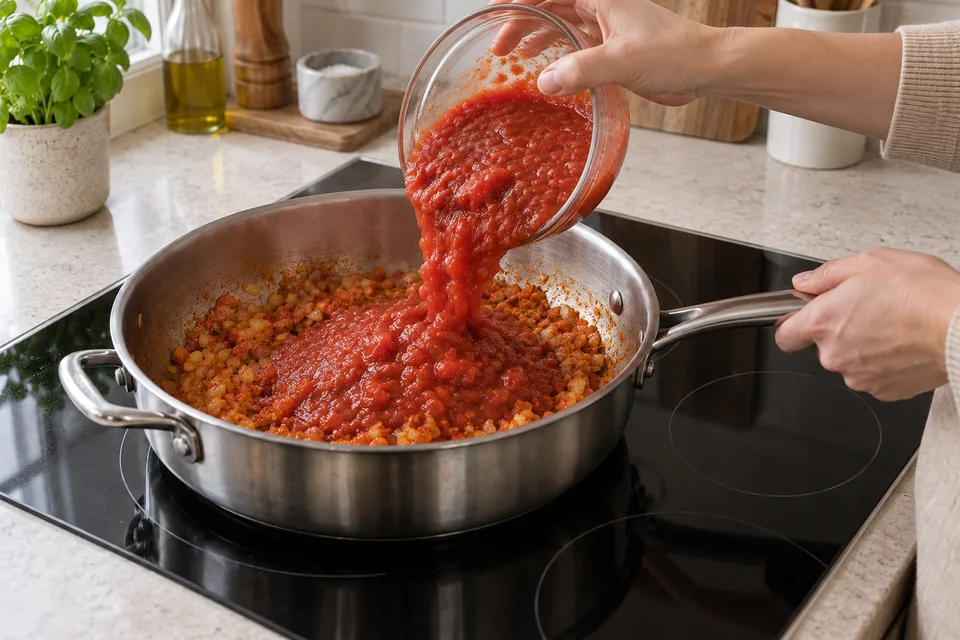
- Pour in crushed tomatoes. Stir well, bring to a simmer, and cook uncovered for 15 minutes until the sauce thickens slightly.
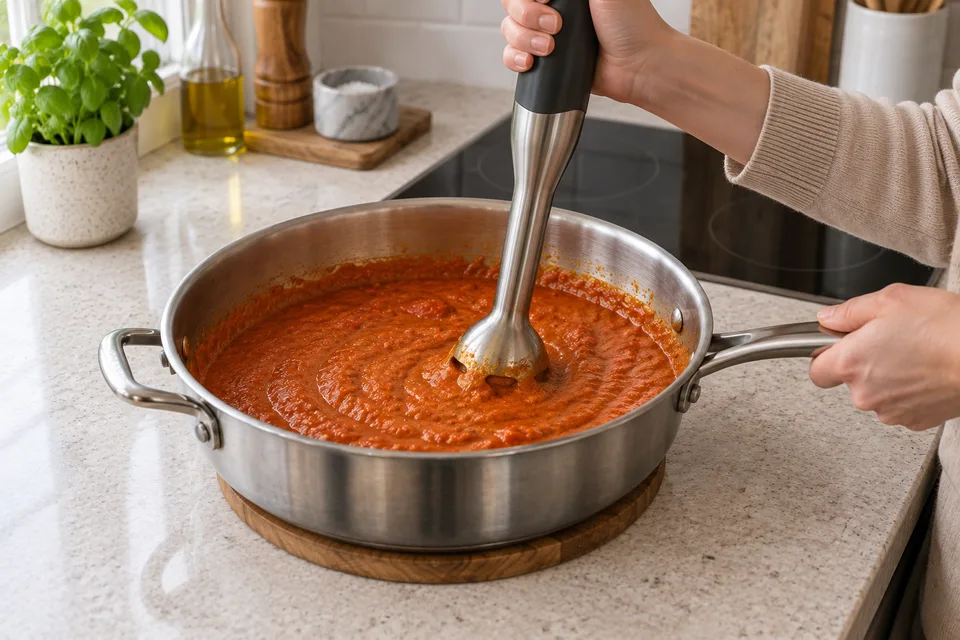
- Remove from heat and blend the sauce until smooth using an immersion blender or countertop blender.
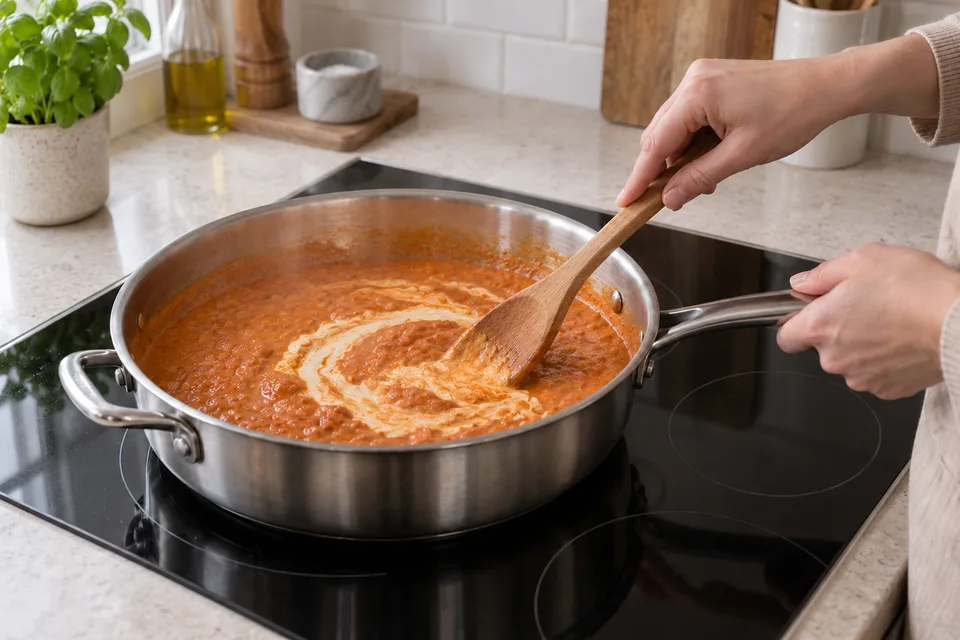
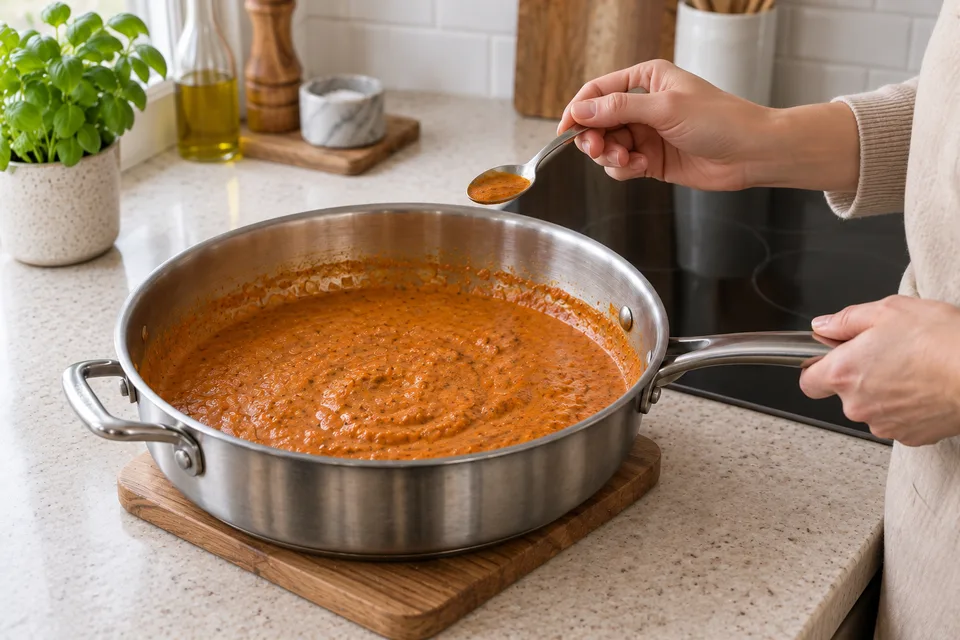
- Return sauce to medium-low heat. Stir in heavy cream, sugar, and salt. Simmer 5 minutes until the sauce coats the back of a spoon.
- Taste and adjust seasoning before serving or adding protein.
Common uses
Practical applications with the role this sauce plays in each dish.
Use 01
Chicken tikka masala
Coats grilled or roasted chicken pieces as the defining sauce in this classic dish.
Use 02
Vegetable curry
Serves as a base for simmering cauliflower, chickpeas, paneer, or mixed vegetables.
Use 03
Protein simmer sauce
Used to finish shrimp, lamb, or tofu by simmering directly in the sauce.
Use 04
Flatbread dipping sauce
Served alongside naan or roti as a warm dipping sauce.
Use 05
Grain bowl sauce
Spooned over basmati rice, quinoa, or farro bowls with roasted vegetables.
Use 06
Pizza base
Spread as a sauce on flatbread or pizza dough in place of tomato sauce.
Use 07
Pasta sauce
Tossed with penne or rigatoni as a fusion alternative to tomato-cream sauces.
Use 08
Stuffed bread filling sauce
Used as a saucy filling component in wraps, stuffed naan, or savory pastries.
Pairings
Pairing ideas grouped by food role for quick comparison.
Proteins
- boneless chicken thighs
- paneer
- lamb
- shrimp
- chickpeas
- tofu
Vegetables
- cauliflower
- spinach
- bell peppers
- peas
- eggplant
- zucchini
Carbs
- basmati rice
- naan
- roti
- pita bread
- penne pasta
- quinoa
Tikka Masala Sauce substitutes
Starting ratios, best uses, and the main functional tradeoff for each alternative.
| Substitute | Ratio | Best for | Notes |
|---|---|---|---|
| Butter chicken sauce | 1:1 | Chicken dishes | Milder and slightly sweeter; lacks the charred-spice depth of tikka masala. |
| Curry sauce | 1:1 | Vegetable and protein simmering | Thinner and less creamy; adjust spices to approximate tikka masala flavor. |
| Tomato cream sauce with garam masala | varies | Pasta or grain bowls | Add 1 teaspoon garam masala per cup of tomato cream sauce as a quick substitute. |
| Jarred tikka masala simmer sauce | 1:1 | All applications | Convenient but sodium and sweetness levels vary widely by brand. |
| Coconut milk curry sauce | 1:1 | Dairy-free preparations | Replaces cream with coconut milk; flavor shifts toward Thai-style curry. |
Storage
Keep time and temperature guidance visible, and discard sauce when spoilage signs appear.
Refrigerator
Transfer the sauce to a shallow covered container and refrigerate within 2 hours of preparation, or within 1 hour when the temperature is above 90°F (32°C). Keep at 40°F (4°C) or below and use within 4 days.
Signs of spoilage
Discard the sauce when its storage time or temperature limit has been exceeded, even if it looks and smells normal. Also discard it if mold, an off odor, or an unusual texture develops. Do not taste food to determine whether it is safe.
Sources
Public references supporting safety-sensitive claims and editorial decisions on this page.
- Leftovers and Food Safety — USDA FSIS fsis.usda.gov
USDA FSIS advises refrigerating perishable leftovers promptly at 40°F or below, using them within 3 to 4 days, and freezing them for 3 to 4 months.
-
FDA advises the two-hour refrigeration rule, a refrigerator temperature at or below 40°F, and notes that unsafe food may still look and smell normal.
Tikka Masala Sauce FAQ
Short, self-contained answers to common questions.
What is tikka masala sauce made of?
Tikka masala sauce is made from tomatoes, heavy cream or yogurt, onion, garlic, ginger, and a blend of spices including garam masala, cumin, coriander, turmeric, and chili powder. The ingredients are simmered and blended into a smooth, creamy sauce.
Is tikka masala sauce gluten-free?
The base preparation of tikka masala sauce is naturally gluten-free, as it relies on tomatoes, cream, and spices. However, some jarred or restaurant versions may contain thickeners or additives with gluten. Always check product labels when using a packaged sauce.
Can tikka masala sauce be made dairy-free?
Yes. Substitute full-fat coconut milk or a plain, unsweetened dairy-free yogurt for the heavy cream. The flavor will shift slightly toward a coconut note, but the sauce will retain a creamy texture and similar spice profile.
How do you thicken tikka masala sauce?
Simmer the sauce uncovered over medium-low heat to reduce excess liquid. Adding tomato paste early in cooking also builds body. A small amount of cashew cream or additional heavy cream stirred in at the end can further thicken and enrich the sauce.
What is the difference between tikka masala sauce and butter chicken sauce?
Both are creamy tomato-based sauces with similar spices, but butter chicken sauce is generally milder, sweeter, and richer in butter. Tikka masala sauce tends to have a more pronounced spice depth and a slightly tangier tomato character. The two are often used interchangeably.