Other/Global · dipping
Amatriciana Sauce
Amatriciana sauce is an Italian tomato-based pasta sauce from Amatrice that combines guanciale, San Marzano tomatoes, Pecorino Romano, and dried chili flakes into a savory, lightly spicy condiment.
Quick facts
Core identity, dietary fit, and storage ranges in a scannable reference table.
| Origin | Amatrice, Lazio, Italy; documented in its current tomato form from the 19th century |
|---|---|
| Base | San Marzano or plum tomatoes |
| Primary ingredients | guanciale, crushed tomatoes, Pecorino Romano, dried chili flakes, dry white wine, black pepper |
| Flavor profile | savory, smoky, tangy, mildly spicy |
| Color | deep red-orange |
| Consistency | medium; chunky with rendered fat and soft tomato pieces |
| Refrigerator shelf life | 5 days |
| Freezer shelf life | 3 months |
| Vegan | No |
| Gluten-free | Yes |
| Dairy-free | No |
Dietary note
Recipes and labels vary
Check ingredient labels and individual dietary requirements; homemade and packaged versions can differ.
Browse sauces sharing an ingredient
How it’s made
Guanciale is rendered in a pan until crisp, then briefly deglazed with white wine. Chili flakes are added, followed by crushed tomatoes. The sauce simmers until thickened, then finished with grated Pecorino Romano before tossing with pasta.
Amatriciana Sauce recipe
Guanciale is rendered in a pan until crisp, then briefly deglazed with white wine. Chili flakes are added, followed by crushed tomatoes. The sauce simmers until thickened, then finished with grated Pecorino Romano before tossing with pasta.
Ingredients
- 4 oz guanciale, cut into small strips
- 14 oz (one 400 g can) crushed San Marzano tomatoes
- 2 tablespoons dry white wine
- 1/2 teaspoon dried chili flakes
- 1/4 cup Pecorino Romano, finely grated
- 1/4 teaspoon black pepper, freshly ground
- 1 tablespoon extra-virgin olive oil
Method
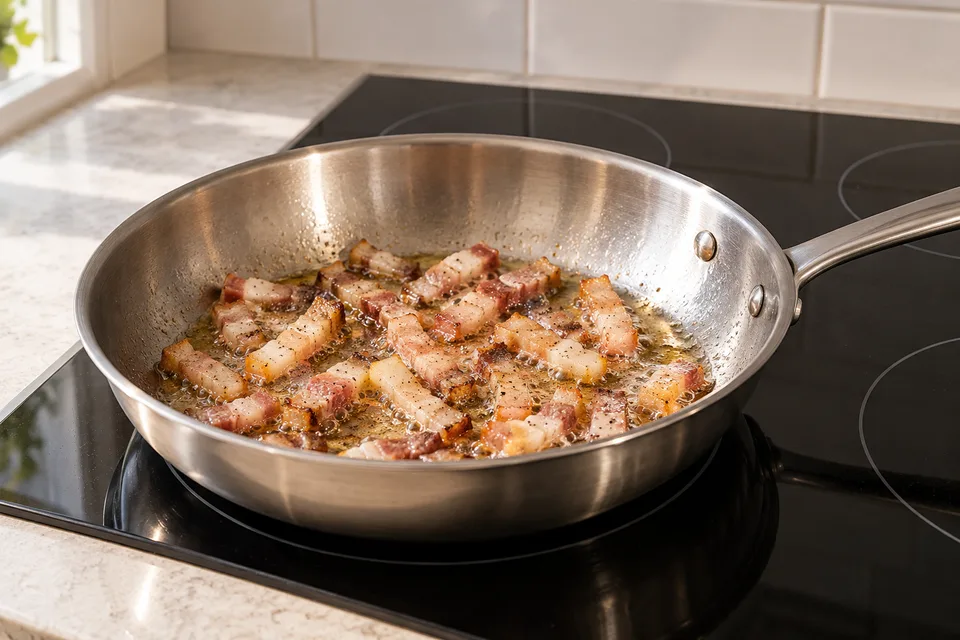
- Heat olive oil in a wide skillet over medium heat. Add guanciale strips and cook, stirring occasionally, until the fat renders and the edges turn golden, about 6 to 8 minutes.
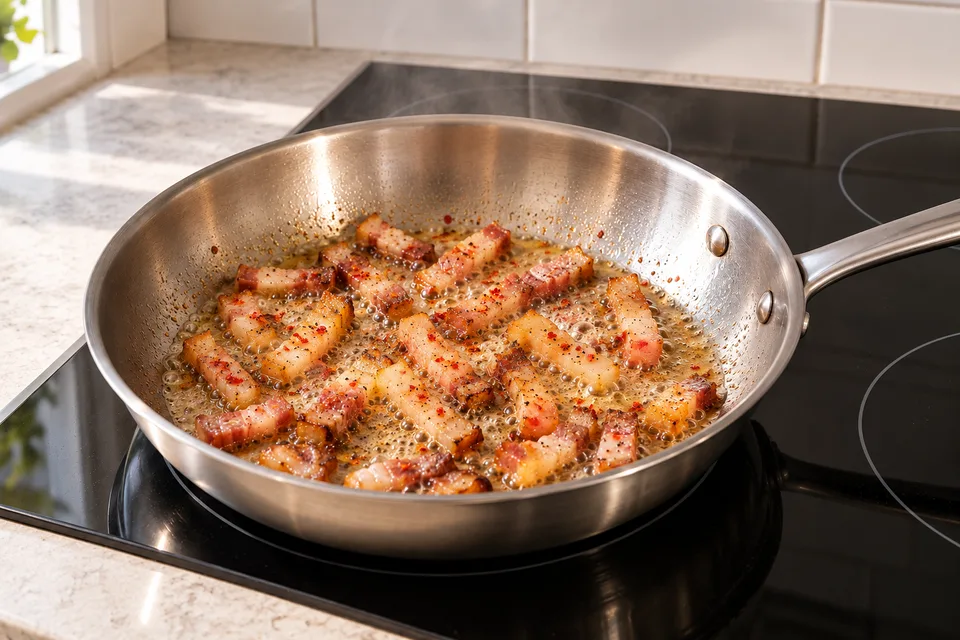
- Add chili flakes and stir for 30 seconds. Pour in white wine and let it reduce by half, about 1 minute.
- Add crushed tomatoes and stir to combine. Season with black pepper.
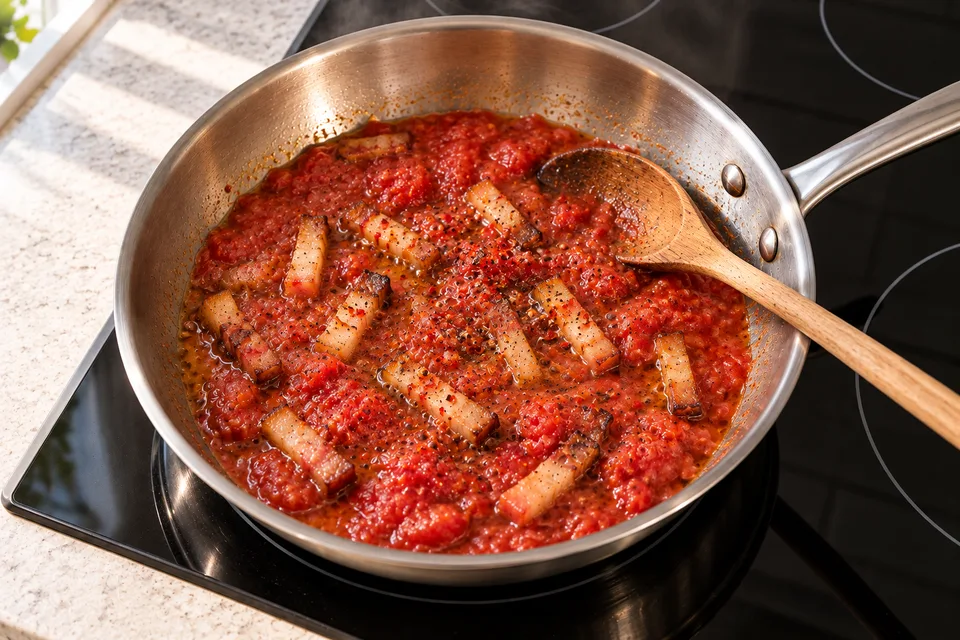
- Simmer uncovered over medium-low heat, stirring occasionally, until the sauce thickens and the fat pools slightly on the surface, about 15 minutes.
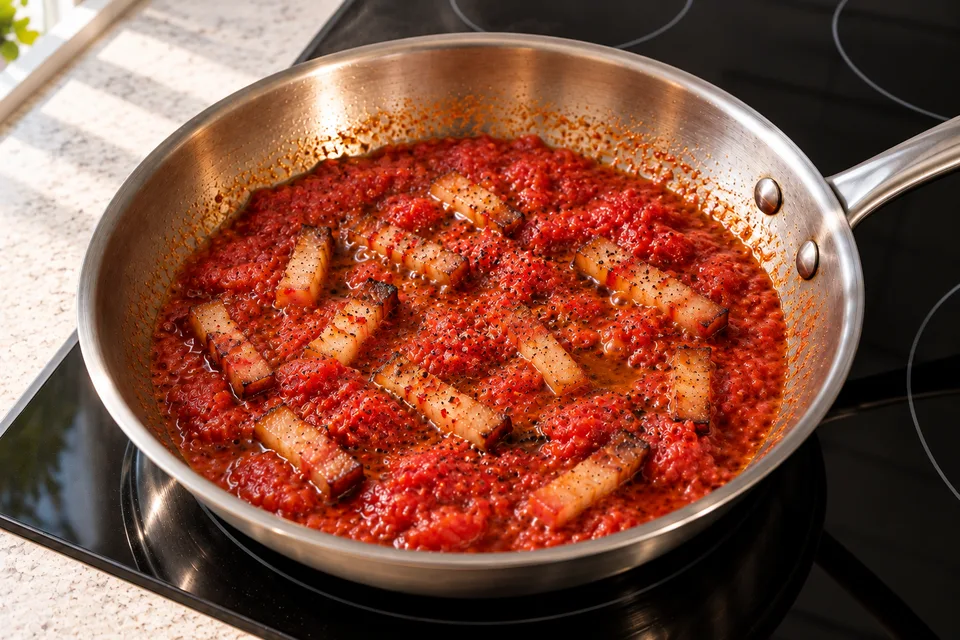
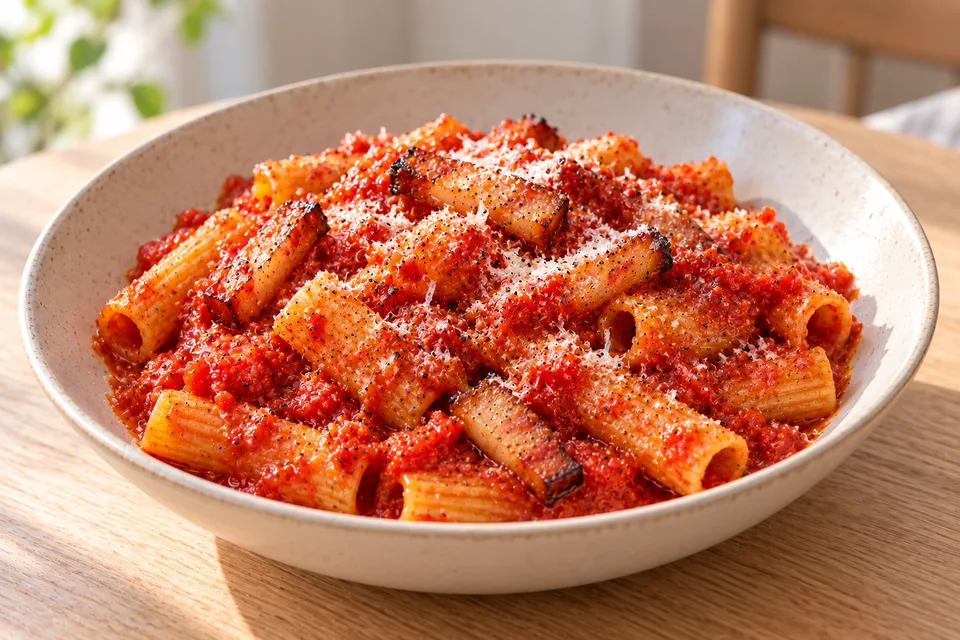
- Remove from heat. Stir in half the Pecorino Romano. Toss with cooked pasta and serve topped with remaining cheese.
Common uses
Practical applications with the role this sauce plays in each dish.
Use 01
Pasta sauce
Traditionally served with bucatini or rigatoni; the sauce coats tubular pasta well.
Use 02
Pizza topping
Spread over pizza dough in place of plain tomato sauce for a smoky, savory base.
Use 03
Baked pasta
Used as the sauce layer in baked rigatoni or pasta al forno preparations.
Use 04
Polenta topping
Spooned over soft polenta as a hearty main course alternative to pasta.
Use 05
Gnocchi sauce
Tossed with potato gnocchi for a Roman-style variation on the classic preparation.
Use 06
Stuffed pepper filling base
Mixed with cooked rice or grains as a flavorful filling for roasted bell peppers.
Use 07
Shakshuka-style eggs
Used as a spiced tomato base in which eggs are poached for a savory brunch dish.
Pairings
Pairing ideas grouped by food role for quick comparison.
Proteins
- guanciale
- pancetta
- Italian sausage
- poached eggs
Vegetables
- roasted bell peppers
- sautéed zucchini
- wilted spinach
- charred broccoli rabe
Carbs
- bucatini
- rigatoni
- potato gnocchi
- soft polenta
- crusty sourdough bread
Amatriciana Sauce substitutes
Starting ratios, best uses, and the main functional tradeoff for each alternative.
| Substitute | Ratio | Best for | Notes |
|---|---|---|---|
| Pancetta | 1:1 | Replacing guanciale | Less fatty and milder than guanciale; the sauce will be slightly leaner. |
| Bacon | 1:1 | Replacing guanciale when cured pork is unavailable | Smoked flavor differs from guanciale; use unsmoked if possible. |
| Arrabbiata sauce | 1:1 | Tomato-chili base without cured pork | Omits guanciale entirely; suitable for a meatless version. |
| Parmigiano-Reggiano | 1:1 | Replacing Pecorino Romano | Milder and less salty than Pecorino; adjust seasoning accordingly. |
| Canned diced tomatoes | 1:1 | Replacing San Marzano crushed tomatoes | Crush by hand before adding; texture will be slightly chunkier. |
Storage
Keep time and temperature guidance visible, and discard sauce when spoilage signs appear.
Refrigerator
Cool completely and transfer to an airtight container. Refrigerate for up to 5 days. Reheat gently on the stovetop over low heat, adding a splash of water if needed.
Freezer
Freeze in airtight containers or zip-top bags for up to 3 months. Thaw overnight in the refrigerator before reheating. Cheese is best added fresh after reheating.
Signs of spoilage
Discard if the sauce develops mold, an off or sour odor, or an unusual slimy texture.
Amatriciana Sauce FAQ
Short, self-contained answers to common questions.
What is the difference between Amatriciana and Arrabbiata sauce?
Amatriciana contains guanciale and Pecorino Romano in addition to tomatoes and chili flakes, giving it a savory, smoky depth. Arrabbiata is a simpler sauce of tomatoes, garlic, and chili flakes with no cured pork or cheese, making it vegan-friendly.
Can I substitute pancetta for guanciale in Amatriciana?
Yes. Pancetta is the most common substitute. It is leaner and milder than guanciale, so the sauce will have slightly less richness. Avoid heavily smoked bacon, which can overpower the tomato flavor.
Is Amatriciana sauce gluten-free?
The sauce itself contains no gluten-bearing ingredients. However, it is traditionally served with pasta, which contains gluten. Use certified gluten-free pasta to keep the full dish gluten-free. Always verify that packaged guanciale or canned tomatoes carry no gluten-containing additives.
What pasta shape is traditionally used with Amatriciana?
Bucatini is the most traditional pairing in Rome, while rigatoni is preferred in Amatrice itself. Both are tubular shapes that hold the chunky, oil-rich sauce effectively. Spaghetti is also widely used.
Does authentic Amatriciana sauce include onion or garlic?
Traditional recipes from Amatrice do not include onion or garlic. The savory base comes entirely from rendered guanciale. Many home cooks add onion or garlic, but purists and the registered Italian recipe consider them non-traditional additions.