Other/Global · creamy
Cheese Sauce
Cheese sauce is a cooked, creamy sauce that combines melted cheese with a dairy liquid base, used as a topping, dip, or cooking component across many cuisines.
Quick facts
Core identity, dietary fit, and storage ranges in a scannable reference table.
| Origin | No single origin is established |
|---|---|
| Base | Cheese and dairy liquid |
| Primary ingredients | cheese, milk or cream, butter, all-purpose flour |
| Flavor profile | rich, savory, creamy, tangy |
| Color | Pale yellow to deep orange, depending on cheese variety |
| Consistency | Medium; pourable when warm, thickens as it cools |
| Refrigerator shelf life | Not established for this recipe |
| Freezer shelf life | Not established for this recipe |
| Vegan | No |
| Gluten-free | Depends on the recipe or product |
| Dairy-free | No |
Dietary note
Recipes and labels vary
Check ingredient labels and individual dietary requirements; homemade and packaged versions can differ.
Browse sauces sharing an ingredient
How it’s made
Butter is melted and whisked with flour to form a roux, then warm milk is added gradually to create a béchamel. Shredded cheese is stirred in off heat until fully melted. Seasoning is adjusted before serving.
Cheese Sauce recipe
Butter is melted and whisked with flour to form a roux, then warm milk is added gradually to create a béchamel. Shredded cheese is stirred in off heat until fully melted. Seasoning is adjusted before serving.
Ingredients
- 2 tablespoons unsalted butter
- 2 tablespoons all-purpose flour
- 1 cup whole milk
- 1 cup (about 4 oz) shredded sharp cheddar cheese
- 1/4 teaspoon kosher salt
- 1/8 teaspoon ground black pepper
- 1/4 teaspoon dry mustard powder
Method
- Melt butter in a small saucepan over medium heat.
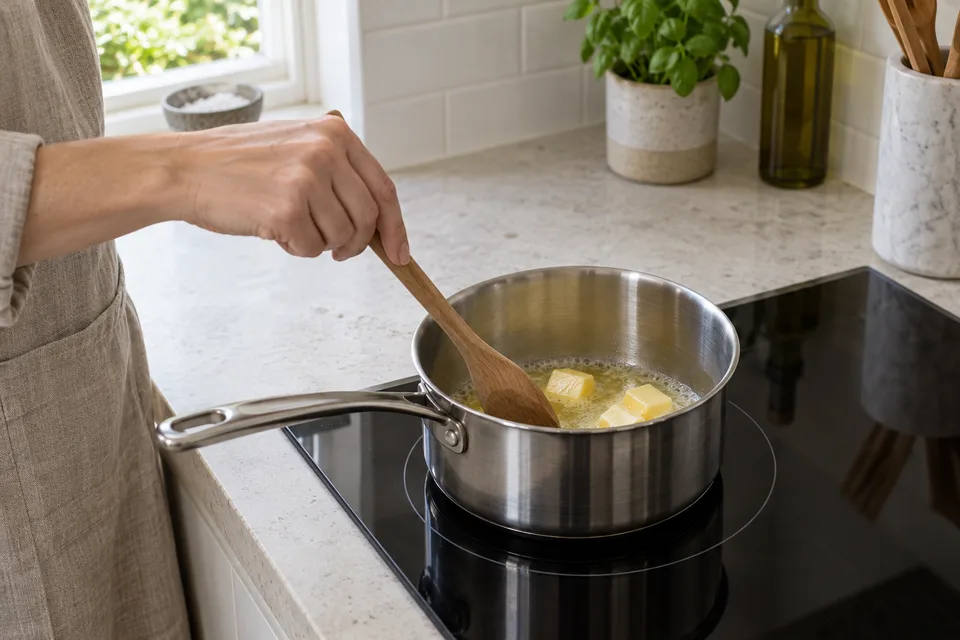
- Whisk in flour and cook, stirring constantly, for 1 to 2 minutes until the mixture turns pale golden.
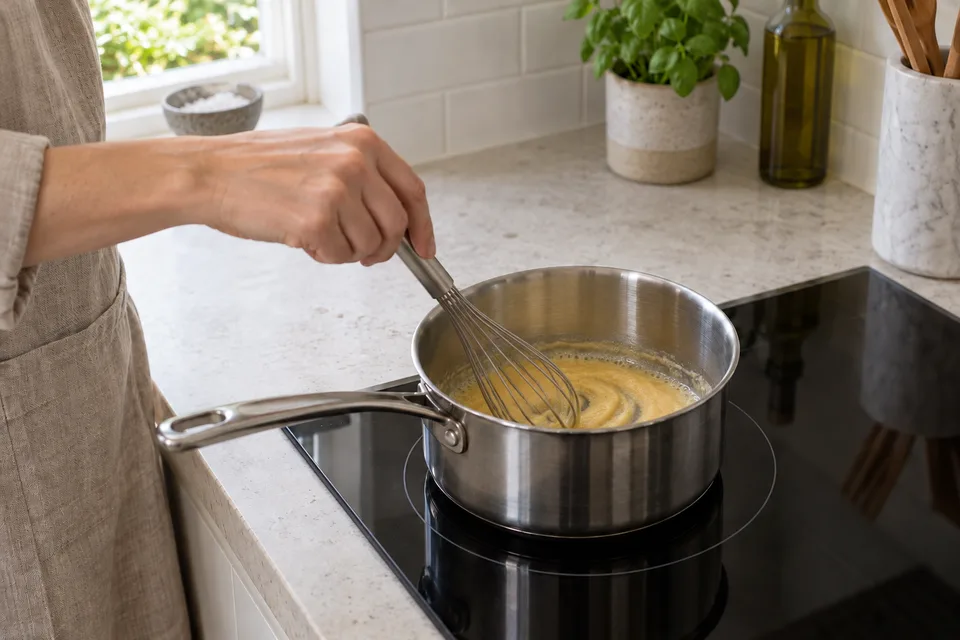
- Gradually pour in milk while whisking to prevent lumps, then cook over medium heat until the sauce thickens, about 5 to 7 minutes.
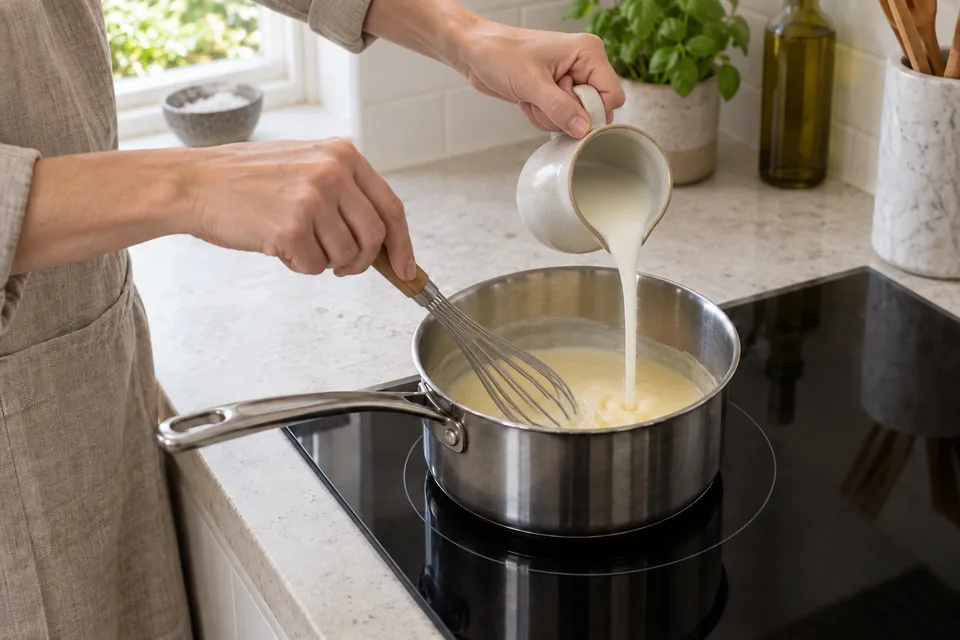
- Remove the pan from heat and stir in shredded cheddar, a handful at a time, until fully melted and smooth.

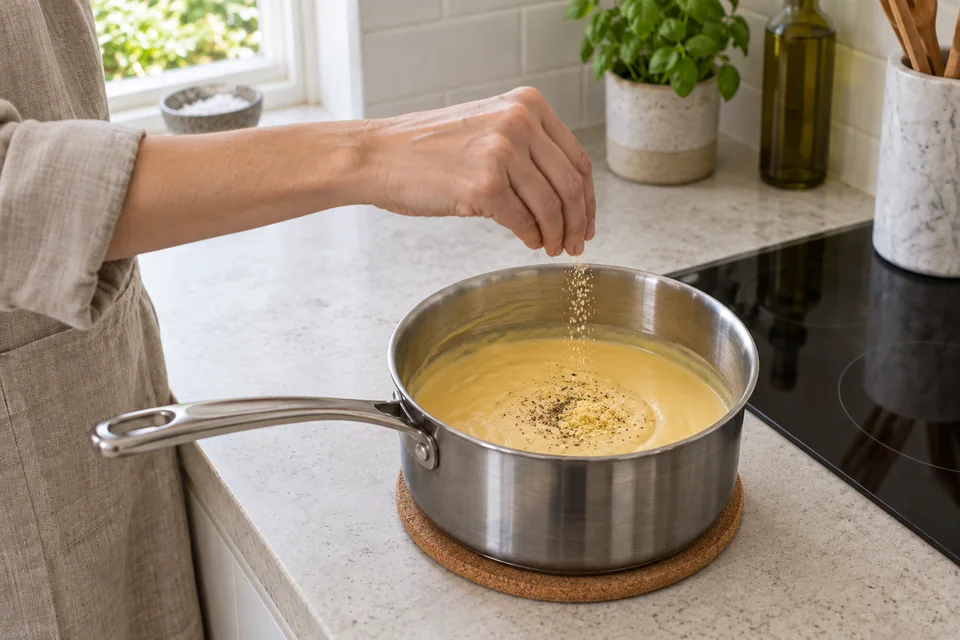
- Season with salt, pepper, and dry mustard powder, then serve immediately or keep warm over low heat.
Common uses
Practical applications with the role this sauce plays in each dish.
Use 01
Pasta topping
Poured over cooked pasta as the base for macaroni and cheese or similar baked dishes.
Use 02
Vegetable dip or topping
Served alongside or drizzled over steamed broccoli, cauliflower, or roasted vegetables.
Use 03
Nacho topping
Used as a warm dipping sauce or poured over tortilla chips with toppings.
Use 04
Burger and sandwich condiment
Spread or poured onto burgers, cheesesteaks, or hot sandwiches in place of sliced cheese.
Use 05
Baked potato topping
Spooned over baked or roasted potatoes as a rich, savory finishing sauce.
Use 06
Casserole component
Incorporated into baked casseroles such as scalloped potatoes or vegetable gratins.
Use 07
Hot dog or pretzel dip
Served as a warm dipping sauce for soft pretzels, hot dogs, or corn dogs.
Use 08
Soup base
Thinned with additional broth or milk to form the base of broccoli cheddar or potato soup.
Pairings
Pairing ideas grouped by food role for quick comparison.
Proteins
- grilled chicken
- beef burger patty
- hot dogs
- crab or lobster
- bacon
Vegetables
- broccoli
- cauliflower
- roasted potatoes
- asparagus
- jalapeños
Carbs
- elbow macaroni
- tortilla chips
- soft pretzels
- baked potatoes
- crusty bread
Cheese Sauce substitutes
Starting ratios, best uses, and the main functional tradeoff for each alternative.
| Substitute | Ratio | Best for | Notes |
|---|---|---|---|
| Nacho cheese sauce | 1:1 | Dipping and topping | More processed flavor; works well for chips and casual applications. |
| Velveeta melted with milk | 1:1 | Smooth, stable sauce | Very smooth and heat-stable; milder flavor than sharp cheddar versions. |
| Cream cheese thinned with milk | varies | Pasta and casseroles | Tangier and denser; whisk in milk gradually to reach desired consistency. |
| Béchamel with Parmesan | 1:1 | Pasta and gratins | Lighter flavor; substitute Parmesan for a nuttier, less sharp profile. |
| Cashew cream sauce with nutritional yeast | 1:1 | Vegan applications | Dairy-free alternative; nutritional yeast provides a savory, cheese-like flavor. |
Storage
Keep time and temperature guidance visible, and discard sauce when spoilage signs appear.
Refrigerator
Transfer promptly to shallow covered containers and refrigerate within 2 hours of preparation, or within 1 hour above 90°F (32°C). Keep at 40°F (4°C) or below; do not wait for the sauce to reach room temperature. A validated refrigerator shelf life for this exact homemade recipe is not established here. Prepare only what you need.
Freezer
A recipe-specific freezer storage duration is not established here. Freezing may change the texture; thaw frozen sauce in the refrigerator.
Signs of spoilage
Discard sauce if time or temperature handling limits have been exceeded, even when it looks and smells normal. Also discard it if mold, an off odor or an unusual texture appears. Do not taste food to determine whether it is safe.
Sources
Public references supporting safety-sensitive claims and editorial decisions on this page.
- Leftovers and Food Safety — USDA FSIS fsis.usda.gov
General prompt refrigeration, shallow-container cooling and time/temperature boundaries; not validation of an exact sauce shelf life.
-
Covered refrigerated storage at 40°F or below; appearance and odor cannot establish safety.
Cheese Sauce FAQ
Short, self-contained answers to common questions.
Why does my cheese sauce turn grainy or gritty?
Graininess usually results from overheating the cheese or adding it while the sauce is still on high heat. Remove the pan from heat before stirring in shredded cheese, and use freshly shredded cheese rather than pre-shredded, which contains anti-caking agents that inhibit smooth melting.
What is the best cheese to use for cheese sauce?
Sharp cheddar is the most common choice for its strong flavor and good meltability. Gruyère, Colby, Fontina, and American cheese also melt smoothly. High-moisture, freshly shredded cheeses generally produce a smoother sauce than aged or pre-shredded varieties.
Can cheese sauce be made gluten-free?
Yes. Replace all-purpose flour with a gluten-free flour blend, cornstarch, or arrowroot starch in equal amounts to thicken the sauce. Verify that all other ingredients, including cheese and seasonings, are certified gluten-free, as formulations vary by brand.
How do you keep cheese sauce from getting thick and clumpy as it cools?
Cheese sauce thickens naturally as it cools. To restore a pourable consistency, reheat it gently over low heat and whisk in small amounts of warm milk until smooth. Keeping the sauce warm in a slow cooker or double boiler also helps maintain texture during serving.
Is cheese sauce the same as nacho cheese sauce?
They are related but not identical. Classic cheese sauce is made from a roux-thickened béchamel with melted natural cheese. Nacho cheese sauce is typically made with processed cheese or emulsifying salts for a smoother, more heat-stable texture and a sharper, spicier flavor profile.