Other/Global · creamy
Nacho Cheese
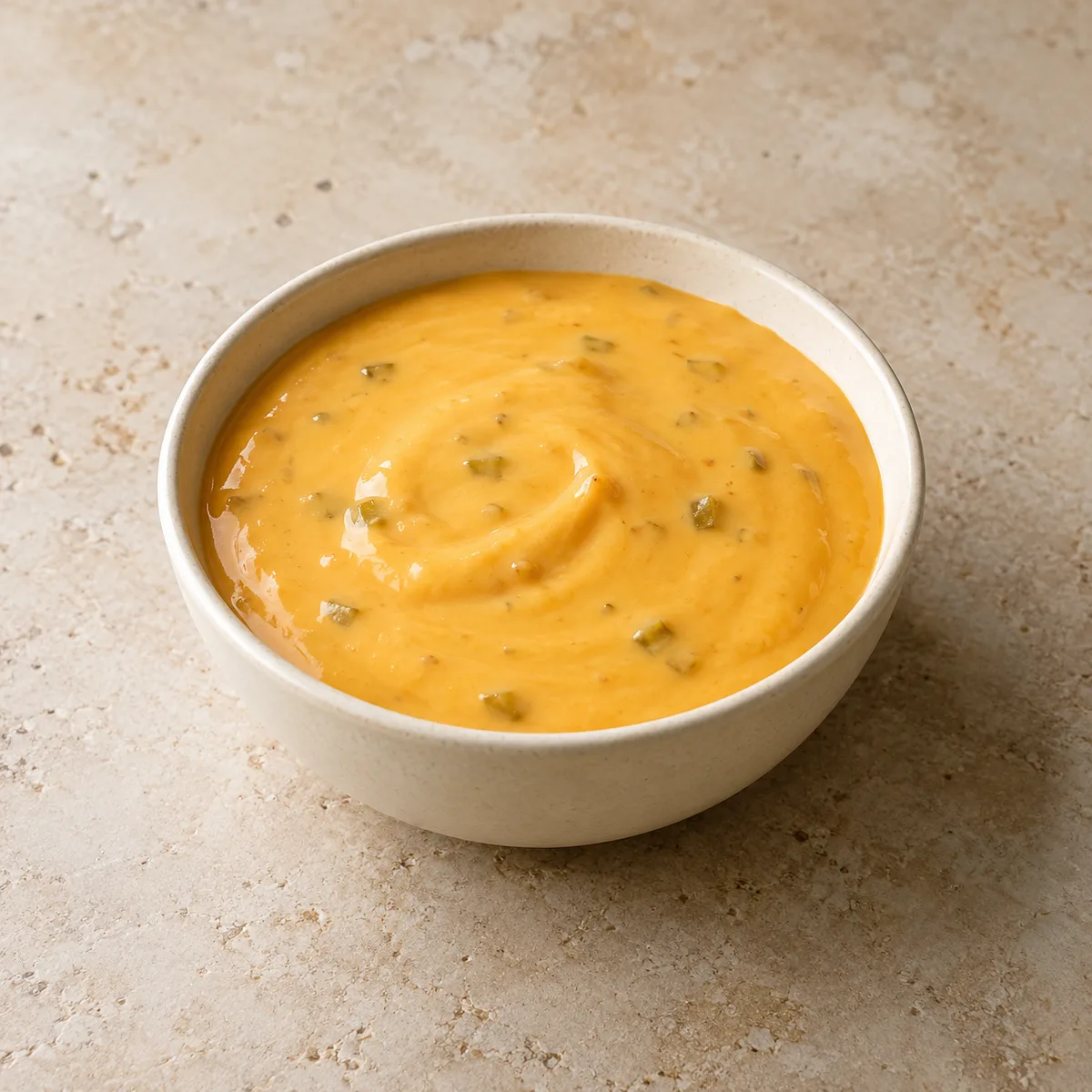
Nacho cheese is a warm, smooth cheese sauce that is used as a dip or topping for tortilla chips, nachos, and other snack foods.
Quick facts
Core identity, dietary fit, and storage ranges in a scannable reference table.
| Origin | United States, 20th century |
|---|---|
| Base | processed cheese or natural cheese with emulsifying agents |
| Primary ingredients | processed cheese or cheddar cheese, milk or evaporated milk, butter, jalapeño peppers or hot sauce, sodium citrate or cornstarch |
| Flavor profile | salty, tangy, creamy, mildly spicy |
| Color | bright orange to golden yellow |
| Consistency | thick; pourable when warm, firms as it cools |
| Refrigerator shelf life | Not established for this exact recipe |
| Vegan | No |
| Gluten-free | Depends on the recipe or product |
| Dairy-free | No |
Dietary note
Recipes and labels vary
Check ingredient labels and individual dietary requirements; homemade and packaged versions can differ.
Browse sauces sharing an ingredient
How to Serve Nacho Cheese Safely
USDA advises keeping hot food at 140°F (60°C) or above, cooling leftovers rapidly in shallow containers, and reheating leftovers to 165°F (74°C). A low burner or a slow cooker setting does not prove a safe holding temperature; use a food thermometer.
How to Make Nacho Cheese
Nacho Cheese recipe
Butter is melted, then milk is whisked in with a starch or emulsifying salt to form a stable base. Shredded or processed cheese is added gradually over low heat until fully melted and smooth. Seasonings and jalapeño are stirred in last.
Ingredients
- 2 tablespoons unsalted butter
- 3/4 cup whole milk
- 1 tablespoon cornstarch
- 8 oz (about 2 cups) sharp cheddar cheese, shredded
- 2 tablespoons pickled jalapeño slices, finely chopped
- 1 tablespoon jalapeño brine
- 1/4 teaspoon garlic powder
- to taste fine salt
Method
- Melt butter in a small saucepan over medium-low heat.
- Whisk cornstarch into the milk until fully dissolved, then pour the mixture into the saucepan.
- Cook, stirring constantly, until the liquid thickens slightly, about 3 minutes.
- Reduce heat to low and add shredded cheddar in three additions, stirring each addition until fully melted before adding the next.
- Stir in chopped jalapeño, jalapeño brine, and garlic powder.
- Season with salt and serve immediately. For hot holding, USDA advises keeping food at 140°F (60°C) or above, checked with a food thermometer. Refrigerate leftovers promptly in a shallow covered container.
What to Serve with Nacho Cheese
Practical applications with the role this sauce plays in each dish.
Use 01
Tortilla chip dip
Served warm alongside tortilla chips as a snack or stadium-style appetizer.
Use 02
Nacho topping
Drizzled over layered tortilla chips with toppings such as jalapeños, beans, and sour cream.
Use 03
Hot dog or pretzel topping
Spooned over soft pretzels or ballpark-style hot dogs as a condiment.
Use 04
Loaded fries
Poured over french fries, often with bacon, jalapeños, or chili added on top.
Use 05
Burrito or taco sauce
Used inside or drizzled over burritos and tacos for added creaminess and flavor.
Use 06
Baked potato topping
Spooned over split baked potatoes in place of or alongside sour cream and butter.
Use 07
Macaroni sauce base
Used as a quick sauce base for stovetop macaroni and cheese preparations.
Pairings
Pairing ideas grouped by food role for quick comparison.
Proteins
- ground beef
- pulled chicken
- chorizo
- black beans
- refried beans
Vegetables
- jalapeño peppers
- roasted corn
- diced tomatoes
- green onions
- pickled banana peppers
Carbs
- tortilla chips
- soft pretzels
- french fries
- flour tortillas
- elbow macaroni
Nacho Cheese substitutes
Starting ratios, best uses, and the main functional tradeoff for each alternative.
| Substitute | Ratio | Best for | Notes |
|---|---|---|---|
| Velveeta-based cheese sauce | 1:1 | dips and nachos | Melts very smoothly; flavor is milder and less sharp than cheddar-based versions. |
| Cheese sauce for broccoli | 1:1 | vegetable and chip dipping | Similar base; may lack jalapeño heat unless seasoning is adjusted. |
| White sauce with added cheddar | 1:1 | pasta and baked dishes | Richer and less tangy; adjust seasoning to compensate for milder flavor. |
| Cream sauce with shredded pepper jack | 1:1 | nachos and dipping | Adds heat from pepper jack; consistency may be slightly thinner. |
| Garlic cream sauce with cheddar | varies | loaded fries and baked potatoes | Garlic flavor is more prominent; works well when a savory profile is preferred. |
How to Store Homemade Nacho Cheese
Keep time and temperature guidance visible, and discard sauce when spoilage signs appear.
Refrigerator
FDA advises refrigerating promptly at 40°F (4°C) or below in a covered container. Do not leave perishable sauce out for more than 2 hours, or 1 hour above 90°F (32°C). No extended shelf life has been established for this exact homemade recipe. Follow the label for bottled products.
Freezer
FDA advises keeping frozen food at 0°F (-18°C). Freeze promptly in a covered freezer-safe container and thaw in the refrigerator. Texture may change. No recipe-specific quality window has been verified.
Signs of spoilage
Discard moldy or suspicious-smelling sauce and sauce with an unsafe storage history. FDA warns that normal appearance, smell or taste does not establish safety. Do not taste sauce to check whether it is safe.
Sources
Public references supporting safety-sensitive claims and editorial decisions on this page.
-
Prompt refrigeration, time and temperature limits, safe marinade handling, and limitations of spoilage checks.
- Basics for Safe Food Handling (USDA) govinfo.gov
Hot holding, shallow-container cooling and reheating leftovers.
Nacho Cheese FAQ
Short, self-contained answers to common questions.
Why does nacho cheese sauce stay smooth when warm but firm up when cold?
The emulsifiers, starches, or processed cheese components that keep fat and water blended are most effective at warm temperatures. As the sauce cools, the fat begins to solidify and the sauce thickens. Gentle reheating with stirring restores a pourable consistency.
Can nacho cheese sauce be made without processed cheese?
Yes. Natural cheddar combined with cornstarch or sodium citrate produces a smooth, stable sauce without processed cheese. Sodium citrate, a food-grade emulsifying salt, is particularly effective at preventing the cheese from breaking or becoming grainy during melting.
Is nacho cheese sauce gluten-free?
It depends on the formulation. Homemade versions thickened with cornstarch are typically gluten-free. Commercial products may contain wheat-based thickeners or be processed in facilities with gluten cross-contact. Always check the product label if gluten avoidance is required.
How do you keep nacho cheese sauce warm for a party?
USDA advises keeping hot nacho cheese sauce at 140°F (60°C) or above. Check with a food thermometer rather than relying on a slow cooker setting. Stir as needed for texture. Refrigerate leftovers promptly; reheat leftovers to 165°F (74°C) before serving.
What cheese works best for homemade nacho cheese sauce?
Sharp cheddar is the most common choice for its flavor and color. Colby, Monterey Jack, or pepper jack also melt smoothly and are frequently used. Avoid pre-shredded cheese coated with anti-caking agents, as the coating can make the sauce grainy.