French/Classic · creamy
Hollandaise Sauce
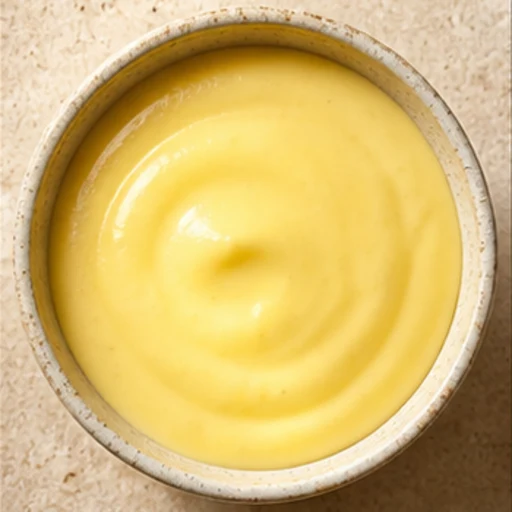
Hollandaise sauce is a classic French emulsified sauce that combines egg yolks and clarified butter into a rich, pale-yellow condiment finished with lemon juice and served warm.
Quick facts
Core identity, dietary fit, and storage ranges in a scannable reference table.
| Origin | France, 19th century |
|---|---|
| Base | Egg yolks and clarified butter |
| Primary ingredients | pasteurized egg yolks, clarified butter, lemon juice, salt, white pepper or cayenne |
| Flavor profile | rich, buttery, tangy, delicate |
| Color | Pale yellow to golden yellow |
| Consistency | Medium; smooth, creamy, and pourable but thick enough to coat a spoon |
| Refrigerator shelf life | 2 days |
| Freezer shelf life | Not established |
| Vegan | No |
| Gluten-free | Yes |
| Dairy-free | No |
Dietary note
Recipes and labels vary
Check ingredient labels and individual dietary requirements; homemade and packaged versions can differ.
Browse sauces sharing an ingredient
How it’s made
Egg yolks are whisked with a small amount of water or lemon juice over gentle heat until thickened. Warm clarified butter is then added slowly while whisking to form a stable emulsion. The sauce is seasoned with lemon juice, salt, and white pepper or cayenne.
Hollandaise Sauce recipe
Egg yolks are whisked with a small amount of water or lemon juice over gentle heat until thickened. Warm clarified butter is then added slowly while whisking to form a stable emulsion. The sauce is seasoned with lemon juice, salt, and white pepper or cayenne.
Ingredients
- 3 large pasteurized egg yolks
- 1/2 cup (1 stick) clarified butter, warm
- 1 tablespoon fresh lemon juice
- 1 tablespoon cold water
- 1/4 teaspoon salt
- pinch cayenne pepper or white pepper
Method
- Combine egg yolks and cold water in a heatproof bowl set over a saucepan of barely simmering water, ensuring the bowl does not touch the water.

- Whisk the yolks constantly over the gentle heat until they thicken and the whisk leaves visible trails, about 3 to 4 minutes. Remove from heat if the bowl becomes too hot.

- Begin adding warm clarified butter a few drops at a time while whisking continuously, then increase to a slow, steady stream once the emulsion is established.

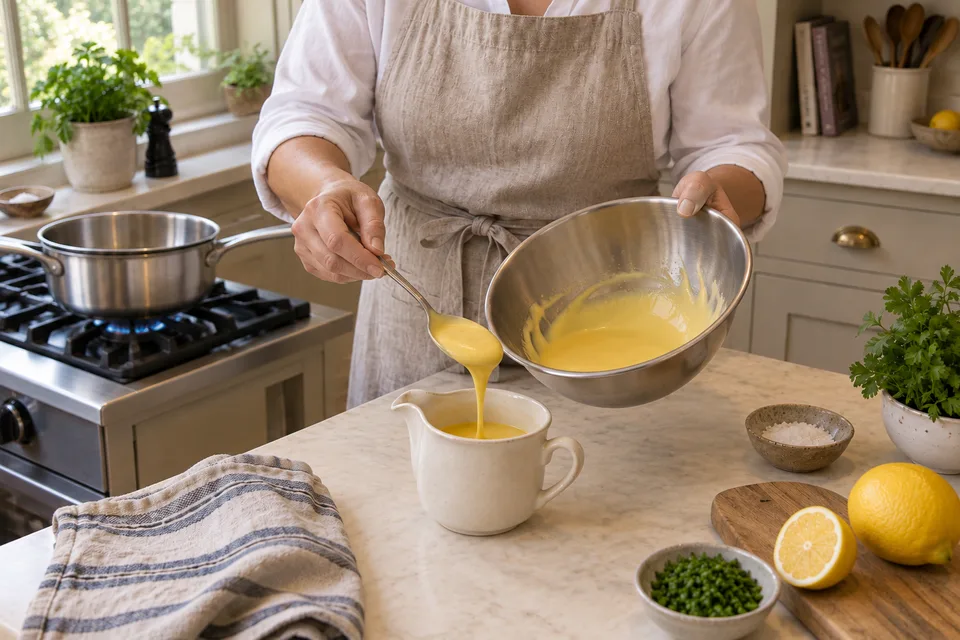
- Continue whisking until all the butter is incorporated and the sauce is smooth and coats the back of a spoon.
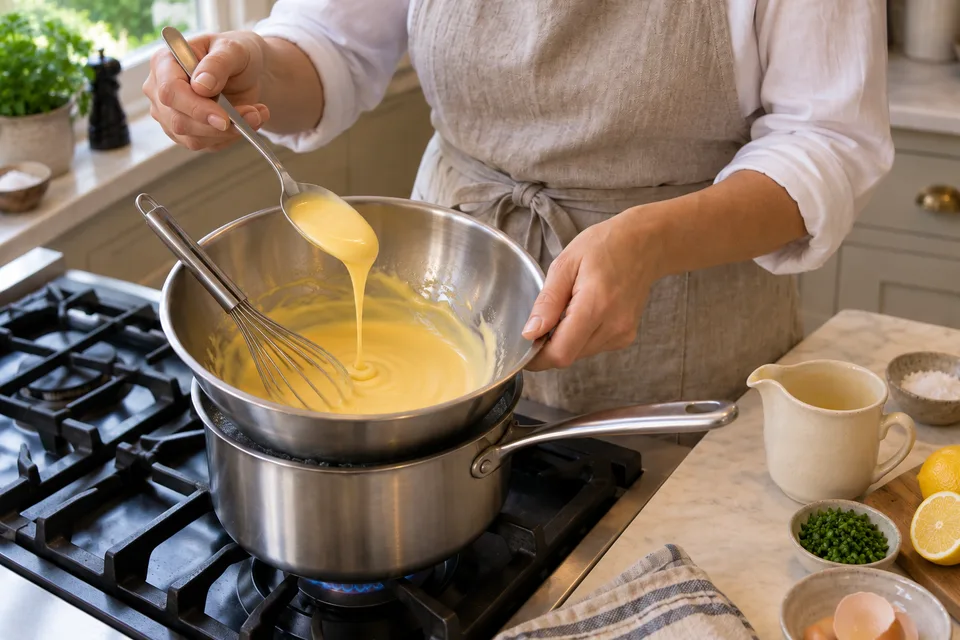
- Whisk in lemon juice, salt, and cayenne or white pepper. Taste and adjust seasoning.

- Serve immediately or keep warm by setting the bowl over warm water, whisking occasionally, for up to 30 minutes.
Common uses
Practical applications with the role this sauce plays in each dish.
Use 01
Eggs Benedict
Spooned over poached eggs and Canadian bacon on an English muffin; the sauce's defining classic application.
Use 02
Steamed or roasted asparagus
Drizzled over warm asparagus spears as a side dish or first course.
Use 03
Poached fish
Served alongside or over delicate poached fish such as salmon or halibut.
Use 04
Steamed broccoli or green beans
Used as a rich finishing sauce for simply cooked green vegetables.
Use 05
Eggs Florentine
Poured over poached eggs and sautéed spinach on an English muffin.
Use 06
Grilled or pan-seared chicken
Spooned over boneless chicken breast as a rich, tangy finishing sauce.
Use 07
Artichokes
Served as a dipping sauce for steamed or boiled artichoke leaves and hearts.
Pairings
Pairing ideas grouped by food role for quick comparison.
Proteins
- poached eggs
- Canadian bacon
- smoked salmon
- poached halibut
- grilled chicken breast
- crab cakes
Vegetables
- asparagus
- broccoli
- spinach
- artichokes
- green beans
- leeks
Carbs
- English muffins
- toasted brioche
- roasted potatoes
- crepes
Hollandaise Sauce substitutes
Starting ratios, best uses, and the main functional tradeoff for each alternative.
| Substitute | Ratio | Best for | Notes |
|---|---|---|---|
| Béarnaise sauce | 1:1 | Steak and grilled proteins | Shares the same emulsion base; tarragon flavor shifts the profile noticeably. |
| Greek yogurt sauce with lemon and butter | 1:1 | Lower-fat applications over vegetables or eggs | Tangier and lighter; does not replicate the classic emulsion texture. |
| Lemon butter sauce (beurre blanc) | 1:1 | Fish and seafood dishes | No egg yolks; thinner consistency and less rich than hollandaise. |
| Garlic cream sauce | varies | Pasta and roasted vegetables when richness is the priority | Cream-based; flavor profile differs significantly from the egg-butter emulsion. |
| Mayonnaise thinned with lemon juice and warmed gently | varies | Quick, no-cook substitute over eggs or vegetables | Convenient but noticeably different in flavor and texture; not heat-stable. |
Storage
Keep time and temperature guidance visible, and discard sauce when spoilage signs appear.
Refrigerator
Transfer to an airtight container and refrigerate promptly. Use within 2 days. Reheat very gently over warm water while whisking; do not microwave or boil, as the emulsion will break.
Freezer
Hollandaise does not freeze well. The emulsion typically breaks upon thawing, resulting in a separated, unusable sauce. Freezing is not recommended.
Signs of spoilage
Off or sour smell, visible mold, separation that cannot be re-emulsified, or any discoloration beyond pale yellow.
Hollandaise Sauce FAQ
Short, self-contained answers to common questions.
Why does hollandaise sauce break, and how can it be fixed?
The emulsion breaks when butter is added too quickly, the heat is too high, or the yolks are overcooked. To fix a broken sauce, whisk a fresh egg yolk with a teaspoon of water in a clean bowl, then slowly whisk the broken sauce into it to re-establish the emulsion.
Is hollandaise sauce safe to eat?
Hollandaise contains partially cooked egg yolks, which carry a small risk of Salmonella. People who are pregnant, elderly, immunocompromised, or very young should exercise caution. Using pasteurized eggs reduces this risk. The sauce should be served promptly and not held at room temperature for more than one hour.
What is the difference between hollandaise and béarnaise sauce?
Both are warm butter-and-egg-yolk emulsions. Béarnaise replaces lemon juice with a tarragon-and-shallot reduction, giving it a more herbaceous, savory flavor. Hollandaise is simpler and more neutral, making it the standard choice for eggs and vegetables.
Can hollandaise sauce be made ahead of time?
Hollandaise is best made fresh and served immediately. It can be held warm over a water bath for up to 30 minutes with occasional whisking. Refrigerated leftovers last up to 2 days but must be reheated very gently to avoid breaking the emulsion.
What is clarified butter and why is it used in hollandaise?
Clarified butter is butter with its milk solids and water removed, leaving pure butterfat. It is used in hollandaise because the absence of water helps create a more stable emulsion and allows the sauce to be held warm longer without the risk of the milk solids causing separation.