Japanese · stir-fry
Katsu Sauce
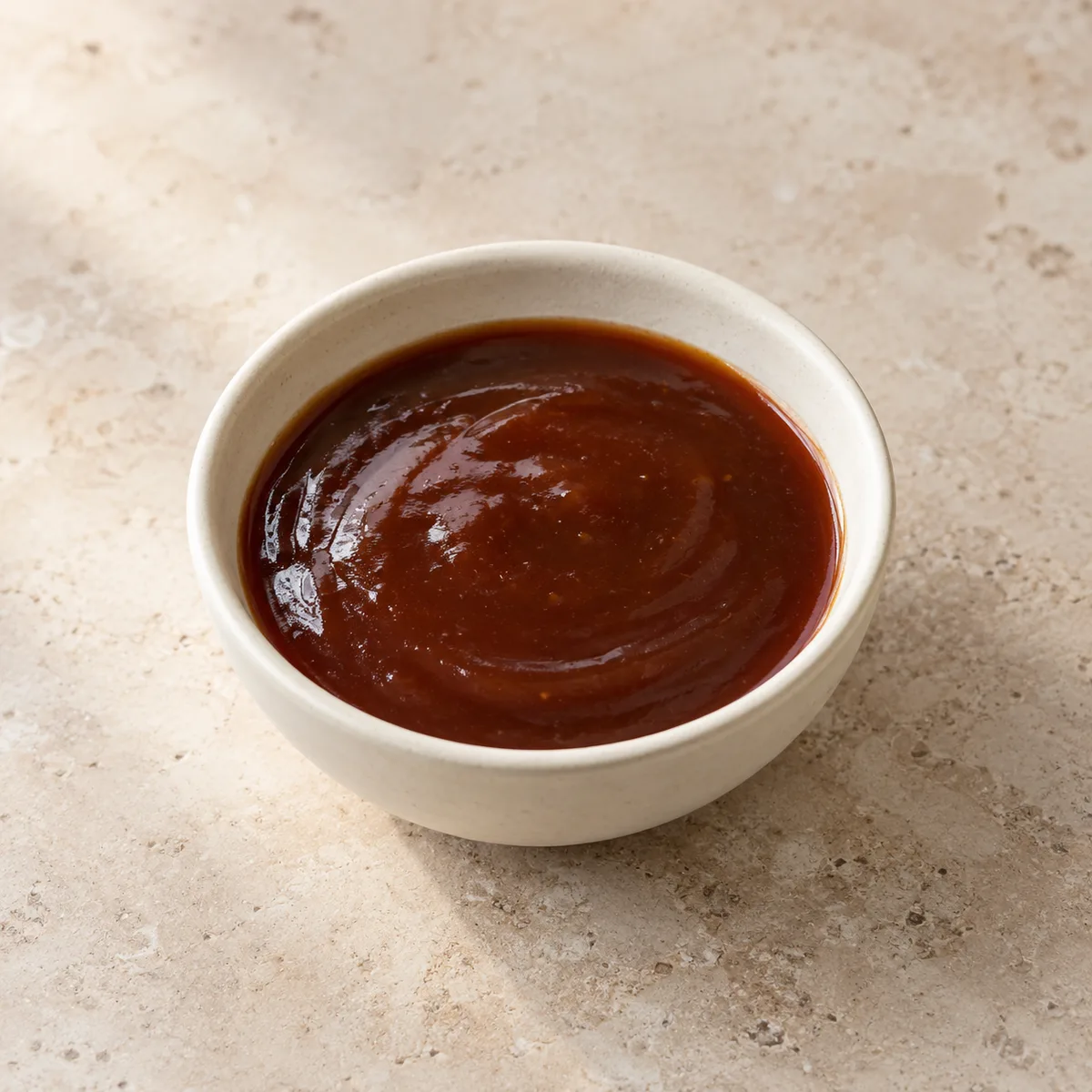
Katsu sauce is a Japanese condiment that combines Worcestershire sauce, ketchup, and soy sauce into a thick, sweet-savory blend traditionally served with breaded, fried cutlets.
Quick facts
Core identity, dietary fit, and storage ranges in a scannable reference table.
| Origin | Japan, 20th century |
|---|---|
| Base | Worcestershire sauce and ketchup |
| Primary ingredients | Worcestershire sauce, ketchup, soy sauce, sugar, mustard |
| Flavor profile | sweet, savory, tangy, umami |
| Color | dark reddish-brown |
| Consistency | thick; pourable but clings to fried foods |
| Refrigerator shelf life | Not established for this exact recipe |
| Vegan | Depends on the recipe or product |
| Gluten-free | Depends on the recipe or product |
| Dairy-free | Yes |
Dietary note
Recipes and labels vary
Check ingredient labels and individual dietary requirements; homemade and packaged versions can differ.
Browse sauces sharing an ingredient
How to Serve Katsu Sauce Safely
USDA advises keeping hot food at 140°F (60°C) or above, cooling leftovers rapidly in shallow containers, and reheating leftovers to 165°F (74°C). A low burner or a slow cooker setting does not prove a safe holding temperature; use a food thermometer.
Is This Katsu Sauce the Only Recipe?
No. Kikkoman publishes a homemade tonkatsu sauce using ketchup, Worcestershire sauce, soy sauce and sugar. The quantities and mustard in the example on this page are a different editorial variation, not Kikkoman’s recipe or a reproduction of a bottled sauce.
How to Make Katsu Sauce
Katsu Sauce recipe
Worcestershire sauce, ketchup, soy sauce, sugar, and mustard are whisked together cold or briefly simmered to dissolve the sugar and meld flavors. No cooking is strictly required; a short simmer deepens the taste.
Ingredients
- 3 tablespoons Worcestershire sauce
- 2 tablespoons ketchup
- 1 tablespoon soy sauce
- 1 teaspoon granulated sugar
- 1 teaspoon Dijon mustard
Method
- Combine Worcestershire sauce, ketchup, soy sauce, sugar, and mustard in a small saucepan.
- Stir over medium-low heat for 3 to 5 minutes until sugar dissolves and sauce is uniform.
- Taste and adjust sugar or soy sauce to balance sweetness and saltiness.
- Remove from heat and serve. For later use, transfer to a shallow covered container and refrigerate promptly at 40°F (4°C) or below; do not wait for room temperature.
What to Serve with Katsu Sauce
Practical applications with the role this sauce plays in each dish.
Use 01
Tonkatsu dipping sauce
Served alongside breaded, deep-fried pork cutlets as the classic accompaniment.
Use 02
Chicken katsu topping
Drizzled over panko-crusted fried chicken cutlets, often with shredded cabbage.
Use 03
Katsu curry base
Stirred into Japanese curry sauce to add depth when served over katsu and rice.
Use 04
Sandwich spread
Used as a condiment in katsu sandwiches, known as katsu sando, on milk bread.
Use 05
Fried seafood dip
Paired with fried shrimp or fish as a sweet-savory dipping sauce.
Use 06
Rice bowl drizzle
Spooned over katsudon, a rice bowl topped with fried cutlet and egg.
Use 07
Vegetable dip
Served with fried or roasted vegetables such as eggplant or lotus root.
Use 08
Burger condiment
Applied to Japanese-style burgers or sliders as a substitute for standard ketchup.
Pairings
Pairing ideas grouped by food role for quick comparison.
Proteins
- pork cutlet
- chicken breast
- fried shrimp
- tofu cutlet
- beef menchi katsu
Vegetables
- shredded green cabbage
- eggplant
- lotus root
- sweet potato
Carbs
- steamed white rice
- milk bread
- panko-crusted items
- udon noodles
Katsu Sauce substitutes
Starting ratios, best uses, and the main functional tradeoff for each alternative.
| Substitute | Ratio | Best for | Notes |
|---|---|---|---|
| Tonkatsu sauce (store-bought) | 1:1 | all katsu applications | Closest match; Bull-Dog brand is widely available in the US. |
| Worcestershire sauce | 1:1 | dipping and drizzling | Thinner and less sweet; add a pinch of sugar to compensate. |
| Hoisin sauce | 1:1 | dipping fried foods | Sweeter and more pungent; flavor profile shifts noticeably toward Chinese cuisine. |
| Plum sauce | 1:1 | dipping fried cutlets | Fruitier and lighter; lacks the Worcestershire depth of katsu sauce. |
| Okonomiyaki sauce | 1:1 | savory fried dishes | Very similar base; slightly sweeter and thicker than katsu sauce. |
How to Store Homemade Katsu Sauce
Keep time and temperature guidance visible, and discard sauce when spoilage signs appear.
Refrigerator
FDA advises refrigerating promptly at 40°F (4°C) or below in a covered container. Do not leave perishable sauce out for more than 2 hours, or 1 hour above 90°F (32°C). No extended shelf life has been established for this exact homemade recipe. Follow the label for bottled products.
Freezer
FDA advises keeping frozen food at 0°F (-18°C). Freeze promptly in a covered freezer-safe container and thaw in the refrigerator. Texture may change. No recipe-specific quality window has been verified.
Signs of spoilage
Discard moldy or suspicious-smelling sauce and sauce with an unsafe storage history. FDA warns that normal appearance, smell or taste does not establish safety. Do not taste sauce to check whether it is safe.
Sources
Public references supporting safety-sensitive claims and editorial decisions on this page.
-
Prompt refrigeration, time and temperature limits, safe marinade handling, and limitations of spoilage checks.
- Basics for Safe Food Handling (USDA) govinfo.gov
Hot holding, shallow-container cooling and reheating leftovers.
- Tonkatsu and Homemade Sauce (Kikkoman) kikkoman.com
A first-party example uses ketchup, Worcestershire sauce, soy sauce and sugar; it does not validate this page’s exact ratios.
- Gluten and Food Labeling (FDA) fda.gov
FDA defines gluten-free labeling; check individual ingredient labels rather than inferring status from the sauce name.
Katsu Sauce FAQ
Short, self-contained answers to common questions.
What does katsu sauce taste like?
Katsu sauce is sweet, tangy, and savory with a pronounced umami depth. The Worcestershire base provides complexity, ketchup adds sweetness and acidity, and soy sauce contributes saltiness. The overall profile is similar to a thicker, more nuanced steak sauce.
Is katsu sauce the same as tonkatsu sauce?
They are effectively the same condiment. Tonkatsu sauce is the full name, referring to the sauce served with tonkatsu (pork cutlet). Katsu sauce is the common shorthand used in English-language contexts. Both describe the same sweet-savory Worcestershire-based blend.
Is katsu sauce gluten-free?
Not automatically. Check every ingredient label, including soy sauce, Worcestershire sauce and mustard, and use explicitly gluten-free versions where needed. FDA defines the gluten-free claim on regulated food labels. Do not infer gluten-free status from the sauce name or assume all Worcestershire sauces contain gluten.
Is katsu sauce vegan?
It depends on the Worcestershire sauce used. Many Worcestershire sauces contain anchovies, making them non-vegan. Vegan Worcestershire sauce is available and produces a fully plant-based katsu sauce when substituted. Ketchup, soy sauce, sugar, and mustard are generally vegan.
Can I use katsu sauce as a marinade?
Katsu sauce can be used in a marinade. FDA advises marinating perishable food in the refrigerator. Reserve a clean portion for serving; sauce that contacted raw food must not be reused unless brought to a rapid boil. Sugar can brown quickly during cooking.