Japanese · stir-fry
Teriyaki Sauce
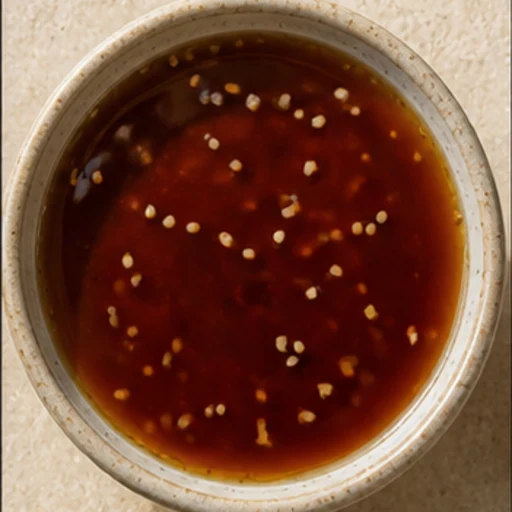
Teriyaki sauce is a Japanese glaze made from soy sauce, mirin, and sugar that caramelizes on grilled or broiled foods to produce a sweet, savory coating.
Quick facts
Core identity, dietary fit, and storage ranges in a scannable reference table.
| Origin | Japan, 17th century |
|---|---|
| Base | Soy sauce |
| Primary ingredients | soy sauce, mirin, sake, sugar |
| Flavor profile | sweet, savory, umami-rich, slightly smoky |
| Color | Deep mahogany brown |
| Consistency | Medium; syrupy enough to coat a spoon but pourable |
| Refrigerator shelf life | 14 days |
| Freezer shelf life | 3 months |
| Vegan | Yes |
| Gluten-free | Depends on the recipe or product |
| Dairy-free | Yes |
Dietary note
Recipes and labels vary
Check ingredient labels and individual dietary requirements; homemade and packaged versions can differ.
Browse sauces sharing an ingredient
How it’s made
Soy sauce, mirin, sake, and sugar are combined and simmered over medium heat until the sugar dissolves and the mixture reduces to a glossy, lightly thickened consistency. Cornstarch slurry is optional for a thicker glaze. The sauce is cooled before storing or using as a marinade.
Teriyaki Sauce recipe
Soy sauce, mirin, sake, and sugar are combined and simmered over medium heat until the sugar dissolves and the mixture reduces to a glossy, lightly thickened consistency. Cornstarch slurry is optional for a thicker glaze. The sauce is cooled before storing or using as a marinade.
Ingredients
- 1/4 cup soy sauce
- 1/4 cup mirin
- 2 tablespoons sake
- 2 tablespoons granulated sugar
- 1 teaspoon cornstarch
- 1 tablespoon cold water
Method
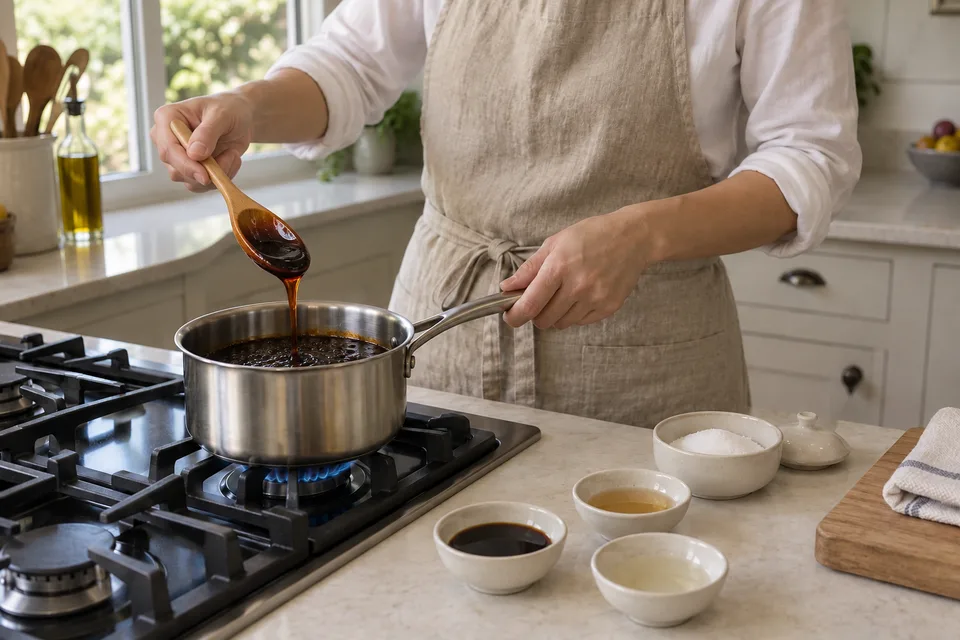
- Combine soy sauce, mirin, sake, and sugar in a small saucepan over medium heat.
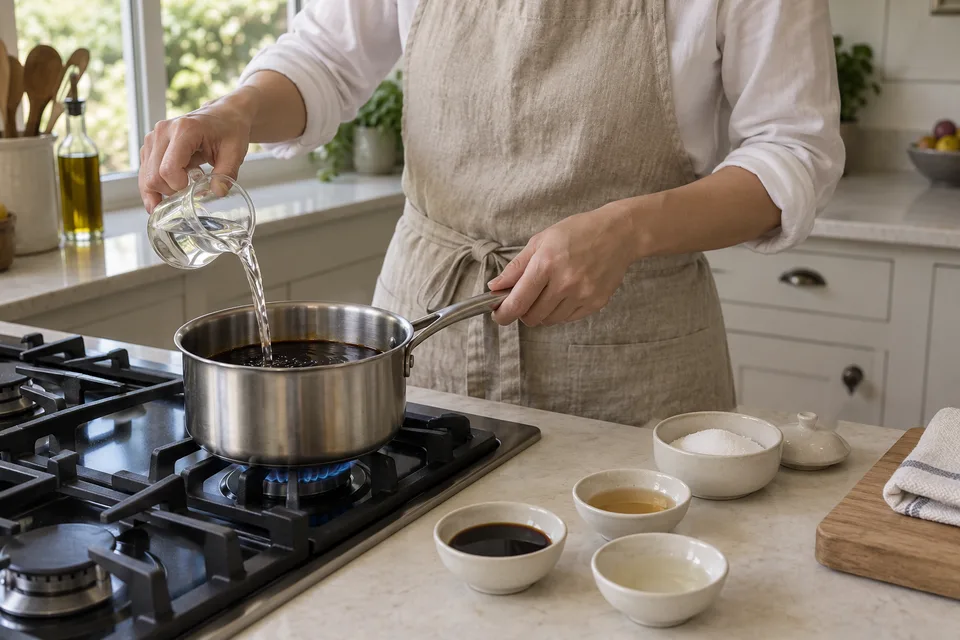
- Stir until the sugar fully dissolves, about 2 minutes.

- Bring the mixture to a gentle simmer and cook for 5 minutes, stirring occasionally.
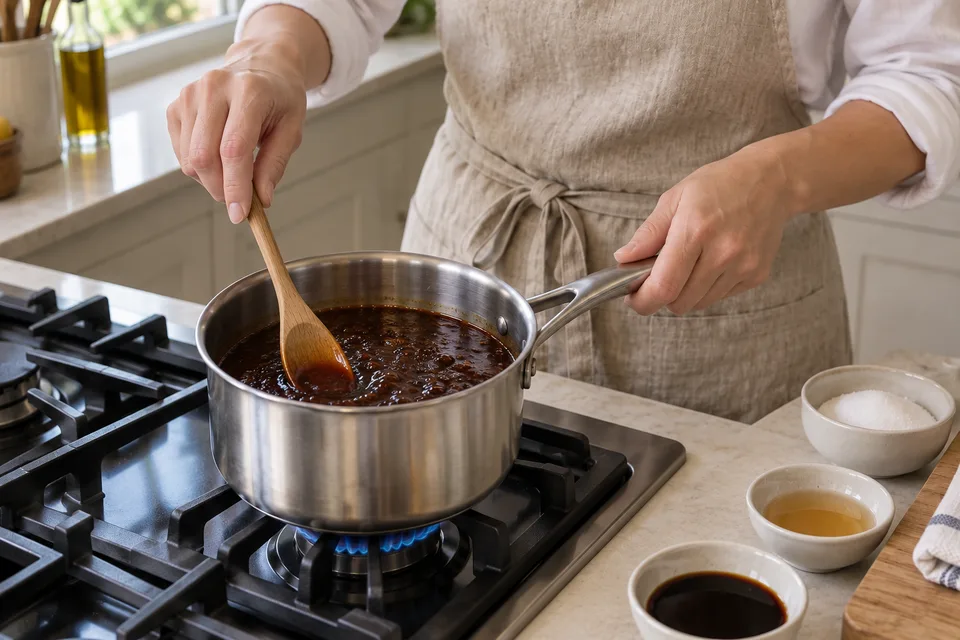
- Whisk cornstarch into cold water until smooth, then stir the slurry into the simmering sauce.
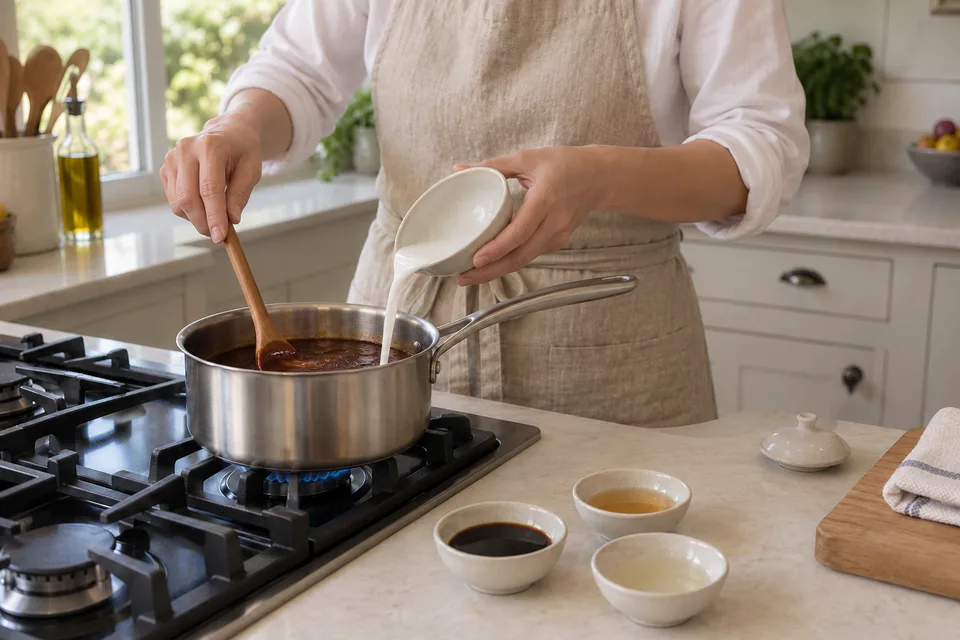
- Cook for 1 to 2 more minutes until the sauce thickens to a glossy glaze.
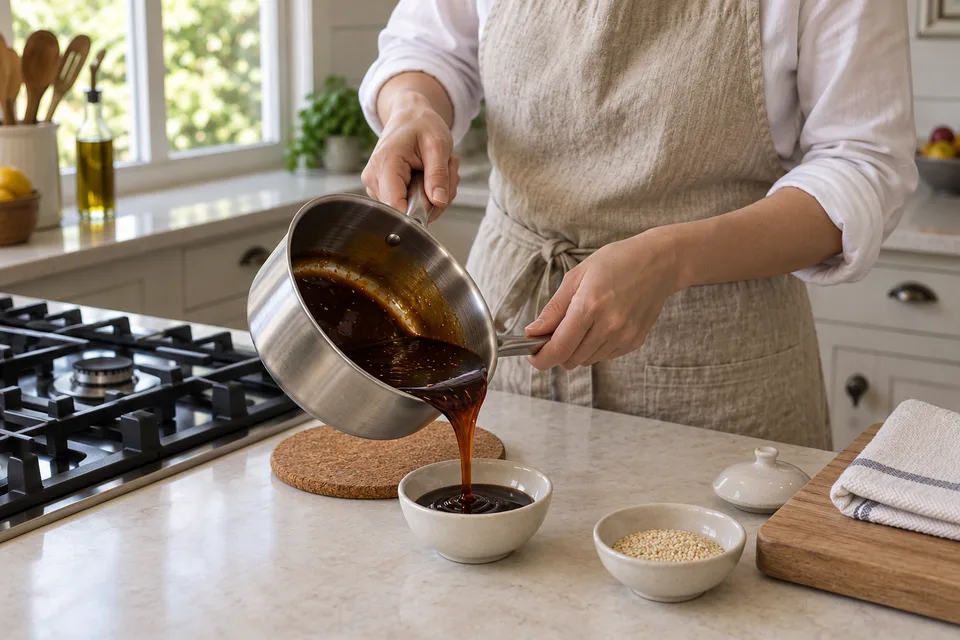
- Remove from heat and let cool before using as a marinade, glaze, or dipping sauce.
Common uses
Practical applications with the role this sauce plays in each dish.
Use 01
Grilling glaze
Brushed onto chicken, beef, or salmon during the final minutes of grilling to form a caramelized crust.
Use 02
Marinade
Used to marinate proteins for 30 minutes to overnight, adding flavor before cooking.
Use 03
Stir-fry sauce
Tossed with vegetables and protein in a hot wok for a quick, glossy coating.
Use 04
Dipping sauce
Served alongside gyoza, chicken skewers, or spring rolls as a table condiment.
Use 05
Rice bowl topping
Drizzled over donburi-style rice bowls with sliced meat and vegetables.
Use 06
Noodle sauce
Mixed into soba or udon noodles as a simple, savory dressing.
Use 07
Burger or sandwich glaze
Applied to grilled patties or chicken sandwiches for a sweet-savory finish.
Use 08
Roasting sauce
Spooned over sheet-pan proteins and vegetables before oven roasting.
Pairings
Pairing ideas grouped by food role for quick comparison.
Proteins
- chicken thighs
- salmon fillet
- beef sirloin
- pork tenderloin
- tofu
- shrimp
Vegetables
- broccoli
- bok choy
- snap peas
- bell peppers
- mushrooms
- zucchini
Carbs
- steamed white rice
- soba noodles
- udon noodles
- fried rice
- rice noodles
Teriyaki Sauce substitutes
Starting ratios, best uses, and the main functional tradeoff for each alternative.
| Substitute | Ratio | Best for | Notes |
|---|---|---|---|
| Hoisin sauce | 1:1 | Glazing and stir-frying | Sweeter and thicker; adds a distinct fermented bean flavor. |
| Soy sauce plus honey | varies | Marinades and glazes | Mix 3 parts soy sauce to 1 part honey; lacks mirin's depth. |
| Ponzu sauce | 1:1 | Dipping and light marinades | Citrus-forward and thinner; less sweet than teriyaki. |
| Bulgogi sauce | 1:1 | Grilling and stir-frying | Korean profile with sesame and pear; similar sweet-savory balance. |
| Eel sauce (unagi tare) | 1:1 | Glazing grilled proteins | Very similar base; slightly richer and more intensely sweet. |
| Stir-fry sauce | 1:1 | Wok cooking | Broadly savory but typically less sweet; adjust sugar to compensate. |
Storage
Keep time and temperature guidance visible, and discard sauce when spoilage signs appear.
Refrigerator
Store homemade teriyaki sauce in an airtight glass jar or sealed container for up to 14 days. Shake or stir before each use as the sauce may settle. For packaged products, follow the label instructions.
Freezer
Freeze in a sealed container or ice cube tray for up to 3 months. Thaw overnight in the refrigerator and stir well before use.
Signs of spoilage
Discard if the sauce develops mold, an off or sour odor, or visible cloudiness beyond normal settling.
Teriyaki Sauce FAQ
Short, self-contained answers to common questions.
Is teriyaki sauce gluten-free?
Traditional teriyaki sauce contains soy sauce, which is brewed with wheat and is not gluten-free. Gluten-free versions substitute tamari or certified gluten-free soy sauce. Always check the label on store-bought products, as formulations vary by brand.
What is the difference between teriyaki sauce and soy sauce?
Soy sauce is a thin, salty fermented condiment. Teriyaki sauce is made with soy sauce as a base but adds mirin, sake, and sugar, producing a sweeter, thicker glaze with a more complex flavor profile suited for cooking rather than direct seasoning.
Can teriyaki sauce be used as a marinade?
Yes. Teriyaki sauce works well as a marinade for chicken, beef, pork, or tofu. Marinate for at least 30 minutes and up to overnight in the refrigerator. Discard any marinade that has contacted raw meat before using the sauce for basting.
How do you thicken teriyaki sauce?
Whisk 1 teaspoon of cornstarch with 1 tablespoon of cold water to form a slurry, then stir it into the simmering sauce. Cook for 1 to 2 minutes until the sauce reaches the desired consistency. Alternatively, simmer the sauce longer to reduce it naturally.
Is store-bought teriyaki sauce the same as homemade?
Store-bought teriyaki sauce often contains added thickeners, preservatives, and higher sodium levels compared to a basic homemade version. Flavor profiles vary widely by brand. Homemade versions allow control over sweetness, sodium, and consistency but have a shorter shelf life.