Other/Global · dipping
Raspberry Sauce
Raspberry sauce is a sweet-tart fruit sauce that is made from raspberries and sugar and used as a dessert topping, glaze, or condiment.
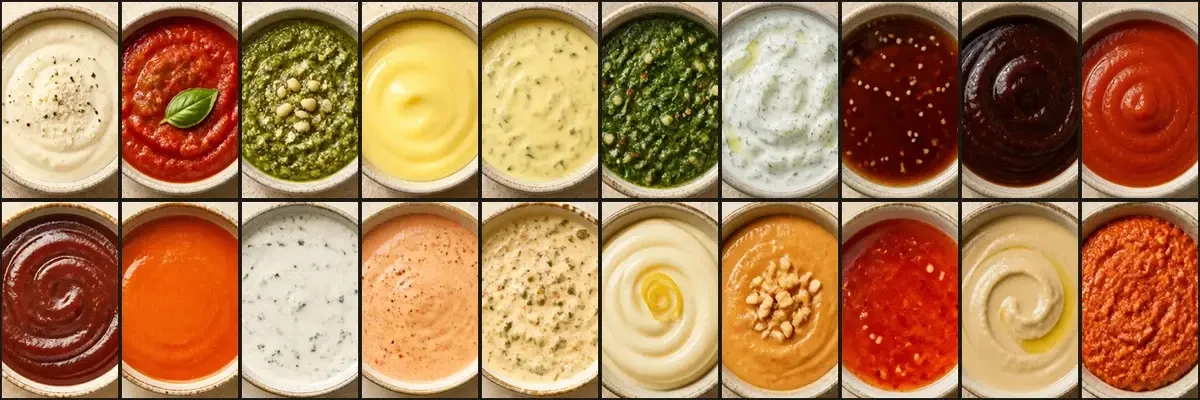
Quick facts
Core identity, dietary fit, and storage ranges in a scannable reference table.
| Origin | No single origin is established |
|---|---|
| Base | Raspberries |
| Primary ingredients | raspberries, sugar, lemon juice, water |
| Flavor profile | sweet, tart, fruity, bright |
| Color | deep red to magenta |
| Consistency | medium; pourable but slightly thickened, with or without seeds |
| Refrigerator shelf life | 7 days |
| Freezer shelf life | 3 months |
| Vegan | Yes |
| Gluten-free | Yes |
| Dairy-free | Yes |
Dietary note
Recipes and labels vary
Check ingredient labels and individual dietary requirements; homemade and packaged versions can differ.
Browse sauces sharing an ingredient
How it’s made
Raspberries are simmered with sugar and lemon juice until the fruit breaks down and the liquid reduces to a light syrup. The sauce is strained to remove seeds if a smooth texture is desired, then cooled before serving.
Raspberry Sauce recipe
Raspberries are simmered with sugar and lemon juice until the fruit breaks down and the liquid reduces to a light syrup. The sauce is strained to remove seeds if a smooth texture is desired, then cooled before serving.
Ingredients
- 2 cups fresh or frozen raspberries
- 3 tablespoons granulated sugar
- 1 tablespoon fresh lemon juice
- 2 tablespoons water
- 1 teaspoon cornstarch (optional, for thickening)
Method
- Combine raspberries, sugar, lemon juice, and water in a small saucepan over medium heat.
- Stir occasionally and cook until raspberries break down completely, about 8 to 10 minutes.
- If using cornstarch, whisk it with 1 teaspoon of cold water and stir into the simmering sauce.
- Cook for 1 to 2 additional minutes until the sauce thickens slightly.
- Remove from heat and press through a fine-mesh strainer to remove seeds, or leave unstrained for a rustic texture.
- Cool to room temperature before serving or transfer to a jar and refrigerate.
Common uses
Practical applications with the role this sauce plays in each dish.
Use 01
Dessert topping
Spooned over cheesecake, panna cotta, ice cream, or pound cake as a finishing sauce.
Use 02
Crepe filling accompaniment
Served alongside or inside sweet crepes with whipped cream or ricotta.
Use 03
Pancake and waffle syrup
Used in place of maple syrup over pancakes, waffles, or French toast.
Use 04
Chocolate dessert pairing
Drizzled over chocolate lava cake, brownies, or mousse to contrast richness with tartness.
Use 05
Meat glaze
Brushed onto duck breast, pork tenderloin, or lamb chops during the final minutes of cooking.
Use 06
Yogurt and parfait layer
Layered into yogurt parfaits or stirred into plain Greek yogurt as a fruit component.
Use 07
Cocktail and mocktail mixer
Stirred into sparkling water, lemonade, or spirits as a flavored syrup base.
Use 08
Vinaigrette base
Whisked with vinegar and oil to make a fruity salad dressing for spinach or arugula salads.
Pairings
Pairing ideas grouped by food role for quick comparison.
Proteins
- duck breast
- pork tenderloin
- lamb chops
- chicken breast
- brie
Vegetables
- arugula
- spinach
- endive
- roasted beets
Carbs
- cheesecake
- pound cake
- crepes
- waffles
- chocolate cake
- vanilla ice cream
Raspberry Sauce substitutes
Starting ratios, best uses, and the main functional tradeoff for each alternative.
| Substitute | Ratio | Best for | Notes |
|---|---|---|---|
| Strawberry sauce | 1:1 | Dessert toppings | Milder and sweeter; lacks the tartness of raspberry. |
| Blueberry sauce | 1:1 | Dessert and meat glazes | Earthier flavor; works well with poultry and pork. |
| Raspberry jam thinned with water | varies | Quick substitution in sauces | Higher sugar content; reduce added sugar in the recipe. |
| Cranberry sauce | 1:1 | Savory meat glazes | More astringent and tart; best for roasted or braised meats. |
| Pomegranate molasses | varies | Savory glazes and dressings | Much thicker and more intensely tart; dilute before using. |
Storage
Keep time and temperature guidance visible, and discard sauce when spoilage signs appear.
Refrigerator
Store in an airtight jar or container for up to 7 days. Allow the sauce to cool completely before sealing to prevent condensation.
Freezer
Freeze in a sealed container or ice cube tray for up to 3 months. Thaw overnight in the refrigerator and stir before use.
Signs of spoilage
Discard if mold appears, the sauce smells fermented or off, or the color darkens significantly.
Raspberry Sauce FAQ
Short, self-contained answers to common questions.
Can raspberry sauce be made with frozen raspberries?
Yes. Frozen raspberries work well and often produce a consistent result year-round. No thawing is required before cooking; add them directly to the saucepan and increase cooking time by a few minutes to drive off extra moisture.
How do you remove seeds from raspberry sauce?
Press the cooked sauce through a fine-mesh strainer or cheesecloth using the back of a spoon. This removes most seeds and produces a smooth, pourable sauce. Skipping this step leaves a rustic, textured result.
Is raspberry sauce the same as raspberry coulis?
They are closely related but not identical. Coulis is typically strained smooth and may be made without cooking. Raspberry sauce is often cooked and may be left unstrained. Both use raspberries and sugar as the base.
How do you thicken raspberry sauce?
Simmer longer to reduce liquid naturally, or stir in a cornstarch slurry during cooking. A small amount of pectin can also be used. Avoid over-thickening, as the sauce continues to set slightly as it cools.
Can raspberry sauce be used as a savory glaze?
Yes. Reduce added sugar and balance with a splash of balsamic vinegar or red wine to create a savory glaze. It pairs well with duck, pork, and lamb, where the tartness complements rich, fatty proteins.