Greek/Med · creamy
Tzatziki Sauce
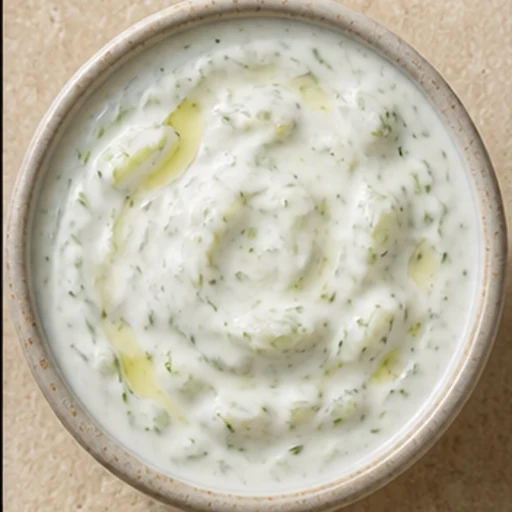
Tzatziki sauce is a Greek condiment made from strained yogurt, cucumber, garlic, and fresh herbs that is served chilled as a dip, spread, or accompaniment.
Quick facts
Core identity, dietary fit, and storage ranges in a scannable reference table.
| Origin | Greece; broadly established across the Eastern Mediterranean |
|---|---|
| Base | Strained yogurt |
| Primary ingredients | strained Greek yogurt, cucumber, garlic, fresh dill or mint, lemon juice, olive oil |
| Flavor profile | tangy, cool, garlicky, herbaceous |
| Color | Creamy white with flecks of green herb |
| Consistency | Thick; dense and spoonable with visible cucumber shreds |
| Refrigerator shelf life | 4 days |
| Freezer shelf life | Not established |
| Vegan | No |
| Gluten-free | Yes |
| Dairy-free | No |
Dietary note
Recipes and labels vary
Check ingredient labels and individual dietary requirements; homemade and packaged versions can differ.
Browse sauces sharing an ingredient
How it’s made
Cucumber is grated and salted to draw out moisture, then squeezed dry. It is folded into strained Greek yogurt with minced garlic, fresh dill or mint, lemon juice, and olive oil. The sauce rests refrigerated for at least 30 minutes to allow flavors to meld.
Tzatziki Sauce recipe
Cucumber is grated and salted to draw out moisture, then squeezed dry. It is folded into strained Greek yogurt with minced garlic, fresh dill or mint, lemon juice, and olive oil. The sauce rests refrigerated for at least 30 minutes to allow flavors to meld.
Ingredients
- 1 cup full-fat Greek yogurt, strained
- 1 medium (about 8 oz) English cucumber, unpeeled
- 2 garlic cloves, minced
- 2 tablespoons fresh dill, chopped
- 1 tablespoon fresh lemon juice
- 1 tablespoon extra-virgin olive oil
- 1/2 teaspoon, plus more to taste kosher salt
- 1/4 teaspoon black pepper, freshly ground
Method
- Grate the cucumber on the large holes of a box grater into a colander. Toss with 1/4 teaspoon salt and let drain for 10 minutes.

- Gather the grated cucumber in a clean kitchen towel and squeeze firmly to remove as much liquid as possible.

- Combine the strained yogurt, squeezed cucumber, garlic, dill, lemon juice, and olive oil in a medium bowl.

- Season with the remaining salt and black pepper; stir until evenly combined.

- Cover and refrigerate for at least 30 minutes before serving to allow flavors to develop.

Common uses
Practical applications with the role this sauce plays in each dish.
Use 01
Dip for pita bread
Served alongside warm or toasted pita wedges as a starter or mezze course.
Use 02
Gyro and wrap condiment
Spread inside gyros, shawarma-style wraps, or flatbreads with grilled meat and vegetables.
Use 03
Grilled meat accompaniment
Spooned alongside grilled lamb, chicken souvlaki, or kebabs to balance charred, savory flavors.
Use 04
Vegetable dip
Used as a chilled dip for raw vegetables such as carrots, celery, and bell pepper strips.
Use 05
Burger or sandwich spread
Applied as a creamy, tangy spread on burgers, falafel sandwiches, or Mediterranean-style sliders.
Use 06
Salad dressing base
Thinned with lemon juice or water and drizzled over grain bowls or green salads.
Use 07
Roasted vegetable topping
Dolloped over roasted eggplant, zucchini, or cauliflower as a finishing sauce.
Use 08
Mezze platter component
Presented alongside olives, hummus, and stuffed grape leaves as part of a shared appetizer spread.
Pairings
Pairing ideas grouped by food role for quick comparison.
Proteins
- grilled lamb chops
- chicken souvlaki
- falafel
- grilled shrimp
- beef kebabs
Vegetables
- roasted eggplant
- cucumber slices
- roasted zucchini
- bell pepper strips
- roasted cauliflower
Carbs
- pita bread
- pita chips
- flatbread
- rice pilaf
- orzo
Tzatziki Sauce substitutes
Starting ratios, best uses, and the main functional tradeoff for each alternative.
| Substitute | Ratio | Best for | Notes |
|---|---|---|---|
| Sour cream and cucumber | 1:1 | Dips and spreads | Less tangy than yogurt-based tzatziki; add lemon juice to compensate. |
| Labneh (strained yogurt cheese) | 1:1 | Thick dips and spreads | Richer and denser; thin slightly with lemon juice or water. |
| Tahini sauce | varies | Wraps and falafel | Dairy-free alternative; flavor shifts to nutty and sesame-forward. |
| Skyr mixed with cucumber and garlic | 1:1 | Lower-fat applications | Very similar texture; slightly milder tang than Greek yogurt. |
| Coconut yogurt with cucumber and dill | 1:1 | Vegan and dairy-free diets | Subtle coconut undertone; works best when well-seasoned with garlic and lemon. |
Storage
Keep time and temperature guidance visible, and discard sauce when spoilage signs appear.
Refrigerator
Store in an airtight container for up to 4 days. Stir before serving, as liquid may separate. Keep at or below 40°F.
Freezer
Freezing is not recommended. Yogurt separates upon thawing, resulting in a watery, grainy texture that cannot be fully restored.
Signs of spoilage
Discard if you notice a sour or off smell, pink or gray discoloration, or visible mold.
Tzatziki Sauce FAQ
Short, self-contained answers to common questions.
How do you keep tzatziki from getting watery?
Salt the grated cucumber and let it drain in a colander for at least 10 minutes, then squeeze it firmly in a kitchen towel before mixing. Using thick, well-strained Greek yogurt also prevents excess liquid from thinning the sauce.
Is tzatziki sauce gluten-free?
Traditional tzatziki made from yogurt, cucumber, garlic, herbs, lemon juice, and olive oil contains no gluten-containing ingredients. Always verify that the yogurt brand used carries no gluten cross-contamination warnings if sensitivity is a concern.
Can tzatziki sauce be made ahead of time?
Yes. Tzatziki improves after resting in the refrigerator for at least 30 minutes and can be made up to 24 hours in advance. Stir before serving and drain any accumulated liquid.
What is the difference between tzatziki and Greek yogurt sauce?
Tzatziki is a specific preparation that always includes cucumber and garlic as defining ingredients. Greek yogurt sauce is a broader term that may omit cucumber or garlic and can be seasoned in many ways unrelated to the tzatziki flavor profile.
Can you freeze tzatziki sauce?
Freezing tzatziki is not recommended. The yogurt base separates during freezing and thawing, producing a watery, grainy texture. Prepare only the quantity needed and refrigerate leftovers for up to 4 days.