Italian · tomato
White Pizza Sauce
White pizza sauce is a creamy, tomato-free sauce that replaces traditional red sauce on pizza, typically made from butter, garlic, heavy cream, and Parmesan cheese.
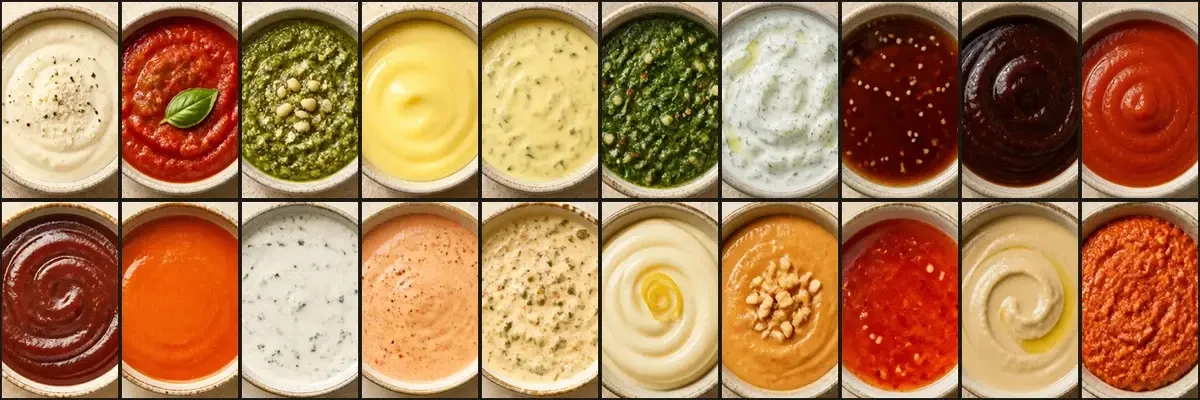
Quick facts
Core identity, dietary fit, and storage ranges in a scannable reference table.
| Origin | Italy, with widespread adoption in the United States |
|---|---|
| Base | Heavy cream or béchamel (butter and flour roux with milk) |
| Primary ingredients | heavy cream, garlic, butter, Parmesan cheese, olive oil |
| Flavor profile | rich, savory, garlicky, creamy |
| Color | Off-white to pale ivory |
| Consistency | Medium; pourable but thick enough to coat a pizza base without spreading |
| Refrigerator shelf life | 5 days |
| Freezer shelf life | 2 months |
| Vegan | No |
| Gluten-free | Depends on the recipe or product |
| Dairy-free | No |
Dietary note
Recipes and labels vary
Check ingredient labels and individual dietary requirements; homemade and packaged versions can differ.
Browse sauces sharing an ingredient
How it’s made
Butter is melted in a saucepan, garlic is sautéed briefly, then heavy cream and grated Parmesan are added and simmered until the sauce thickens. Some versions use a béchamel base with flour. Seasoning with salt, pepper, and Italian herbs finishes the sauce.
White Pizza Sauce recipe
Butter is melted in a saucepan, garlic is sautéed briefly, then heavy cream and grated Parmesan are added and simmered until the sauce thickens. Some versions use a béchamel base with flour. Seasoning with salt, pepper, and Italian herbs finishes the sauce.
Ingredients
- 2 tablespoons unsalted butter
- 3 garlic cloves, minced
- 1 cup heavy cream
- 1/2 cup grated Parmesan cheese
- 1/2 teaspoon dried Italian seasoning
- 1/4 teaspoon salt
- 1/4 teaspoon black pepper
Method
- Melt butter in a small saucepan over medium heat.
- Add minced garlic and cook for 1 minute, stirring constantly, until fragrant but not browned.
- Pour in heavy cream and bring to a gentle simmer, stirring frequently.
- Stir in grated Parmesan, Italian seasoning, salt, and black pepper.
- Simmer for 4 to 5 minutes, stirring often, until the sauce thickens enough to coat the back of a spoon.
- Remove from heat and let cool slightly before spreading on pizza dough.
Common uses
Practical applications with the role this sauce plays in each dish.
Use 01
Pizza base
Spread directly on raw pizza dough as a substitute for tomato-based pizza sauce.
Use 02
Flatbread topping
Used as a creamy base on flatbreads topped with vegetables or cured meats.
Use 03
Pasta sauce
Tossed with fettuccine, penne, or gnocchi as a quick cream sauce.
Use 04
Dipping sauce
Served warm alongside breadsticks, garlic knots, or pizza crust edges.
Use 05
Calzone filling base
Spread inside calzones before adding cheese and protein fillings.
Use 06
Stuffed bread filling
Used as a creamy layer inside stuffed rolls or stromboli.
Use 07
Vegetable gratin
Poured over layered vegetables before baking to create a creamy gratin.
Use 08
Chicken topping
Spooned over baked or grilled chicken breasts as a finishing sauce.
Pairings
Pairing ideas grouped by food role for quick comparison.
Proteins
- grilled chicken
- Italian sausage
- shrimp
- prosciutto
- bacon
Vegetables
- spinach
- artichoke hearts
- roasted garlic
- mushrooms
- sun-dried tomatoes
- caramelized onions
Carbs
- pizza dough
- fettuccine
- gnocchi
- flatbread
- penne
White Pizza Sauce substitutes
Starting ratios, best uses, and the main functional tradeoff for each alternative.
| Substitute | Ratio | Best for | Notes |
|---|---|---|---|
| Alfredo sauce | 1:1 | Pizza base or pasta | Very similar flavor; may be slightly richer and thicker than a basic white pizza sauce. |
| Béchamel sauce | 1:1 | Pizza base or gratin | Milder flavor; add garlic and Parmesan to better match white pizza sauce character. |
| Ricotta cheese | varies | Pizza base | Spread directly on dough; thicker texture and less spreadable than a poured sauce. |
| Creamy pesto sauce | 1:1 | Pizza or flatbread | Adds herbal, basil-forward flavor; suitable when a bolder profile is acceptable. |
| Olive oil and garlic | varies | Thin-crust pizza base | Dairy-free option; much lighter and less creamy than white pizza sauce. |
Storage
Keep time and temperature guidance visible, and discard sauce when spoilage signs appear.
Refrigerator
Store in an airtight container for up to 5 days. Press plastic wrap directly onto the surface to prevent a skin from forming.
Freezer
Freeze in an airtight container for up to 2 months. Cream-based sauces may separate upon thawing; whisk gently while reheating over low heat.
Signs of spoilage
Discard if the sauce develops a sour smell, visible mold, or an off-yellow or gray discoloration.
White Pizza Sauce FAQ
Short, self-contained answers to common questions.
What is white pizza sauce made of?
White pizza sauce is typically made from butter, garlic, heavy cream, and Parmesan cheese. Some versions use a béchamel base of butter, flour, and milk. Seasonings such as Italian herbs, salt, and black pepper are common additions.
Is white pizza sauce the same as Alfredo sauce?
They are closely related but not identical. Both use butter, cream, and Parmesan. Alfredo sauce is traditionally a pasta sauce with a richer ratio of butter and cheese, while white pizza sauce is often thinner and more lightly seasoned for spreading on dough.
Can white pizza sauce be made without heavy cream?
Yes. A béchamel made with whole milk and a butter-flour roux is a common alternative. Half-and-half also works and produces a lighter sauce. Dairy-free versions can use full-fat coconut milk or unsweetened oat milk, though flavor and texture will differ.
How long does homemade white pizza sauce last in the refrigerator?
Homemade white pizza sauce keeps for up to 5 days in an airtight container in the refrigerator. Reheat gently over low heat, stirring to recombine any separated cream. Discard if it develops an off smell or visible mold.
Can white pizza sauce be used as a pasta sauce?
Yes. White pizza sauce works well tossed with pasta such as fettuccine, penne, or gnocchi. It may benefit from thinning with a small amount of reserved pasta cooking water to achieve a consistency that coats noodles evenly.