Sauce technique guide
What is vodka sauce?
Vodka sauce is a tomato-and-cream pasta sauce made with vodka, aromatics, and often cheese or chile. Recipes vary, and ordinary simmering can reduce alcohol without guaranteeing that none remains.
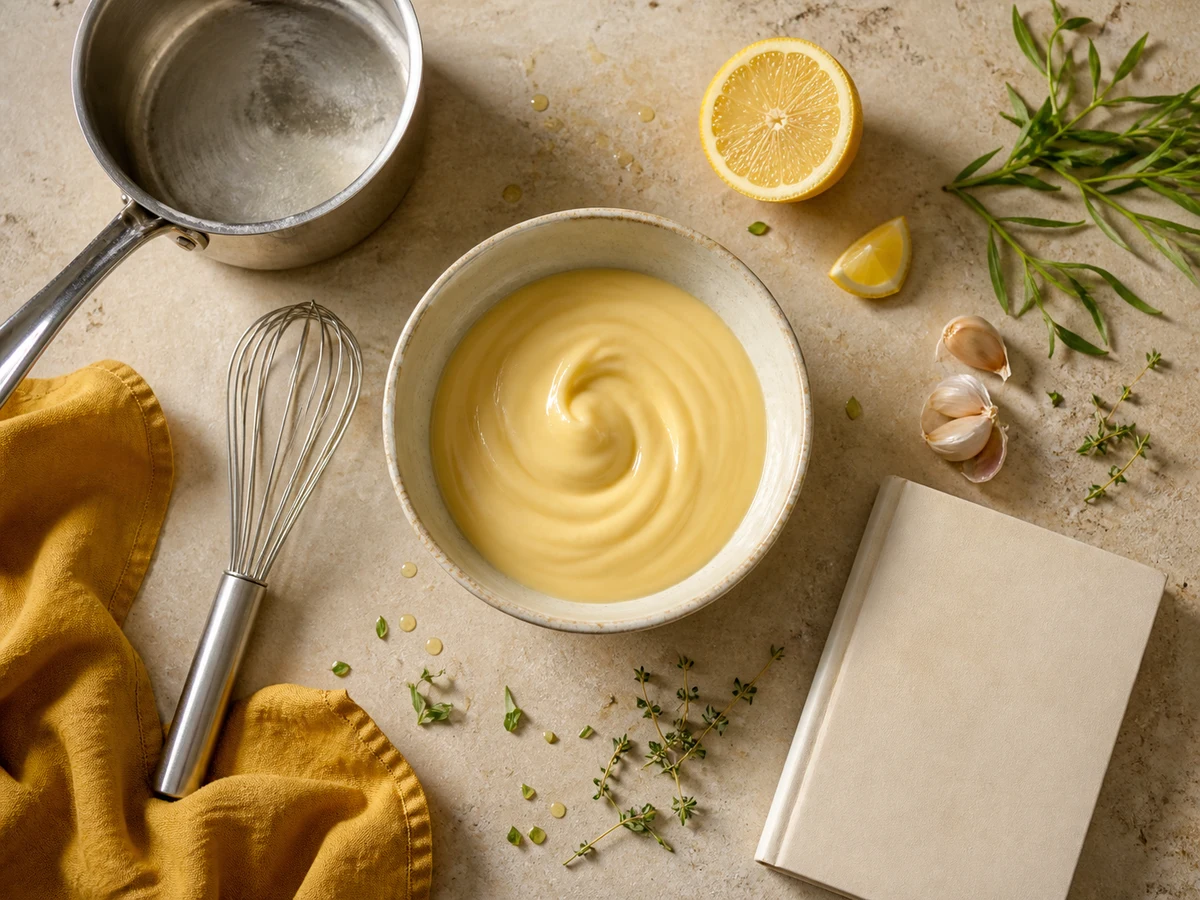
1. Ingredients and culinary role
Vodka sauce usually combines tomatoes, cream, a measured amount of vodka, aromatics, fat, and seasonings. Parmesan and red pepper are common but not required. Commercial products may add starch, sugar, other cheeses, or stabilizers, so the name alone does not establish ingredients, nutrition, or allergens.
The sauce is associated with penne alla vodka and Italian-American restaurant cooking, though origin stories are disputed. It is more accurate to describe the dish as popularized in the late twentieth century than to name one inventor without primary documentation. Recipe names and restaurant accounts are not proof that every modern version follows one historical formula.
Tomato supplies acidity and body; cream softens the flavor and changes color and texture. Vodka can contribute aroma and a small amount of sharpness before it is reduced. Avoid presenting vodka as a required emulsifier that chemically guarantees tomato and cream will stay combined. Stable texture also depends on fat, proteins, water, heat, agitation, and any added starch.
Penne is a common pairing because tubes and ridges carry sauce, but rigatoni, other pasta, or non-pasta uses can work. Choose by texture rather than declaring one shape mandatory. The sauce should coat without pooling, and it should taste balanced rather than strongly alcoholic. An alcohol-free tomato-cream sauce is a valid alternative, but it is not identical to a recipe made with vodka. Compare recipes by their complete ingredient lists and methods, because the shared name alone cannot predict richness, heat, allergens, or remaining alcohol. Keep those distinctions visible when labeling leftovers.
Tip. Read the exact product label; vodka sauce does not have one universal ingredient list.
2. Cook the sauce without overstating the chemistry
Follow a tested recipe for the amount and timing of vodka. Add it away from an open flame and never pour directly from a large bottle into a hot pan. Alcohol vapor is flammable. A recipe may add vodka before cream so it can simmer with the tomato base, but the safest sequence and cookware depend on the recipe and appliance.
Use moderate heat and stir to prevent scorching. Cream can separate under excessive heat, yet “never boil” and a fixed number of simmering minutes are not universal safety rules. Texture is best judged by the selected formula. If the sauce separates, lower the heat and stir in a small amount of compatible liquid; separation is a quality issue and does not by itself prove spoilage.
Claims that vodka extracts particular tomato compounds or permanently bridges water and fat are often repeated without a claim-specific primary source. Alcohol is a solvent and can affect aroma, but the finished sensory effect depends on concentration and cooking. Describe the result you observe rather than promising a molecular mechanism that every recipe shares.
Do not use taste or the absence of an alcohol smell to conclude that the alcohol is gone. Evaporation depends on pan shape, time, heat, stirring, food composition, and when the alcohol was added. A wider pan or longer cooking may increase loss, but neither provides a home proof of zero residual alcohol. Keep the recipe’s starting amount and cooking method with any notes about the finished batch. Preserve those notes with stored portions.
Warning. Keep vodka away from open flame and do not pour from the bottle into a hot pan.
3. Handle alcohol, allergens, and leftovers conservatively
USDA nutrient-retention data show that some alcohol can remain after cooking and that retention varies widely by method and time. The table is not a promise about the exact percentage in an individual pot of vodka sauce. A home cook cannot infer zero alcohol from a 15-, 30-, or 60-minute simmer without testing the finished food.
Anyone who must avoid alcohol completely for medical, recovery, religious, age-related, pregnancy, or personal reasons should choose an alcohol-free recipe or obtain advice appropriate to that situation. Do not tell parents that a fixed simmer makes the dish safe for every child, and do not tell a person in recovery that the remaining amount is negligible. Broth plus a small amount of acid may suit some alcohol-free recipes, but it changes flavor and should follow a tested formula.
Traditional versions contain milk ingredients and may contain wheat or other allergens depending on cheese, thickener, stock, and packaged components. Read every label for the exact product. Distillation claims about vodka do not establish the gluten status of the complete sauce, and a restaurant preparation may have cross-contact.
Refrigerate leftovers promptly in shallow covered containers. USDA’s general cooked-leftover window is three to four days when food has been handled correctly. Reheat evenly to the applicable endpoint and discard sauce with mold, an off odor, package damage, or uncertain handling. Separation after chilling can be a quality change rather than a spoilage test. Label an alcohol-free portion clearly so it is not confused with the vodka-containing batch.
Warning. Ordinary cooking reduces alcohol but does not prove that a finished sauce contains none.
Sources
Primary and direct references used for current or safety-sensitive claims.
- USDA Table of Nutrient Retention Factors — USDA retention data show that alcohol retention varies substantially with preparation method and cooking time; ordinary cooking does not guarantee zero residual alcohol.
- Leftovers and Food Safety | USDA FSIS — USDA FSIS says hot food may be refrigerated directly in shallow containers, describes safe thawing and refreezing methods, and gives a general three-to-four-day refrigerated leftover window.
Guide FAQ
Short, self-contained answers to common technique questions.
Does all the vodka cook out of vodka sauce?
Not reliably. USDA data show that alcohol retention varies with method and time. A home simmer duration cannot prove zero alcohol in a specific finished sauce.
Is vodka sauce appropriate for someone avoiding alcohol?
Choose an alcohol-free recipe when complete avoidance matters. Do not rely on smell, taste, or a fixed simmer time to prove that no alcohol remains.
Does vodka emulsify tomato and cream?
Vodka can affect flavor and the liquid mixture, but it does not guarantee a stable emulsion. Fat, proteins, water, heat, stirring, and other ingredients also control texture.
Can vodka sauce be made without vodka?
Yes. Use a tested alcohol-free tomato-cream recipe. Broth and a small amount of acid can be used in some formulas, but the result will not be identical.
Is vodka sauce gluten-free?
It depends on the complete formula. Check vodka, stock, thickeners, cheese, seasonings, and cross-contact for the exact product or restaurant preparation.
How long does leftover vodka sauce keep?
Properly handled cooked leftovers generally have a three-to-four-day USDA refrigerator window. Refrigerate promptly; use more specific product or recipe guidance when it applies.