Italian · dipping
Vodka Sauce
Vodka sauce is an Italian-American tomato cream sauce that combines crushed tomatoes, heavy cream, and a small amount of vodka to produce a smooth, mildly tangy, rose-colored pasta sauce.
Quick facts
Core identity, dietary fit, and storage ranges in a scannable reference table.
| Origin | Italy and United States, late 20th century |
|---|---|
| Base | Crushed tomatoes and heavy cream |
| Primary ingredients | crushed tomatoes, heavy cream, vodka, garlic, shallots, Parmesan cheese, olive oil, red pepper flakes |
| Flavor profile | creamy, tangy, mildly spicy, savory |
| Color | Rose to deep orange-pink |
| Consistency | Medium; smooth and coating, thicker than marinara but thinner than Alfredo |
| Refrigerator shelf life | 3–4 days (general USDA leftover guidance) |
| Freezer shelf life | 3 months |
| Vegan | No |
| Gluten-free | Yes |
| Dairy-free | No |
Dietary note
Recipes and labels vary
Check ingredient labels and individual dietary requirements; homemade and packaged versions can differ.
Browse sauces sharing an ingredient
How it’s made
Shallots and garlic are softened in olive oil, then tomato paste and crushed tomatoes are added. Vodka is stirred in and simmered briefly to cook off the alcohol. Heavy cream is added and the sauce is reduced until smooth and coating. Parmesan and seasonings finish the sauce.
Vodka Sauce recipe
Shallots and garlic are softened in olive oil, then tomato paste and crushed tomatoes are added. Vodka is stirred in and simmered briefly to cook off the alcohol. Heavy cream is added and the sauce is reduced until smooth and coating. Parmesan and seasonings finish the sauce.
Ingredients
- 2 tablespoons olive oil
- 2 medium shallots, finely minced
- 4 garlic cloves, minced
- 3 tablespoons tomato paste
- 1 can (28 oz) crushed tomatoes
- 1/3 cup vodka
- 3/4 cup heavy cream
- 1/2 teaspoon red pepper flakes
- 1/2 cup Parmesan cheese, finely grated
- to taste kosher salt
- to taste black pepper
Method
- Heat olive oil in a large skillet over medium heat. Add shallots and cook, stirring, until softened, about 4 minutes.
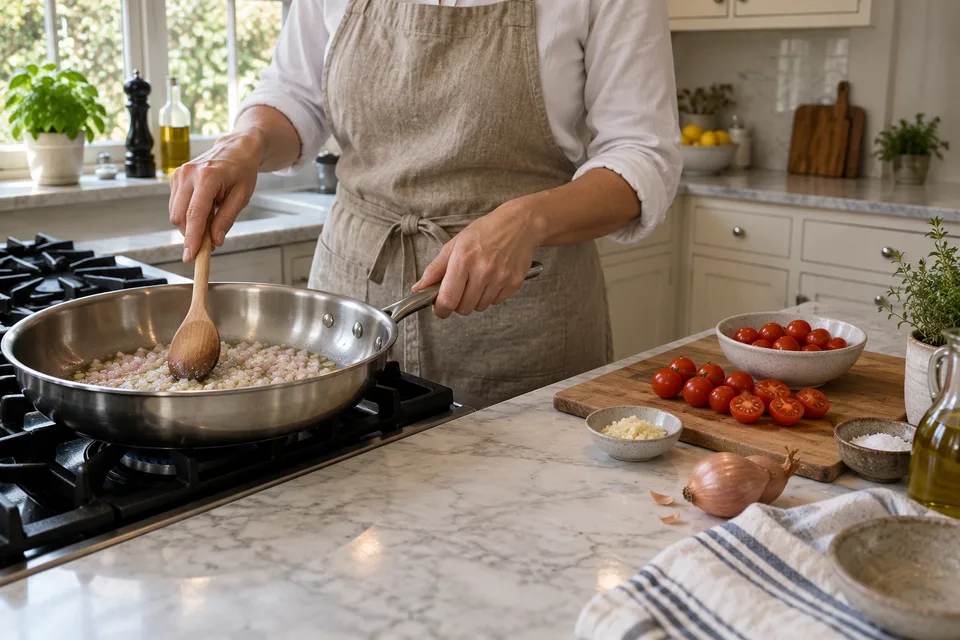
- Add garlic and red pepper flakes; cook 1 minute until fragrant.
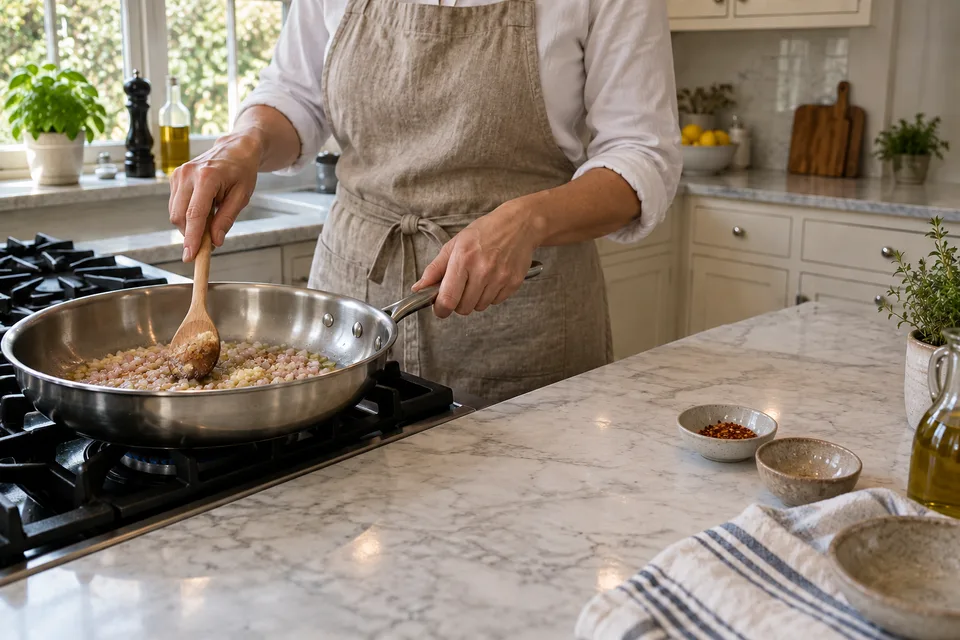
- Stir in tomato paste and cook, stirring frequently, for 2 minutes to deepen the flavor.
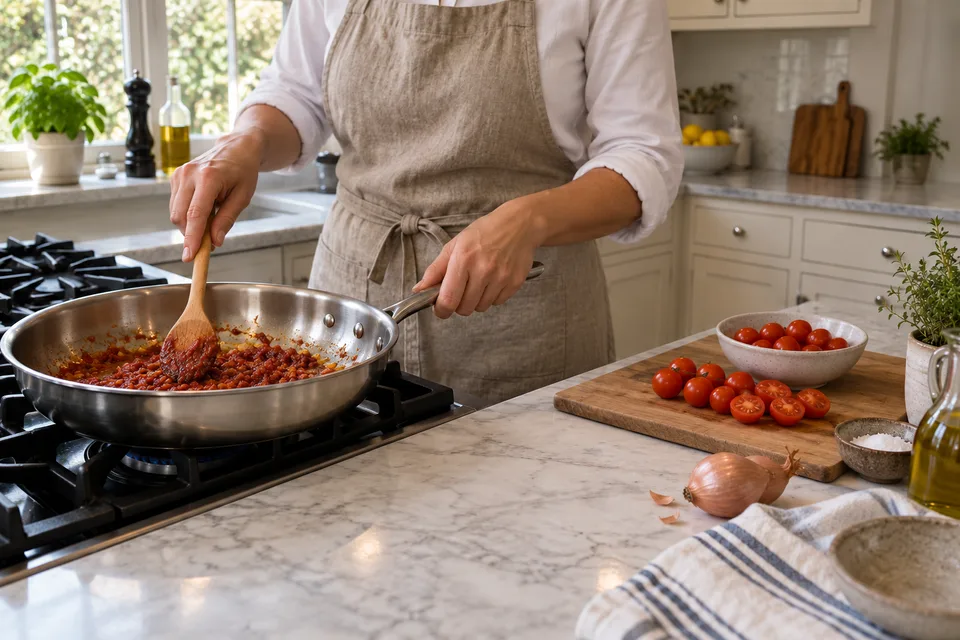
- Pour in crushed tomatoes and stir to combine. Add vodka and bring to a gentle simmer.
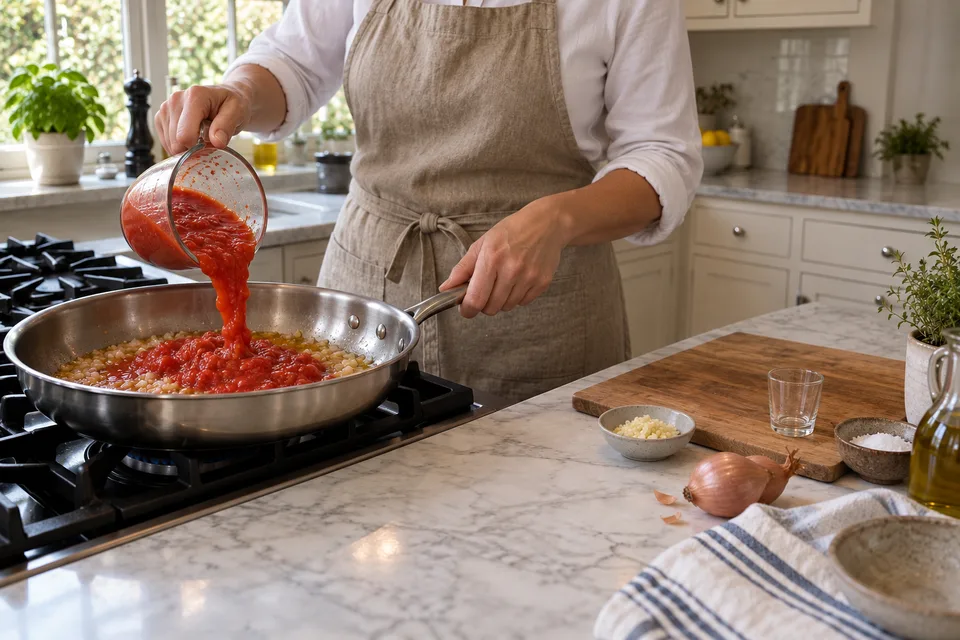
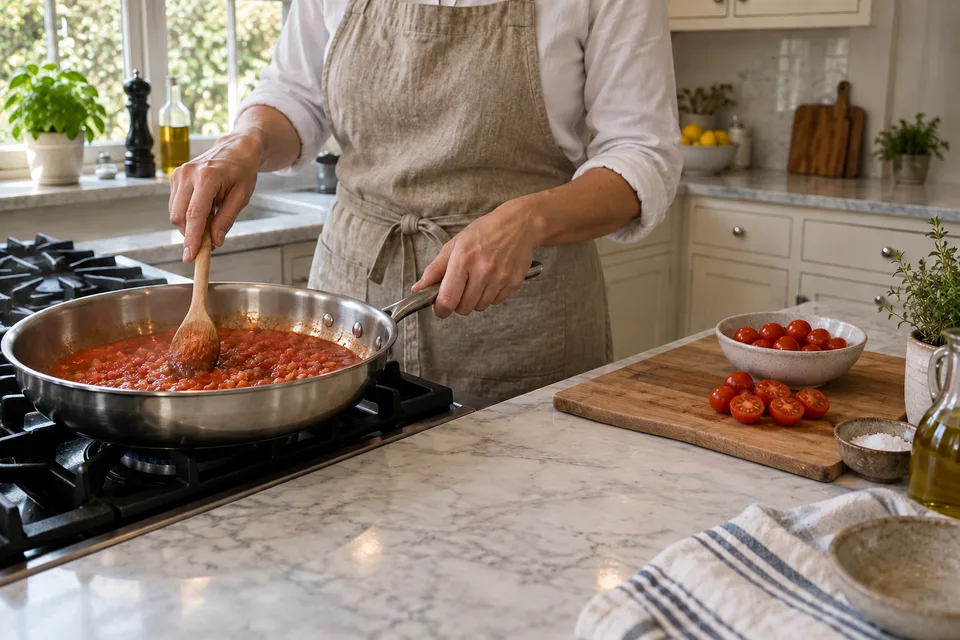
- Simmer uncovered for 10 minutes, stirring occasionally, to reduce the sauce and cook off the alcohol.
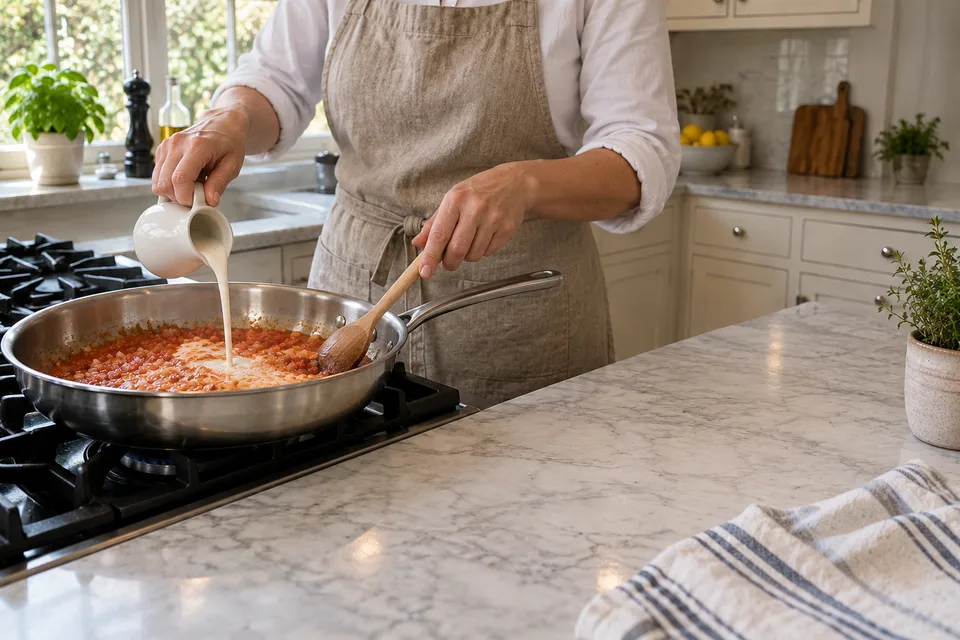
- Reduce heat to low and stir in heavy cream. Simmer for 5 minutes until the sauce is smooth and slightly thickened.
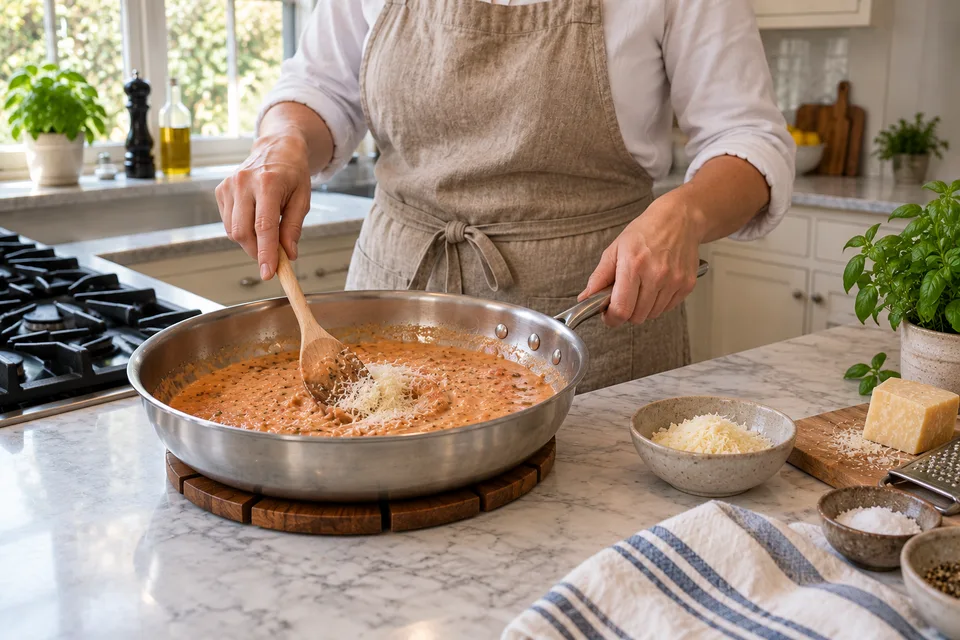
- Remove from heat, stir in Parmesan, and season with salt and black pepper. Toss immediately with cooked pasta or use as directed.
Common uses
Practical applications with the role this sauce plays in each dish.
Use 01
Pasta sauce
Tossed with penne, rigatoni, or other short pasta as the classic application.
Use 02
Pizza topping
Spread on pizza dough in place of marinara for a creamy, tangy base.
Use 03
Baked pasta
Used as the sauce in baked ziti or stuffed shells for a rich, creamy result.
Use 04
Dipping sauce
Served warm alongside bread, breadsticks, or fried appetizers.
Use 05
Gnocchi sauce
Coats potato gnocchi evenly due to its medium, clinging consistency.
Use 06
Shakshuka variation
Used as a base for poaching eggs in a creamy tomato preparation.
Use 07
Stuffed pepper filling
Mixed with rice and meat as a flavorful filling for baked stuffed peppers.
Use 08
Chicken or shrimp skillet
Simmered with sautéed protein for a quick one-pan entrée.
Pairings
Pairing ideas grouped by food role for quick comparison.
Proteins
- Italian sausage
- shrimp
- grilled chicken
- pancetta
- prosciutto
Vegetables
- spinach
- roasted red peppers
- mushrooms
- sun-dried tomatoes
- peas
Carbs
- penne rigate
- rigatoni
- gnocchi
- focaccia
- crusty Italian bread
Vodka Sauce substitutes
Starting ratios, best uses, and the main functional tradeoff for each alternative.
| Substitute | Ratio | Best for | Notes |
|---|---|---|---|
| Tomato cream sauce (no vodka) | 1:1 | Alcohol-free cooking | Omit vodka; flavor is slightly less complex but otherwise similar. |
| Marinara sauce with cream stirred in | 1:1 | Quick weeknight substitute | Stir 2 to 3 tablespoons of heavy cream into warm marinara per serving. |
| Arrabbiata sauce with cream | 1:1 | Spicier profile | Adds more heat; reduce added red pepper flakes accordingly. |
| Canned tomato bisque thinned with cream | varies | Pantry shortcut | Texture and sweetness differ; best used in baked pasta dishes. |
| Pomodoro sauce with a splash of white wine and cream | varies | Lighter alternative | White wine replaces vodka; result is thinner and less rich. |
Storage
Keep time and temperature guidance visible, and discard sauce when spoilage signs appear.
Refrigerator
Divide leftover vodka sauce into shallow covered containers and refrigerate promptly at 40°F (4°C) or below; do not wait for it to cool completely on the counter. Refrigerate within 2 hours, or 1 hour above 90°F (32°C). Follow USDA’s general leftover guidance: use within 3–4 days. This is not a tested shelf life for this exact recipe. Reheat leftovers to 165°F (74°C).
Freezer
Freeze in airtight containers or zip-top bags for up to 3 months. Cream-based sauces may separate slightly on thawing; whisk over low heat to recombine.
Signs of spoilage
Discard if the sauce develops an off or sour odor, visible mold, or an unusual discoloration.
Sources
Public references supporting safety-sensitive claims and editorial decisions on this page.
- Leftovers and Food Safety — USDA FSIS fsis.usda.gov
General leftover guidance: rapid cooling in shallow containers, prompt refrigeration, time limits and 3–4 days refrigerated storage. Not recipe-specific shelf-life testing.
Vodka Sauce FAQ
Short, self-contained answers to common questions.
Does vodka sauce contain alcohol?
Vodka sauce contains vodka, but most of the alcohol cooks off during simmering. A small residual amount may remain depending on cook time. The sauce is generally not considered alcohol-free and is not suitable for those who must avoid all alcohol.
What does vodka do in vodka sauce?
Vodka helps emulsify the tomato and cream components, producing a smoother texture. It also releases fat-soluble flavor compounds in the tomatoes that water alone cannot extract, contributing to a more complex, rounded flavor without adding a strong alcohol taste.
Can you make vodka sauce without vodka?
Yes. Omitting the vodka produces a tomato cream sauce with a similar appearance and texture. The flavor will be slightly less complex. A small amount of white grape juice or water can be used to deglaze the pan in its place.
Is vodka sauce gluten-free?
A homemade vodka sauce made with the standard ingredients is naturally gluten-free. Vodka distilled from grain is generally considered gluten-free by the FDA after distillation. Always verify that any jarred or packaged vodka sauce is certified gluten-free if sensitivity is a concern.
How is vodka sauce different from marinara?
Marinara is a simple tomato sauce made without cream or dairy, producing a thinner, brighter, more acidic result. Vodka sauce adds heavy cream and Parmesan, giving it a richer, rose-colored, coating consistency and a milder, less acidic flavor profile.