Sauce technique guide
Homemade vs. store-bought sauce
Homemade sauce offers greater control over ingredients, sodium, and flavor. Store-bought sauce trades some of that control for convenience and longer shelf life. Neither is universally superior; the right choice depends on time, dietary needs, and intended use.
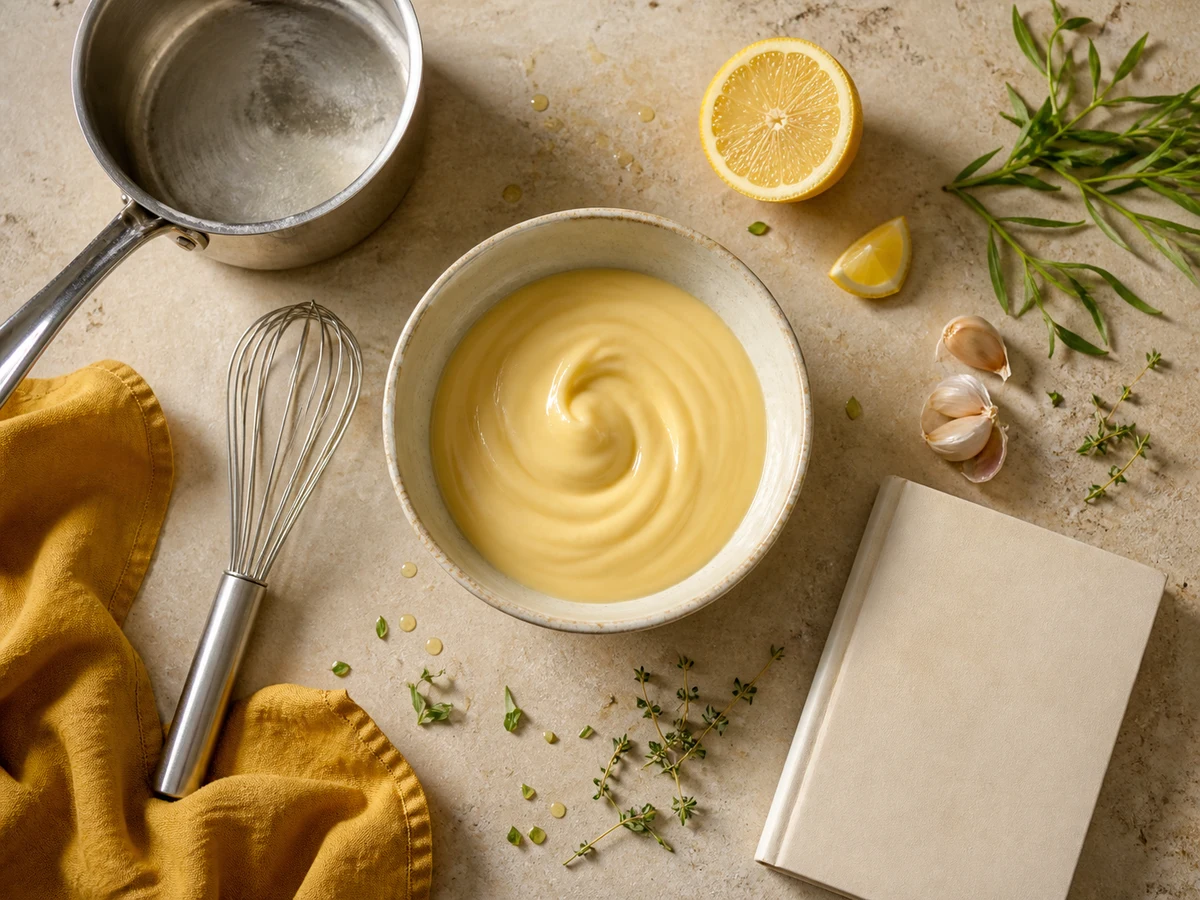
1. Ingredients and nutrition
The practical difference between homemade and store-bought sauce begins with the exact recipe and exact product, not the category name alone.
Ingredients: A homemade sauce lets the cook choose each ingredient and adjust seasoning during preparation. A packaged sauce provides a fixed ingredient list and Nutrition Facts panel. Neither format guarantees a short ingredient list, a particular oil, or the absence of preservatives; read the label and compare it with the homemade formula you would actually use.
Sodium and sugar: Sodium and sugar vary substantially by brand and serving size. Compare Nutrition Facts labels for the exact products using the same serving size; do not treat one article’s values as category-wide averages. Homemade sauce can be prepared with less salt or sweetener, but the final amount depends on the recipe and serving size. “No added sugar,” “low sodium,” and similar label statements have defined or product-specific meanings; compare the complete panel rather than inferring nutrition from front-of-package language.
Allergens and dietary needs: Homemade preparation can make ingredient control easier, but cross-contact still depends on the kitchen and tools. Packaged sauces may provide allergen statements and facility information, yet formulas can change. Recheck the current label each time a restriction matters.
Flavor and texture: Fresh herbs, long simmering, a high-powered commercial process, or a stabilizer can each change the result. Homemade is not automatically fresher-tasting, and packaged is not automatically uniform across brands. Judge the specific sauce for the intended dish.
For a fair comparison, use the same serving size, include every added ingredient in the homemade recipe, and distinguish convenience and shelf life from nutrition or flavor.
Tip. Check the serving size on store-bought labels carefully; sodium and sugar totals can appear low because the listed serving is small.
Warning. "Low-fat" or "no sugar added" labels do not guarantee low sodium or absence of sweeteners. Read the full ingredient list before purchasing.
2. Flavor and customization
Homemade sauce and store-bought sauce occupy different positions on the flavor spectrum, and neither is automatically superior for every application.
Freshness and depth favor homemade preparations. Fresh herbs added at the end of cooking retain bright aromatics that dried herbs — especially those that have been jarred for an extended period — cannot fully replicate. Fresh tomatoes and quality olive oil contribute flavor compounds that industrial processing can reduce.
Consistency favors store-bought. Commercial sauces are formulated to taste the same batch after batch, which matters for high-volume cooking or when a specific flavor profile needs to be reproduced reliably. Homemade sauce varies with the season, the ripeness of produce, and the cook's adjustments.
Customization is the clearest advantage of making sauce at home. Spice level, sweetness, acidity, herb selection, and fat source are all adjustable. Home preparation lets cooks choose ingredients around specific restrictions, but it does not eliminate cross-contact risk. For store-bought sauce, compare the current label against those constraints.
Occasion is a practical guide for choosing between the two. A weeknight pasta dinner is a reasonable use case for a quality jarred sauce. A special-occasion lasagna, a sauce built around peak-season tomatoes, or a recipe with specific dietary requirements generally benefits from a homemade approach.
Improving store-bought sauce is a practical middle path. Stirring in fresh herbs at the end of heating, adding a drizzle of quality olive oil, or incorporating sautéed aromatics such as garlic or onion can improve depth and freshness without the full time investment of making sauce from scratch. Some jarred sauces use simple, high-quality ingredients and come close to homemade results, particularly when supplemented with fresh additions.
Tip. Batch-cook homemade sauce on a low-demand day and freeze in portion-sized containers to create a convenient ready-to-use supply.
3. Convenience, cost, and shelf life
Store-bought sauce has a decisive advantage in shelf life and immediate availability. Unopened commercial tomato-based sauces are shelf-stable for up to 18 months or more in the pantry. Once opened, the USDA advises that high-acid canned goods such as tomato sauce should be stored for no more than five to seven days in the refrigerator. Opened cream or Alfredo sauces should be used within three to four days.
Homemade sauce has a shorter refrigerator window. The USDA's standard guidance for cooked leftovers held at 40°F (4°C) or below is three to four days. Sauces made with fresh ingredients such as herbs, garlic, or dairy may reach the lower end of that range. Refrigerate homemade sauce promptly — within two hours of cooking — in an airtight container.
Freezing is the most practical way to extend homemade sauce. Sauce frozen in airtight containers maintains quality for up to six months. Thaw frozen sauce overnight in the refrigerator rather than at room temperature. Sauce thawed in the refrigerator may be refrozen without cooking, although quality may decline. Sauce thawed in cold water or the microwave should be reheated to 165°F before refreezing.
Spoilage signs to watch for in any sauce include off odor, discoloration, mold, and Separation or curdling can be a quality change and does not by itself prove spoilage; when safety is uncertain, discard. Discard sauce with mold, an off odor, package damage, or another clear sign of spoilage. Note that some pathogenic bacteria do not produce noticeable odors, so adhering to time limits is important even when a sauce appears and smells normal.
Cost varies by sauce type and ingredient quality. Store-bought sauces offer a predictable per-unit cost. Homemade sauce cost depends on ingredient sourcing; using canned crushed tomatoes rather than fresh can reduce cost while still producing a lower-sodium result than most jarred options.
Time is the most common barrier to homemade sauce. Many basic tomato sauces require 30–60 minutes of active and passive cooking time. Batch cooking and freezing amortizes that time investment across multiple meals.
Warning. Discard homemade tomato sauce after 3–4 days in the refrigerator. Do not rely on smell alone to judge safety; adhere to time limits.
Sources
Primary and direct references used for current or safety-sensitive claims.
- Shelf-Stable Food Safety | USDA FSIS — USDA FSIS says unused canned food may be refrigerated in the can, while transfer to glass or plastic can better preserve flavor and quality.
Guide FAQ
Short, self-contained answers to common technique questions.
Is homemade sauce always healthier than store-bought?
Not automatically. Homemade sauce gives control over ingredients, but it is not automatically healthier. However, some clean-label store-bought options use simple ingredients and moderate sodium. The nutritional outcome depends on the specific recipe or product, not the category alone.
How long does homemade sauce last in the refrigerator?
Most homemade tomato-based sauces last 3–4 days in the refrigerator stored in an airtight container at or below 40°F (4°C), consistent with USDA guidance for cooked leftovers. Cream-based or dairy-containing sauces may spoil faster. Discard any sauce showing off odor, mold, or unusual texture regardless of how recently it was made.
Can I freeze homemade sauce to extend its shelf life?
Yes. Freeze homemade sauce in airtight containers for up to six months. Thaw overnight in the refrigerator rather than at room temperature. Sauce thawed in the refrigerator may be refrozen without cooking, although quality may decline. Sauce thawed in cold water or the microwave should be reheated to 165°F before refreezing.
Why does store-bought sauce have more sodium than homemade?
Sodium and sugar vary substantially by brand and serving size. Compare Nutrition Facts labels for the exact products using the same serving size; do not treat one article’s values as category-wide averages.
When does it make more sense to use store-bought sauce?
Store-bought sauce is practical for weeknight meals when time is limited, for consistent results across large batches, and when pantry stock is needed for unplanned cooking. It is also a reasonable choice when a clean-label product with acceptable sodium and ingredient quality is available.
What is the best way to improve a store-bought sauce?
Stir in fresh herbs at the end of heating, add a small amount of quality olive oil, adjust seasoning to taste, or incorporate sautéed aromatics such as garlic or onion. These additions can improve depth and freshness without the full time investment of making sauce from scratch.