Sauce technique guide
How to freeze sauce
Freeze sauce in small, food-safe containers after prompt cooling. Label each portion, follow the exact product or recipe guidance for quality, and thaw by refrigerator, cold-water, or microwave methods appropriate to the package.
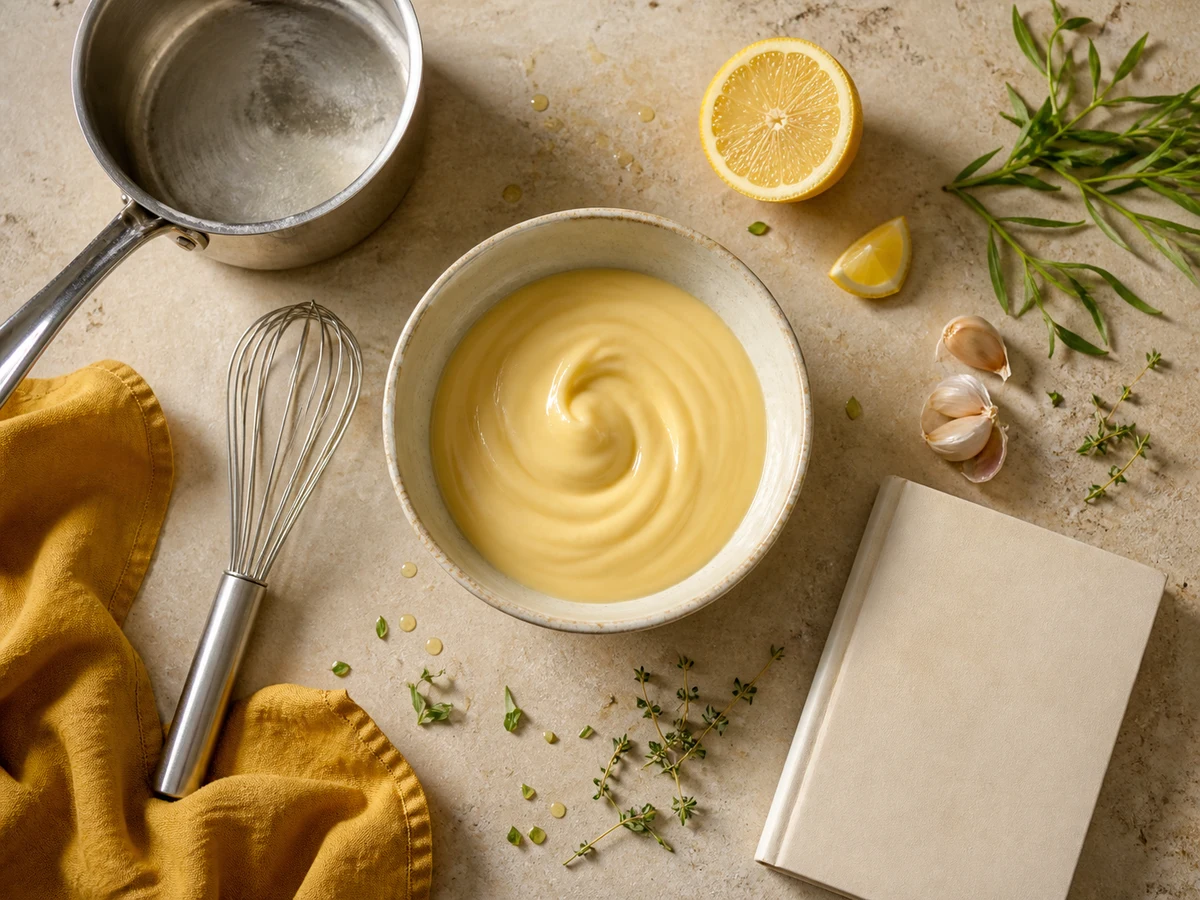
1. Cool and package sauce safely
Freezing starts with prompt handling, not a long wait on the counter. Divide hot sauce into shallow containers and refrigerate promptly; hot food may go directly into the refrigerator. An ice-water bath can speed cooling for large batches. If a recipe or appliance manual gives more specific directions, follow them. Do not leave a large pot at room temperature until its center feels cool, because the outside and center cool at different rates.
Choose containers labeled for food storage and freezer use. Rigid containers, freezer bags, and freezer-rated glass are options when used within their manufacturer limits. Ordinary glass may crack as food expands. Leave the headspace stated for the container and sauce; there is no single measurement that fits every vessel. Avoid filling a hot container beyond its temperature rating.
Portion sauce in amounts you expect to use at one time. Smaller portions cool and freeze faster and reduce repeated thawing. Remove excess air from a freezer bag without forcing sauce into the seal. Wipe the rim of a rigid container, close it securely, and label it with the sauce name, ingredients that matter for allergies, portion size, and freeze date.
Freezing stops microbial growth but does not repair food that was already mishandled. If a perishable sauce exceeded the applicable time-and-temperature limit or its history is unknown, freezing is not a safety reset. When transferring a packaged sauce, preserve the original storage directions and lot information if a recall or label question could matter later. Keep the preparation area and utensils clean throughout portioning and packaging.
Tip. Use shallow, meal-size portions so sauce cools and freezes more evenly.
Warning. Freezing does not make previously mishandled sauce safe.
2. Judge freezer quality by the exact sauce
A freezer date is mainly a quality-management tool. USDA explains that properly frozen food can remain safe while flavor, color, moisture, and texture decline. That principle does not create one best-quality window for every sauce. The recipe, package, ingredients, freezer temperature, container, and amount of air all affect the result.
Tomato sauces often freeze with fewer visible texture changes than dairy emulsions, but a specific meat sauce, vegetable sauce, or opened retail product may have different guidance. Cream, cheese, egg, and butter emulsions can separate or look grainy after thawing. Separation or curdling can be a quality change and does not by itself prove spoilage; when safety is uncertain, discard. A sauce that separates may sometimes be whisked gently, but recovery is not guaranteed.
Pesto and other oil-rich sauces can darken or lose fresh aroma. Sauces thickened with starch may become thinner, thicker, or uneven after thawing. These are reasons to freeze a test portion before committing a full batch. They are not a basis for inventing a universal table of two, three, or six months.
For a commercial sauce, use the manufacturer’s freezing instructions and date guidance for the exact product. For a homemade sauce, use a source specific to that recipe when available and record the ingredients. Rotate older portions first and discard a damaged, leaking, unsealed, or unidentified package. Freezer burn is a quality defect, but package damage or uncertain handling can raise a separate safety question. Record the container type and portion size when comparing the quality of later batches.
Tip. Freeze a small test portion when the sauce contains a delicate dairy or egg emulsion.
3. Thaw, reheat, and refreeze safely
Refrigerator thawing gives the most control: place the sealed portion in a dish to catch leaks and allow enough time for the center to thaw. A leak-proof package may also be thawed in cold water when the water is kept cold and changed as needed. Microwave thawing is appropriate only in a microwave-safe container and should flow directly into reheating. Never use a container outside its labeled temperature limits.
Sauce can also be reheated from frozen when the vessel and recipe permit it. Stir as it loosens so cold spots do not remain. USDA directs reheated leftovers to reach 165°F and says sauces, soups, and gravies reheated on the stovetop should be brought to a rolling boil. Texture-focused advice such as low heat for a cream sauce does not replace the food-safety endpoint; use a thermometer and a method that heats the whole portion.
Sauce thawed in the refrigerator may be refrozen without cooking, although quality may decline. Sauce thawed in cold water or the microwave should be reheated to 165°F before refreezing. If only part of a refrigerator-thawed package is needed, remove that portion with a clean utensil and promptly return the remainder to cold storage.
Do not infer safety from smell or appearance alone. Discard sauce with mold, an off odor, a damaged package, or an uncertain time-and-temperature history. Label a refrozen portion again so the handling sequence is clear. Repeated cycles tend to reduce quality, so portioning before the first freeze remains the better plan.
Warning. Cold-water- or microwave-thawed sauce must be reheated to 165°F before refreezing.
Sources
Primary and direct references used for current or safety-sensitive claims.
- Leftovers and Food Safety | USDA FSIS — USDA FSIS says hot food may be refrigerated directly in shallow containers, describes safe thawing and refreezing methods, and gives a general three-to-four-day refrigerated leftover window.
- Freezing and Food Safety | USDA FSIS — USDA FSIS explains that freezing preserves safety while quality can decline, and that refrigerator-thawed food may be refrozen without cooking although quality may suffer.
- Are You Storing Food Safely? | FDA — FDA advises prompt refrigeration, covered storage, label checks, and discarding food when safety is uncertain.
Guide FAQ
Short, self-contained answers to common technique questions.
Must sauce cool completely before refrigeration?
No. Divide hot sauce into shallow containers and refrigerate promptly; hot food may go directly into the refrigerator. An ice-water bath can speed cooling for a large batch.
How long can every sauce stay frozen?
There is no single best-quality period for every sauce. Follow the exact recipe or manufacturer guidance and label the freeze date. Ingredients, packaging, air exposure, and freezer conditions all affect quality.
Does separation after thawing mean spoilage?
Not by itself. Separation or curdling can be a quality change. Evaluate handling history and package condition; discard for mold, an off odor, damage, or when safety is uncertain.
Can sauce be thawed in a microwave?
Yes, in a microwave-safe container. Continue directly into reheating and heat the sauce throughout to 165°F. Stir and check more than one spot because microwave heating can be uneven.
Can thawed sauce be refrozen?
Refrigerator-thawed sauce may be refrozen without cooking, although quality may decline. Cold-water- or microwave-thawed sauce should be reheated to 165°F before refreezing.
Can I freeze sauce in its opened can or jar?
Use a container specifically labeled for freezer storage and preserve the original product directions. Do not assume the retail can or jar is freezer-safe; transfer the portion when the package does not authorize freezing.