Greek/Med · dressings
Chimichurri
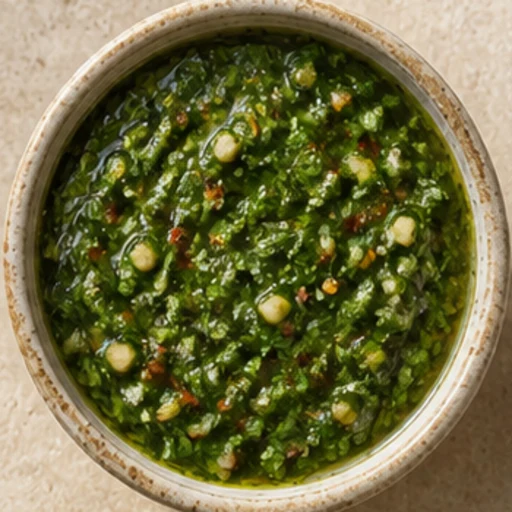
Chimichurri is an Argentine herb sauce that combines finely chopped parsley, garlic, olive oil, and red wine vinegar for use as a condiment or marinade for grilled meats.
Quick facts
Core identity, dietary fit, and storage ranges in a scannable reference table.
| Origin | Argentina, 19th century |
|---|---|
| Base | Fresh parsley and olive oil |
| Primary ingredients | flat-leaf parsley, garlic, olive oil, red wine vinegar, dried oregano, red pepper flakes |
| Flavor profile | herbaceous, tangy, garlicky, mildly spicy |
| Color | Bright green with flecks of red |
| Consistency | Medium; loose and spoonable with visible herb pieces |
| Refrigerator shelf life | 7 days |
| Freezer shelf life | 3 months |
| Vegan | Yes |
| Gluten-free | Yes |
| Dairy-free | Yes |
Dietary note
Recipes and labels vary
Check ingredient labels and individual dietary requirements; homemade and packaged versions can differ.
Browse sauces sharing an ingredient
How it’s made
Fresh parsley and garlic are finely chopped by hand or pulsed briefly in a food processor. Olive oil, red wine vinegar, dried oregano, and red pepper flakes are combined with the herbs. The sauce rests at least 30 minutes before serving to allow flavors to meld.
Chimichurri recipe
Fresh parsley and garlic are finely chopped by hand or pulsed briefly in a food processor. Olive oil, red wine vinegar, dried oregano, and red pepper flakes are combined with the herbs. The sauce rests at least 30 minutes before serving to allow flavors to meld.
Ingredients
- 1 cup fresh flat-leaf parsley, packed
- 4 medium garlic cloves
- 1/2 cup extra-virgin olive oil
- 3 tablespoons red wine vinegar
- 1 teaspoon dried oregano
- 1/2 teaspoon red pepper flakes
- 1/2 teaspoon kosher salt
- 1/4 teaspoon black pepper
Method
- Finely chop parsley and garlic by hand or pulse 5 to 6 times in a food processor until coarsely minced; avoid pureeing.

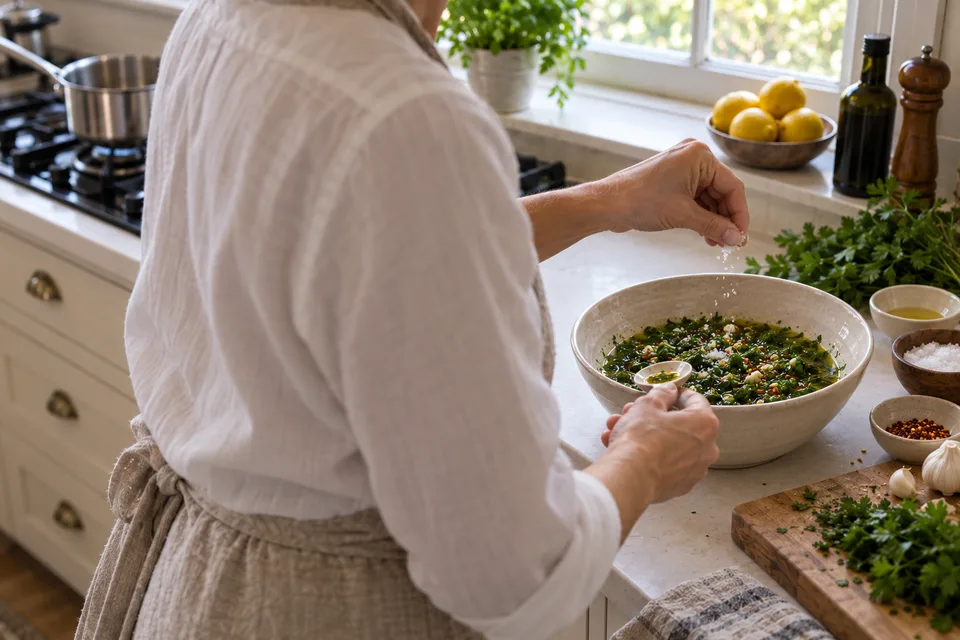
- Transfer parsley and garlic to a bowl. Add olive oil, red wine vinegar, oregano, red pepper flakes, salt, and black pepper.
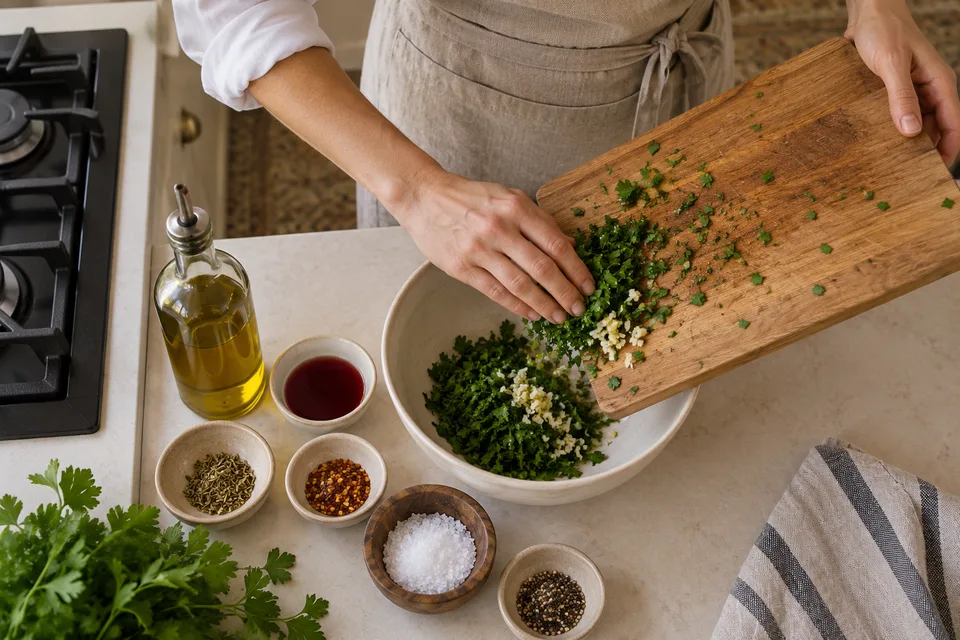
- Stir all ingredients together until evenly combined.
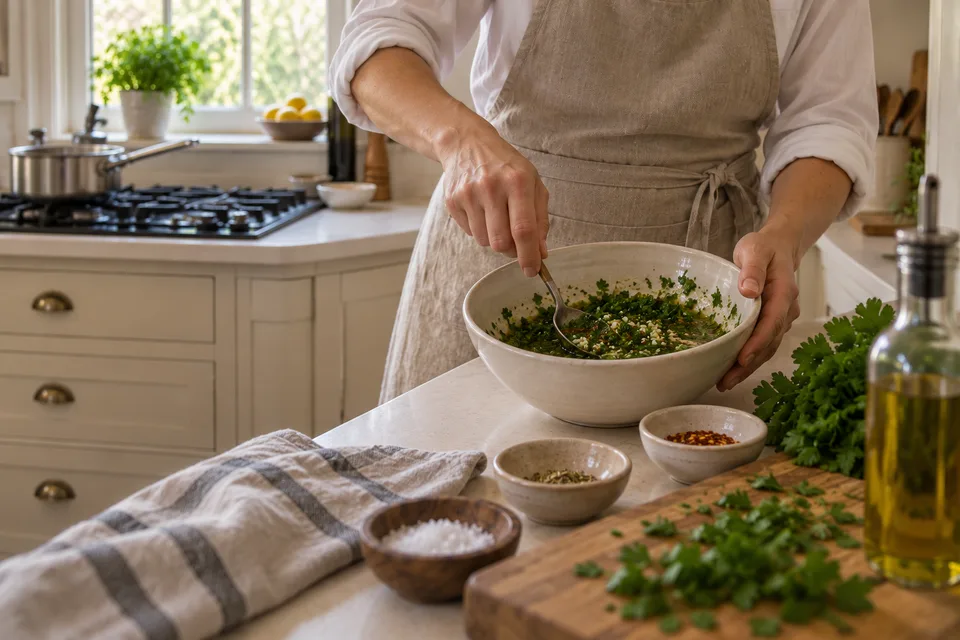
- Let the sauce rest at room temperature for at least 30 minutes before serving to allow flavors to develop.

- Taste and adjust salt, vinegar, or red pepper flakes as needed before serving.
Common uses
Practical applications with the role this sauce plays in each dish.
Use 01
Grilled steak condiment
Spooned directly over skirt, flank, or ribeye steak immediately after grilling.
Use 02
Marinade
Used to marinate beef, chicken, or lamb for 1 to 4 hours before cooking.
Use 03
Grilled chicken topping
Drizzled over bone-in or boneless chicken pieces fresh off the grill.
Use 04
Vegetable dressing
Tossed with roasted or grilled vegetables such as zucchini, peppers, and eggplant.
Use 05
Sandwich spread
Spread on bread or rolls as a flavorful alternative to mayonnaise or mustard.
Use 06
Seafood accompaniment
Served alongside grilled shrimp or fish as a bright, acidic finishing sauce.
Use 07
Grain bowl dressing
Drizzled over farro, quinoa, or rice bowls to add herbaceous flavor.
Use 08
Dipping sauce
Served as a table condiment for bread, empanadas, or grilled sausages.
Pairings
Pairing ideas grouped by food role for quick comparison.
Proteins
- skirt steak
- flank steak
- ribeye
- grilled chicken thighs
- lamb chops
- grilled shrimp
- chorizo
Vegetables
- grilled zucchini
- roasted bell peppers
- grilled eggplant
- roasted potatoes
- grilled corn
Carbs
- crusty bread
- farro
- white rice
- quinoa
- flatbread
Chimichurri substitutes
Starting ratios, best uses, and the main functional tradeoff for each alternative.
| Substitute | Ratio | Best for | Notes |
|---|---|---|---|
| Salsa verde (Italian) | 1:1 | Grilled meats and vegetables | Similar herb-and-oil base; capers and anchovies add briny depth. |
| Pesto | 1:1 | Sandwiches and grain bowls | Richer and nuttier; lacks vinegar tang; works well as a spread. |
| Mojo sauce | 1:1 | Marinades and grilled pork | Citrus-forward rather than vinegar-based; garlic flavor is comparable. |
| Cilantro-lime sauce | 1:1 | Tacos and grilled chicken | Brighter citrus note; cilantro replaces parsley for a different herb character. |
| Romesco sauce | varies | Grilled vegetables and proteins | Thicker and nut-based; adds smokiness but lacks the herbaceous quality. |
Storage
Keep time and temperature guidance visible, and discard sauce when spoilage signs appear.
Refrigerator
Store in an airtight glass jar for up to 7 days. Keep olive oil layer on top to help preserve color. Stir before each use.
Freezer
Freeze in ice cube trays, then transfer cubes to a sealed bag for up to 3 months. Thaw in the refrigerator overnight before use.
Signs of spoilage
Discard if the sauce develops an off or fermented odor, visible mold, or a slimy texture.
Chimichurri FAQ
Short, self-contained answers to common questions.
What is the difference between green and red chimichurri?
Green chimichurri uses fresh parsley as its base. Red chimichurri adds roasted red peppers or tomatoes and often more paprika, producing a deeper color and slightly sweeter, smokier flavor. Both share the same oil, vinegar, and garlic foundation.
Can chimichurri be made ahead of time?
Yes. Chimichurri improves after resting 30 minutes and can be made up to 24 hours in advance. Store it covered in the refrigerator and bring it to room temperature before serving. The parsley may darken slightly but flavor remains intact for up to 7 days.
Is chimichurri the same as pesto?
No. Chimichurri is an Argentine herb sauce built on parsley, garlic, oil, and vinegar. Pesto is an Italian sauce made from basil, pine nuts, Parmesan, garlic, and olive oil. They share an herb-and-oil structure but differ in ingredients, flavor, and culinary tradition.
Does chimichurri need to be cooked?
No. Chimichurri is a raw sauce. Ingredients are combined without heat. Resting the sauce at room temperature for at least 30 minutes allows the garlic and herbs to infuse the oil and vinegar, developing fuller flavor without any cooking.
Can chimichurri be used as a marinade?
Yes. Chimichurri works as a marinade for beef, chicken, or lamb. Coat the protein and refrigerate for 1 to 4 hours. Avoid marinating longer than 4 hours, as the vinegar's acidity can begin to break down the texture of the meat.