Greek/Med · tomato
Romesco Sauce
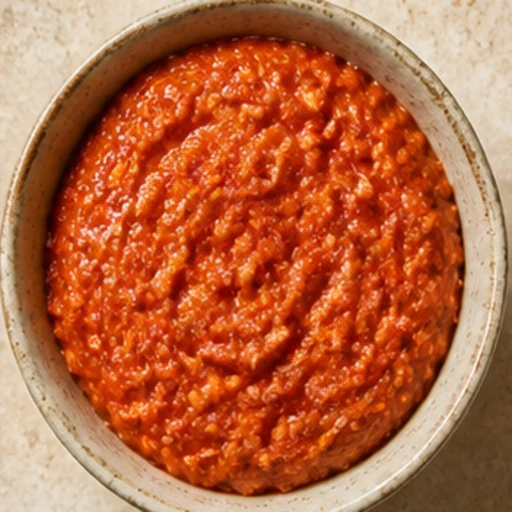
Romesco sauce is a Spanish condiment that combines roasted red peppers, tomatoes, toasted nuts, and olive oil into a thick, smoky, tangy sauce originating in Catalonia.
Quick facts
Core identity, dietary fit, and storage ranges in a scannable reference table.
| Origin | Catalonia, Spain; origins traced to the early 20th century |
|---|---|
| Base | Roasted red peppers and tomatoes |
| Primary ingredients | roasted red peppers, tomatoes, almonds or hazelnuts, garlic, olive oil, red wine vinegar, smoked paprika, dried ñora or ancho chiles |
| Flavor profile | smoky, nutty, tangy, mildly sweet |
| Color | Deep brick red to orange-red |
| Consistency | Thick; coarsely textured with visible nut and pepper pieces |
| Refrigerator shelf life | 7 days |
| Freezer shelf life | 3 months |
| Vegan | Yes |
| Gluten-free | Depends on the recipe or product |
| Dairy-free | Yes |
Dietary note
Recipes and labels vary
Check ingredient labels and individual dietary requirements; homemade and packaged versions can differ.
Browse sauces sharing an ingredient
How it’s made
Tomatoes, red peppers, and garlic are roasted or charred until softened. Nuts and dried chiles are toasted separately, then all components are blended with olive oil, vinegar, and smoked paprika to a coarse, thick consistency. Bread is sometimes added as a thickener.
Romesco Sauce recipe
Tomatoes, red peppers, and garlic are roasted or charred until softened. Nuts and dried chiles are toasted separately, then all components are blended with olive oil, vinegar, and smoked paprika to a coarse, thick consistency. Bread is sometimes added as a thickener.
Ingredients
- 2 large (about 1 cup) roasted red peppers (jarred or freshly roasted)
- 2 medium roma tomatoes, halved
- 4 garlic cloves, unpeeled
- 1/3 cup raw almonds
- 1/4 cup olive oil, divided
- 1 teaspoon smoked paprika
- 1 tablespoon red wine vinegar
- 1 dried ancho or ñora chile, stemmed and seeded
- 1/2 teaspoon kosher salt
- 1 slice crusty bread, torn (optional thickener)
Method
- Preheat oven to 400°F. Place tomato halves and unpeeled garlic on a baking sheet, drizzle with 1 tablespoon olive oil, and roast 25 to 30 minutes until softened and lightly charred.
- While vegetables roast, toast almonds in a dry skillet over medium heat for 3 to 4 minutes, stirring frequently, until golden. Remove and set aside.
- Soak the dried chile in hot water for 10 minutes to soften, then drain.
- Peel the roasted garlic cloves. Combine roasted tomatoes, garlic, roasted red peppers, toasted almonds, soaked chile, smoked paprika, red wine vinegar, and bread (if using) in a food processor.
- Pulse the mixture to a coarse paste. With the processor running, drizzle in the remaining olive oil until the sauce reaches a thick, slightly chunky consistency.
- Season with salt, taste, and adjust vinegar or paprika as needed. Transfer to a jar and refrigerate until ready to serve.
Common uses
Practical applications with the role this sauce plays in each dish.
Use 01
Grilled fish dipping sauce
Served alongside grilled or roasted fish, particularly salt cod and sea bass, as a traditional Catalan accompaniment.
Use 02
Vegetable dip
Used as a dipping sauce for roasted or raw vegetables, especially calçots (green onions) in Catalonia.
Use 03
Pasta sauce
Tossed with pasta as a quick, no-cook sauce; pairs well with short shapes like rigatoni or fusilli.
Use 04
Sandwich spread
Spread on crusty bread, sandwiches, or wraps in place of mayonnaise or mustard for added depth.
Use 05
Grain bowl base
Spooned over farro, quinoa, or rice bowls as a flavorful, protein-compatible sauce.
Use 06
Roasted meat accompaniment
Served as a table sauce alongside roasted chicken, lamb, or pork to add smoky, tangy contrast.
Use 07
Egg topping
Dolloped over fried or poached eggs for a Spanish-inspired breakfast or brunch preparation.
Use 08
Pizza or flatbread base
Used as an alternative to tomato sauce on flatbreads or pizza, contributing a smoky, nutty flavor layer.
Pairings
Pairing ideas grouped by food role for quick comparison.
Proteins
- grilled sea bass
- salt cod
- roasted chicken thighs
- lamb chops
- shrimp
- poached eggs
Vegetables
- calçots
- roasted asparagus
- grilled zucchini
- roasted cauliflower
- charred leeks
Carbs
- crusty sourdough
- rigatoni
- farro
- flatbread
- roasted potatoes
Romesco Sauce substitutes
Starting ratios, best uses, and the main functional tradeoff for each alternative.
| Substitute | Ratio | Best for | Notes |
|---|---|---|---|
| Roasted red pepper sauce | 1:1 | Dipping and spreading | Lacks the nutty depth and smokiness; add smoked paprika to compensate. |
| Sun-dried tomato pesto | 1:1 | Pasta and sandwiches | Richer and more acidic; omit extra vinegar in the dish. |
| Muhammara | 1:1 | Dipping and grain bowls | Similar pepper-and-nut base; slightly spicier and uses walnuts instead of almonds. |
| Harissa | varies | Meat accompaniment | Much spicier and thinner; use sparingly and blend with olive oil to moderate heat. |
| Tomato-almond pesto | 1:1 | Pasta | Approximates the nut-tomato combination but lacks roasted pepper smokiness. |
Storage
Keep time and temperature guidance visible, and discard sauce when spoilage signs appear.
Refrigerator
Store in an airtight container for up to 7 days. Press plastic wrap directly onto the surface or pour a thin layer of olive oil on top to slow oxidation.
Freezer
Freeze in a sealed container or ice cube tray for up to 3 months. Thaw overnight in the refrigerator and stir well before serving.
Signs of spoilage
Discard if mold appears, the sauce smells sour or fermented, or the color darkens significantly.
Romesco Sauce FAQ
Short, self-contained answers to common questions.
What nuts are traditionally used in romesco sauce?
Almonds are the most common nut in romesco sauce. Hazelnuts are also traditional, and some preparations use a combination of both. The nuts are typically toasted before blending to develop a deeper, roasted flavor.
Is romesco sauce gluten-free?
Romesco sauce is often gluten-free, but some recipes include a slice of bread as a thickener, which contains gluten. Check the specific recipe or product label. When making it at home, simply omit the bread or substitute a gluten-free alternative.
What is the difference between romesco sauce and roasted red pepper sauce?
Romesco sauce includes toasted nuts, dried chiles, smoked paprika, and vinegar alongside roasted red peppers, giving it a smoky, nutty, and tangy complexity. Plain roasted red pepper sauce typically contains only peppers, garlic, and olive oil, resulting in a simpler, sweeter flavor.
Can romesco sauce be made ahead of time?
Yes. Romesco sauce keeps well refrigerated for up to 7 days and often improves after a day as the flavors meld. It can also be frozen for up to 3 months. Stir or blend briefly after thawing if the texture separates.
What are ñora chiles and can they be substituted?
Ñora chiles are small, round dried Spanish peppers with a mild, sweet, slightly smoky flavor. They are traditional in romesco sauce. Dried ancho chiles or a combination of sweet paprika and a small amount of chipotle are practical substitutes when ñora chiles are unavailable.