Italian · dressings
Pesto
Pesto is an Italian uncooked sauce that blends fresh basil, garlic, pine nuts, Parmesan cheese, and olive oil into a thick, herbaceous condiment originating from Genoa.
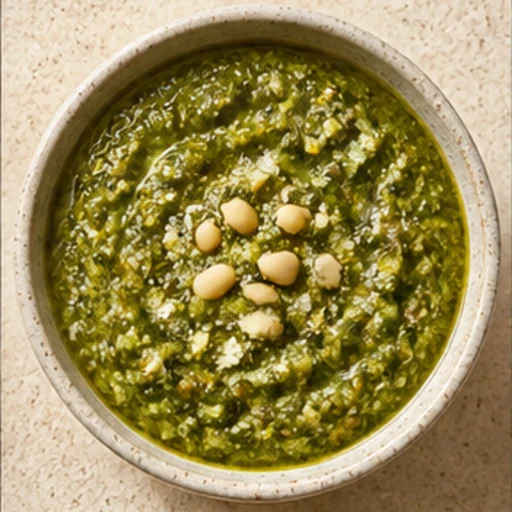
Quick facts
Core identity, dietary fit, and storage ranges in a scannable reference table.
| Origin | Genoa, Italy (Liguria region); documented in the 19th century |
|---|---|
| Base | Fresh basil and olive oil |
| Primary ingredients | fresh basil, extra-virgin olive oil, Parmesan cheese, pine nuts, garlic, salt |
| Flavor profile | herbaceous, nutty, savory, bright |
| Color | Vivid green |
| Consistency | Thick; coarse to smooth paste depending on preparation method |
| Refrigerator shelf life | 7 days |
| Freezer shelf life | 3 months |
| Vegan | No |
| Gluten-free | Yes |
| Dairy-free | No |
Dietary note
Recipes and labels vary
Check ingredient labels and individual dietary requirements; homemade and packaged versions can differ.
Browse sauces sharing an ingredient
How it’s made
Fresh basil leaves, garlic, and pine nuts are ground together, then Parmesan and Pecorino Romano are incorporated. Olive oil is streamed in gradually to form a cohesive paste. Traditional preparation uses a mortar and pestle; a food processor is a common modern alternative.
Pesto recipe
Fresh basil leaves, garlic, and pine nuts are ground together, then Parmesan and Pecorino Romano are incorporated. Olive oil is streamed in gradually to form a cohesive paste. Traditional preparation uses a mortar and pestle; a food processor is a common modern alternative.
Ingredients
- 2 cups fresh basil leaves, packed
- 1/2 cup extra-virgin olive oil
- 1/3 cup pine nuts
- 2 medium garlic cloves
- 1/2 cup finely grated Parmesan cheese
- 2 tablespoons finely grated Pecorino Romano cheese
- 1/4 teaspoon kosher salt
Method
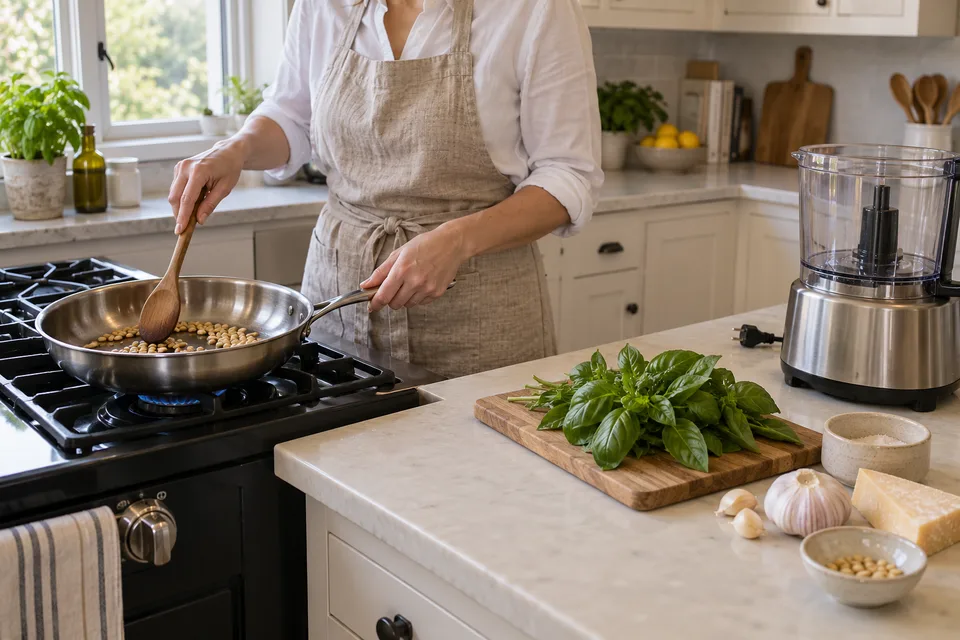
- Toast pine nuts in a dry skillet over medium-low heat for 2 to 3 minutes, stirring frequently, until lightly golden. Remove from heat and let cool.
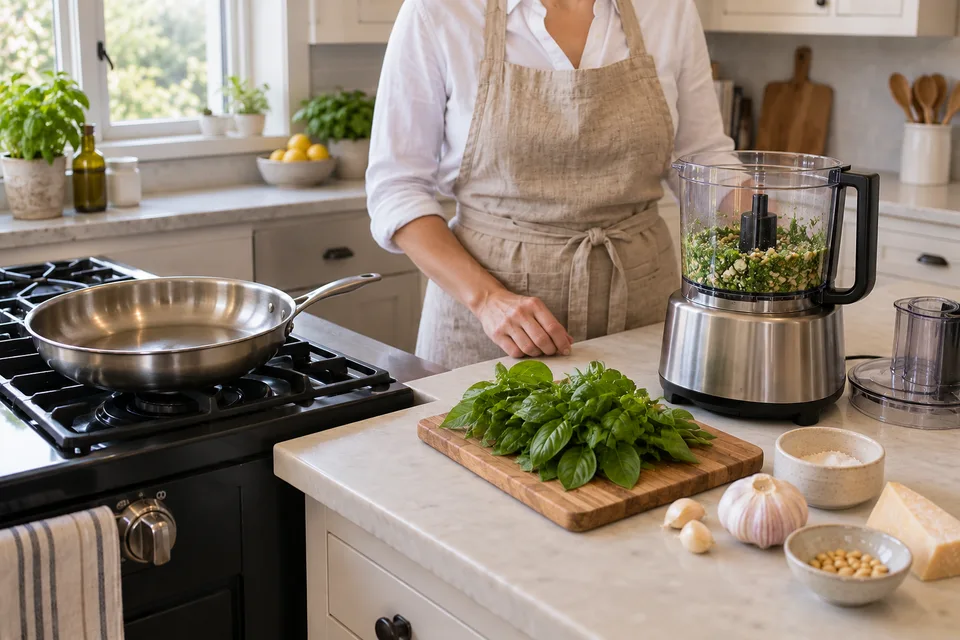
- Combine basil, garlic, toasted pine nuts, and salt in a food processor. Pulse until coarsely chopped.
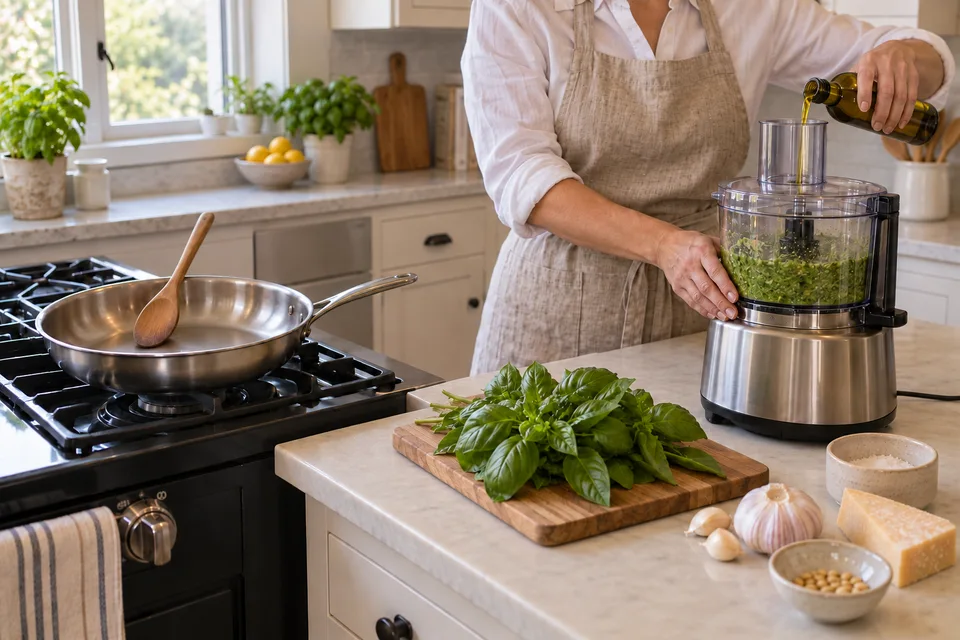
- With the processor running, stream in olive oil slowly until the mixture forms a smooth paste.
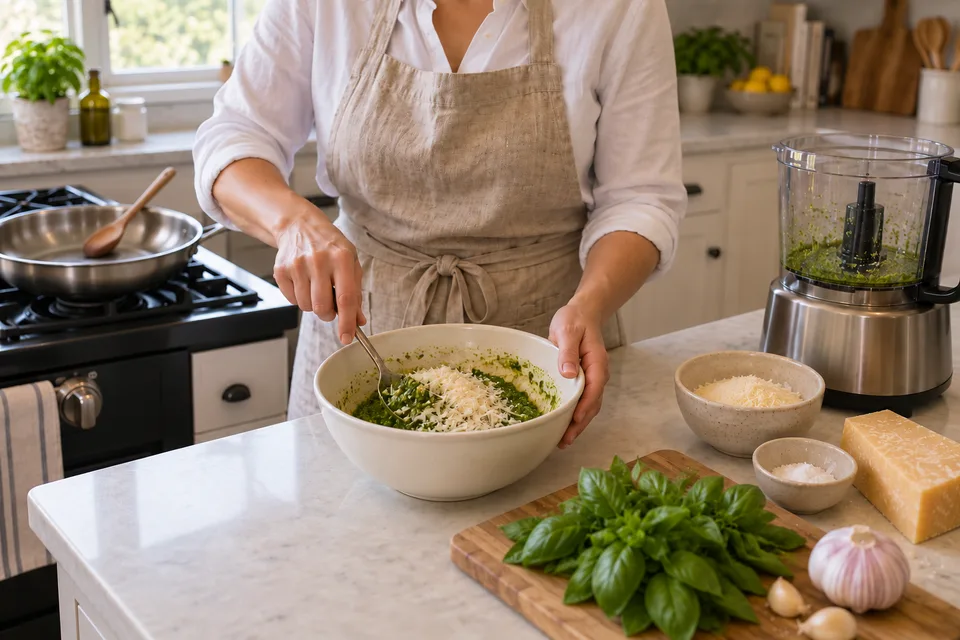
- Transfer to a bowl and stir in Parmesan and Pecorino Romano by hand. Taste and adjust salt as needed.
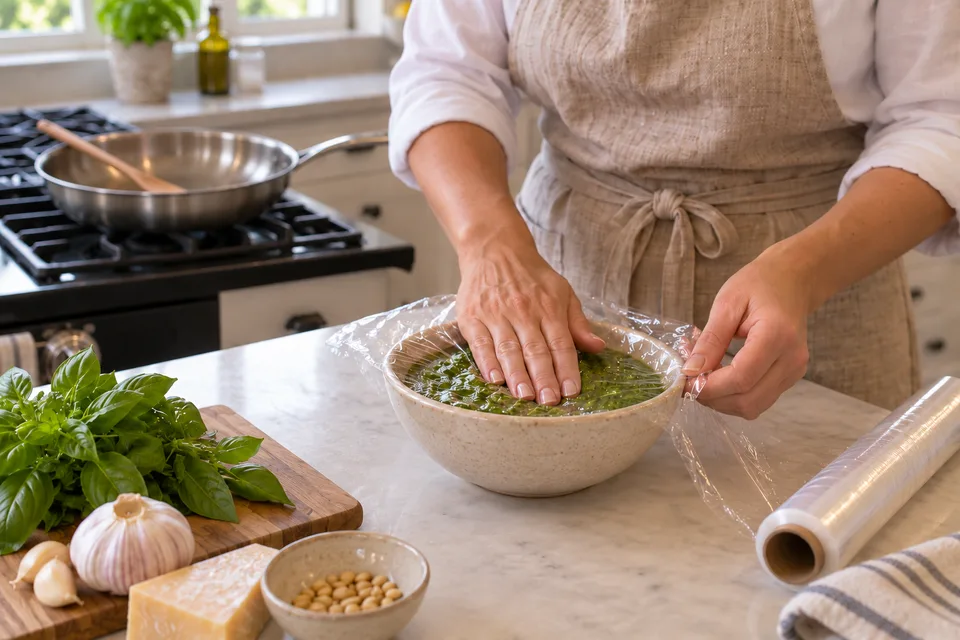
- Use immediately or press plastic wrap directly onto the surface before refrigerating to slow oxidation.
Common uses
Practical applications with the role this sauce plays in each dish.
Use 01
Pasta sauce
Tossed with cooked pasta; thin with reserved pasta water to coat evenly without clumping.
Use 02
Pizza base
Spread directly on pizza dough in place of tomato sauce before adding toppings.
Use 03
Sandwich spread
Applied to bread or focaccia as a flavorful alternative to mayonnaise or mustard.
Use 04
Salad dressing
Whisked with a splash of lemon juice or vinegar and drizzled over green or grain salads.
Use 05
Soup swirl
Stirred into minestrone or vegetable soup just before serving to add herbal depth.
Use 06
Marinade
Used as a wet rub or marinade for chicken, fish, or vegetables before grilling or roasting.
Use 07
Dip
Served alongside crudités, bread, or crackers as a quick appetizer dip.
Use 08
Egg topping
Spooned over scrambled eggs, omelets, or frittatas to add savory, herby flavor.
Pairings
Pairing ideas grouped by food role for quick comparison.
Proteins
- grilled chicken breast
- shrimp
- salmon
- Italian sausage
- hard-boiled eggs
Vegetables
- roasted cherry tomatoes
- zucchini
- asparagus
- artichoke hearts
- sun-dried tomatoes
Carbs
- linguine
- trofie pasta
- gnocchi
- focaccia
- sourdough bread
- roasted potatoes
Pesto substitutes
Starting ratios, best uses, and the main functional tradeoff for each alternative.
| Substitute | Ratio | Best for | Notes |
|---|---|---|---|
| Creamy pesto sauce | 1:1 | Pasta and pizza | Adds cream for a richer, milder result; reduces sharpness of raw garlic. |
| Walnut and basil pesto | 1:1 | Any pesto application | Walnuts replace pine nuts; slightly more bitter and earthy in flavor. |
| Sun-dried tomato pesto (pesto rosso) | 1:1 | Pasta, sandwiches, and pizza | Red color and sweeter, tangy profile; not a flavor match but a functional swap. |
| Arugula pesto | 1:1 | Pasta and salad dressings | Peppery and bold; suitable when basil is unavailable or a sharper taste is preferred. |
| Store-bought basil pesto | 1:1 | Any application requiring convenience | Flavor is less bright than fresh; check label for dairy content if needed. |
Storage
Keep time and temperature guidance visible, and discard sauce when spoilage signs appear.
Refrigerator
Transfer to an airtight container and press plastic wrap directly onto the surface to limit air exposure. Refrigerate for up to 7 days. Stir before use.
Freezer
Spoon into ice cube trays, freeze until solid, then transfer cubes to a freezer bag. Freeze for up to 3 months. Thaw in the refrigerator overnight.
Signs of spoilage
Discard if the sauce develops a sour or off smell, visible mold, or a gray-brown discoloration throughout.
Pesto FAQ
Short, self-contained answers to common questions.
Why does homemade pesto turn brown?
Basil oxidizes quickly when its cell walls are broken and exposed to air. Blanching basil briefly in boiling water before blending, or pressing plastic wrap directly onto the sauce surface, slows browning. Adding a thin layer of olive oil on top before refrigerating also helps.
Is pesto gluten-free?
Traditional pesto made from basil, olive oil, pine nuts, garlic, and Parmesan contains no gluten-containing ingredients. However, some commercial products are processed in facilities that handle wheat. Always check the label if gluten sensitivity or celiac disease is a concern.
Can pesto be made without pine nuts?
Yes. Walnuts, almonds, cashews, or sunflower seeds are common substitutes. Each nut changes the flavor slightly; walnuts add bitterness, cashews add creaminess. Use the same volume as the pine nuts called for in the recipe.
Can you freeze pesto?
Yes. Freeze pesto in ice cube trays for portioned use, then transfer frozen cubes to a sealed freezer bag. It keeps for up to 3 months. Thaw in the refrigerator. Texture may change slightly after freezing; stir well before serving.
What pasta shape works best with pesto?
Trofie is the traditional Ligurian pairing. Linguine, spaghetti, and fusilli also work well because their surfaces hold the sauce. Toss pasta with pesto off the heat and add a splash of starchy pasta water to help the sauce coat evenly.