Italian · pasta
Homemade Spaghetti Sauce with Fresh Tomatoes
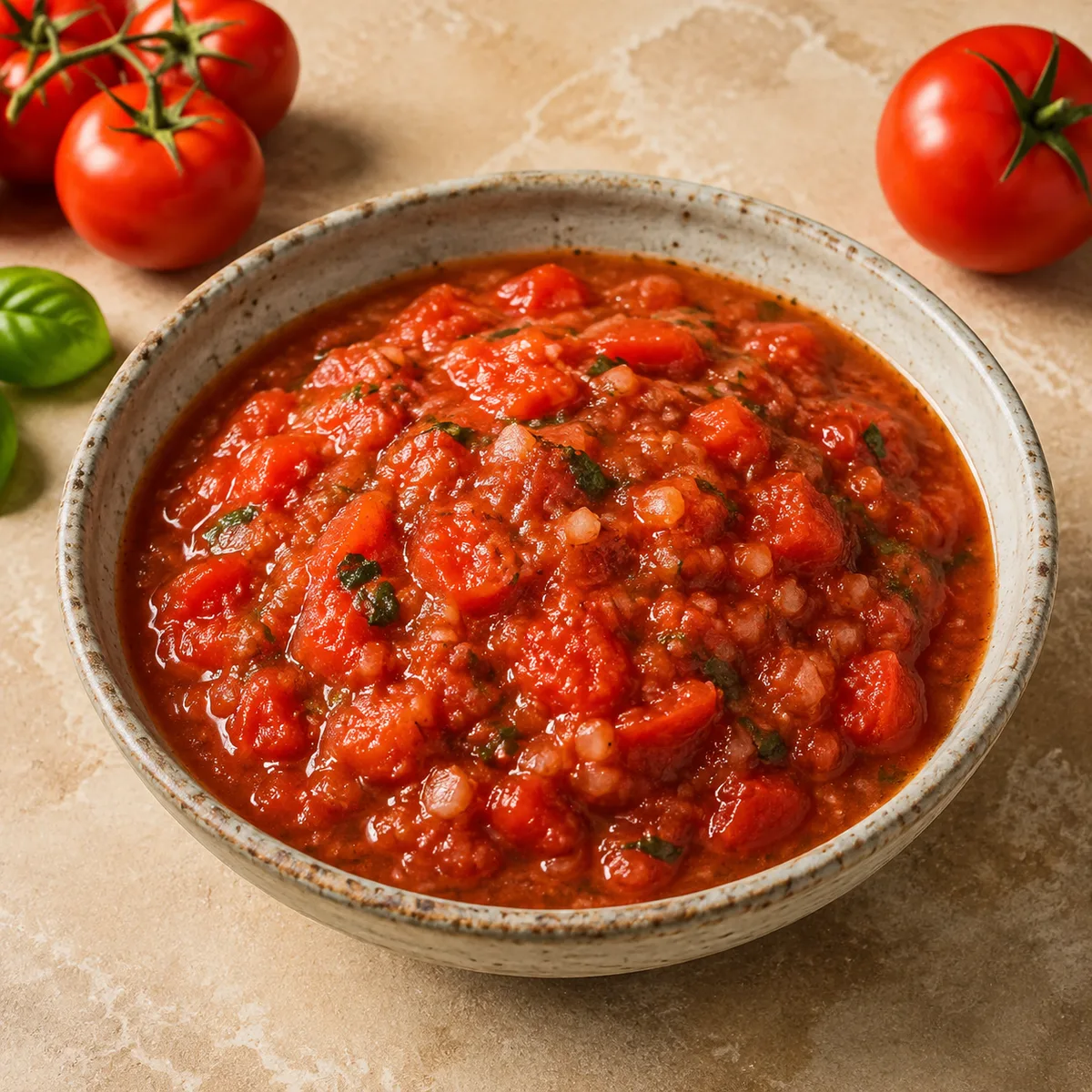
Homemade spaghetti sauce with fresh tomatoes is an Italian-style pasta sauce that combines ripe fresh tomatoes with garlic, onion, olive oil, and herbs, simmered until thickened into a bright, chunky consistency.
Quick facts
Core identity, dietary fit, and storage ranges in a scannable reference table.
| Origin | Italy, with regional variations established by the 19th century |
|---|---|
| Base | Fresh tomatoes |
| Primary ingredients | fresh tomatoes, garlic, onion, olive oil, fresh basil, dried oregano, salt |
| Flavor profile | bright, savory, herbaceous, mildly sweet |
| Color | Deep red to red-orange |
| Consistency | Medium; chunky with some texture from cooked tomato flesh |
| Refrigerator shelf life | 3 to 4 days (homemade) |
| Freezer shelf life | Up to 3 months for quality |
| Vegan | Yes |
| Gluten-free | Yes |
| Dairy-free | Yes |
Dietary note
Recipes and labels vary
Check ingredient labels and individual dietary requirements; homemade and packaged versions can differ.
Browse sauces sharing an ingredient
How to Make Spaghetti Sauce with Fresh Tomatoes
Fresh tomatoes are blanched, peeled, and crushed, then simmered with sautéed garlic and onion in olive oil. Herbs are added and the sauce cooks uncovered until thickened, concentrating the tomato flavor and reducing excess liquid.
Homemade Spaghetti Sauce with Fresh Tomatoes recipe
Fresh tomatoes are blanched, peeled, and crushed, then simmered with sautéed garlic and onion in olive oil. Herbs are added and the sauce cooks uncovered until thickened, concentrating the tomato flavor and reducing excess liquid.
Ingredients
- 3 lbs ripe Roma or plum tomatoes
- 3 tablespoons olive oil
- 1 medium yellow onion, finely diced
- 4 garlic cloves, minced
- 2 tablespoons tomato paste
- 1/4 cup fresh basil leaves, torn
- 1 teaspoon dried oregano
- 1 teaspoon sugar
- 1 teaspoon, or to taste salt
- 1/2 teaspoon black pepper
Method
- Score an X on the bottom of each tomato. Blanch in boiling water for 30 seconds, then transfer to an ice bath. Peel, core, and roughly crush the tomatoes by hand or with a knife.
- Heat olive oil in a large, heavy-bottomed saucepan over medium heat. Add onion and cook, stirring occasionally, until softened and translucent, about 6 minutes.
- Add garlic and cook for 1 minute until fragrant, taking care not to brown it.
- Stir in tomato paste and cook for 2 minutes to deepen its flavor.
- Add the crushed tomatoes along with their juices, oregano, sugar, salt, and pepper. Stir to combine.
- Bring the sauce to a gentle boil, then reduce heat to low. Simmer uncovered, stirring occasionally, for 35 to 40 minutes until the sauce thickens and the flavor concentrates.
- Remove from heat and stir in fresh basil. Taste and adjust salt and pepper before serving.
How to Use Fresh Tomato Spaghetti Sauce
Practical applications with the role this sauce plays in each dish.
Use 01
Pasta coating
Tossed with spaghetti, linguine, or penne as a primary pasta sauce.
Use 02
Lasagna layer
Spread between pasta sheets and cheese layers in baked lasagna.
Use 03
Pizza base
Used as a chunky tomato base on homemade or sheet-pan pizza.
Use 04
Meatball braising
Simmered with meatballs to cook them through and meld flavors.
Use 05
Shakshuka base
Adapted with spices as a poaching liquid for eggs.
Use 06
Stuffed pepper filling
Mixed with rice and meat as a filling for baked bell peppers.
Use 07
Dipping sauce
Served warm alongside breadsticks, mozzarella sticks, or calzones.
Use 08
Soup starter
Thinned with broth to form the base of a tomato or minestrone soup.
Pairings
Pairing ideas grouped by food role for quick comparison.
Proteins
- ground beef
- Italian sausage
- meatballs
- grilled chicken
- shrimp
- lentils
Vegetables
- zucchini
- eggplant
- bell peppers
- mushrooms
- spinach
- roasted garlic
Carbs
- spaghetti
- rigatoni
- penne
- polenta
- crusty Italian bread
- gnocchi
Homemade Spaghetti Sauce with Fresh Tomatoes substitutes
Starting ratios, best uses, and the main functional tradeoff for each alternative.
| Substitute | Ratio | Best for | Notes |
|---|---|---|---|
| Canned whole peeled tomatoes | 1:1 | Year-round cooking | Drain excess liquid; flavor is slightly less bright than fresh. |
| Crushed canned tomatoes | 1:1 | Quicker preparation | Skip blanching step; texture is smoother and more uniform. |
| Jarred marinara sauce | 1:1 | Convenience substitution | Ready to use; add fresh herbs to approximate homemade flavor. |
| Tomato paste thinned with water | varies | Concentrated flavor applications | Use 2 tablespoons paste per 1/2 cup water; much more intense. |
| San Marzano tomatoes (canned) | 1:1 | Closest flavor match to fresh | Lower acidity and sweeter than standard canned tomatoes. |
How to Store Fresh Tomato Spaghetti Sauce
Keep time and temperature guidance visible, and discard sauce when spoilage signs appear.
Refrigerator
Divide the cooked sauce into shallow covered containers and refrigerate promptly at 40°F (4°C) or below. Use within 3 to 4 days. If it has been above 40°F for more than 2 hours, or more than 1 hour above 90°F (32°C), discard it.
Freezer
Freeze promptly in airtight, freezer-safe portions for up to 3 months for quality, leaving room for expansion. Thaw in the refrigerator before reheating.
Signs of spoilage
Discard the sauce if mold, slime, unexpected bubbling, or an off odor appears. Do not rely on appearance or smell alone to determine safety; follow the refrigeration time and temperature limits above.
Sources
Public references supporting safety-sensitive claims and editorial decisions on this page.
-
NCHFP publishes a research-tested pressure-canning recipe with fixed ingredient proportions and jar-size, canner-type, and elevation-specific processing schedules.
- Leftovers and Food Safety — USDA FSIS fsis.usda.gov
USDA FSIS advises refrigerating perishable leftovers promptly at 40°F or below, using them within 3 to 4 days, and freezing them for 3 to 4 months.
-
FDA advises the two-hour refrigeration rule, a refrigerator temperature at or below 40°F, and notes that unsafe food may still look and smell normal.
Homemade Spaghetti Sauce with Fresh Tomatoes FAQ
Short, self-contained answers to common questions.
What are the best tomatoes for homemade spaghetti sauce?
Roma and plum tomatoes are widely preferred because they have dense flesh, fewer seeds, and lower water content, which produces a thicker sauce with less simmering time. Beefsteak or heirloom tomatoes work but may require longer cooking to reduce excess liquid.
Do I need to peel tomatoes for spaghetti sauce?
Peeling is recommended. Tomato skins can separate during cooking and create tough, chewy pieces in the finished sauce. Blanching tomatoes briefly in boiling water loosens the skin so it slips off easily.
How do I thicken homemade spaghetti sauce made with fresh tomatoes?
Simmer the sauce uncovered over low heat to allow water to evaporate. Stirring in a tablespoon or two of tomato paste also adds body. Avoid high heat, which can scorch the bottom before the sauce reduces evenly.
Can I can homemade spaghetti sauce made with fresh tomatoes?
Do not can this recipe as written. For shelf-stable home canning, use a research-tested recipe such as NCHFP's Spaghetti Sauce Without Meat, keep its ingredient proportions unchanged, and follow its jar-size, canner-type, and elevation-specific pressure-canning schedule. Otherwise, refrigerate or freeze this sauce.
Why does my fresh tomato spaghetti sauce taste acidic?
Fresh tomatoes vary in acidity by variety and ripeness. A small amount of sugar, about 1 teaspoon per batch, can balance sharpness without making the sauce sweet. Using riper tomatoes and longer simmering also mellows acidity naturally.
How do you make spaghetti sauce from fresh tomatoes?
Blanch and peel ripe tomatoes, crush them, then simmer them with sautéed onion, garlic, olive oil, and herbs until the excess water evaporates and the sauce thickens. Stir in fresh basil near the end and adjust the seasoning before serving.