Italian · tomato
How to Make Tomato Sauce from Tomato Paste
Tomato sauce from tomato paste is a pantry-based sauce that uses concentrated tomato paste thinned with water or broth and seasoned with aromatics and herbs to produce a quick, full-bodied tomato sauce.
Quick facts
Core identity, dietary fit, and storage ranges in a scannable reference table.
| Origin | No single origin is established |
|---|---|
| Base | Tomato paste |
| Primary ingredients | tomato paste, water or broth, olive oil, garlic, dried oregano, salt |
| Flavor profile | rich, concentrated, savory, slightly tangy |
| Color | deep red to brick red |
| Consistency | medium; thicker than canned crushed tomato sauce but adjustable with added liquid |
| Refrigerator shelf life | Not established for this recipe |
| Freezer shelf life | Not established for this recipe |
| Vegan | Yes |
| Gluten-free | Yes |
| Dairy-free | Yes |
Dietary note
Recipes and labels vary
Check ingredient labels and individual dietary requirements; homemade and packaged versions can differ.
How it’s made
Tomato paste is sautéed briefly in olive oil with garlic to deepen its flavor, then thinned with water or broth to the desired consistency. Herbs and seasoning are added, and the sauce simmers until cohesive and balanced, typically 10 to 15 minutes.
How to Make Tomato Sauce from Tomato Paste recipe
Tomato paste is sautéed briefly in olive oil with garlic to deepen its flavor, then thinned with water or broth to the desired consistency. Herbs and seasoning are added, and the sauce simmers until cohesive and balanced, typically 10 to 15 minutes.
Ingredients
- 6 oz (one standard can) tomato paste
- 1 1/2 cups water or low-sodium vegetable broth
- 2 tablespoons olive oil
- 3 cloves garlic, minced
- 1/2 teaspoon dried oregano
- 1/2 teaspoon dried basil
- 1/2 teaspoon granulated sugar
- 1/2 teaspoon, plus more to taste kosher salt
- 1/4 teaspoon black pepper
Method
- Heat olive oil in a medium saucepan over medium heat.
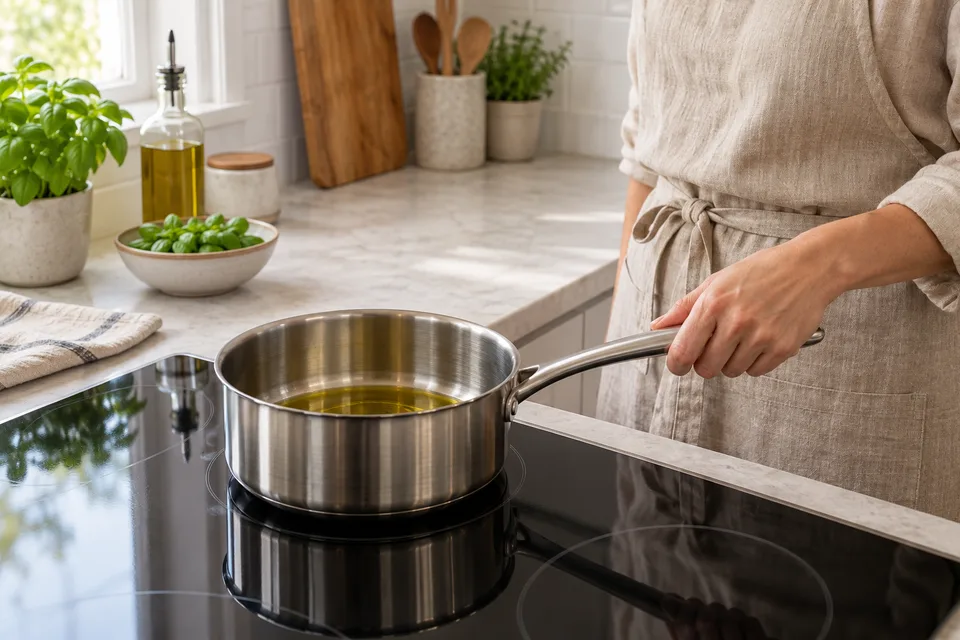
- Add minced garlic and cook, stirring, for 1 minute until fragrant but not browned.
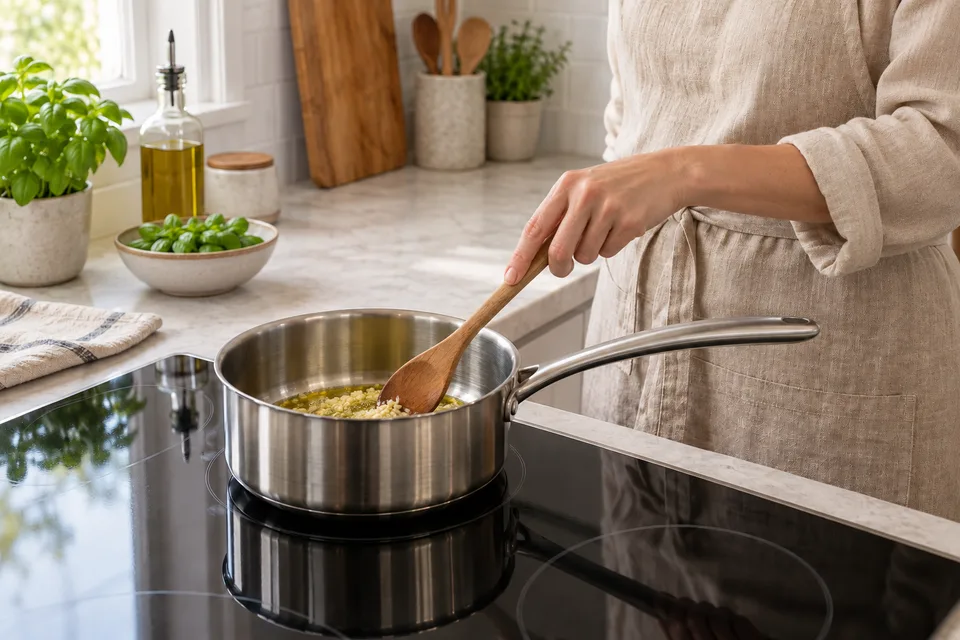
- Add tomato paste and stir constantly for 2 minutes to caramelize slightly and reduce raw flavor.
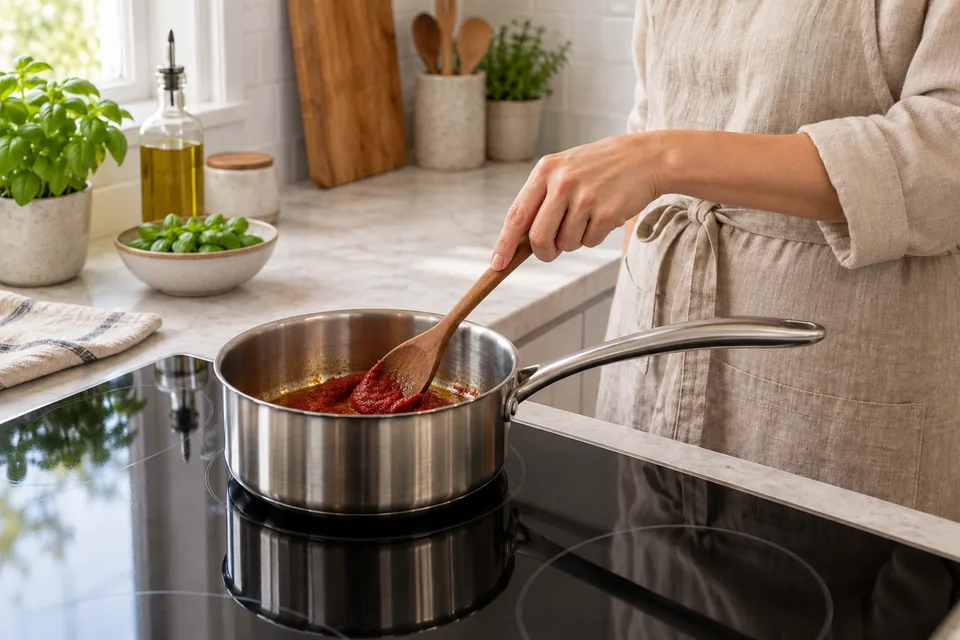
- Pour in water or broth gradually, whisking to combine until smooth.
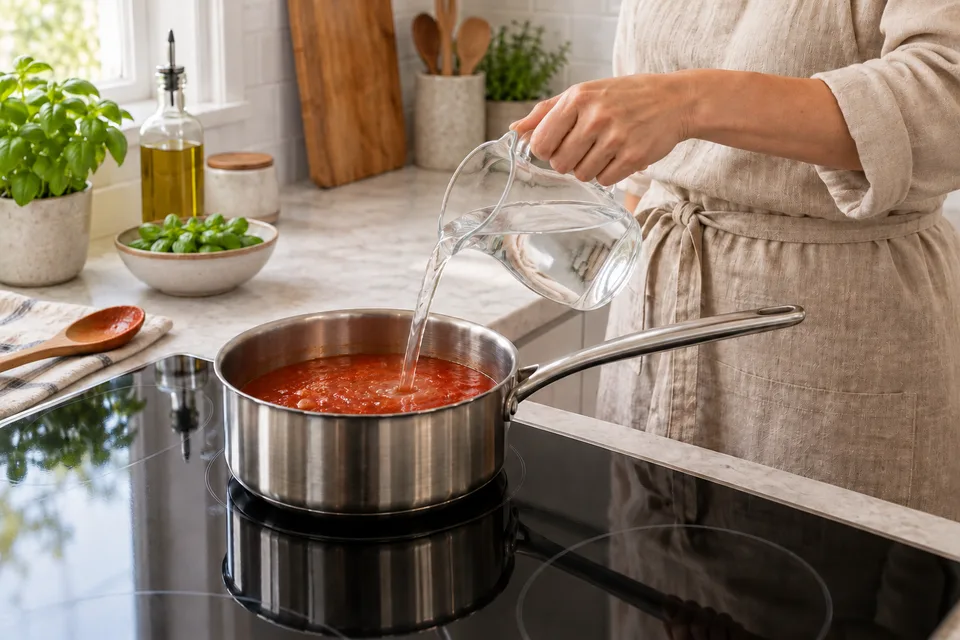
- Stir in oregano, basil, sugar, salt, and black pepper.
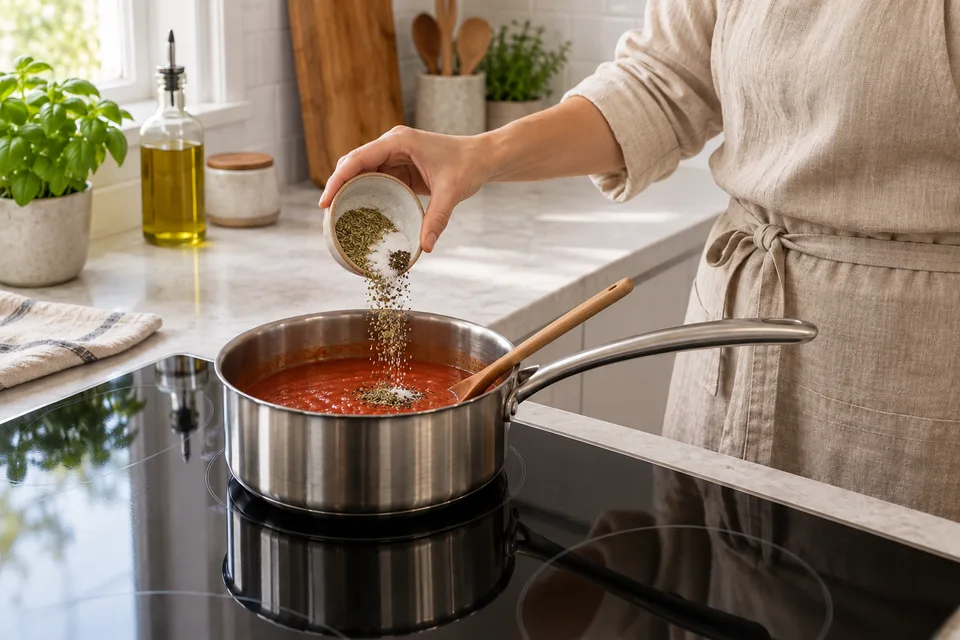
- Reduce heat to medium-low and simmer uncovered for 10 to 12 minutes, stirring occasionally, until the sauce thickens to your preferred consistency.
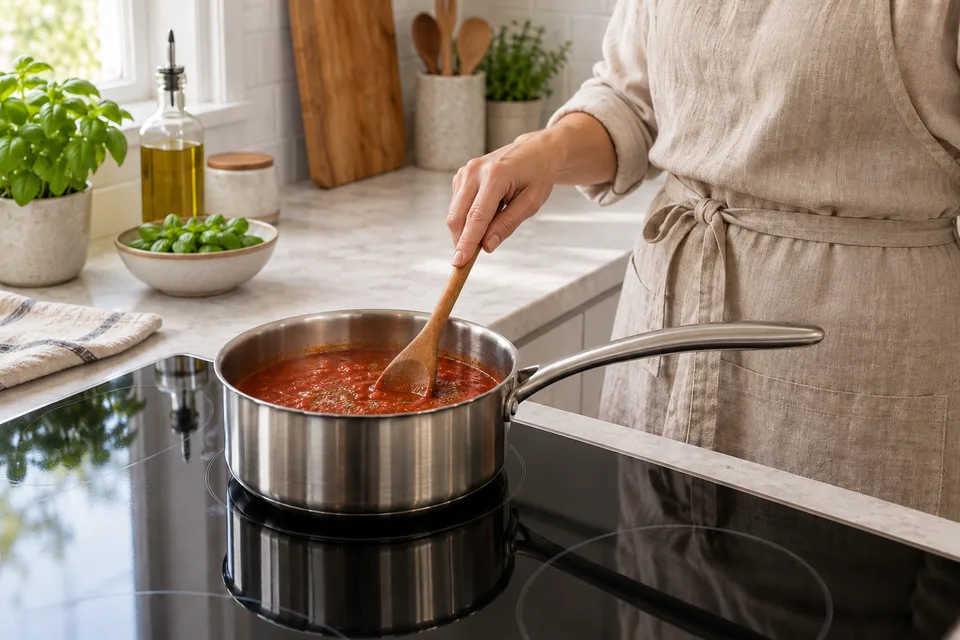
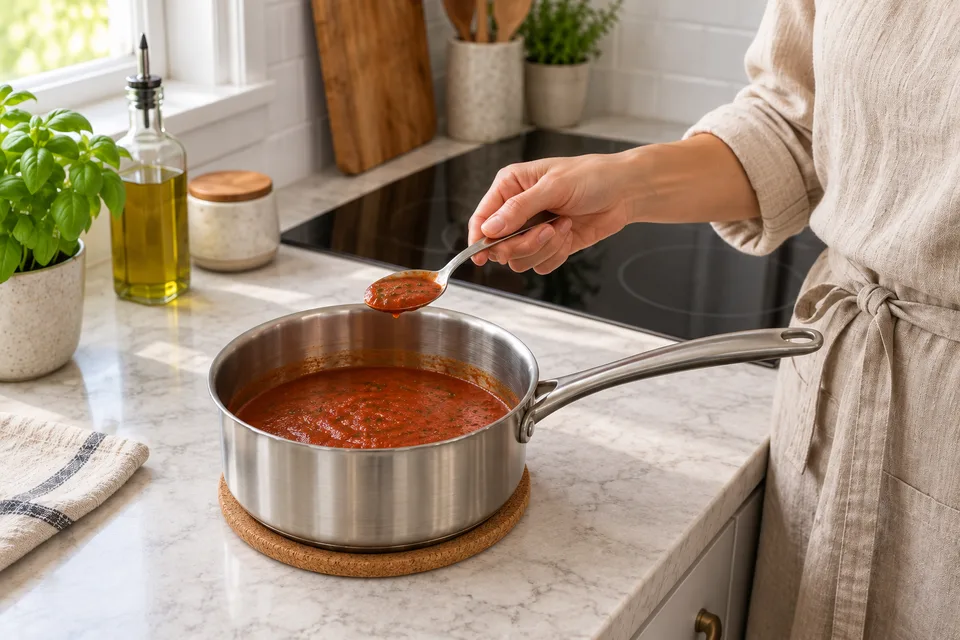
- Taste and adjust salt, pepper, or sugar before serving.
Common uses
Practical applications with the role this sauce plays in each dish.
Use 01
Pasta sauce
Toss with cooked spaghetti, penne, or rigatoni as a quick weeknight tomato sauce.
Use 02
Pizza base
Spread on pizza dough as a concentrated, flavorful alternative to canned pizza sauce.
Use 03
Braising liquid
Use as a base for braising chicken thighs, meatballs, or sausage on the stovetop.
Use 04
Shakshuka base
Thin slightly and add spices to create a quick poaching sauce for eggs.
Use 05
Soup starter
Stir into vegetable or bean soups to add body and tomato depth without extra liquid.
Use 06
Dipping sauce
Serve alongside breadsticks, mozzarella sticks, or calzones as a warm dipping sauce.
Use 07
Grain bowl topping
Spoon over farro, polenta, or rice bowls for a simple, savory tomato component.
Use 08
Lasagna or baked pasta layer
Layer between pasta sheets or use as the tomato component in baked casseroles.
Pairings
Pairing ideas grouped by food role for quick comparison.
Proteins
- ground beef
- Italian sausage
- chicken thighs
- shrimp
- firm tofu
- lentils
Vegetables
- zucchini
- eggplant
- bell peppers
- spinach
- mushrooms
- onions
Carbs
- spaghetti
- penne
- polenta
- pizza dough
- crusty bread
- gnocchi
How to Make Tomato Sauce from Tomato Paste substitutes
Starting ratios, best uses, and the main functional tradeoff for each alternative.
| Substitute | Ratio | Best for | Notes |
|---|---|---|---|
| Canned crushed tomatoes | varies | pasta sauce | Simmer longer to reduce; flavor is less concentrated than paste-based sauce. |
| Canned whole peeled tomatoes, blended | varies | chunky pasta or braising | Blend before use; reduce to match paste-based sauce thickness. |
| Jarred marinara sauce | 1:1 | quick pasta or pizza | Ready to use but may contain added sugar, salt, or oil. |
| Passata (tomato purée) | varies | smooth pasta sauce | Thinner consistency; simmer to reduce or use less liquid in the recipe. |
| Fresh tomato sauce | varies | seasonal cooking | Brighter, less concentrated flavor; requires longer cooking to develop depth. |
Storage
Keep time and temperature guidance visible, and discard sauce when spoilage signs appear.
Refrigerator
Transfer promptly to shallow covered containers and refrigerate within 2 hours of preparation, or within 1 hour above 90°F (32°C). Keep at 40°F (4°C) or below; do not wait for the sauce to reach room temperature. A validated refrigerator shelf life for this exact homemade recipe is not established here. Prepare only what you need.
Freezer
A recipe-specific freezer storage duration is not established here. Freezing may change the texture; thaw frozen sauce in the refrigerator.
Signs of spoilage
Discard sauce if time or temperature handling limits have been exceeded, even when it looks and smells normal. Also discard it if mold, an off odor or an unusual texture appears. Do not taste food to determine whether it is safe.
Sources
Public references supporting safety-sensitive claims and editorial decisions on this page.
- Leftovers and Food Safety — USDA FSIS fsis.usda.gov
General prompt refrigeration, shallow-container cooling and time/temperature boundaries; not validation of an exact sauce shelf life.
-
Covered refrigerated storage at 40°F or below; appearance and odor cannot establish safety.
How to Make Tomato Sauce from Tomato Paste FAQ
Short, self-contained answers to common questions.
How much water do I add to tomato paste to make tomato sauce?
A standard ratio is 1 part tomato paste to 2 to 2.5 parts water or broth. A 6-ounce can of paste combined with about 1 to 1.5 cups of liquid yields a medium-bodied sauce. Adjust liquid to reach your preferred consistency.
Does tomato sauce made from paste taste as good as sauce made from fresh tomatoes?
Paste-based sauce has a deeper, more concentrated flavor because tomato paste is already cooked down. It lacks the brightness of fresh tomato sauce but gains richness. Briefly caramelizing the paste in oil before adding liquid significantly improves the final flavor.
Can I use tomato paste sauce on pizza?
Yes. Tomato paste sauce works well on pizza because its thick, concentrated consistency spreads without making the crust soggy. Use it as-is or thin it slightly. Season with oregano, garlic, and a pinch of sugar to balance acidity.
How do I reduce the acidity of tomato sauce made from paste?
Add a small amount of granulated sugar, typically one-quarter to one-half teaspoon, to balance acidity. A pinch of baking soda also neutralizes acid quickly but can affect texture if overused. Longer simmering and a drizzle of olive oil also mellow sharpness.
Is tomato paste sauce the same as marinara?
No. Marinara is a specific Italian-American sauce traditionally made from crushed or whole tomatoes, garlic, olive oil, and herbs, simmered briefly. Tomato paste sauce uses concentrated paste as its base, producing a thicker, more intense result with a different texture and flavor profile.