Sauce technique guide
Dairy-free creamy sauce basics
Dairy-free creamy sauces use plant-based bases—cashew cream, coconut milk, oat milk, or pureed vegetables—to replicate the richness of traditional cream sauces without any dairy ingredients.
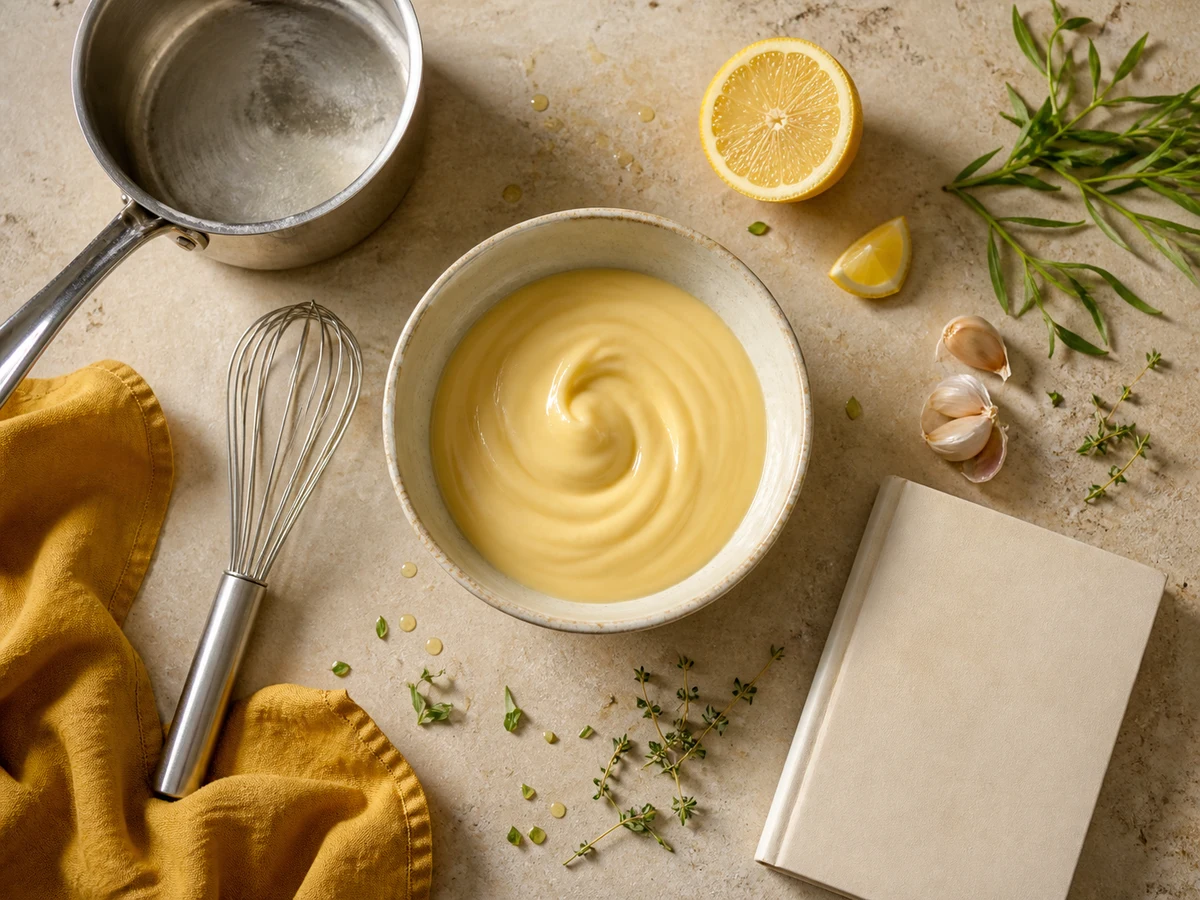
1. Choosing a dairy-free base
The base ingredient determines the flavor profile and best application of a dairy-free creamy sauce. Each option behaves differently under heat and pairs better with certain dishes.
Cashew cream is the most versatile option for savory sauces. Raw cashews are soaked, then blended with water or broth until smooth. The result is a rich, mildly nutty liquid that closely mimics the body of heavy cream. It works well in pasta sauces, gravies, and dairy-free béchamel.
Full-fat coconut milk (canned) delivers a thick, rich texture but carries a distinct sweetness and coconut undertone. It suits curries, Thai-inspired sauces, and dishes where a subtle sweetness is welcome. For neutral savory applications, the coconut flavor can compete with other ingredients.
Oat milk and soy milk are the most neutral plant-based milks for savory cooking. Soy milk is naturally higher in protein, which gives it a slightly richer mouthfeel than most other non-dairy milks. Oat milk produces a smooth, creamy texture and is a reliable choice when a clean background flavor is needed.
Pureed vegetables and legumes—such as white beans, cauliflower, or cooked potatoes—add creaminess and body without strong flavors. These bases work especially well when blended into a sauce that already has aromatics, since they absorb surrounding flavors readily.
Silken tofu blended smooth is another neutral option that adds protein and a custard-like creaminess, particularly useful in cream-style soups and pasta sauces.
| Base | Flavor | Best use |
|---|---|---|
| Cashew cream | Mild, nutty | Pasta, béchamel, gravies |
| Full-fat coconut milk | Sweet, coconut | Curries, Asian-style sauces |
| Oat milk | Neutral, smooth | Soups, light cream sauces |
| Soy milk | Neutral, slightly rich | Alfredo-style, pan sauces |
| White bean puree | Neutral, starchy | Pasta, vegetable sauces |
| Silken tofu | Neutral, creamy | Cream soups, pasta sauces |
Tip. For nut-free cooking, soy milk or white bean puree are the most neutral substitutes for cashew cream in savory sauces.
2. Techniques for texture and flavor
Achieving a smooth, stable dairy-free cream sauce depends on blending method, thickening approach, and seasoning strategy.
Blending for smoothness
A high-speed blender produces the silkiest results when working with cashews or cooked vegetables. For cashew cream, soaking raw cashews in water for at least two hours (or boiling for 5–10 minutes) softens them enough for a lump-free blend. Straining the blended liquid through a fine-mesh sieve removes any remaining solids and improves the final texture.
Thickening options
Plant-based milks are thinner than heavy cream, so most dairy-free cream sauces benefit from a thickener.
- Starch slurry: Cornstarch, arrowroot, or tapioca starch mixed into cold liquid before adding to a hot pan prevents lumps. Arrowroot and tapioca produce a glossier finish than cornstarch.
- Flour roux: A roux made with olive oil or dairy-free butter and all-purpose flour (or a 1:1 gluten-free blend) thickens sauces in the same way as a traditional béchamel base.
- Reduction: Simmering the sauce over low heat concentrates it naturally, though this works best with higher-fat bases like coconut milk or cashew cream.
- Cashew butter or nut butter: Stirring in a small amount after blending adds both body and a subtle richness.
Building flavor without dairy
Dairy contributes fat, salt, and umami to cream sauces. Dairy-free versions benefit from deliberate seasoning to compensate.
- Nutritional yeast adds a savory, cheesy depth and is a standard addition in dairy-free Alfredo-style sauces.
- Garlic (sautéed) and white miso contribute umami.
- Lemon juice brightens the sauce and balances richness, similar to the role of acidity in traditional cream sauces.
- Salt should be added gradually and adjusted at the end, since bases like cashew cream and nutritional yeast already carry some sodium.
Tip. Always mix starch thickeners into cold liquid before adding to a hot pan to prevent clumping.
Tip. Nutritional yeast adds cheesy, umami depth to dairy-free sauces; start with 2 tablespoons per cup of base and adjust to taste.
3. Storage, freezing, and reheating
Dairy-free cream sauces are perishable when their ingredients or preparation require refrigeration. Follow the exact product labels and recipe-specific guidance rather than assuming every cashew, coconut, oat, soy, or vegetable sauce has the same storage life.
Refrigerator handling
Divide hot sauce into shallow containers and refrigerate promptly; hot food may go directly into the refrigerator. An ice-water bath can speed cooling for large batches. Keep the refrigerator at 40°F or below and cover the sauce. USDA’s general three-to-four-day cooked-leftover window can be a conservative reference for a properly handled cooked sauce, but a packaged product, raw blended sauce, or ingredient with shorter directions controls.
Freezing and quality
Use a container labeled for freezer storage and leave the headspace its manufacturer specifies. Do not promise a universal three-month window or “indefinite” quality. The base, starch, fat, packaging, freezer conditions, and product directions all affect the result. Freeze a small test portion when texture matters.
Plant-based sauces can separate or look grainy after thawing. Separation or curdling can be a quality change and does not by itself prove spoilage; when safety is uncertain, discard. Whisking or blending may improve texture, but it cannot correct unsafe handling.
Reheating and discarding
Reheat only the amount needed and follow the applicable safe endpoint. If reheated sauce remains, refrigerate it promptly in a shallow container. Safely handled leftovers may be refrigerated again; each cooling and reheating cycle still reduces quality. Reheat leftovers to 165°F each time.
Discard for mold, an off odor, package damage, or an uncertain time-and-temperature history. Do not discard solely because a safely handled sauce separated, and do not rely on appearance alone to prove safety.
Warning. Per USDA FSIS, reheat all leftover sauces to 165°F (74°C) before serving. Use a food thermometer to verify temperature.
Sources
Primary and direct references used for current or safety-sensitive claims.
- Leftovers and Food Safety | Food Safety and Inspection Service — Reheat leftovers to 165°F as measured with a food thermometer; this is the USDA FSIS safe reheating temperature for all cooked leftovers including sauces.
- Refrigeration & Food Safety | Food Safety and Inspection Service — A general rule of thumb for refrigerator storage for cooked leftovers is 4 days, per USDA FSIS.
- Danger Zone (40°F–140°F) | Food Safety and Inspection Service — Bacteria multiply rapidly in the Danger Zone between 40°F and 140°F; foods should be reheated to 165°F.
- Keep Food Safe from Kickoff to Leftovers | Food Safety and Inspection Service — Perishable foods should not be left out at room temperature for more than two hours; refrigerate or freeze leftover foods within two hours.
Guide FAQ
Short, self-contained answers to common technique questions.
What is the best dairy-free substitute for heavy cream in a sauce?
Full-fat canned coconut milk and cashew cream are the closest matches for heavy cream in terms of fat content and body. Cashew cream is more neutral in flavor and suits a wider range of savory sauces. Coconut milk works well when a slight sweetness is acceptable, such as in curries.
How do I stop a dairy-free cream sauce from being too thin?
Use a starch slurry (cornstarch, arrowroot, or tapioca mixed into cold liquid first), a flour-based roux, or reduce the sauce by simmering over low heat. Cashew butter stirred in at the end also adds body. Full-fat coconut milk thickens more readily than most plant-based milks.
Does dairy-free cream sauce freeze well?
Freezer performance depends on the exact base, thickener, package, and recipe. Use product-specific guidance and test a small portion. Separation after thawing can be a quality change; it does not by itself prove spoilage.
How long does homemade dairy-free cream sauce last in the refrigerator?
Follow the exact recipe and product labels. USDA’s general cooked-leftover window is three to four refrigerated days for properly handled food, but raw blended sauces or ingredients with shorter directions may differ. Discard for unsafe or uncertain handling, mold, off odor, or package damage.
Is dairy-free cream sauce automatically vegan?
Not always. A sauce is dairy-free if it contains no milk, cream, butter, or cheese, but it may still include eggs or other animal products. Verify each ingredient if vegan compliance is required. Cashew cream, coconut milk, and oat milk bases are typically vegan when no other animal products are added.
How do I add cheesy flavor to a dairy-free cream sauce?
Nutritional yeast is the standard addition, contributing a savory, umami-rich depth. Start with 2 tablespoons per cup of base and adjust to taste. White miso paste and a small amount of lemon juice also enhance savory complexity without dairy.