Sauce technique guide
How to thicken sauce
Thicken sauce by reducing liquid, adding a starch mixture, building a roux, or blending in a compatible ingredient. Choose by sauce type and add gradually; no single ratio, temperature, or timing works for every formula.
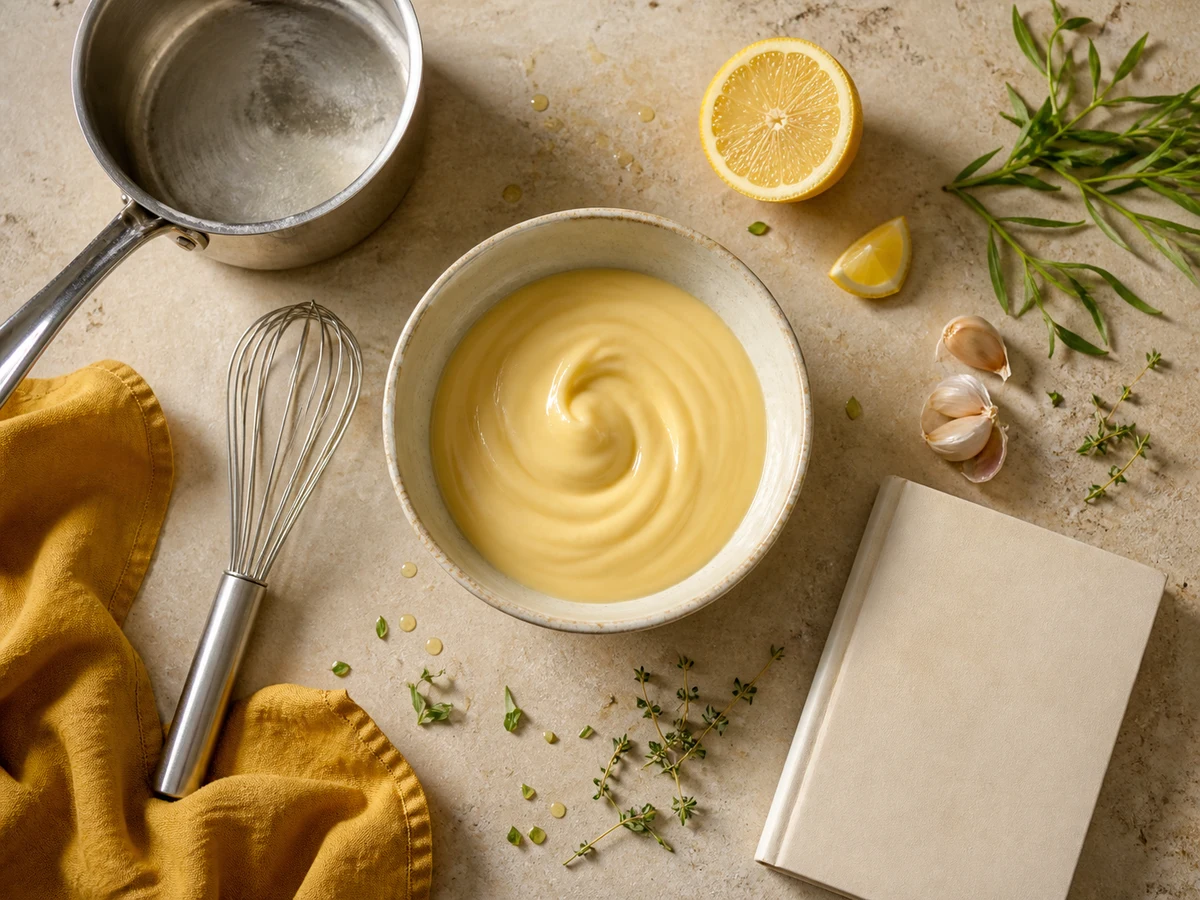
1. Diagnose the thin sauce first
Before adding a thickener, identify why the sauce is thin and what finish the dish needs. A pan sauce may only need more evaporation. A glossy fruit glaze may benefit from a clear starch. A dairy sauce may need a stable roux, while a vegetable sauce may gain body from blending part of its own solids. The intended serving temperature matters because many sauces feel thicker as they cool.
Taste before changing texture. Reduction concentrates salt, sugar, acid, and bitterness along with desirable flavor. If the sauce is already strongly seasoned, evaporation may make the balance worse. Dilution followed by a compatible thickener can be safer than further reduction. Also confirm that the sauce is fully mixed: fat pooling on top is an emulsion problem, not simply a lack of thickness.
Decide whether clarity matters. Flour and many blended ingredients make a sauce opaque. Cornstarch can produce a glossier finish, while a roux contributes body and its own cooked flavor. Acid, dairy, prolonged heat, and freezing can change how different starches behave, so broad rules such as “never use cornstarch with tomato” are too categorical.
Work on a small sample when possible. Measure the sample and the proposed addition, then scale only after the result is smooth and tastes right. Add less than you think you need, allow the chosen method time to work, and judge at the serving temperature. A thin sauce can be adjusted again; an over-thickened, pasty sauce is harder to restore without diluting its flavor. Write down the measured test before scaling it.
Tip. Test the thickener in a measured sample before changing the full batch.
2. Use reduction or a starch carefully
Reduction removes water and concentrates the dissolved material already in the sauce. Use an uncovered pan with enough surface area for steady evaporation and stir often enough to prevent scorching. A gentle or moderate simmer is usually easier to control than an aggressive boil. Stop before the sauce looks fully finished if it will continue thickening as it cools or after another ingredient is added.
For starch thickening, first check the package directions because products and intended uses differ. Disperse a refined starch in a compatible cool liquid when the directions call for a slurry; adding dry powder directly to hot sauce often creates lumps. Whisk in a small portion, heat as directed, and wait before deciding whether more is needed. A universal one-to-one slurry or tablespoon-per-cup formula ignores the sauce’s existing solids and the starch product’s strength.
Do not present one exact temperature or “rupture after a fixed number of minutes” as a category rule. Acidity, sugar, agitation, and heating time can all change the result. Arrowroot may behave poorly in some dairy preparations, while cornstarch can still work in many acidic sauces when the formula and process are appropriate. Follow a tested recipe or the manufacturer instructions for the specific starch.
If the sauce becomes too thick, add a small amount of compatible unsalted liquid and mix over gentle heat. If it turns lumpy, stop adding thickener; whisking, straining, or blending may help depending on the sauce. A scorched flavor cannot be removed by more starch. Recheck flavor after every texture correction.
Warning. Do not rely on one universal starch ratio, temperature, or simmer time.
3. Build body with flour, fat, or the sauce itself
A roux combines flour with fat before liquid is incorporated. Its strength and flavor depend on the flour, fat, cooking stage, and final liquid, so “equal parts” needs a stated measurement basis and recipe context. Follow a tested formula when consistency matters. Whisk liquid in gradually and cook until the sauce no longer tastes raw; a fixed minute count cannot cover every pan, batch size, and heat level.
Beurre manié is softened butter worked with flour and added in small pieces near the end of cooking. The fat helps disperse the flour, but the finished sauce still needs enough cooking for the flour to hydrate and lose a raw taste. It adds butter as well as thickness, so it may be unsuitable for dairy-free or low-fat preparations.
The sauce itself can provide body. Blend cooked vegetables, beans, or a portion of the solids already present, then return the purée gradually. Cheese, nut butter, or reduced cream may thicken compatible sauces, but each changes allergens, nutrition, and flavor. Egg yolk thickening requires a recipe designed for it and careful temperature control; it is not a generic rescue step for every sauce.
After any adjustment, recheck seasoning and texture with the food the sauce will coat. Pasta water, meat juices, or resting time can loosen or tighten the final dish. Record what you added so the result can be repeated. If a safety-sensitive sauce contains eggs, dairy, meat, or seafood, texture advice does not replace the applicable cooking, cooling, and storage guidance.
Tip. Recheck thickness after the sauce meets the food and reaches serving temperature.
Sources
Primary and direct references used for current or safety-sensitive claims.
- Three Ways to Thicken Sauce | America’s Test Kitchen — America’s Test Kitchen describes cornstarch, roux, and beurre manié as distinct thickening methods whose use depends on the sauce and desired finish.
- The Science of Thickening Agents | The Culinary Pro — The Culinary Pro compares reduction and starch thickening and explains that the method changes flavor, clarity, and texture.
Guide FAQ
Short, self-contained answers to common technique questions.
What is the fastest way to thicken sauce?
A compatible starch slurry can work quickly, but follow the specific product or recipe directions and add it gradually. The correct amount depends on the sauce volume, existing solids, acidity, and desired finish.
Can I thicken sauce by simmering it?
Yes, when concentration will not make the sauce too salty, sweet, acidic, or bitter. Simmer uncovered, stir to prevent scorching, and stop before the sauce becomes over-reduced.
Is there one cornstarch ratio for every sauce?
No. Package instructions, sauce volume, existing solids, acidity, sugar, and desired texture all matter. Start with a tested recipe or product direction and add less rather than assuming a universal tablespoon-per-cup rule.
Can arrowroot be used in dairy sauce?
Some arrowroot products produce an undesirable texture with dairy, but categorical rules are unreliable. Follow the specific starch instructions or a tested recipe designed for that dairy sauce.
How do I fix sauce that is too thick?
Stir in a small amount of compatible unsalted liquid over gentle heat, then taste again. Add gradually so the sauce does not swing from too thick to watery.
Does roux always use equal amounts of butter and flour?
Recipes often describe equal proportions, but weight and volume are not interchangeable and the needed strength varies. Use the exact recipe’s measurement method instead of treating one ratio as universal.