Sauce technique guide
How to reduce a sauce
Reducing a sauce means simmering it uncovered to evaporate water and concentrate flavor. Cook off 25% to 75% of the liquid volume until the sauce coats a spoon and reaches the desired consistency.
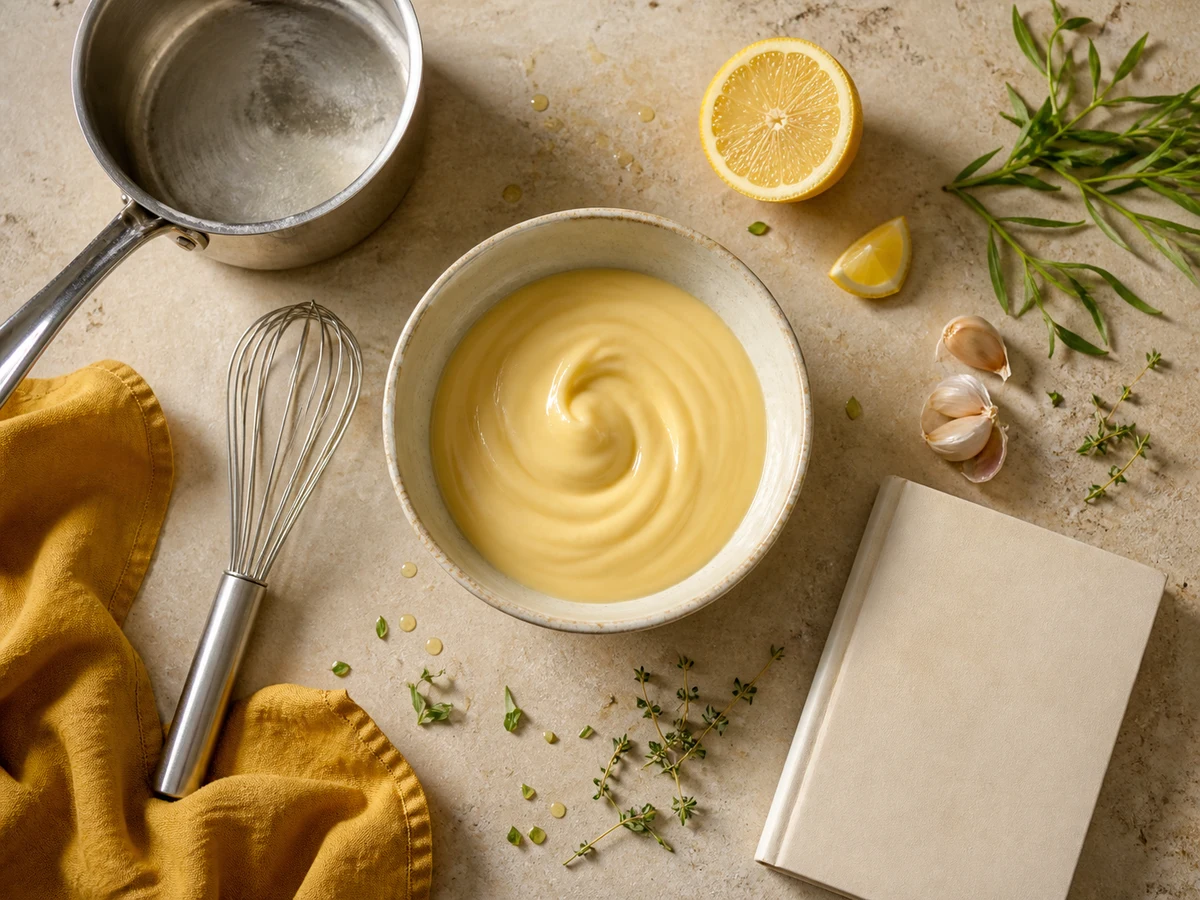
1. The Science Behind Reduction
Reduction is the process of simmering a liquid uncovered over steady heat until a portion of the water evaporates. What remains is more concentrated in flavor and thicker in body than the starting liquid — achieved through patience and evaporation alone, without added starch or thickener.
When a liquid simmers, water molecules escape as steam. Everything else stays in the pan: dissolved sugars, amino acids, gelatin from stock, acids from wine, and aromatic compounds. As volume drops, the concentration of those flavor molecules rises.
Texture changes because natural gelatin from bones or pectin from fruit becomes more densely packed as water leaves. In dilute liquid, these molecules float freely. As concentration increases, they begin tangling together, forming a network that thickens the sauce — which is why a watery stock can reduce into something that coats a spoon without any added starch.
Sugars can reach temperatures high enough for light caramelization as water leaves, especially at the edges of the pan, adding depth and color.
Alcohol evaporates early in wine or spirit reductions. What remains are the acids, tannins, and fruit flavors that give the sauce complexity. Wine loses its raw alcohol bite and develops deeper fruit notes.
Salt concentrates along with everything else. If the starting liquid is already seasoned, reducing it will make it saltier. Always season after reducing, not before.
For protein-based pan sauces, the fond — the caramelized brown bits left after searing meat — is the flavor foundation. Adding liquid to the pan dissolves the fond and incorporates it into the sauce as it reduces.
Warning. Season only after reducing. Salt concentrates with the liquid; seasoning beforehand risks an over-salted, unbalanced sauce.
2. Step-by-Step Reduction Method
Choose the right pan
Pan width directly controls reduction speed. A wide pan exposes more liquid surface to air, so water evaporates faster. A wider pan usually evaporates water faster than a narrow pan holding the same volume, but the actual time depends on heat, surface area, ingredients, and the target consistency. Watch the sauce rather than relying on one pan-and-minute formula. Use a stainless steel or enameled cast iron skillet with straight sides. Avoid non-stick pans for reductions built on fond, as the coating prevents fond from forming.
Set the heat
Most reductions happen at a simmer, not a rolling boil. Maintain a steady, gentle bubble throughout — not an aggressive boil, which can cause fat and water to violently separate and break the sauce.
Leave the lid off
Covering the pan traps steam and prevents evaporation. Always reduce with the lid off. Even a partially covered pan slows reduction significantly.
Stir and scrape
Stir every 3 to 5 minutes, scraping the bottom to release any solids. Brown bits on the pan bottom add flavor; black bits taste bitter. As the sauce thickens, it will begin to splash more — reduce heat slightly if needed.
Know your target volume
A common starting point is reducing by half: start with 2 cups of stock to yield 1 cup of sauce. Recipes may call for reducing by one-quarter, one-half, or three-quarters depending on the desired intensity. Mark the starting level on a wooden spoon handle before you begin to track progress without measuring.
Test for doneness
Use the nappé test: dip a wooden spoon into the sauce and draw a line down the back with your finger. If the line holds without the sauce running back together, the sauce has reached nappé consistency — the French culinary term for a liquid that coats the back of a spoon. Remove from heat when the sauce reaches the target consistency, as it thickens slightly as it cools.
Tip. Remove the sauce from heat just before it looks done. Residual heat and cooling will thicken it further on the plate.
3. Troubleshooting Common Reduction Problems
Sauce is over-reduced or too thick
Add a small splash of unsalted stock or water and stir over low heat to loosen. If the sauce has scorched, do not scrape the dark residue from the bottom — transfer the sauce to a clean pan and continue. Reducing too much can also leave a sticky, burnt coating on the pan if not stirred consistently.
Sauce is too salty
This is the most common consequence of reducing a pre-seasoned liquid. Dilute with unsalted stock or water. Going forward, use low-sodium or unsalted stock as the base, and add salt only at the end. Store-bought broths with added salt are particularly prone to this problem.
Sauce is watery after a long simmer
A thin result usually points to a weak starting liquid. Homemade stock, pan drippings, or a liquid already rich in gelatin reduces into a glossy sauce. A thin commercial broth will simply yield less thin broth. If the base cannot be changed, a small amount of butter (monté au beurre) whisked in off heat can add body and gloss without further reduction.
Sauce is taking too long
Switch to a wider pan. More surface area accelerates evaporation significantly. Slightly increasing heat is an option, but watch carefully — the risk of scorching rises as the sauce thickens.
Pairing reductions with proteins
Liquid choice affects the final flavor profile. Red wine, port, or demi-glace suits beef and lamb. White wine or apple cider works with chicken. Apple cider or balsamic suits pork. White wine or citrus reduction keeps seafood flavors light. A balsamic reduction also works on roasted root vegetables without any meat-based fond as a starting point.
Warning. Do not use store-bought broths with added salt as a reduction base. Concentrating them risks an unpalatably salty result.
Sources
Primary and direct references used for current or safety-sensitive claims.
- How to Reduce a Sauce | Fond — Reduction requires uncovered evaporation and can be judged by volume and coating consistency rather than a universal time.
- The Science of Thickening Agents | The Culinary Pro — The Culinary Pro compares reduction and starch thickening and explains that the method changes flavor, clarity, and texture.
Guide FAQ
Short, self-contained answers to common technique questions.
What does it mean to reduce a sauce by half?
Reducing by half means simmering the sauce uncovered until its volume drops to 50% of the starting amount. Start with 2 cups to yield 1 cup. This is the most common reduction instruction and produces a noticeably thicker, more intensely flavored result.
Should I reduce a sauce with the lid on or off?
Always reduce with the lid off. Covering the pan traps steam and prevents evaporation, which is the entire mechanism of reduction. A lid will slow or stop the process entirely.
How do I know when a sauce is reduced enough?
Use the nappé test: dip a spoon into the sauce and draw a finger across the back. If the line holds without the sauce running back together, it is ready. A properly reduced sauce coats the spoon and leaves a clean trail that does not immediately fill in.
Why does my reduced sauce taste too salty?
Salt concentrates along with everything else as water evaporates. If the starting liquid was already seasoned or was a salted commercial broth, the finished sauce will be saltier. Always season after reducing, and use unsalted or low-sodium stock as the base.
What is the best pan for reducing a sauce?
A wide, heavy pan can speed evaporation by exposing more surface area, but there is no universal reduction time. Choose a pan that allows steady stirring and judge the sauce by volume, taste, and target consistency.
Can I fix a sauce that has been reduced too much?
Yes. Add a small amount of unsalted stock or water and stir over low heat to loosen the consistency. Act quickly if the sauce is close to scorching — transfer to a clean pan if any burnt residue appears on the bottom.