Italian · tomato
Pizza Sauce
Pizza sauce is a tomato-based sauce that is spread on pizza dough before toppings are added, typically seasoned with garlic, oregano, and olive oil.
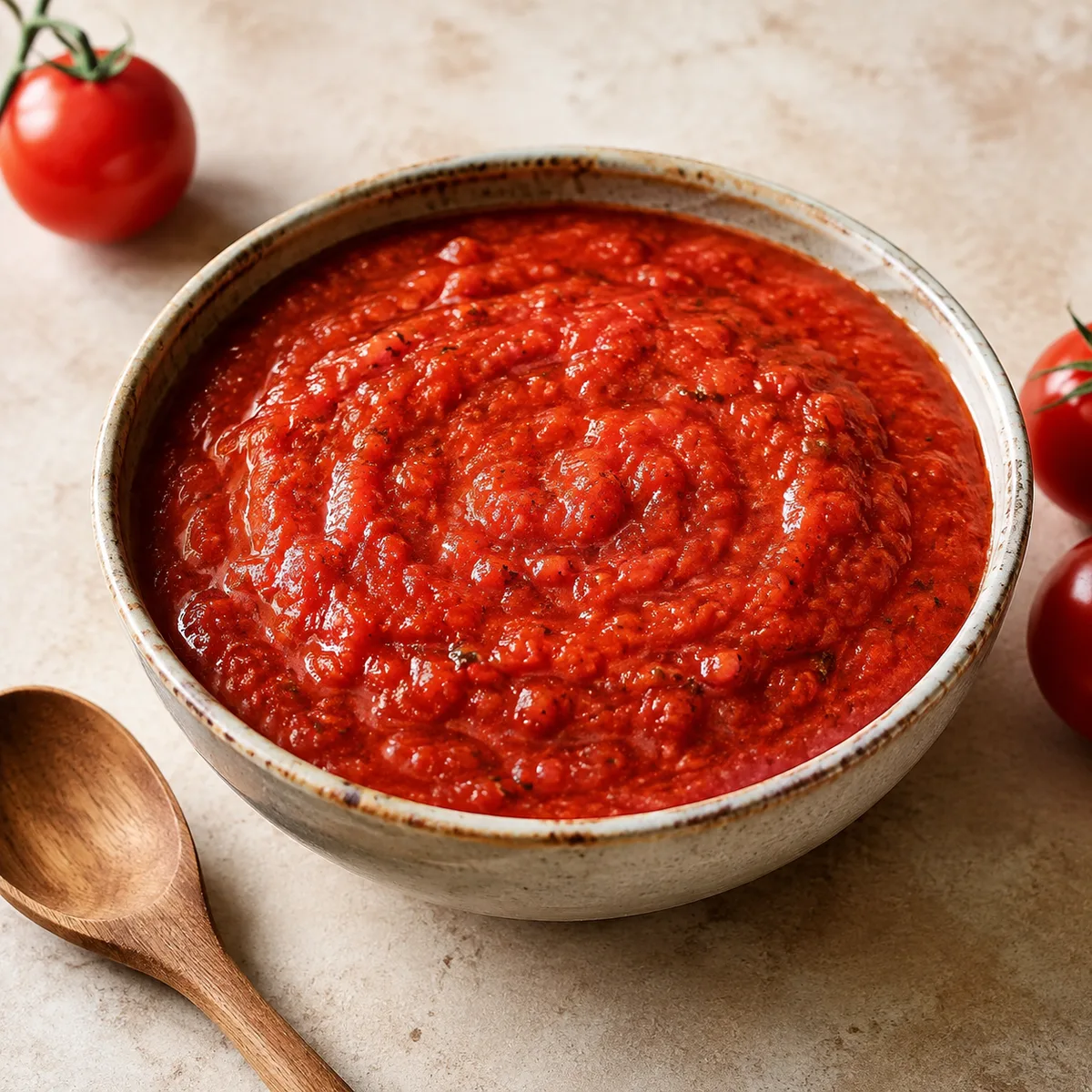
Quick facts
Core identity, dietary fit, and storage ranges in a scannable reference table.
| Origin | Italy, 19th century |
|---|---|
| Base | tomatoes |
| Primary ingredients | crushed or pureed tomatoes, garlic, olive oil, dried oregano, salt |
| Flavor profile | bright, savory, mildly sweet, herbaceous |
| Color | deep red to brick red |
| Consistency | medium; thick enough to spread without saturating dough |
| Refrigerator shelf life | 3 to 4 days (homemade) |
| Freezer shelf life | Up to 3 months for quality |
| Vegan | Yes |
| Gluten-free | Yes |
| Dairy-free | Yes |
Dietary note
Recipes and labels vary
Check ingredient labels and individual dietary requirements; homemade and packaged versions can differ.
Browse sauces sharing an ingredient
How Is Pizza Sauce Made?
Crushed or pureed tomatoes are combined raw or briefly simmered with garlic, olive oil, and dried herbs. Many traditional preparations skip cooking entirely, relying on oven heat during baking to develop flavor. Salt and sugar are adjusted to balance acidity.
Pizza Sauce recipe
Crushed or pureed tomatoes are combined raw or briefly simmered with garlic, olive oil, and dried herbs. Many traditional preparations skip cooking entirely, relying on oven heat during baking to develop flavor. Salt and sugar are adjusted to balance acidity.
Ingredients
- 1 can (28 oz) crushed San Marzano tomatoes
- 2 cloves garlic, minced
- 2 tablespoons extra-virgin olive oil
- 1 teaspoon dried oregano
- 1/2 teaspoon kosher salt
- 1/2 teaspoon granulated sugar
- 1/4 teaspoon red pepper flakes
Method
- Drain excess liquid from the crushed tomatoes if the mixture appears very watery.
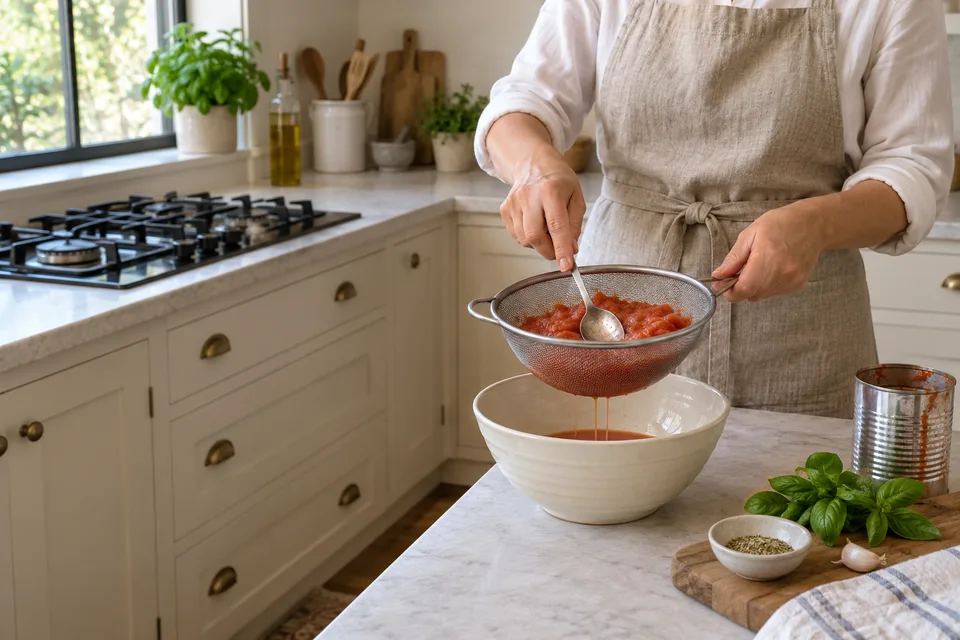
- Combine tomatoes, garlic, olive oil, oregano, salt, sugar, and red pepper flakes in a bowl.
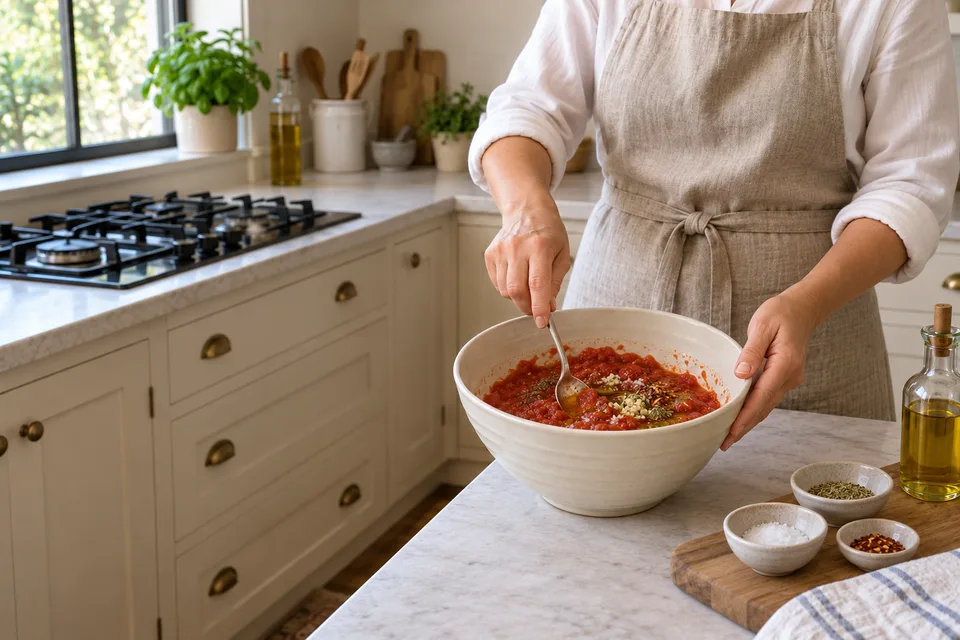
- Stir until fully incorporated; crush any large tomato pieces with a spoon or your hands.
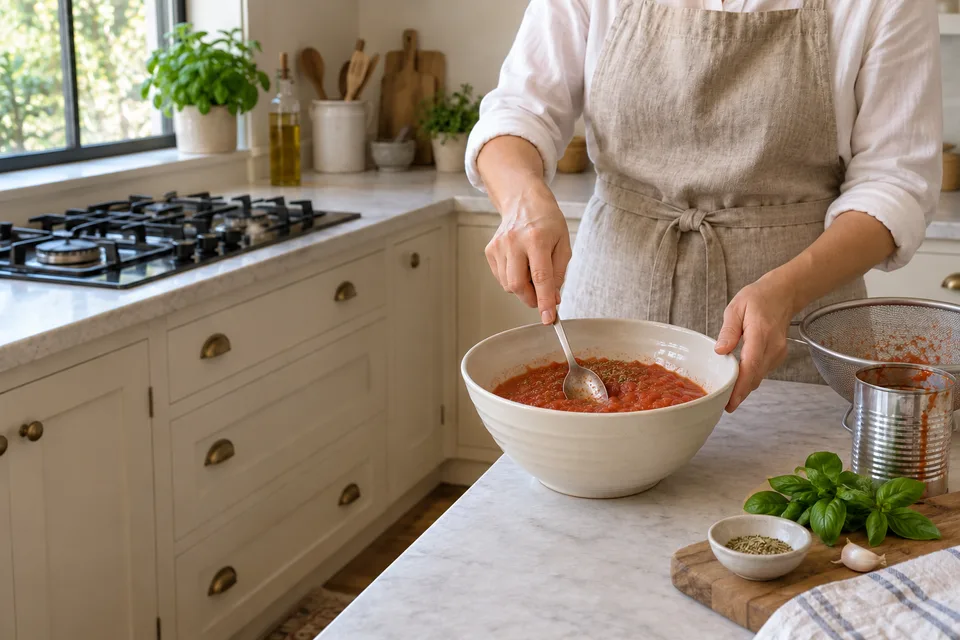
- Taste and adjust salt or sugar to balance acidity before spreading on dough.
What Is Pizza Sauce Used For?
Practical applications with the role this sauce plays in each dish.
Use 01
Pizza base
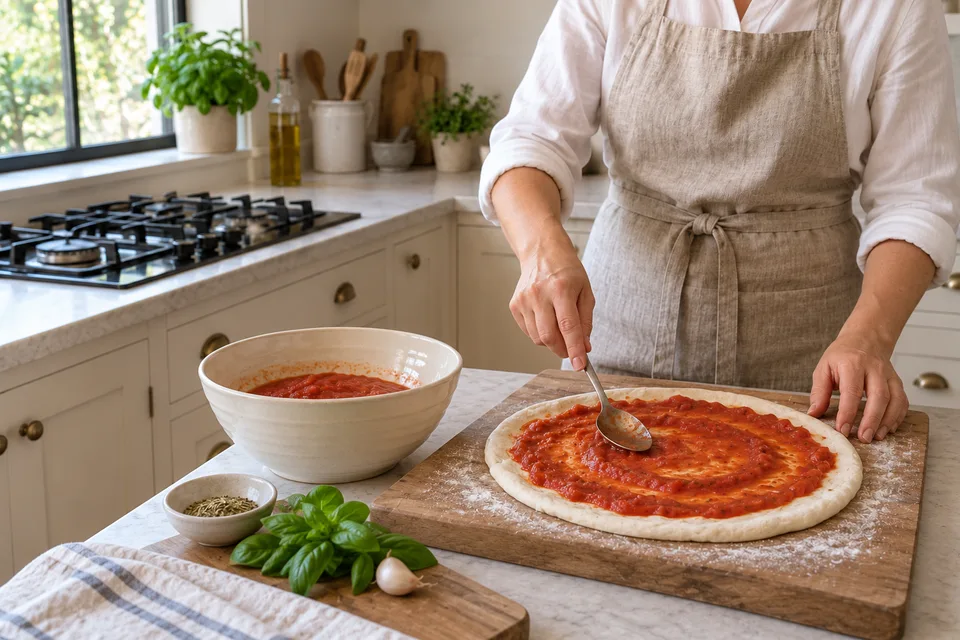
Spread directly on raw dough before adding cheese and toppings for Neapolitan or New York-style pizza.
Use 02
Dipping sauce
Served alongside breadsticks, calzones, or garlic knots as a warm or room-temperature dip.
Use 03
Flatbread topping
Used on focaccia or naan flatbreads as a quick alternative to traditional pizza dough.
Use 04
Stromboli and calzone filling
Spread inside rolled or folded dough before baking to add moisture and tomato flavor.
Use 05
Sheet pan pizza
Applied to thick, oiled sheet pan dough for Sicilian-style or Detroit-style preparations.
Use 06
Pizza rolls and bites
Used as a filling or dipping component in bite-sized pizza appetizers and snacks.
Use 07
Shakshuka base shortcut
Thinned with water or broth and used as a quick spiced tomato base for poached eggs.
Use 08
Pasta sauce substitute
Thinned with pasta water and tossed with cooked pasta when a quick tomato sauce is needed.
Pairings
Pairing ideas grouped by food role for quick comparison.
Proteins
- fresh mozzarella
- pepperoni
- Italian sausage
- grilled chicken
- anchovies
Vegetables
- roasted bell peppers
- mushrooms
- fresh basil
- black olives
- spinach
Carbs
- pizza dough
- focaccia
- breadsticks
- calzone dough
- naan
Pizza Sauce substitutes
Starting ratios, best uses, and the main functional tradeoff for each alternative.
| Substitute | Ratio | Best for | Notes |
|---|---|---|---|
| Marinara sauce | 1:1 | pizza base | Drain excess liquid first; marinara is thinner and more heavily seasoned. |
| Tomato paste thinned with water | varies | quick pizza base | Mix 1 part paste with 1 to 2 parts water; season with oregano and salt. |
| Canned crushed tomatoes, unseasoned | 1:1 | pizza base | Add garlic, olive oil, and oregano before using; drain if watery. |
| Pesto | 1:1 | white or vegetable pizza | Provides an herby, oil-based alternative; not tomato-flavored. |
| White pizza sauce | 1:1 | cream-based pizza | Replaces tomato flavor entirely with a garlic-cream base. |
How to Store Pizza Sauce
Keep time and temperature guidance visible, and discard sauce when spoilage signs appear.
Refrigerator
Refrigerate the homemade sauce promptly in a covered container at 40°F (4°C) or below and use it within 3 to 4 days. If it has been above 40°F for more than 2 hours, or more than 1 hour above 90°F (32°C), discard it. Commercial products may have different label directions.
Freezer
Freeze promptly in airtight, freezer-safe portions for up to 3 months for quality. Thaw in the refrigerator before use.
Signs of spoilage
Discard the sauce if mold, slime, unexpected bubbling, or an off odor appears. Do not rely on appearance or smell alone to determine safety; follow the refrigeration time and temperature limits above.
Sources
Public references supporting safety-sensitive claims and editorial decisions on this page.
- Leftovers and Food Safety — USDA FSIS fsis.usda.gov
USDA FSIS advises refrigerating perishable leftovers promptly at 40°F or below, using them within 3 to 4 days, and freezing them for 3 to 4 months.
-
FDA advises the two-hour refrigeration rule, a refrigerator temperature at or below 40°F, and notes that unsafe food may still look and smell normal.
Pizza Sauce FAQ
Short, self-contained answers to common questions.
Is pizza sauce the same as marinara sauce?
No. Pizza sauce is typically uncooked and thicker, designed to stay on dough during baking. Marinara is a cooked, looser tomato sauce seasoned more assertively with garlic and herbs. The two are related but differ in texture, cooking method, and intended use.
Do you cook pizza sauce before putting it on pizza?
Most traditional pizza sauce recipes are used raw. The oven heat during baking cooks the sauce sufficiently. Some recipes call for a brief simmer to concentrate flavor, but cooking is not required and can make the sauce too thick or dry.
How long does homemade pizza sauce last in the fridge?
Refrigerate homemade pizza sauce promptly at 40°F (4°C) or below and use it within 3 to 4 days. For best quality, freeze airtight portions for up to 3 months and thaw them in the refrigerator.
Can I use tomato paste instead of pizza sauce?
Yes. Thin tomato paste with water at roughly a 1:1 or 1:2 ratio, then season with garlic, olive oil, oregano, and salt. The result is thicker and more concentrated than standard pizza sauce, so adjust seasoning carefully.
What tomatoes are best for pizza sauce?
San Marzano tomatoes, a plum-type variety grown in Italy, are widely preferred for their low acidity, dense flesh, and sweet flavor. Domestic plum tomatoes or high-quality canned crushed tomatoes are practical alternatives when San Marzano tomatoes are unavailable.
What seasonings go in pizza sauce?
Common pizza sauce seasonings include garlic, oregano, basil, salt, and black pepper. Olive oil rounds out the tomato flavor. Add sugar only when needed to balance sharp acidity; seasoning levels should suit the tomatoes and pizza toppings.