Italian · pasta
Pizza Sauce vs Pasta Sauce
Pizza sauce and pasta sauce are overlapping recipe and retail categories, not fixed formulas. Uncooked pizza sauce and simmered pasta sauce are common patterns, but ingredients, texture, seasoning, and cooking method vary by product and recipe.
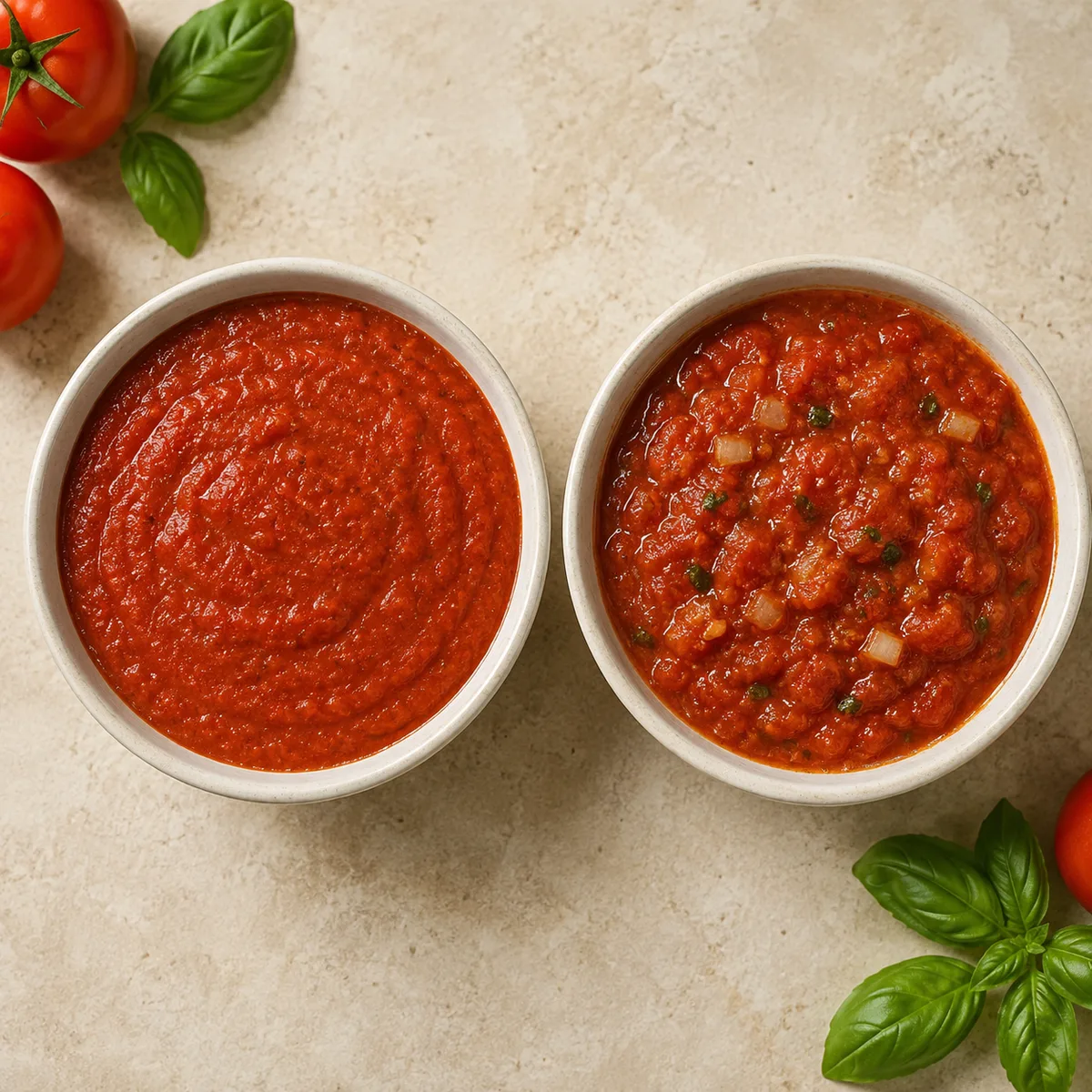
Pizza Sauce vs Pasta Sauce: Quick Comparison
The main differences are cooking method, texture, seasoning, and intended use.
| Attribute | Pizza sauce | Pasta sauce |
|---|---|---|
| Cooking method | Often spread without a separate simmer; some recipes cook it first. | Often cooked before serving; times and methods vary. |
| Texture | Often thick enough to limit free liquid on dough; it may be smooth or textured. | Can be thin, thick, smooth, chunky, or meat-based. |
| Seasoning | Garlic, herbs, oil, salt, and sugar vary by recipe or product. | Garlic, herbs, oil, salt, and sugar vary by recipe or product. |
| Best use | Spread on raw pizza dough. | Tossed with cooked pasta or layered into baked dishes. |
| Substitution | For pasta, follow product directions; heat if required and adjust gradually. | For pizza, use a restrained layer; drain or reduce only if excess liquid threatens the dough. |
How they are made differently
A common pizza-sauce method seasons crushed or puréed tomatoes and spreads them on dough without a separate stovetop simmer. The sauce then heats with the crust and toppings. Other pizza recipes cook or reduce their sauce first. “Pizza sauce is raw” is therefore a useful description of one style, not a definition that covers every pizzeria, jar, or home recipe.
Tomato-based pasta sauce is commonly simmered before serving, but duration and ingredients vary. A quick sauce may cook briefly in a skillet, a ragù may cook much longer, and some pasta dishes finish sauce and noodles together. Pasta sauce is typically simmered before serving; that wording describes a pattern without promising that every product received the same process.
The dish explains why cooks often choose different methods. Pizza sauce continues heating in an oven and must work with dough moisture, cheese, and toppings. Pasta sauce must coat or combine with noodles at service and may receive pasta water, cheese, oil, or another finishing ingredient. Neither job requires one exact oven temperature, stovetop time, or herb list.
Seasoning also varies. Garlic, onion, oregano, basil, chile, wine, meat, vegetables, and added sugar may appear in either category. A short ingredient list is not exclusive to pizza sauce, and complexity is not a requirement for pasta sauce. Commercial tomato-based pasta sauces are made to product specifications, and formulas differ across brands and varieties.
For a reliable comparison, examine two exact recipes or labels. Note tomato form, added liquid, salt, sugar, aromatics, intended cooking step, and finished yield. Those details predict behavior more accurately than the front-label category alone.
Tip. For homemade pizza sauce, skip the stovetop entirely. Blend canned whole tomatoes with salt and a pinch of oregano, then spread directly on dough.
Texture, consistency, and flavor
Pizza sauce is often made thick enough to stay where it is spread, but crust style, tomato product, topping load, and bake method change the target. Some recipes use drained tomatoes, some use paste, and others use a looser crushed-tomato mixture in a thin layer. Smoothness is also optional; a pizza sauce may be puréed or retain tomato texture.
Pasta sauces can be thin, thick, smooth, chunky, or meat-based. A sauce for long noodles may behave differently from one used with tubes, stuffed pasta, or baked pasta. “Pasta sauce is thinner” is not a category rule, and bolognese or another ragù can be much thicker than a particular pizza sauce.
Flavor descriptions need the same caution. An uncooked tomato mixture can taste bright, but raw does not guarantee tanginess or higher acidity. Simmering changes aroma, water content, and ingredient integration; it does not universally make every sauce sweeter or less acidic. Tomato variety, ripeness, product formulation, added ingredients, and reduction all matter. San Marzano or another variety name does not determine the result by itself.
When choosing for pizza, test how much free liquid the dough and bake can tolerate. Use a restrained amount and observe the first pizza before changing the full batch. When choosing for pasta, taste the sauce with the cooked noodle and any cheese or pasta water. A spoonful tasted alone can seem more intense than the complete dish.
For store-bought products, normalize serving size before comparing Nutrition Facts. Sodium and sugar vary substantially by brand and serving size. Compare labels for the exact products using the same serving size; do not treat one article’s values as category-wide averages. Ingredient order and package directions can also reveal whether the products are actually different or merely marketed for different uses.
Tip. If your pasta sauce tastes flat, a short additional simmer of 10 minutes often concentrates flavor without requiring extra seasoning.
Can you substitute one for the other?
Either category can sometimes be adapted, but the needed change depends on the exact product and dish. Start with a small portion so an adjustment does not compromise the full meal.
Using pasta sauce on pizza
Check texture before reducing it. If the sauce releases enough free liquid to threaten the chosen dough, use a thinner layer, drain it when appropriate, or reduce it gently. Reduction concentrates salt, sugar, acid, and bitterness as well as tomato solids, so taste throughout. Do not apply one ten-to-fifteen-minute simmer to every volume, pan, and formula. A sauce that is already thick may need no reduction.
Using pizza sauce with pasta
Read the package or recipe to determine whether cooking is required. Heat it by a method suitable for the product, then taste it with pasta before adding aromatics, liquid, salt, or sweetness. Garlic, basil, chile, cheese, oil, stock, or pasta water are optional adjustments tied to the dish. Do not assume every pizza sauce is raw, underseasoned, or safe to serve without following its directions.
Compare exact products
Some jars in the two categories have similar ingredients, while others differ substantially. Sodium and sugar vary substantially by brand and serving size. Compare Nutrition Facts labels for the exact products using the same serving size; do not treat one article’s values as category-wide averages. Also compare tomato concentration, serving size, added liquid, allergens, and package storage instructions.
Treat the adapted sauce as part of the full recipe. Added meat, dairy, seafood, or other perishable ingredients may introduce more specific handling rules. Refrigerate safely handled leftovers promptly in shallow covered containers and follow the exact product or recipe guidance. Substitution changes culinary behavior; it does not extend shelf life or override a label.
Record a successful adjustment with the brand, batch amount, pan, and finished yield. That note is more repeatable than a universal claim about all pizza or pasta sauces.
Warning. Do not apply thin, unmodified pasta sauce directly to raw pizza dough. Excess moisture can prevent the crust from crisping properly.
Sources
Public references supporting safety-sensitive claims and editorial decisions on this page.
-
USDA AMS documents that commercial tomato-based pasta sauces vary by formulation and are governed by product specifications rather than one universal recipe.
Pizza Sauce vs Pasta Sauce FAQ
Short, self-contained answers to common questions.
What is the main difference between pizza sauce and pasta sauce?
Uncooked pizza sauce and simmered pasta sauce are common patterns, but neither category has one fixed formula. Compare the exact recipe or label for cooking method, tomato form, seasoning, texture, and intended use.
Why is pizza sauce thicker than pasta sauce?
It often is, because many recipes limit free liquid on dough, but this is not universal. Crust style, tomato product, topping load, sauce amount, and bake method determine the useful texture.
Can I use pasta sauce as pizza sauce?
Often, but inspect it first. Use a thinner layer, drain, or reduce only if excess free liquid threatens the dough. Taste during reduction because salt, sugar, acid, and bitterness also concentrate.
Can I use pizza sauce on pasta?
Often, after following the product directions and heating when required. Taste it with pasta, then adjust texture and seasoning gradually. Do not assume every pizza sauce is raw or needs the same simmer time.
Why does pasta sauce taste sweeter than pizza sauce?
Not universally. Cooking and reduction change flavor, but tomato variety, ripeness, formulation, and added ingredients also matter. A category name cannot establish sweetness or measured acidity.
Are store-bought pizza sauce and pasta sauce the same?
Sometimes. Compare the exact ingredient lists, directions, serving sizes, sodium, sugar, allergens, and tomato concentration. Similar category names can hide different formulas, and different labels can also describe very similar products.