Mexican · dipping
Ranchero Sauce
Ranchero sauce is a cooked Mexican-style tomato sauce seasoned with chiles, onion, and garlic that is used as a topping for eggs, meats, and enchiladas.
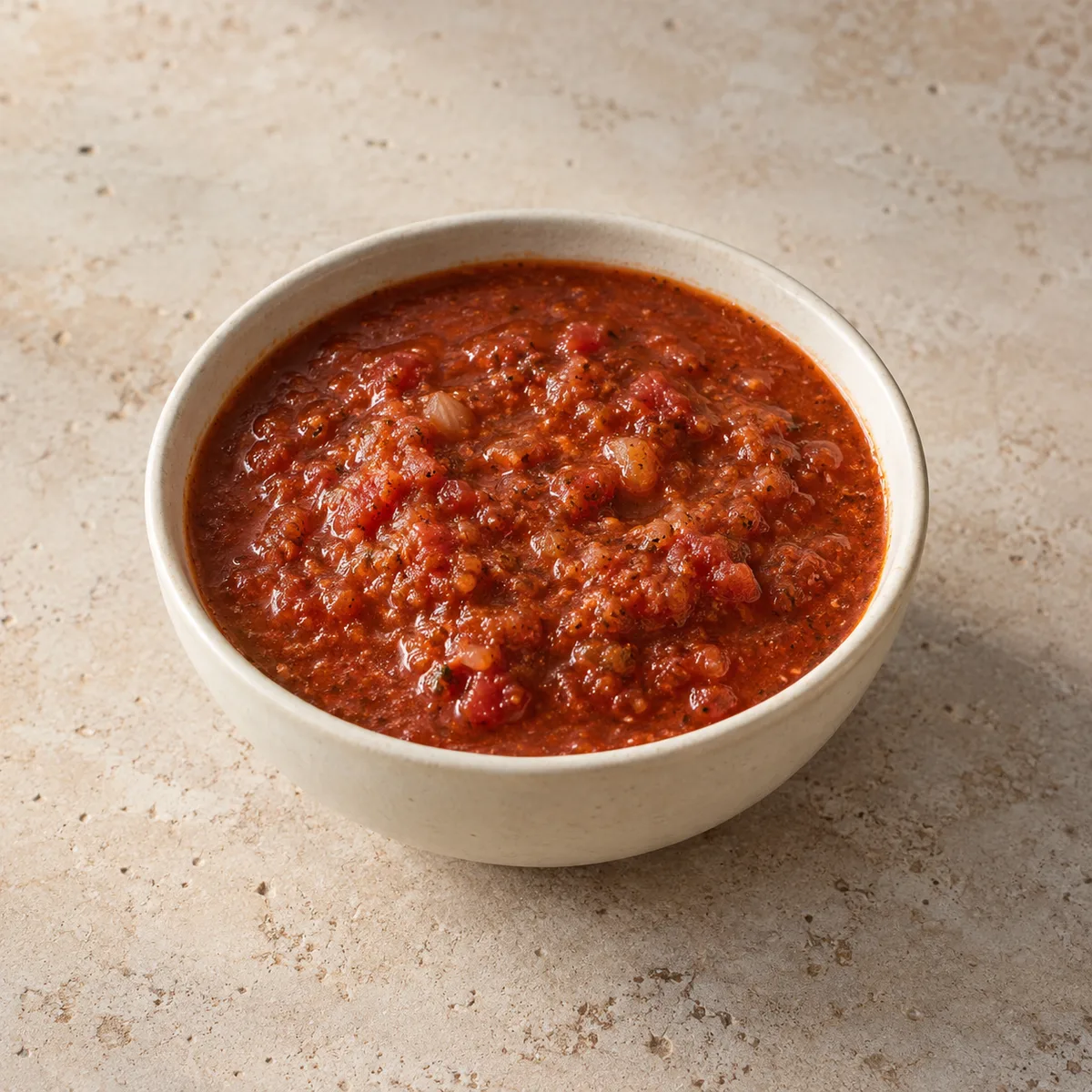
Quick facts
Core identity, dietary fit, and storage ranges in a scannable reference table.
| Origin | Mexico, with broad adoption across the American Southwest; century not established |
|---|---|
| Base | tomato |
| Primary ingredients | tomatoes, dried or fresh chiles, white onion, garlic, cumin, oregano, vegetable oil |
| Flavor profile | smoky, tangy, mildly spicy, savory |
| Color | deep red-orange |
| Consistency | medium; chunky-smooth with visible tomato and chile pieces |
| Refrigerator shelf life | Not established for this exact recipe |
| Vegan | Depends on the recipe or product |
| Gluten-free | Yes |
| Dairy-free | Yes |
Dietary note
Recipes and labels vary
Check ingredient labels and individual dietary requirements; homemade and packaged versions can differ.
Browse sauces sharing an ingredient
How to Serve Ranchero Sauce Safely
USDA advises keeping hot food at 140°F (60°C) or above, cooling leftovers rapidly in shallow containers, and reheating leftovers to 165°F (74°C). A low burner or a slow cooker setting does not prove a safe holding temperature; use a food thermometer.
How to Make Ranchero Sauce
Ranchero Sauce recipe
Tomatoes and chiles are charred or sautéed with onion and garlic in oil, then simmered together and blended to a coarse texture. Cumin and oregano are added during cooking. The sauce is finished to a pourable, slightly chunky consistency.
Ingredients
- 4 medium (about 1 lb) roma tomatoes, roughly chopped
- 2 dried guajillo chiles, stemmed and seeded
- 1/2 medium white onion, diced
- 3 garlic cloves, minced
- 2 tablespoons vegetable oil
- 1/2 teaspoon ground cumin
- 1/2 teaspoon dried Mexican oregano
- 1 teaspoon, or to taste kosher salt
- 1/2 cup water
Method
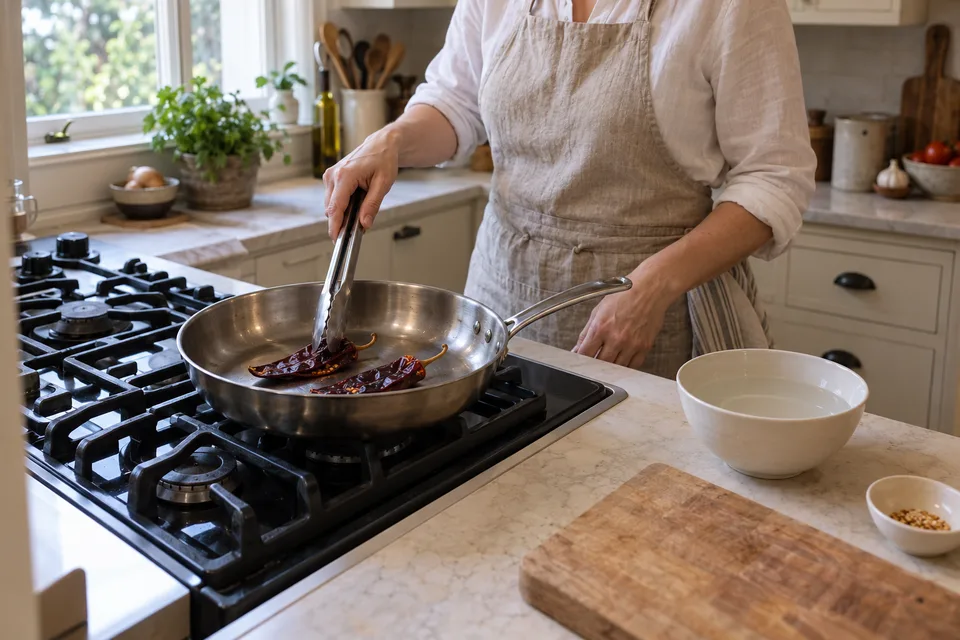
- Toast the dried guajillo chiles in a dry skillet over medium heat for 30 seconds per side until fragrant; soak in hot water for 10 minutes, then drain.
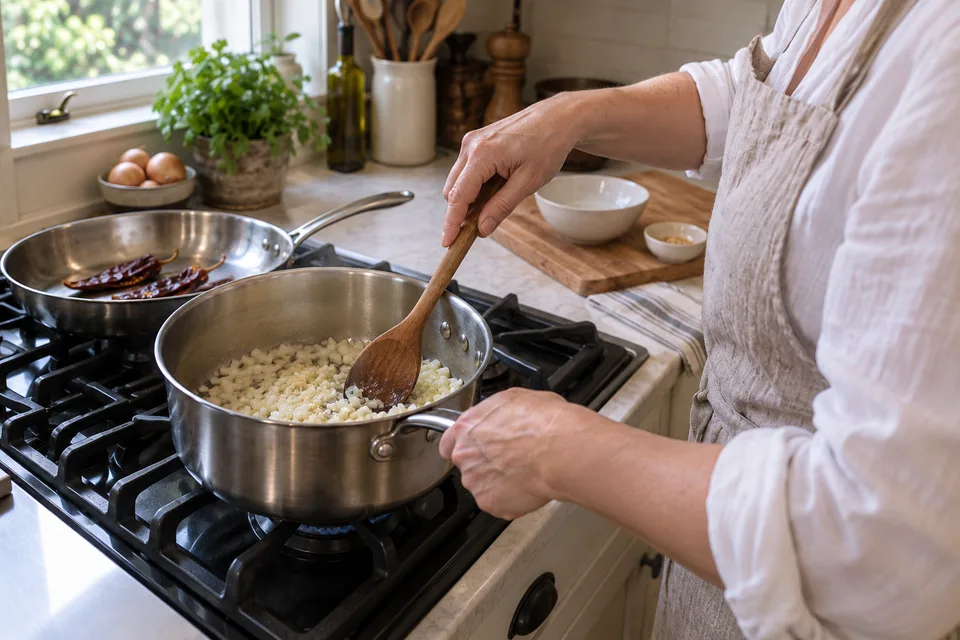
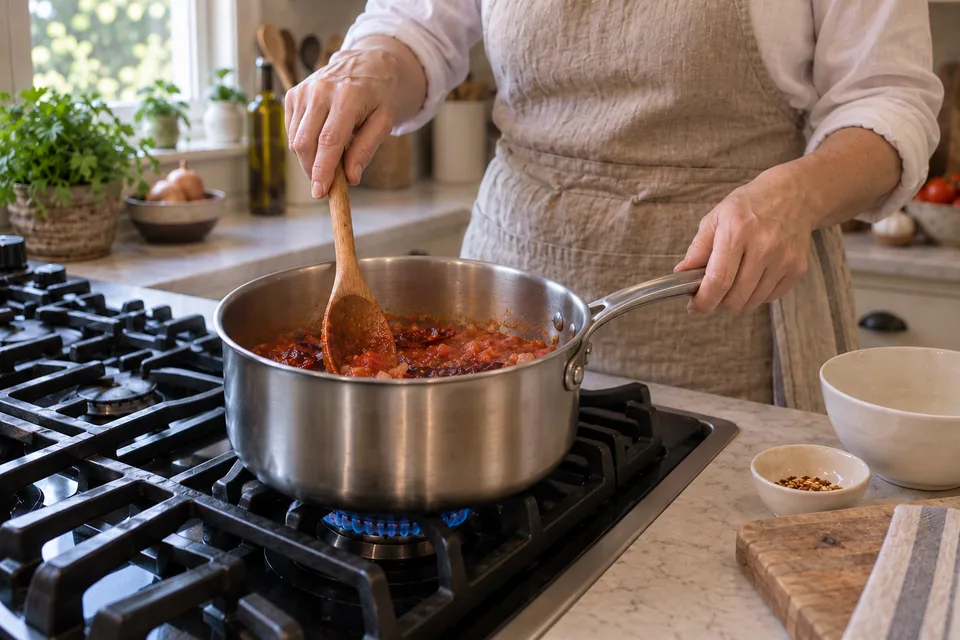
- While the chiles soak, heat oil in a saucepan over medium-high heat. Cook the onion until softened, about 4 minutes, then add garlic and cook 1 minute more.
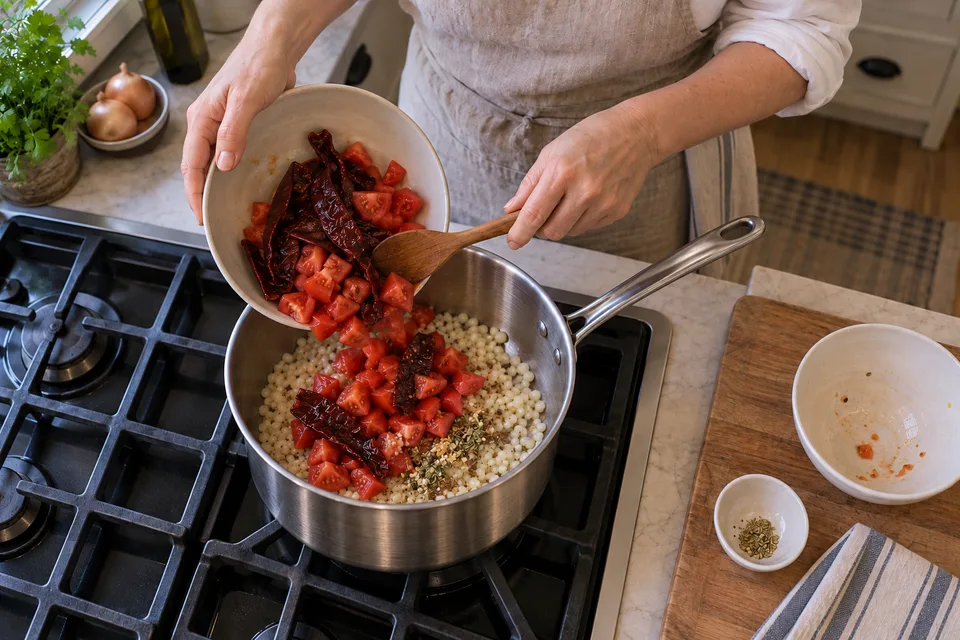
- Add chopped tomatoes, drained chiles, cumin, and oregano. Stir to combine.
- Pour in water and bring to a simmer. Cook uncovered for 12 minutes, stirring occasionally, until tomatoes break down.
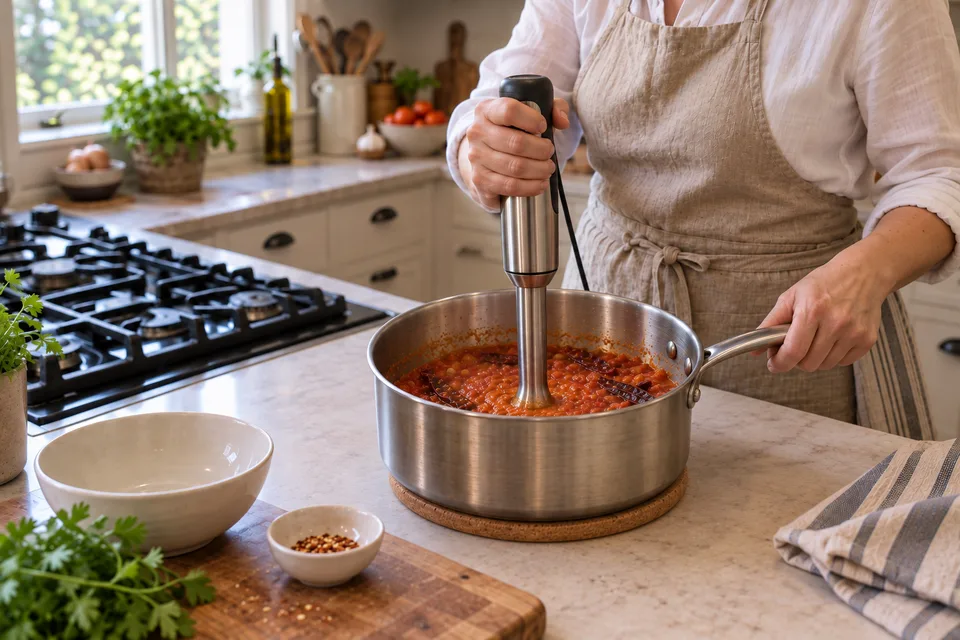
- Remove the pan from heat. Use an immersion blender rated for hot liquids, following its manual, to make a coarse sauce while avoiding splashes. If using a countertop blender, follow its temperature and venting instructions; never put hot sauce in a sealed personal blender. Return the sauce to the pan.
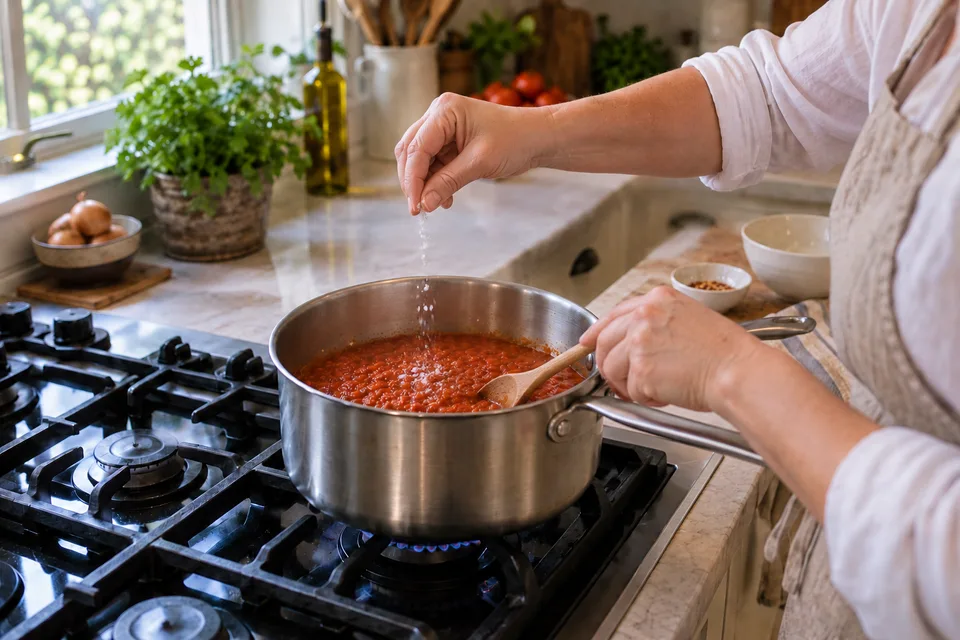
- Season with salt, simmer 2 minutes more, and adjust consistency with additional water if needed.
What to Serve with Ranchero Sauce
Practical applications with the role this sauce plays in each dish.
Use 01
Huevos rancheros topping
Spooned over fried eggs on corn tortillas as the defining component of huevos rancheros.
Use 02
Enchilada sauce
Used to coat rolled enchiladas before baking, adding chile-tomato flavor throughout.
Use 03
Breakfast burrito sauce
Served alongside or poured over breakfast burritos filled with eggs and potatoes.
Use 04
Braising liquid
Used to braise chicken thighs or pork until tender, infusing the meat with smoky tomato flavor.
Use 05
Dipping sauce
Served warm as a dipping sauce for tortilla chips, quesadillas, or taquitos.
Use 06
Tamale accompaniment
Ladled over tamales as a finishing sauce in place of or alongside salsa roja.
Use 07
Shakshuka-style base
Used as a simmering base in which eggs are poached directly in the sauce.
Pairings
Pairing ideas grouped by food role for quick comparison.
Proteins
- fried eggs
- chicken thighs
- pork carnitas
- chorizo
- black beans
Vegetables
- roasted poblano peppers
- sautéed zucchini
- grilled corn
- caramelized onions
Carbs
- corn tortillas
- flour tortillas
- rice
- roasted potatoes
Ranchero Sauce substitutes
Starting ratios, best uses, and the main functional tradeoff for each alternative.
| Substitute | Ratio | Best for | Notes |
|---|---|---|---|
| Salsa roja | 1:1 | topping eggs or meats | Less cooked depth; thinner texture but similar chile-tomato flavor. |
| Enchilada sauce (red) | 1:1 | enchiladas and braising | More uniform texture; often milder and slightly sweeter than ranchero. |
| Canned diced tomatoes with green chiles | varies | quick preparations | Requires sautéing with onion and cumin to approximate cooked depth. |
| Homemade tomato sauce with chipotle | varies | braising | Adds smokiness; reduce chipotle quantity to avoid overpowering the dish. |
| Pico de gallo (cooked down) | varies | dipping and topping | Simmer fresh pico until thickened; texture will be chunkier than traditional ranchero. |
How to Store Homemade Ranchero Sauce
Keep time and temperature guidance visible, and discard sauce when spoilage signs appear.
Refrigerator
FDA advises refrigerating promptly at 40°F (4°C) or below in a covered container. Do not leave perishable sauce out for more than 2 hours, or 1 hour above 90°F (32°C). No extended shelf life has been established for this exact homemade recipe. Follow the label for bottled products.
Freezer
FDA advises keeping frozen food at 0°F (-18°C). Freeze promptly in a covered freezer-safe container and thaw in the refrigerator. Texture may change. No recipe-specific quality window has been verified.
Signs of spoilage
Discard moldy or suspicious-smelling sauce and sauce with an unsafe storage history. FDA warns that normal appearance, smell or taste does not establish safety. Do not taste sauce to check whether it is safe.
Sources
Public references supporting safety-sensitive claims and editorial decisions on this page.
-
Prompt refrigeration, time and temperature limits, safe marinade handling, and limitations of spoilage checks.
- Basics for Safe Food Handling (USDA) govinfo.gov
Hot holding, shallow-container cooling and reheating leftovers.
Ranchero Sauce FAQ
Short, self-contained answers to common questions.
What is the difference between ranchero sauce and enchilada sauce?
Ranchero sauce is typically chunkier and made with fresh or whole dried chiles and tomatoes cooked briefly. Enchilada sauce is usually smoother, often made with chile powder or pureed dried chiles, and is designed to coat tortillas evenly. Flavor depth and texture differ noticeably between the two.
Is ranchero sauce the same as salsa?
No. Ranchero sauce is a cooked sauce simmered until the tomatoes and chiles break down, producing a deeper, more integrated flavor. Salsa can be raw or cooked but is generally less reduced. Ranchero sauce has a saucier consistency suited for topping hot dishes.
How spicy is ranchero sauce?
Spice level varies by the chiles used. A traditional guajillo-based ranchero sauce is mildly spicy with fruity, smoky notes. Adding serrano or jalapeño peppers increases heat. The sauce is generally considered mild to medium on a standard heat scale.
Can ranchero sauce be made ahead of time?
Yes. Refrigerate ranchero sauce promptly in a covered shallow container at 40°F (4°C) or below. The previous five-day recommendation was not verified for this exact recipe. Freeze promptly if saving for later; thaw in the refrigerator. Do not use this recipe for shelf-stable canning.
What chiles are used in ranchero sauce?
Guajillo and ancho chiles are common dried options that provide mild heat and fruity depth. Fresh jalapeño or serrano chiles are used in some regional versions for brighter, sharper heat. The choice of chile significantly affects the sauce's color, flavor, and spice level.