Other/Global · dipping
Worcestershire Sauce
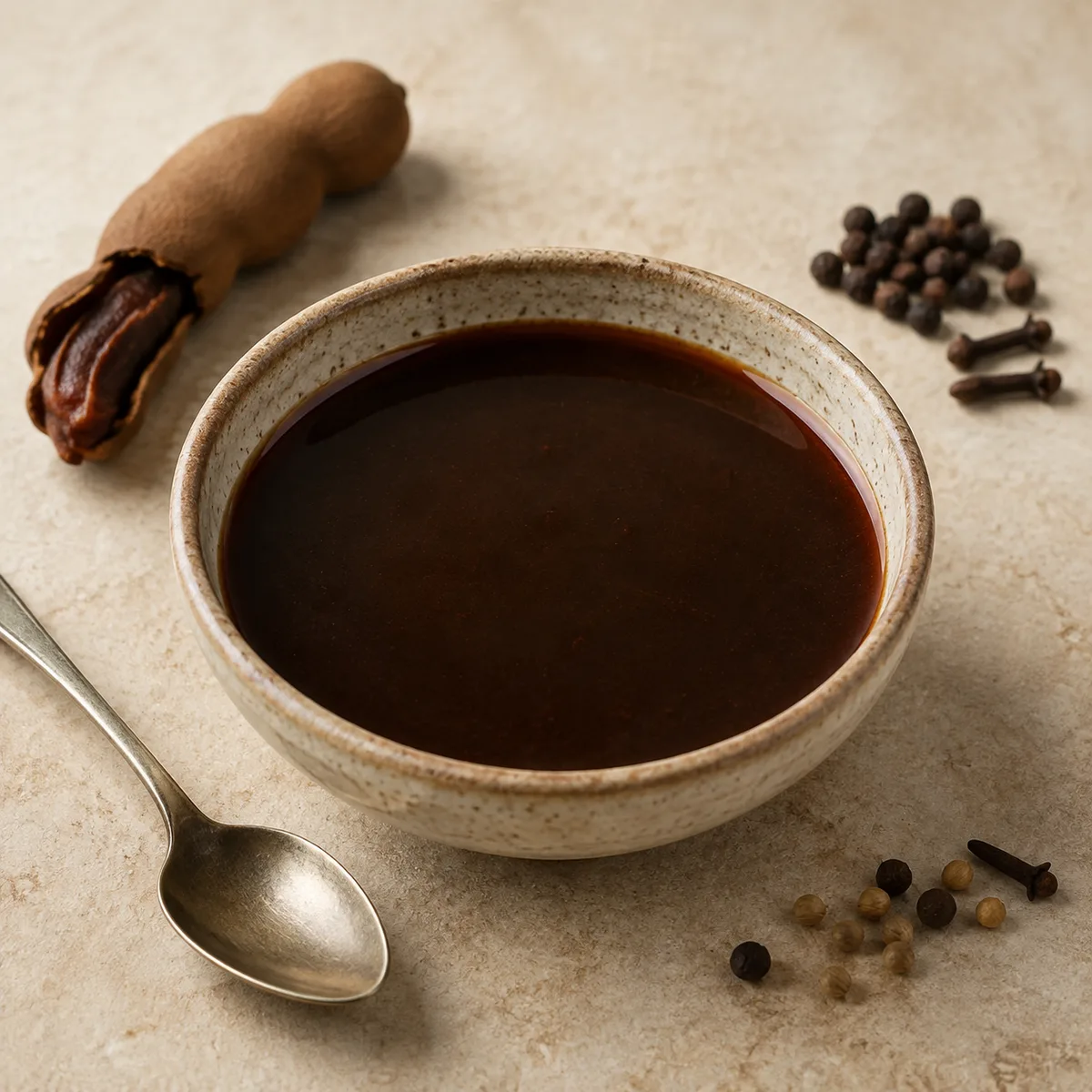
Worcestershire sauce is a fermented liquid condiment of British origin that combines anchovies, tamarind, vinegar, and spices into a savory, tangy seasoning used to enhance meat dishes, marinades, and cocktails.
Quick facts
Core identity, dietary fit, and storage ranges in a scannable reference table.
| Origin | England, 19th century |
|---|---|
| Base | Fermented anchovies and tamarind |
| Primary ingredients | anchovies, tamarind extract, malt vinegar, molasses, onions, garlic, cloves, chili pepper extract |
| Flavor profile | savory, tangy, slightly sweet, umami-rich |
| Color | Dark brown, nearly black |
| Consistency | Thin; pourable liquid with no visible solids |
| Refrigerator shelf life | 3 to 4 days (homemade) |
| Vegan | No |
| Gluten-free | Depends on the recipe or product |
| Dairy-free | Yes |
Dietary note
Recipes and labels vary
Check ingredient labels and individual dietary requirements; homemade and packaged versions can differ.
Browse sauces sharing an ingredient
How Is Worcestershire Sauce Made?
Quick Worcestershire-style sauce
This quick Worcestershire-style sauce is simmered for about 35 minutes to approximate the condiment's tangy, savory flavor. It does not reproduce the extended maturation used for traditional bottled Worcestershire sauce.
Ingredients
- 2 cups malt vinegar
- 3 tablespoons molasses
- 3 tablespoons soy sauce
- 2 tablespoons tamarind paste
- 1 tablespoon anchovy paste
- 1/2 medium onion, finely minced
- 2 garlic cloves, minced
- 1/4 teaspoon ground cloves
- 1/4 teaspoon ground allspice
- 1/8 teaspoon cayenne pepper
- 1/4 teaspoon black pepper
Method
- Combine vinegar, molasses, soy sauce, and tamarind paste in a medium saucepan over medium heat.
- Stir in anchovy paste, onion, garlic, cloves, allspice, cayenne, and black pepper.
- Bring the mixture to a gentle simmer, stirring until all ingredients are fully incorporated.
- Reduce heat to low and cook for 15 minutes, stirring occasionally, until slightly reduced.
- Remove from heat and cool only until the saucepan and sauce are safe to handle. Keep the total time above 40°F (4°C) within 2 hours, or within 1 hour when the ambient temperature is above 90°F (32°C).
- Strain through a fine-mesh sieve into a clean glass jar or bottle, pressing solids to extract liquid.
- Transfer to a covered container, refrigerate promptly at 40°F (4°C) or below, and use within 3 to 4 days.
What Is Worcestershire Sauce Used For?
Practical applications with the role this sauce plays in each dish.
Use 01
Steak marinade
Brushed onto beef before grilling or broiling to add umami depth and promote browning.
Use 02
Bloody Mary cocktail
A standard ingredient in Bloody Mary mixes, contributing savory complexity to the tomato base.
Use 03
Burger seasoning
Mixed directly into ground beef patties or used as a condiment to intensify savory flavor.
Use 04
Caesar salad dressing
Added in small amounts to classic Caesar dressing for anchovy-forward umami character.
Use 05
Gravy and pan sauces
Stirred into gravies and pan drippings to deepen color and add layered savory notes.
Use 06
Welsh rarebit
A traditional component of this British cheese sauce served over toast.
Use 07
Chili and stews
Added during cooking to build background savory flavor without a distinct sauce taste.
Use 08
Deviled eggs
Blended into the yolk filling to add a subtle tangy, savory edge.
Pairings
Pairing ideas grouped by food role for quick comparison.
Proteins
- beef steak
- ground beef
- lamb chops
- pork tenderloin
- oysters
- shrimp
Vegetables
- mushrooms
- roasted tomatoes
- caramelized onions
- grilled asparagus
Carbs
- crusty bread
- roasted potatoes
- egg noodles
- rice pilaf
Worcestershire Sauce substitutes
Starting ratios, best uses, and the main functional tradeoff for each alternative.
| Substitute | Ratio | Best for | Notes |
|---|---|---|---|
| Soy sauce with tamarind | 1:1 | Marinades and sauces | Mix 1 tablespoon soy sauce with 1/2 teaspoon tamarind paste to approximate depth. |
| Fish sauce | 1:1 | Umami boost in cooked dishes | Provides similar fermented depth but is saltier and more pungent; use sparingly. |
| Soy sauce | 1:1 | General seasoning | Lacks tamarind sweetness and complexity; adds saltiness without the full flavor range. |
| A.1. steak sauce | 1:1 | Steak and burger applications | Thicker consistency; flavor is bolder and sweeter than Worcestershire. |
| Coconut aminos with vinegar | 1:1 | Vegan or soy-free recipes | Combine with a small splash of apple cider vinegar for added tang. |
How to Store Worcestershire Sauce
Keep time and temperature guidance visible, and discard sauce when spoilage signs appear.
Refrigerator
Refrigerate the homemade sauce promptly in a covered container at 40°F (4°C) or below and use it within 3 to 4 days. If it has been above 40°F for more than 2 hours, or more than 1 hour above 90°F (32°C), discard it. Commercial products may have different label directions.
Freezer
Freezing this quick homemade sauce is optional but may change its flavor or texture. If frozen, use an airtight freezer-safe container and thaw it in the refrigerator.
Signs of spoilage
Discard the sauce if mold, slime, unexpected bubbling, or an off odor appears. Do not rely on appearance or smell alone to determine safety; follow the refrigeration time and temperature limits above.
Sources
Public references supporting safety-sensitive claims and editorial decisions on this page.
- Worcestershire Sauce — Lea & Perrins kraftheinz.com
Kraft Heinz states that Lea & Perrins Worcestershire sauce has been made since 1837 and that its ingredient blend takes 18 months to mature.
- Leftovers and Food Safety — USDA FSIS fsis.usda.gov
USDA FSIS advises refrigerating perishable leftovers promptly at 40°F or below, using them within 3 to 4 days, and freezing them for 3 to 4 months.
-
FDA advises the two-hour refrigeration rule, a refrigerator temperature at or below 40°F, and notes that unsafe food may still look and smell normal.
Worcestershire Sauce FAQ
Short, self-contained answers to common questions.
Does Worcestershire sauce need to be refrigerated after opening?
Follow the label after opening a commercial bottle. For the quick homemade sauce on this page, refrigerate promptly at 40°F (4°C) or below and use within 3 to 4 days; this conservative limit follows USDA guidance for homemade leftovers.
Is Worcestershire sauce gluten-free?
It depends on the brand. Traditional formulations use malt vinegar, which contains gluten. Some brands produce certified gluten-free versions using distilled vinegar. Always check the product label if gluten is a dietary concern.
Is Worcestershire sauce vegan?
Most standard Worcestershire sauces are not vegan because they contain anchovies. Several brands produce vegan-certified versions that substitute anchovies with alternative umami sources such as soy sauce or mushroom extract.
What does Worcestershire sauce taste like?
Worcestershire sauce tastes savory, tangy, and slightly sweet with a pronounced umami quality. The anchovy and tamarind base creates depth, while vinegar and spices add brightness. The anchovy flavor is not distinctly fishy in the finished sauce.
How much Worcestershire sauce should I add to a recipe?
Most recipes call for 1 teaspoon to 1 tablespoon. Because the sauce is concentrated and salty, start with a small amount and adjust to taste. Adding too much can overpower other flavors with saltiness and acidity.
What is Worcestershire sauce made of?
Traditional Worcestershire sauce combines vinegar, molasses, tamarind, anchovies, aromatics, and spices, then matures to develop its savory, tangy character. Formulas vary, so check the ingredient label for allergens and dietary restrictions.
What is Worcestershire sauce used for?
Worcestershire sauce adds concentrated savory depth to marinades, burgers, gravies, pan sauces, stews, Caesar dressing, and Bloody Mary cocktails. Start with a small amount because its salt, acidity, and umami can quickly dominate a dish.