American restaurant-style · creamy
Yum Yum Sauce
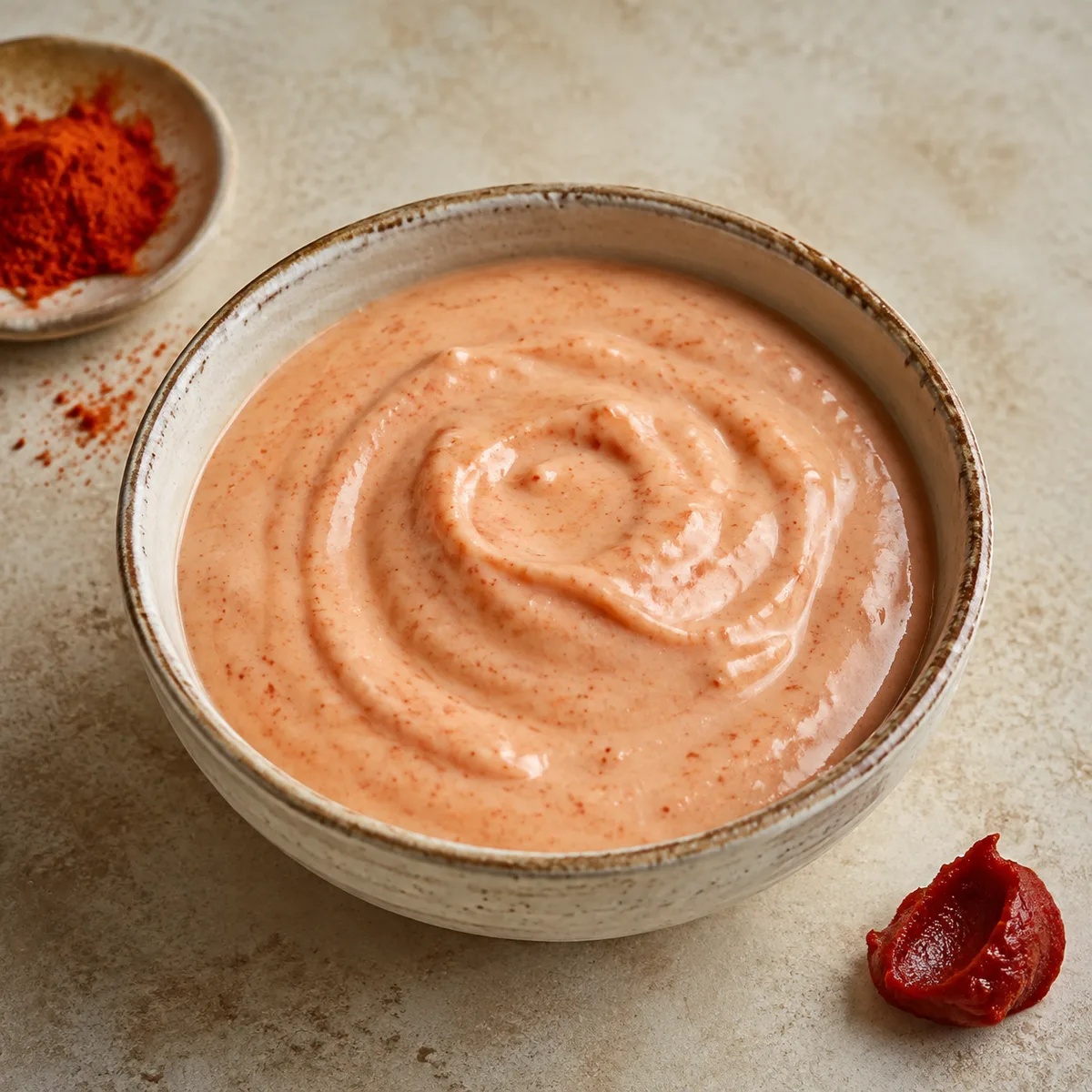
Yum Yum Sauce is a creamy, mayonnaise-based condiment associated with American Japanese steakhouses that combines mayo, tomato paste, and seasonings into a mild, slightly sweet dipping sauce.
Quick facts
Core identity, dietary fit, and storage ranges in a scannable reference table.
| Origin | United States (Japanese-American steakhouse tradition), late 20th century |
|---|---|
| Base | Mayonnaise |
| Primary ingredients | mayonnaise, tomato paste or ketchup, butter, garlic powder, onion powder, paprika, sugar, water |
| Flavor profile | mild, creamy, slightly sweet, faintly tangy |
| Color | pale pink to light orange |
| Consistency | medium; smooth and pourable but thick enough to coat |
| Refrigerator shelf life | Up to 4 days (homemade) |
| Vegan | No |
| Gluten-free | Yes |
| Dairy-free | Depends on the recipe or product |
Dietary note
Recipes and labels vary
Check ingredient labels and individual dietary requirements; homemade and packaged versions can differ.
Browse sauces sharing an ingredient
Where Did Yum Yum Sauce Originate?
Yum Yum sauce is an American restaurant condiment associated with Japanese-style teppanyaki steakhouses. KPBS/NPR reported that culinary experts found no evidence that the creamy pink sauce is part of traditional Japanese cuisine; its precise origin is unclear, and the name later spread through U.S. restaurant and bottled-sauce use.
How it’s made
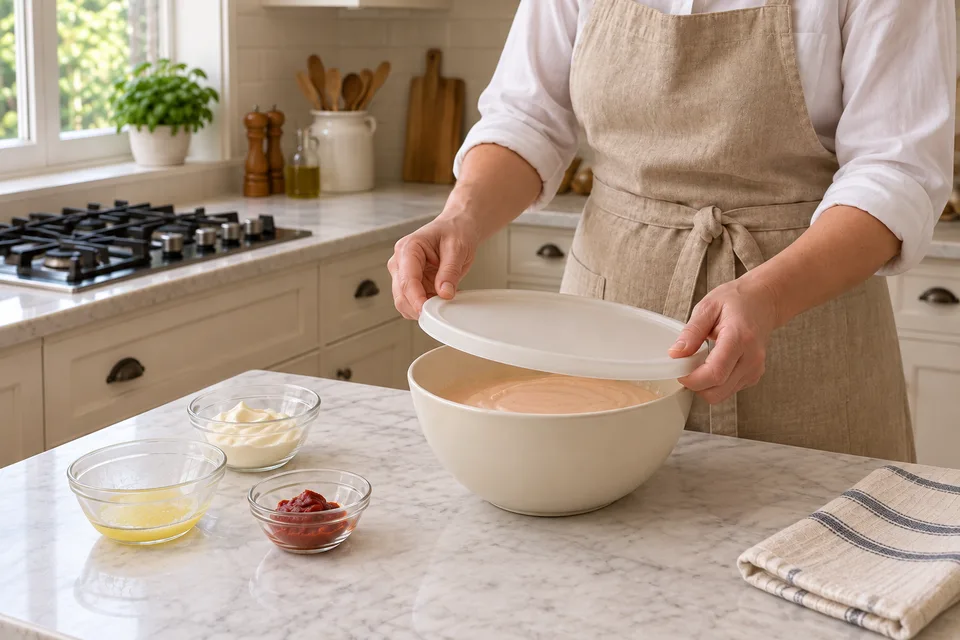
Mayonnaise is whisked together with tomato paste or ketchup, melted butter, and dry seasonings. Water is added gradually to reach a pourable consistency. The sauce is refrigerated for at least one hour before serving to allow flavors to meld.
Yum Yum Sauce recipe
Mayonnaise is whisked together with tomato paste or ketchup, melted butter, and dry seasonings. Water is added gradually to reach a pourable consistency. The sauce is refrigerated for at least one hour before serving to allow flavors to meld.
Ingredients
- 1 cup mayonnaise
- 1 tablespoon tomato paste
- 1 tablespoon unsalted butter, melted
- 1/2 teaspoon garlic powder
- 1/2 teaspoon onion powder
- 1/2 teaspoon paprika
- 1 teaspoon granulated sugar
- 2 to 3 tablespoons water
- to taste salt
Method
- Combine mayonnaise, tomato paste, and melted butter in a medium bowl.
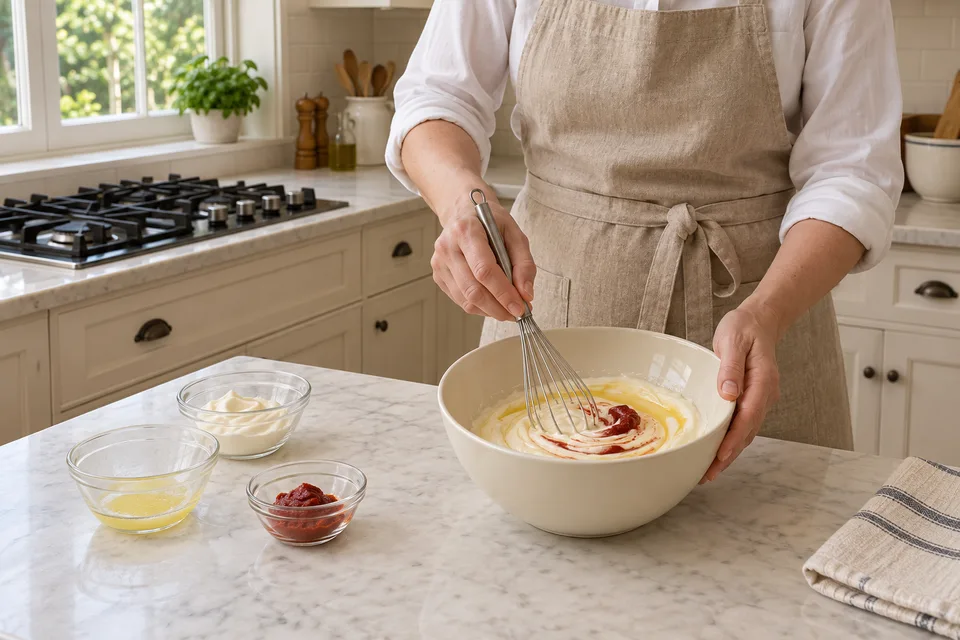
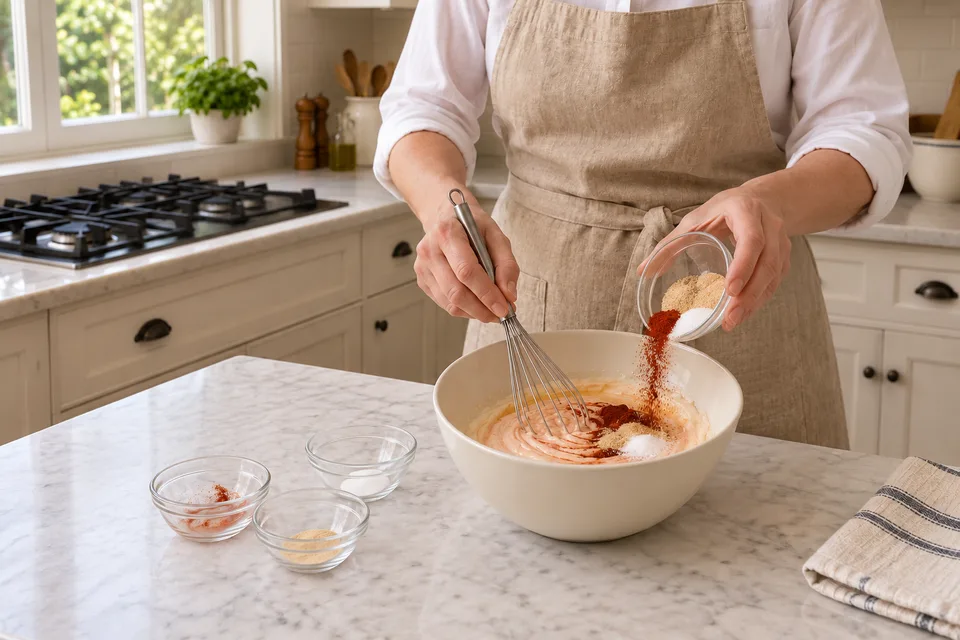
- Add garlic powder, onion powder, paprika, and sugar. Whisk until fully incorporated.
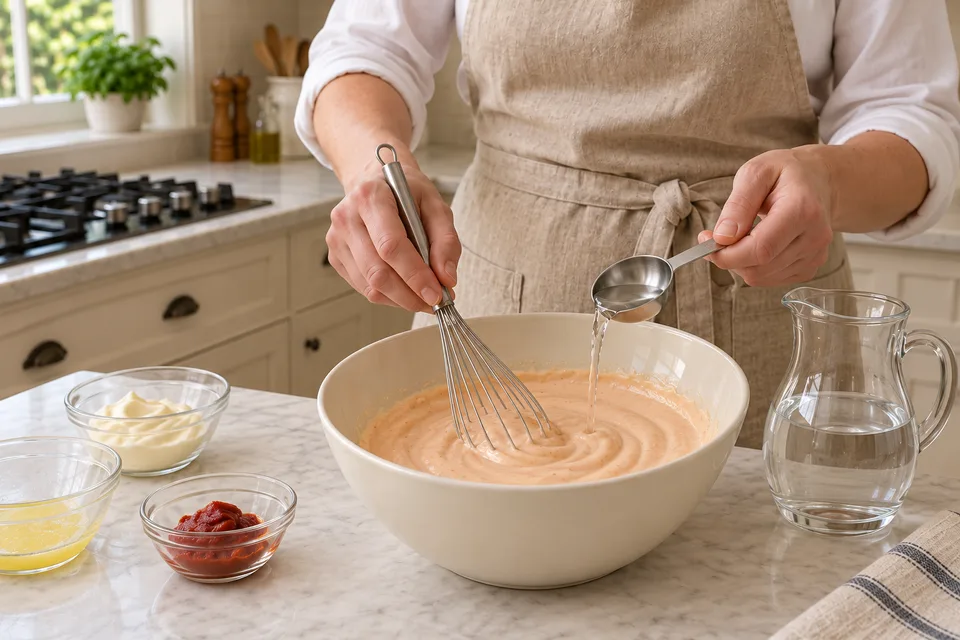
- Add water one tablespoon at a time, whisking after each addition, until the sauce reaches a smooth, pourable consistency.
- Season with salt to taste.

- Cover and refrigerate for at least 1 hour before serving to allow flavors to develop.
Common uses
Practical applications with the role this sauce plays in each dish.
Use 01
Dipping sauce for grilled proteins
Served alongside hibachi-style chicken, shrimp, or steak at Japanese-American steakhouses.
Use 02
Fried rice topping
Drizzled over hibachi fried rice to add creaminess and mild sweetness.
Use 03
Vegetable dip
Used as a dipping sauce for raw or grilled vegetables such as zucchini and broccoli.
Use 04
Burger or sandwich spread
Spread on buns or sandwich bread as a mild, creamy alternative to plain mayonnaise.
Use 05
Sushi and roll dipping
Paired with California rolls or tempura rolls as a mild complement to soy sauce.
Use 06
Salad dressing base
Thinned with additional water or rice vinegar and used as a creamy salad dressing.
Use 07
Noodle sauce
Tossed with cold or warm noodles for a quick, creamy coating.
Use 08
Seafood accompaniment
Served as a dipping sauce for shrimp, scallops, or fried calamari.
Pairings
Pairing ideas grouped by food role for quick comparison.
Proteins
- hibachi chicken
- grilled shrimp
- beef sirloin
- salmon
- fried tofu
- scallops
Vegetables
- zucchini
- broccoli
- mushrooms
- bean sprouts
- snap peas
- grilled corn
Carbs
- hibachi fried rice
- steamed white rice
- noodles
- potato wedges
- soft burger buns
Yum Yum Sauce substitutes
Starting ratios, best uses, and the main functional tradeoff for each alternative.
| Substitute | Ratio | Best for | Notes |
|---|---|---|---|
| Sriracha mayo | 1:1 | dipping and spreading | Adds heat; reduce or omit sriracha for a milder result. |
| Thousand Island dressing | 1:1 | dipping and salad use | Sweeter and chunkier; works when a tomato-mayo profile is acceptable. |
| Remoulade sauce | 1:1 | seafood dipping | More herbaceous and tangy; suits fried seafood well. |
| Fry sauce (mayo and ketchup blend) | 1:1 | dipping fried foods | Simpler flavor; lacks the seasoning depth of yum yum sauce. |
| Greek yogurt with paprika and garlic | varies | lighter dipping or dressing | Lower fat; tangier profile and thicker texture than the original. |
Storage
Keep time and temperature guidance visible, and discard sauce when spoilage signs appear.
Refrigerator
Refrigerate the homemade sauce promptly in a covered container at 40°F (4°C) or below and use it within 4 days. If it has been at room temperature for more than 2 hours, or more than 1 hour above 90°F (32°C), discard it.
Freezer
Freezing is not recommended for quality because the mayonnaise-based emulsion can separate after thawing.
Signs of spoilage
Discard the sauce when its storage time or temperature limit has been exceeded, even if it looks and smells normal. Also discard it if mold, an off odor, or an unusual texture develops. Do not taste food to determine whether it is safe.
Sources
Public references supporting safety-sensitive claims and editorial decisions on this page.
-
KPBS/NPR reported that experts found no evidence of the sauce in traditional Japanese cuisine, described its exact origin as unclear, and traced its growth through American teppanyaki restaurants and bottled products.
- Leftovers and Food Safety — USDA FSIS fsis.usda.gov
USDA FSIS advises refrigerating perishable leftovers promptly at 40°F or below, using them within 3 to 4 days, and freezing them for 3 to 4 months.
-
FDA advises the two-hour refrigeration rule, a refrigerator temperature at or below 40°F, and notes that unsafe food may still look and smell normal.
Yum Yum Sauce FAQ
Short, self-contained answers to common questions.
What is yum yum sauce made of?
Yum yum sauce is made primarily from mayonnaise, tomato paste or ketchup, melted butter, and dry seasonings such as garlic powder, onion powder, paprika, and sugar. Water is added to thin the sauce to a pourable consistency.
Is yum yum sauce the same as hibachi sauce?
The terms are often used interchangeably at American Japanese steakhouses. Both refer to the same creamy, pink mayo-based condiment served with hibachi-style dishes. Some restaurants use the name 'shrimp sauce' for the same preparation.
Is yum yum sauce gluten-free?
A basic homemade yum yum sauce made with standard mayonnaise, tomato paste, and dry spices is typically gluten-free. Commercial versions may vary by brand, so check product labels for gluten-containing additives or cross-contamination warnings.
Why does yum yum sauce taste better the next day?
Refrigerating the sauce for several hours allows the dry seasonings to fully hydrate and the flavors to meld together. Most recipes recommend at least one hour of chilling, and overnight rest often produces a more balanced, cohesive flavor.
Can yum yum sauce be used as a salad dressing?
Yes. Thin yum yum sauce with a small amount of water or rice vinegar until it reaches a pourable consistency. It works well on green salads, Asian-style slaws, and grain bowls where a mild, creamy dressing is appropriate.
Is Yum Yum Sauce American or Japanese?
Yum Yum sauce is best described as an American condiment served in Japanese-style teppanyaki restaurants. Reporting from KPBS/NPR found no evidence that it is a traditional Japanese sauce, while noting that its exact origin is uncertain.