Sauce type · Multi-cuisine
BBQ sauces
BBQ sauces are condiments that are applied to grilled, smoked, or roasted meats and range from sweet tomato-based styles to tangy vinegar-forward or creamy mayonnaise-based regional varieties.
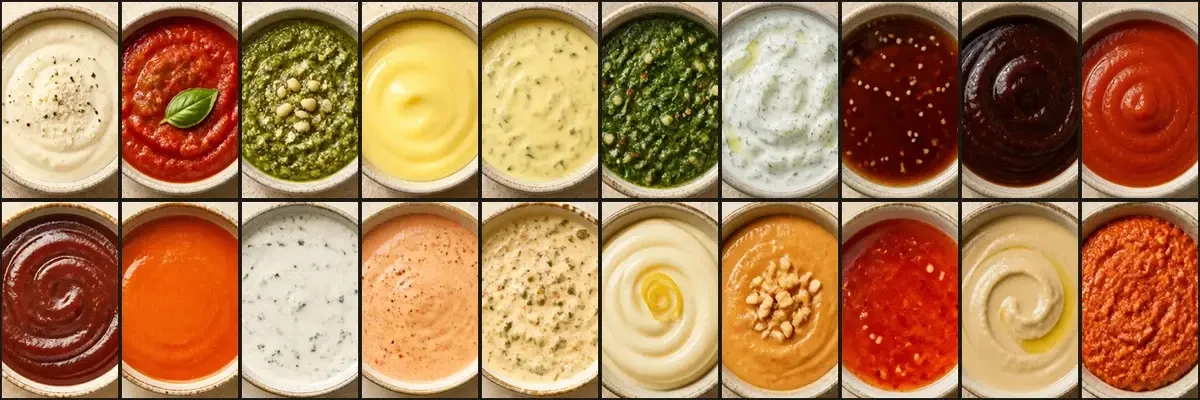
What defines this sauce type?
Texture, flavor, ingredients, technique, and cooking behavior at a glance.
| Characteristic | Typical pattern |
|---|---|
| Primary bases | Tomato, vinegar, mustard, or mayonnaise, depending on regional style |
| Flavor profile | Varies from sweet and smoky to sharp and tangy; heat level ranges from mild to spicy |
| Common uses | Basting, mopping, dipping, and finishing sauce for smoked or grilled meats |
| Sugar content | Many tomato-based versions are high in sugar; sugar-free and vinegar-based alternatives exist |
| Regional variation | Distinct American regional traditions include Carolinas, Alabama, Kansas City, and Texas styles |
| International variants | Korean and Chinese BBQ sauces use soy, sesame, and fermented ingredients distinct from American styles |
Subtypes
Common branches within this sauce family.
Tomato-based BBQ sauces
Thick sauces built on a tomato or ketchup foundation, typically sweetened with sugar, molasses, or honey and balanced with vinegar and spices. The most widely recognized American BBQ sauce style.
Vinegar-based BBQ sauces
Thin, acidic sauces centered on cider or white vinegar with pepper and spices. Associated with Eastern Carolina traditions and used primarily as a meat mop or finishing sauce.
Mustard-based BBQ sauces
Tangy sauces using yellow or brown mustard as the primary base, characteristic of South Carolina's Midlands region. Bright yellow color and sharp flavor distinguish them from tomato-based styles.
Mayonnaise-based BBQ sauces
Creamy white sauces built on mayonnaise with vinegar and black pepper. Primarily associated with northern Alabama and used as a finishing sauce or dip for smoked chicken.
Asian BBQ sauces
Sauces from East Asian culinary traditions that use soy sauce, sesame, fermented pastes, or five-spice as primary flavoring agents, distinct in technique and ingredient base from American regional styles.
BBQ sauce index
Every catalog entry assigned to this type, across cuisines and uses.
American/BBQ
Homemade BBQ Sauce
Scratch-made tomato-based sauce allowing full control over sweetness, heat, and smoke level.
American/BBQ
White BBQ Sauce
Creamy mayonnaise and vinegar sauce used as a dip or finishing sauce for smoked meats.
American/BBQ
Carolina Gold Sauce
Mustard-forward South Carolina sauce with a tangy, slightly sweet flavor and bright yellow color.
American/BBQ
Best BBQ Sauce
A comparative guide to top-rated tomato-based BBQ sauce options across commercial and regional styles.
American/BBQ
BBQ Sauce
Core reference entry covering the broad category of BBQ sauces, ingredients, and common uses.
American/BBQ
Sugar Free BBQ Sauce
Tomato-based BBQ sauce formulated without added sugar, suited for low-carb and diabetic-friendly diets.
American/BBQ
Alabama White Sauce
Northern Alabama specialty: a peppery mayonnaise-vinegar sauce traditionally paired with smoked chicken.
American/BBQ
Carolina BBQ Sauce
Umbrella term for vinegar- and mustard-based sauces from North and South Carolina BBQ traditions.
American/BBQ
Korean BBQ Sauce
Soy, sesame, garlic, and ginger-based sauce used for marinating and grilling meats in Korean cuisine.
American/BBQ
Homemade Barbecue Sauce
From-scratch barbecue sauce recipes covering base ingredients, technique, and customization options.
American/BBQ
Chinese BBQ Sauce
Soy and five-spice-based sauce used in Cantonese char siu and other Chinese roasted meat preparations.
American/BBQ
Vinegar Based BBQ Sauce
Thin, acidic sauce built on cider vinegar and pepper; a staple of Eastern Carolina pit barbecue.
American/BBQ
Honey BBQ Sauce
Tomato-based BBQ sauce sweetened primarily with honey, producing a mild, glossy glaze on grilled meats.
Compare bbq sauces
Representative entries across cuisines without user ratings or fabricated scores.
| Sauce | Cuisine | Working type | Content status |
|---|---|---|---|
| Homemade BBQ Sauce | American/BBQ | bbq | Encyclopedia entry |
| White BBQ Sauce | American/BBQ | bbq | Encyclopedia entry |
| Carolina Gold Sauce | American/BBQ | bbq | Encyclopedia entry |
| Best BBQ Sauce | American/BBQ | bbq | Encyclopedia entry |
| BBQ Sauce | American/BBQ | bbq | Encyclopedia entry |
| Sugar Free BBQ Sauce | American/BBQ | bbq | Encyclopedia entry |
| Alabama White Sauce | American/BBQ | bbq | Encyclopedia entry |
| Carolina BBQ Sauce | American/BBQ | bbq | Encyclopedia entry |
Explore by cuisine
Keep technique and culinary context visible when comparing related sauces.
BBQ sauce FAQ
Direct answers about the sauce family and its uses.
What is the difference between vinegar-based and tomato-based BBQ sauce?
Vinegar-based sauces are thin and sharp, built on cider or white vinegar with pepper and little or no sweetener. Tomato-based sauces are thicker, sweeter, and use ketchup or tomato paste as the primary ingredient. The two styles suit different meats and cooking methods.
What makes Alabama white sauce different from other BBQ sauces?
Alabama white sauce uses mayonnaise rather than tomato or vinegar as its base, producing a creamy, tangy condiment. It is seasoned with black pepper and apple cider vinegar and is most commonly served with smoked chicken in northern Alabama.
Can BBQ sauce be used as a marinade?
BBQ sauce can be used as a marinade, though its sugar content causes it to burn quickly over high heat. Many cooks apply it only during the final minutes of grilling or after cooking. Vinegar-based sauces, which are lower in sugar, tolerate longer cooking exposure better.
How do Korean and Chinese BBQ sauces differ from American styles?
Korean BBQ sauce typically combines soy sauce, sesame oil, garlic, ginger, and sugar. Chinese BBQ sauce, used in preparations like char siu, relies on soy sauce, five-spice powder, and fermented bean paste. Both differ from American styles in base ingredients, flavor profile, and culinary tradition.