Cuisine hub · 14 catalog entries
Chinese sauces
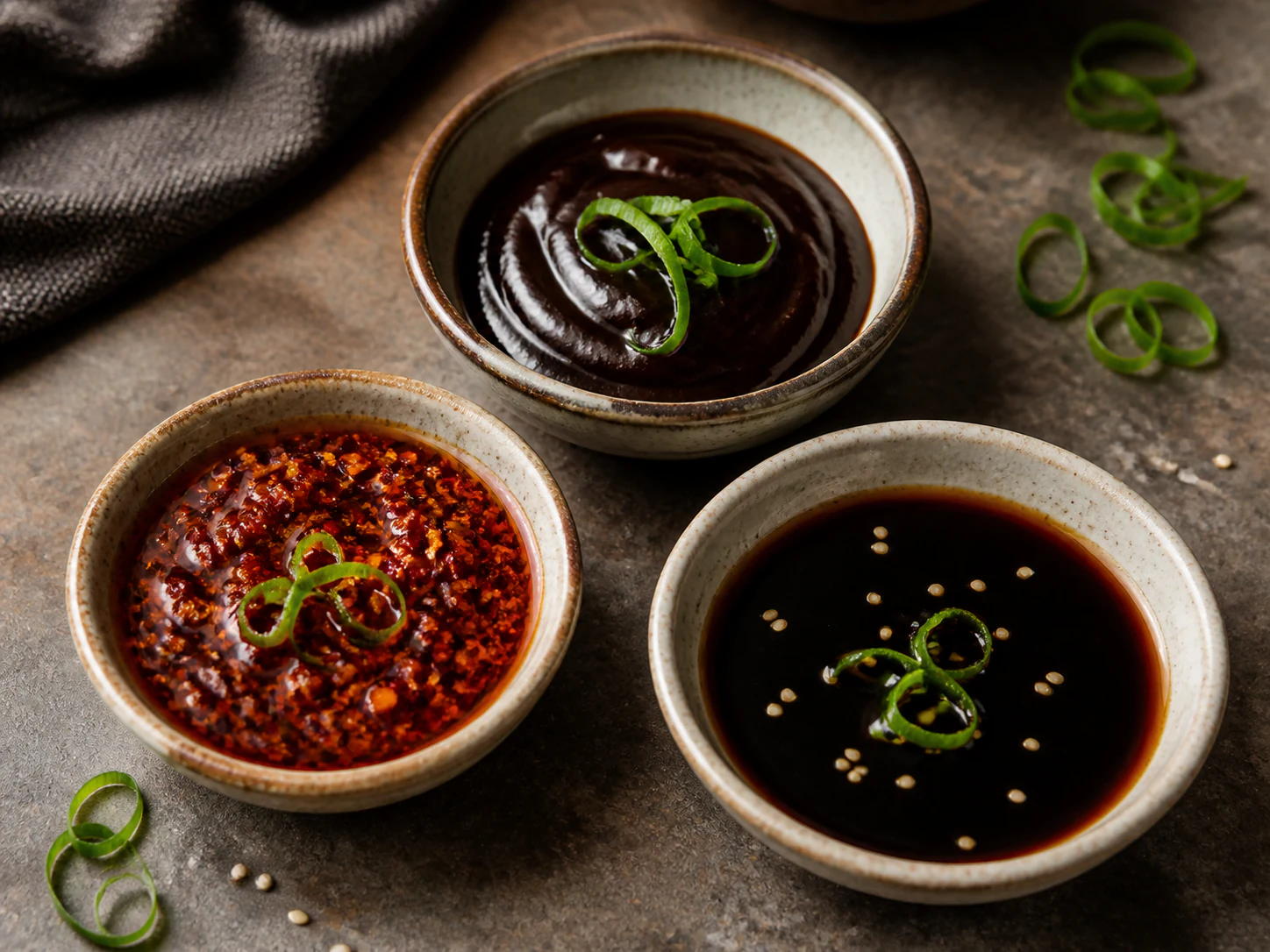
Chinese cuisine sauces are condiments and cooking sauces that span regional styles from Cantonese to Sichuan, covering traditional fermented preparations and widely used American-Chinese adaptations.
Cuisine characteristics
Core ingredients, techniques, textures, and flavor patterns in a scannable table.
| Regional variation | Flavor profiles differ significantly by region; Sichuan preparations often feature numbing heat from Sichuan peppercorns, while Cantonese sauces tend toward milder, savory-sweet balance. |
|---|---|
| Fermented bases | Many sauces rely on fermented ingredients such as fermented black beans, soybean paste, or oyster extract to build umami depth. |
| Soy sauce foundation | Soy sauce, in light or dark varieties, appears as a base or seasoning component across a broad range of Chinese sauces. |
| Sweet-savory balance | Sauces commonly combine sugar or fruit-derived sweetness with salt, vinegar, or fermented elements rather than relying on a single dominant note. |
| American-Chinese adaptations | Several entries, including General Tso sauce and sweet and sour sauce as commonly served in the US, reflect adaptations developed for American restaurant contexts. |
| Versatile application | Chinese-associated sauces serve as dipping condiments, stir-fry cooking sauces, marinades, and table condiments depending on the preparation. |
Chinese sauce collection
Open a definition-first entity page from this dataset-backed collection.
stir-fry · Tier T1
Dumpling Sauce
A dipping condiment for dumplings, typically built on soy sauce, vinegar, and aromatics.
stir-fry · Tier T1
Stir Fry Sauce
A cooking sauce added to the wok, balancing soy, aromatics, and often a starch thickener.
stir-fry · Tier T1
Potsticker Sauce
Dipping sauce for pan-fried dumplings; closely related to dumpling sauce with soy and vinegar base.
stir-fry · Tier T1
Oyster Sauce Substitute
Covers ingredient alternatives that replicate oyster sauce's thick, savory-sweet profile in recipes.
stir-fry · Tier T1
Hoisin Sauce
Thick, sweet-savory fermented soybean sauce used in Cantonese cooking and as a table condiment.
stir-fry · Tier T1
Sweet and Sour Sauce
Tangy, sugar-forward sauce prominent in American-Chinese cuisine; uses vinegar and fruit or tomato elements.
stir-fry · Tier T1
General Tso Sauce
Sweet, mildly spicy sauce associated with the American-Chinese dish General Tso's chicken.
stir-fry · Tier T1
Szechuan Sauce
Sauce drawing on Sichuan flavors, often including chili, garlic, and Sichuan peppercorn for numbing heat.
stir-fry · Tier T2
What is Oyster Sauce
Reference entry explaining oyster sauce's composition, production, and culinary uses in Chinese cooking.
stir-fry · Tier T2
Plum Sauce
Fruit-based condiment made from plums; sweet and tangy, used as a dipping sauce or glaze.
stir-fry · Tier T2
Vegetarian Oyster Sauce
Oyster sauce alternative made from mushrooms, designed to replicate umami without shellfish.
stir-fry · Tier T3
Substitute for Hoisin Sauce
Covers ingredient swaps that approximate hoisin's thick, sweet-savory character in recipes.
stir-fry · Tier T3
Kung Pao Sauce
Spicy, slightly sweet sauce central to Kung Pao chicken; includes chili, soy, and vinegar elements.
stir-fry · Tier T3
Black Bean Sauce
Savory sauce made from fermented black beans; common in Cantonese stir-fries and braised dishes.
Browse by subtype
Move from cuisine context to the texture or cooking role you need.
Chinese sauce FAQ
Short answers about the cuisine and this collection.
What distinguishes Sichuan sauces from Cantonese sauces?
Sichuan sauces typically incorporate dried chilies and Sichuan peppercorns, producing spicy and numbing sensations. Cantonese sauces, such as oyster sauce and hoisin, tend toward milder savory-sweet profiles with fermented soybean or shellfish bases. Regional ingredients and cooking traditions drive these differences.
Are sweet and sour sauce and General Tso sauce traditional Chinese preparations?
Both are strongly associated with American-Chinese restaurant cooking rather than regional Chinese culinary tradition. Their flavor profiles and formulations were shaped by adaptation for US audiences. Versions found in China, where they exist, often differ from the American forms.
What is the role of fermented ingredients in Chinese sauces?
Fermented black beans, soybean pastes, and oyster extract contribute umami, depth, and complexity to many Chinese sauces. Fermentation breaks down proteins into savory compounds, reducing the need for added flavor enhancers. These ingredients appear across Cantonese, Sichuan, and other regional styles.
Can oyster sauce be replaced in Chinese recipes?
Several substitutes approximate oyster sauce's thick, savory-sweet character, including mushroom-based vegetarian oyster sauce, hoisin sauce thinned with soy sauce, or soy sauce combined with a small amount of sugar. The best substitute depends on the dish and whether shellfish avoidance is the reason for substituting.