Sauce type · Multi-cuisine
Creamy sauces
Creamy sauces are sauces that achieve a smooth, rich, coating texture through dairy, emulsified fat, cheese, yogurt, or blended plant-based ingredients such as tahini.
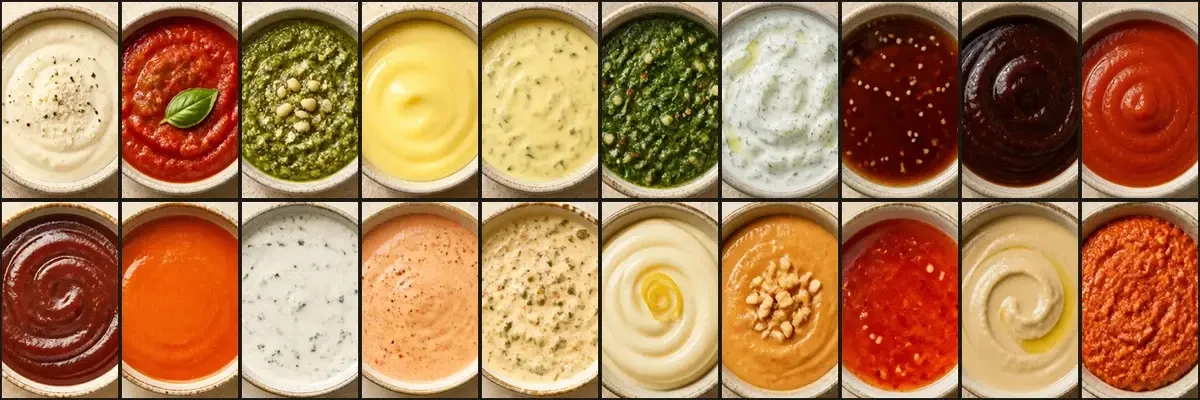
What defines this sauce type?
Texture, flavor, ingredients, technique, and cooking behavior at a glance.
| Characteristic | Typical pattern |
|---|---|
| Texture | Smooth and coating, ranging from pourable to thick and spoonable |
| Primary bases | Dairy cream, butter, cheese, eggs, yogurt, or tahini |
| Thickening methods | Emulsification, roux, reduction, or natural fat content |
| Flavor profile | Mild and rich by default; seasoned with aromatics, herbs, or acid |
| Common uses | Pasta, vegetables, grilled proteins, sandwiches, and dipping |
| Heat sensitivity | Many require controlled heat to prevent breaking or curdling |
Subtypes
Common branches within this sauce family.
Butter-based sauces
Sauces built on whole butter or clarified butter, sometimes emulsified with egg yolks or brightened with acid. Texture is silky and rich.
Cheese sauces
Sauces in which melted cheese provides both body and flavor, often built on a béchamel or processed-cheese base.
Cream and milk sauces
Sauces thickened with heavy cream, whole milk, or a roux-and-milk combination, forming a neutral, versatile base.
Yogurt and cultured dairy sauces
Sauces using strained yogurt or fermented dairy for a tangy, lighter creaminess. Common in Mediterranean and Middle Eastern cuisines.
Mayonnaise and emulsified condiment sauces
Sauces built on mayonnaise or a similar oil-and-egg emulsion, often blended with seasonings, herbs, or spices.
Creamy sauce index
Every catalog entry assigned to this type, across cuisines and uses.
Japanese
Yum Yum Sauce
Mayonnaise-based Japanese steakhouse condiment with a mild, slightly sweet flavor.
Greek/Med
Tzatziki Sauce
Greek yogurt sauce with cucumber, garlic, and dill; tangy and cooling.
Other/Global
Cheese Sauce
Melted cheese sauce used broadly for vegetables, pasta, and dipping.
French/Classic
Hollandaise Sauce
Classic French emulsion of egg yolks and butter, finished with lemon.
Seafood/Dipping
Garlic Butter Sauce
Butter melted with garlic; simple, rich, and widely used on seafood and bread.
Other/Global
Homemade Mac and Cheese
Scratch-made cheese sauce combined with pasta for a classic comfort dish.
French/Classic
Bearnaise Sauce
Hollandaise variation flavored with tarragon and shallots; classic with steak.
Other/Global
Brown Butter Sage Sauce
Nutty browned butter infused with crispy sage; traditional with fresh pasta.
American/BBQ
Remoulade Sauce
Mayonnaise-based sauce with mustard, herbs, and capers; common in Cajun cuisine.
Italian
Creamy Pesto Sauce
Traditional basil pesto extended with cream for a richer, milder pasta sauce.
Other/Global
Lemon Butter Sauce
Butter sauce brightened with lemon juice; frequently paired with fish and vegetables.
Other/Global
Brown Butter Sauce
Butter cooked until milk solids toast, producing a nutty, caramel-like flavor.
Other/Global
White Sauce
General term for mild cream- or milk-based sauces, often synonymous with béchamel.
Greek/Med
Tahini Sauce
Ground sesame paste thinned with lemon and water; creamy and dairy-free.
French/Classic
Bechamel
French mother sauce of butter, flour, and milk; base for many derived sauces.
Other/Global
Greek Yogurt Sauce
Strained yogurt sauce seasoned with herbs or garlic; tangy and protein-rich.
Other/Global
Garlic Cream Sauce
Heavy cream reduced with garlic for a rich, aromatic pasta or protein sauce.
Other/Global
Halal Guys White Sauce
Copycat of the iconic New York street-cart white sauce; tangy and mayo-based.
Other/Global
Cream Sauce
Reduced heavy cream sauce used as a versatile base across many preparations.
French/Classic
Mornay Sauce
Béchamel enriched with grated cheese, typically Gruyère or Parmesan.
Other/Global
Cheese Sauce for Broccoli
Mild, smooth cheese sauce formulated to complement steamed or roasted broccoli.
Other/Global
Velveeta Cheese Sauce
Processed cheese sauce known for smooth melting and consistent texture.
Other/Global
Nacho Cheese
Warm, pourable cheese sauce used as a dip for tortilla chips and snack foods.
Compare creamy sauces
Representative entries across cuisines without user ratings or fabricated scores.
| Sauce | Cuisine | Working type | Content status |
|---|---|---|---|
| Yum Yum Sauce | Japanese | creamy | Encyclopedia entry |
| Tzatziki Sauce | Greek/Med | creamy | Encyclopedia entry |
| Cheese Sauce | Other/Global | creamy | Encyclopedia entry |
| Hollandaise Sauce | French/Classic | creamy | Encyclopedia entry |
| Garlic Butter Sauce | Seafood/Dipping | creamy | Encyclopedia entry |
| Homemade Mac and Cheese | Other/Global | creamy | Encyclopedia entry |
| Bearnaise Sauce | French/Classic | creamy | Encyclopedia entry |
| Brown Butter Sage Sauce | Other/Global | creamy | Encyclopedia entry |
Explore by cuisine
Keep technique and culinary context visible when comparing related sauces.
Creamy sauce FAQ
Direct answers about the sauce family and its uses.
What makes a sauce creamy?
A sauce is considered creamy when it has a smooth, coating texture derived from an emulsified fat, dairy product, or blended ingredient such as tahini or yogurt. The texture can range from thin and pourable to thick and spoonable depending on the base and preparation method.
What is the difference between béchamel and cream sauce?
Béchamel is thickened with a roux (cooked butter and flour) before milk is added. Cream sauce is typically made by reducing heavy cream directly, without a flour-based thickener. Both are mild and white, but béchamel has a starchier body while cream sauce is richer and more concentrated.
Are all creamy sauces made with dairy?
No. Tahini sauce uses ground sesame paste, and some recipes substitute plant-based milks or cashew cream. However, most traditional creamy sauces rely on butter, heavy cream, cheese, eggs, or yogurt as their primary base.
Why do creamy sauces sometimes break or curdle?
Breaking occurs when an emulsion separates or proteins coagulate from excessive heat, rapid temperature change, or added acid. Keeping heat moderate, tempering eggs before combining, and adding acid gradually helps maintain a stable, smooth texture.