Cuisine hub · 9 catalog entries
Thai / Southeast Asian sauces
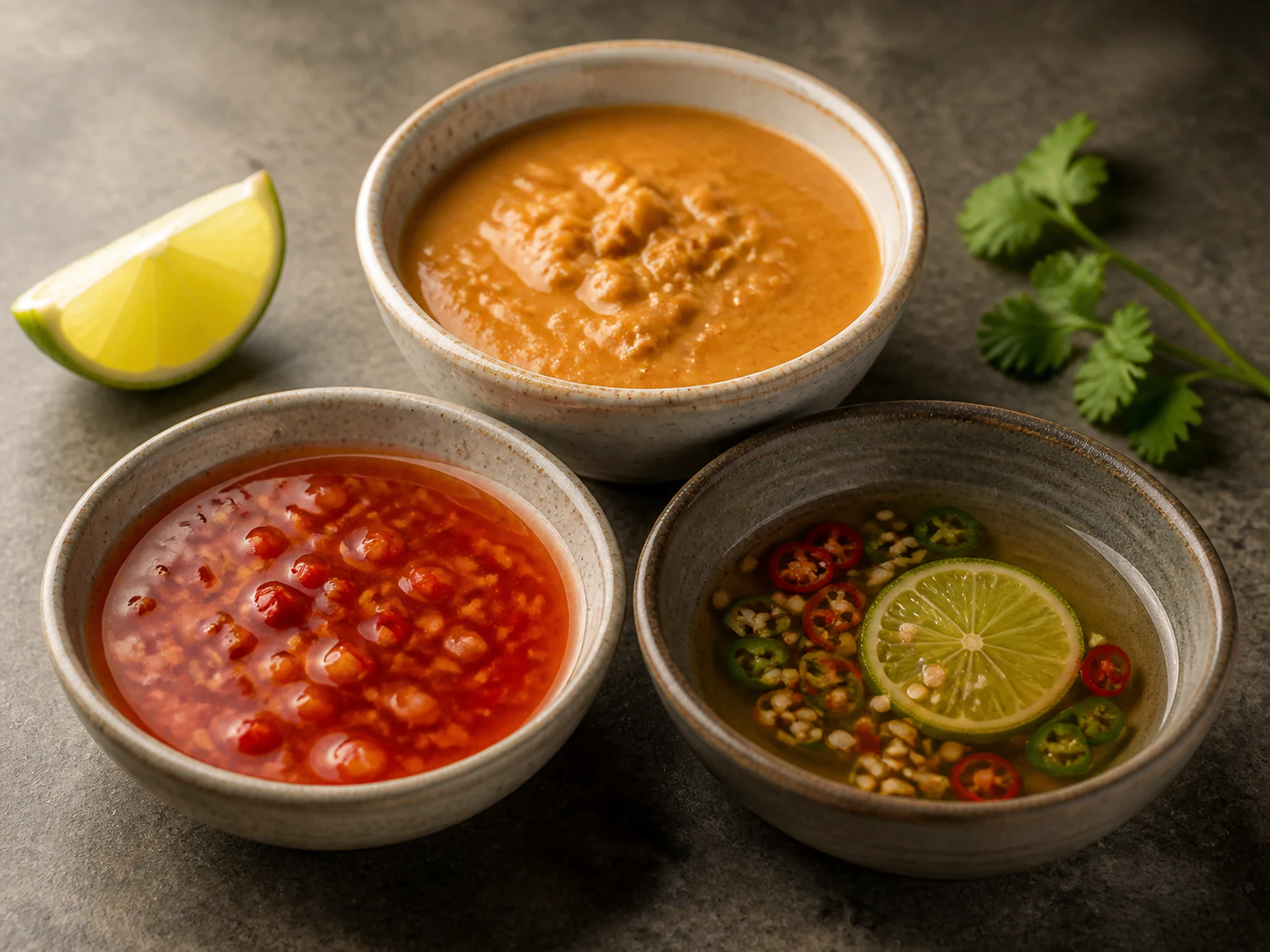
Thai / Southeast Asian is a sauce and condiment category that spans Thai, Vietnamese, and broader Southeast Asian culinary traditions, including fermented, chili-forward, peanut-based, and curry preparations.
Cuisine characteristics
Core ingredients, techniques, textures, and flavor patterns in a scannable table.
| Fermented bases | Fish sauce and shrimp paste are common flavor foundations in many Thai and Vietnamese preparations, contributing umami depth. |
|---|---|
| Chili heat | Fresh, dried, and processed chilies appear across the region; heat level varies widely by dish and regional tradition. |
| Sweet-sour-salty balance | Many sauces combine sugar or palm sugar, acid such as lime juice or tamarind, and salt or fish sauce in deliberate balance. |
| Herb and aromatic use | Lemongrass, galangal, kaffir lime leaf, and fresh herbs frequently contribute aroma to curry pastes and dipping sauces. |
| Peanut presence | Ground or blended peanuts appear in several Thai-influenced sauces, particularly those served with grilled meats or fresh rolls. |
| Condiment culture | Table condiments and dipping sauces are central to the dining experience across Thailand, Vietnam, and neighboring countries. |
Thai / Southeast Asian sauce collection
Open a definition-first entity page from this dataset-backed collection.
dipping · Tier T1
Peanut Sauce
Creamy, savory sauce built on peanuts; widely used in Thai cooking as a dip or dressing.
dipping · Tier T1
Pad Thai Sauce
Tamarind-based stir-fry sauce that defines the sweet, tangy, savory profile of pad thai noodles.
dipping · Tier T1
Curry Sauce
Coconut milk and curry paste sauce common across Thai regional cooking in red, green, and yellow styles.
dipping · Tier T2
Peanut Sauce for Spring Rolls
Thicker peanut dipping sauce formulated to accompany fresh or fried spring rolls.
dipping · Tier T2
Nuoc Cham
Vietnamese dipping sauce combining fish sauce, lime juice, sugar, garlic, and chili.
hot-spicy · Tier T2
Sweet Chili Sauce
Mild, syrupy Thai-style condiment balancing sugar and red chili; common as a dipping sauce.
dipping · Tier T2
Fish Sauce Substitute
Alternatives to fish sauce that approximate its salty, umami character for dietary or availability reasons.
hot-spicy · Tier T2
Honey Sriracha Sauce
Sweet-heat sauce pairing honey with sriracha, a Thai-style chili sauce now widely produced in the US.
dipping · Tier T3
Easy Peanut Sauce
Simplified peanut sauce recipe using accessible pantry ingredients for quick preparation.
Browse by subtype
Move from cuisine context to the texture or cooking role you need.
Thai / Southeast Asian sauce FAQ
Short answers about the cuisine and this collection.
What makes Thai sauces distinct from other Southeast Asian sauces?
Thai sauces frequently balance fish sauce, tamarind, palm sugar, and fresh chilies in a single preparation. Vietnamese sauces like nuoc cham emphasize lime and lighter seasoning. Indonesian and Malaysian traditions lean more heavily on shrimp paste and coconut. Each country has distinct regional variations within its own cuisine.
Is fish sauce essential in Southeast Asian cooking?
Fish sauce is a foundational seasoning in Thai and Vietnamese cooking, providing salt and umami. It is not universal across all Southeast Asian cuisines. Soy sauce, shrimp paste, or fermented soybean products serve comparable roles in other regional traditions. Substitutes exist for those avoiding fish-derived ingredients.
What is sriracha and where does it originate?
Sriracha is a chili sauce made from red chilies, vinegar, garlic, sugar, and salt. The style is named after Si Racha, a coastal city in Thailand. The version most familiar to US consumers is produced domestically and differs in flavor profile from Thai-made sriracha products.
Can peanut sauce be made without fish sauce?
Yes. Many peanut sauce recipes rely on soy sauce, lime juice, and sweetener rather than fish sauce, making them suitable for vegetarian or vegan diets. The resulting flavor is less funky and more straightforwardly savory. Coconut milk or water is often used to adjust consistency.