Sauce type · Multi-cuisine
Dressings sauces
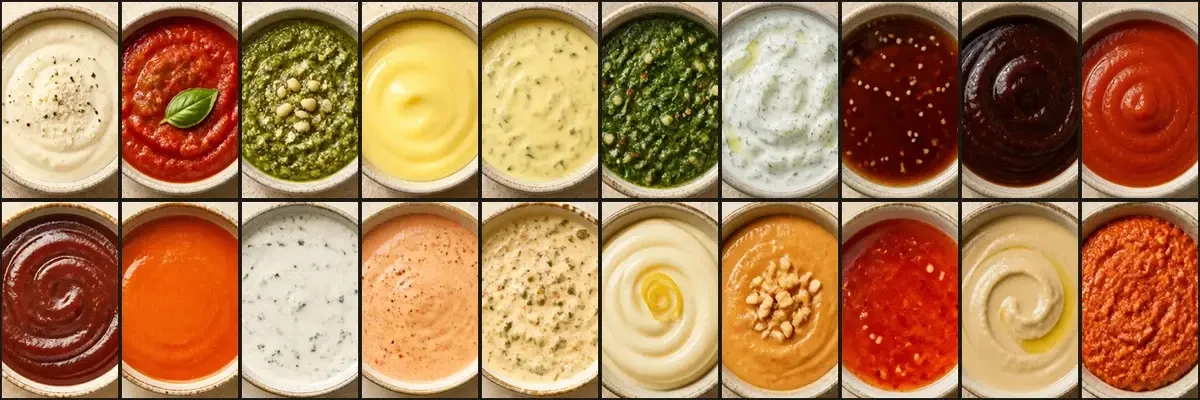
Dressings are pourable or spoonable sauces that season, coat, or finish dishes, typically built on an oil, acid, herb, or dairy base and applied cold or at room temperature.
What defines this sauce type?
Texture, flavor, ingredients, technique, and cooking behavior at a glance.
| Characteristic | Typical pattern |
|---|---|
| Primary function | Season and coat salads, grains, proteins, or vegetables at the table or just before serving |
| Typical base | Oil, acid (vinegar or citrus), fresh herbs, dairy, or mustard, often combined |
| Texture range | Thin and pourable to thick and spoonable; emulsified or non-emulsified |
| Temperature | Usually served cold or at room temperature rather than heated |
| Application method | Drizzled, tossed, spooned alongside, or used as a dipping sauce |
| Shelf life | Varies widely; fresh herb dressings typically last 3 to 5 days refrigerated, while commercial versions may last weeks |
Subtypes
Common branches within this sauce family.
Herb and Oil Dressings
Sauces built on a base of fresh herbs blended or chopped with oil and acid. They are typically uncooked and served as a finishing drizzle or condiment.
Dairy-Based Dressings
Dressings that use a cultured or fresh dairy component such as crema or sour cream to create a creamy, tangy texture.
Mustard and Sweetened Dressings
Dressings that balance a sharp condiment base with a sweetener, producing a smooth, tangy-sweet sauce suited to salads and dipping.
Vinegar and Acid Dressings
Sharp, minimally emulsified sauces built primarily on vinegar or citrus, used to brighten proteins or shellfish.
Dressings sauce index
Every catalog entry assigned to this type, across cuisines and uses.
Greek/Med
Chimichurri
Argentine herb sauce of parsley, garlic, oil, and vinegar; classic with grilled meats.
Other/Global
Mint Sauce for Lamb
British condiment of chopped mint steeped in vinegar and sugar; traditionally paired with roast lamb.
Italian
Pesto
Italian herb paste of basil, pine nuts, garlic, Parmesan, and olive oil; used on pasta and more.
Other/Global
Mojo Sauce
Caribbean and Canarian sauce built on citrus, garlic, and oil; used as a marinade or table condiment.
Other/Global
Mignonette Sauce
French vinegar and shallot sauce served alongside raw oysters to brighten their brine.
Other/Global
Honey Mustard
Sweet-tangy blend of mustard and honey; widely used as a salad dressing and dipping sauce.
Other/Global
Cilantro Sauce
Fresh herb sauce centered on cilantro, often with garlic and acid; versatile across many cuisines.
Mexican
Salsa Verde
Green herb sauce with regional variations in Italy and Mexico; used on meats, fish, and vegetables.
Other/Global
Cilantro Lime Sauce
Bright, oil-based sauce combining cilantro and lime juice; common on tacos and grilled proteins.
Other/Global
Cilantro Lime Crema
Creamy dairy-based sauce blending cilantro and lime into sour cream or crema; used as a taco topping.
Compare dressings sauces
Representative entries across cuisines without user ratings or fabricated scores.
| Sauce | Cuisine | Working type | Content status |
|---|---|---|---|
| Chimichurri | Greek/Med | dressings | Encyclopedia entry |
| Mint Sauce for Lamb | Other/Global | dressings | Encyclopedia entry |
| Pesto | Italian | dressings | Encyclopedia entry |
| Mojo Sauce | Other/Global | dressings | Encyclopedia entry |
| Mignonette Sauce | Other/Global | dressings | Encyclopedia entry |
| Honey Mustard | Other/Global | dressings | Encyclopedia entry |
| Cilantro Sauce | Other/Global | dressings | Encyclopedia entry |
| Salsa Verde | Mexican | dressings | Encyclopedia entry |
Explore by cuisine
Keep technique and culinary context visible when comparing related sauces.
Dressings sauce FAQ
Direct answers about the sauce family and its uses.
What is the difference between a dressing and a sauce?
Dressings are typically served cold or at room temperature and applied to finish a dish, while sauces may be cooked and served hot. The distinction is not strict; many preparations function as both depending on how they are used.
How long do homemade herb dressings keep in the refrigerator?
Most fresh herb dressings, such as chimichurri or cilantro sauce, keep for 3 to 5 days in a sealed container in the refrigerator. Dairy-based dressings like cilantro lime crema should be used within 3 days. Always check for off odors before use.
Can dressings be used as marinades?
Yes. Oil and acid dressings such as mojo sauce and chimichurri are commonly used as marinades for meat, poultry, or seafood. Discard any marinade that has contacted raw protein; do not reuse it as a table sauce without cooking it first.
What makes a dressing emulsified?
An emulsified dressing holds oil and water-based liquids in a stable mixture, usually through an emulsifier such as mustard or egg yolk. Honey mustard is a common example. Non-emulsified dressings, like mignonette, separate on standing and require stirring before use.