Cuisine hub · 4 catalog entries
Greek / Mediterranean sauces
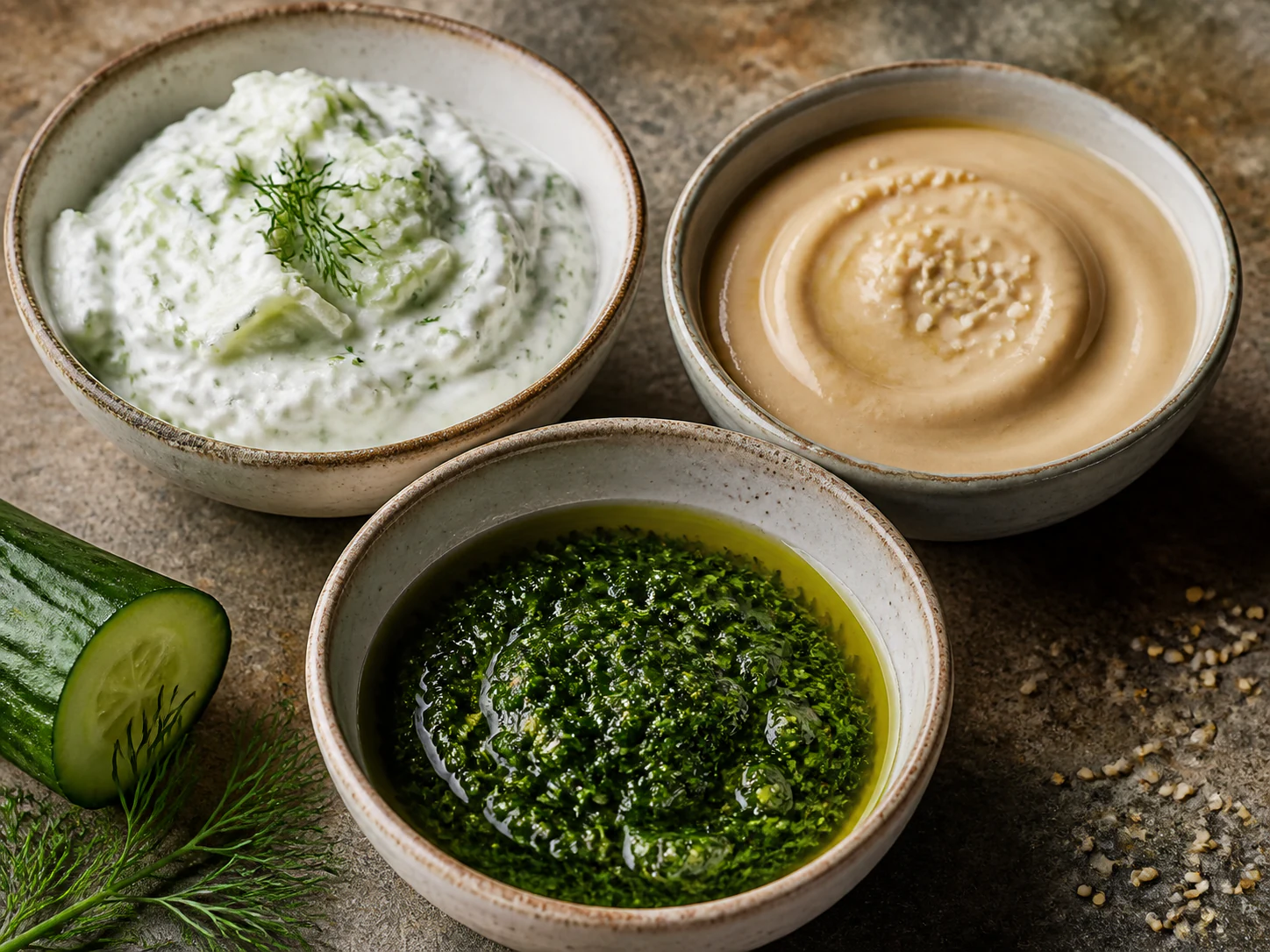
Greek / Mediterranean is a sauce category that spans herb-based, nut-based, and sesame-based condiments associated with Greece and the broader Mediterranean region across multiple culinary traditions.
Cuisine characteristics
Core ingredients, techniques, textures, and flavor patterns in a scannable table.
| Core fats | Olive oil is a common base in many Mediterranean sauces; sesame paste (tahini) is prominent in eastern Mediterranean preparations. |
|---|---|
| Herb use | Fresh herbs such as parsley, dill, and mint appear frequently, though specific herbs vary by regional tradition. |
| Acid balance | Lemon juice and vinegar are commonly used to brighten sauces; the ratio varies by recipe and country of origin. |
| Texture range | Textures span smooth and creamy (tzatziki, tahini sauce) to coarsely blended (romesco), depending on preparation method. |
| Serving role | These sauces typically function as dips, dressings, or accompaniments rather than cooked-in components. |
Greek / Mediterranean sauce collection
Open a definition-first entity page from this dataset-backed collection.
creamy · Tier T1
Tzatziki Sauce
Greek yogurt-based sauce with cucumber, garlic, and dill; a staple condiment in Greek cuisine.
dressings · Tier T1
Chimichurri
Argentine herb sauce included here for its Mediterranean-style olive oil and parsley profile.
tomato · Tier T1
Romesco Sauce
Catalan roasted red pepper and nut sauce with Spanish Mediterranean roots and a smoky depth.
creamy · Tier T2
Tahini Sauce
Sesame paste thinned with lemon and water; central to eastern Mediterranean and Levantine cooking.
Browse by subtype
Move from cuisine context to the texture or cooking role you need.
Greek / Mediterranean sauce FAQ
Short answers about the cuisine and this collection.
What distinguishes Greek sauces from other Mediterranean sauces?
Greek sauces often rely on strained yogurt, olive oil, lemon, and fresh herbs such as dill or mint. Other Mediterranean traditions, such as Spanish or Levantine, emphasize nuts, roasted peppers, or sesame paste instead. Overlap exists across the region, and many preparations are shared or adapted across multiple cuisines.
Is chimichurri a Mediterranean sauce?
Chimichurri originates in Argentina, not the Mediterranean. It appears in this hub because its core ingredients—parsley, olive oil, garlic, and vinegar—share structural similarities with Mediterranean herb sauces. Its inclusion reflects culinary affinity rather than geographic or historical origin.
Can tahini sauce be used the same way as tzatziki?
Both work as dips and accompaniments, but they differ significantly. Tzatziki is yogurt-based with a cool, tangy flavor. Tahini sauce is sesame-based with a nuttier, richer profile. They are not direct substitutes, though both pair well with grilled meats, vegetables, and flatbreads.
Are these sauces typically served hot or cold?
Most sauces in this hub are served at room temperature or chilled. Tzatziki is typically served cold. Romesco and tahini sauce are usually room temperature. None are traditionally served hot, though individual recipes may vary.