Sauce type · Multi-cuisine
Stir-fry sauces
Stir-fry sauces are liquid or semi-liquid condiments that season, glaze, or finish dishes cooked over high heat, combining salty, sweet, savory, or spicy elements to coat ingredients quickly.
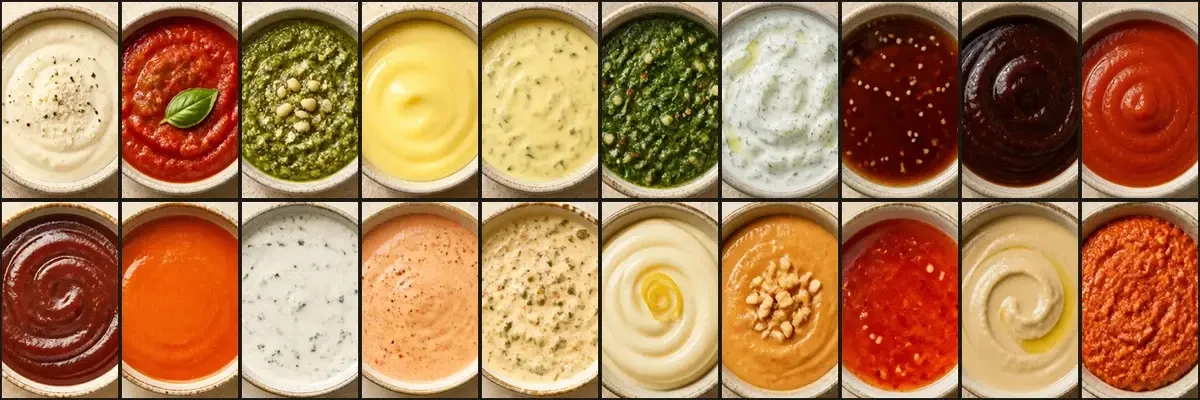
What defines this sauce type?
Texture, flavor, ingredients, technique, and cooking behavior at a glance.
| Characteristic | Typical pattern |
|---|---|
| Primary function | Season and coat proteins, vegetables, or noodles during or after high-heat cooking |
| Common bases | Soy sauce, fermented bean paste, rice vinegar, or citrus juice |
| Texture range | Thin and pourable to thick and glossy; many are thickened with cornstarch |
| Flavor profile | Varies widely: salty-umami, sweet-sour, spicy-fermented, or a combination |
| Regional origins | Primarily East and Southeast Asian culinary traditions, including Chinese, Japanese, and Korean |
| Dietary variation | Formulations differ; gluten-free, vegetarian, and low-sodium versions exist for many types |
Subtypes
Common branches within this sauce family.
Soy-based glazing sauces
Sauces built on soy sauce or tamari that caramelize under heat to produce a savory, glossy coating on proteins and vegetables.
Fermented paste and bean sauces
Thick, deeply savory sauces made from fermented soybeans, black beans, or chili paste, used to build bold base flavors in stir-fries.
Sweet, sour, and tangy sauces
Sauces that balance sugar and acid, often incorporating fruit, vinegar, or citrus, to create bright contrast in stir-fried dishes.
Spicy stir-fry sauces
Heat-forward sauces that use chili, Szechuan peppercorn, or fermented chili paste as a primary flavor driver.
Dipping and finishing sauces
Thinner sauces served alongside dumplings, potstickers, or finished dishes rather than cooked into the stir-fry itself.
Stir-fry sauce index
Every catalog entry assigned to this type, across cuisines and uses.
Japanese
Eel Sauce
Sweet, thick Japanese glaze made from soy sauce, mirin, and sugar; used on grilled items and rolls.
Japanese
Teriyaki Sauce
Japanese soy-mirin glaze that caramelizes over heat, coating proteins with a sweet-savory finish.
Chinese
Dumpling Sauce
Soy-based dipping sauce, often with vinegar and chili oil, served alongside steamed or pan-fried dumplings.
Chinese
Stir Fry Sauce
All-purpose seasoning blend combining soy sauce, aromatics, and thickener for quick high-heat cooking.
Chinese
Potsticker Sauce
Tangy dipping sauce of soy sauce, rice vinegar, and sesame oil paired with pan-fried dumplings.
Other/Global
Soy Sauce Substitute
Alternatives such as coconut aminos or tamari that replicate soy sauce's salty-umami role in stir-fries.
Chinese
Oyster Sauce Substitute
Replacements for oyster sauce, including hoisin or mushroom-based sauces, for similar savory depth.
Japanese
Ponzu Sauce
Citrus-forward Japanese sauce blending soy sauce with yuzu or lemon juice for a bright, tangy finish.
Chinese
Hoisin Sauce
Thick, sweet-savory Chinese sauce made from fermented soybeans, used in stir-fries and as a glaze.
Chinese
Sweet and Sour Sauce
Balanced blend of sugar and vinegar, often with pineapple or ketchup, common in Chinese-American stir-fries.
Chinese
General Tso Sauce
Sweet, spicy, and slightly tangy sauce used to coat deep-fried chicken in Chinese-American cuisine.
Japanese
Katsu Sauce
Thick Japanese condiment resembling Worcestershire sauce, served with breaded cutlets and noodle dishes.
Chinese
Szechuan Sauce
Spicy, numbing sauce from Sichuan province featuring chili bean paste and Szechuan peppercorns.
Other/Global
Tamari vs Soy Sauce
Comparison of tamari's richer, gluten-free profile against standard soy sauce for stir-fry applications.
Other/Global
Soy Sauce Eggs
Soft- or hard-boiled eggs marinated in a soy-based brine, common in East Asian meal preparation.
Other/Global
Gochujang Sauce
Korean fermented chili paste thinned into a sauce; adds heat, sweetness, and depth to stir-fries.
Chinese
What is Oyster Sauce
Reference entry explaining oyster sauce's composition, flavor, and common stir-fry uses.
Other/Global
Yakisoba Sauce
Sweet-savory Japanese sauce used to season stir-fried buckwheat noodles; similar to Worcestershire in character.
Chinese
Plum Sauce
Fruity, tangy Chinese condiment made from plums and vinegar; used as a dipping sauce or stir-fry glaze.
Japanese
Miso Sauce
Fermented soybean paste thinned with mirin or dashi; adds umami depth to glazes and stir-fry bases.
Chinese
Vegetarian Oyster Sauce
Mushroom-based sauce that replicates oyster sauce's thick, savory character without seafood ingredients.
Chinese
Substitute for Hoisin Sauce
Alternatives such as black bean sauce or plum sauce used when hoisin is unavailable in a recipe.
Other/Global
Soy Sauce Chicken
Dish of chicken braised or glazed in a soy-based sauce; a reference preparation for soy glaze technique.
Other/Global
Bulgogi Sauce
Korean marinade of soy sauce, pear, sesame oil, and garlic used for thinly sliced grilled or stir-fried beef.
Other/Global
Light Soy Sauce
Thinner, saltier soy sauce variety used for seasoning without darkening the color of stir-fried dishes.
Chinese
Kung Pao Sauce
Spicy-sweet Chinese stir-fry sauce combining soy sauce, vinegar, sugar, and dried chilies.
Other/Global
Dark Soy Sauce Substitute
Alternatives for dark soy sauce's color and mild sweetness when the original is unavailable.
Other/Global
Coconut Aminos vs Soy Sauce
Comparison of coconut aminos' lower sodium, slightly sweeter profile against soy sauce in stir-fry use.
Chinese
Black Bean Sauce
Pungent, salty Chinese sauce made from fermented black soybeans; a classic stir-fry base ingredient.
Other/Global
Bibimbap
Korean mixed rice dish finished with gochujang sauce; included here for its seasoned sauce component.
Compare stir-fry sauces
Representative entries across cuisines without user ratings or fabricated scores.
| Sauce | Cuisine | Working type | Content status |
|---|---|---|---|
| Eel Sauce | Japanese | stir-fry | Encyclopedia entry |
| Teriyaki Sauce | Japanese | stir-fry | Encyclopedia entry |
| Dumpling Sauce | Chinese | stir-fry | Encyclopedia entry |
| Stir Fry Sauce | Chinese | stir-fry | Encyclopedia entry |
| Potsticker Sauce | Chinese | stir-fry | Encyclopedia entry |
| Soy Sauce Substitute | Other/Global | stir-fry | Encyclopedia entry |
| Oyster Sauce Substitute | Chinese | stir-fry | Encyclopedia entry |
| Ponzu Sauce | Japanese | stir-fry | Encyclopedia entry |
Explore by cuisine
Keep technique and culinary context visible when comparing related sauces.
Stir-fry sauce FAQ
Direct answers about the sauce family and its uses.
What makes a sauce suitable for stir-frying?
A stir-fry sauce should withstand high heat without burning, coat ingredients evenly, and deliver concentrated flavor quickly. Most combine a salty base such as soy sauce with sugar, aromatics, and a thickener like cornstarch to create a glossy finish in the short cooking time.
Can stir-fry sauces be made gluten-free?
Many can. Tamari or coconut aminos replace standard soy sauce, and certified gluten-free versions of hoisin and oyster sauce are available. Always check labels, since formulations vary by brand and some sauces contain wheat-based additives.
What is the difference between a stir-fry sauce and a dipping sauce?
Stir-fry sauces are cooked with ingredients over high heat and are formulated to reduce and cling. Dipping sauces such as dumpling sauce or potsticker sauce are served raw or at room temperature alongside finished dishes and are typically thinner and more acidic.
How do soy sauce varieties affect stir-fry results?
Light soy sauce seasons without darkening color; dark soy sauce adds deep color and mild sweetness; tamari offers a richer, gluten-free option. Choosing the wrong type can alter both the appearance and salt level of the finished dish significantly.