Sauce type · Multi-cuisine
Tomato sauces
Tomato sauces are cooked or raw preparations that use tomatoes as the primary base to dress pasta, top pizza, fill enchiladas, and accompany dishes across multiple culinary traditions.
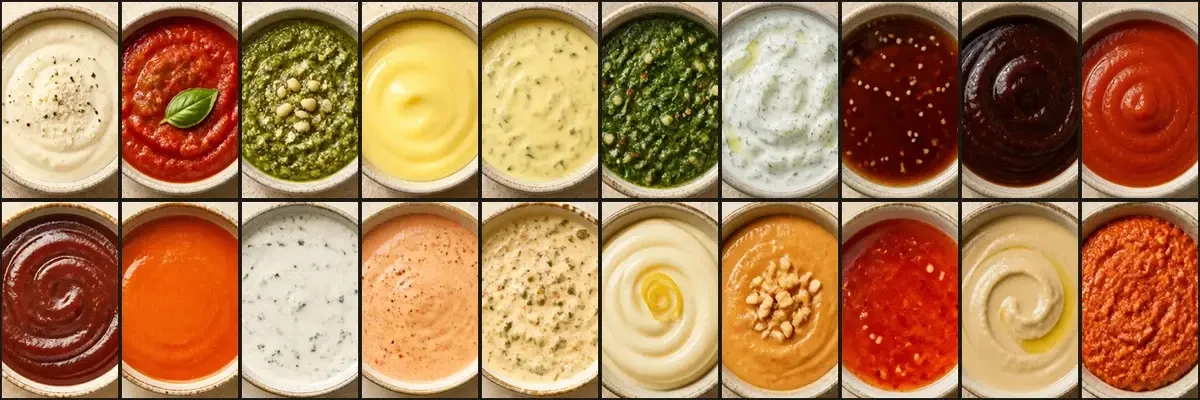
What defines this sauce type?
Texture, flavor, ingredients, technique, and cooking behavior at a glance.
| Characteristic | Typical pattern |
|---|---|
| Primary base | Fresh, canned, roasted, or pureed tomatoes |
| Texture range | Smooth and strained to chunky and rustic, depending on preparation method |
| Common seasonings | Garlic, onion, olive oil, herbs such as basil and oregano, and salt |
| Cooking methods | Simmered, roasted, or left uncooked; cooking time affects depth of flavor and consistency |
| Acidity | Natural tomato acidity is central to flavor; sugar or long cooking can moderate sharpness |
| Applications | Pasta, pizza, enchiladas, dipping, braising, and canning for shelf-stable storage |
Subtypes
Common branches within this sauce family.
Italian-style tomato sauces
Sauces rooted in Italian culinary tradition, typically made with San Marzano-style tomatoes, olive oil, and herbs. Range from quick, bright preparations to long-simmered, deeply flavored bases.
Pizza sauces
Tomato-based sauces applied to pizza dough before baking. Generally thicker and less watery than pasta sauces to prevent a soggy crust.
Enchilada and Mexican-style tomato sauces
Sauces used in Mexican and Tex-Mex cooking to coat or fill enchiladas. Red versions are tomato-based; green versions use tomatillos rather than tomatoes.
Pepper-forward tomato sauces
Sauces that combine tomatoes with roasted or dried peppers as a co-primary ingredient, producing a smoky, slightly sweet, or nutty flavor profile.
Guides and comparisons
Reference pages covering technique, ingredient distinctions, and food-safety procedures related to tomato sauces.
Tomato sauce index
Every catalog entry assigned to this type, across cuisines and uses.
Mexican
Enchilada Sauce
A spiced, tomato-based sauce used to coat corn tortillas in enchilada preparation.
Italian
Tomato Sauce
A foundational cooked sauce of tomatoes, aromatics, and oil used across many cuisines.
Italian
How to Make Tomato Sauce from Tomato Paste
A technique guide for thinning and seasoning concentrated tomato paste into a pourable sauce.
Italian
Pizza Sauce
A thick, seasoned tomato sauce spread on pizza dough before toppings and baking.
Italian
Marinara Sauce
A quick Italian tomato sauce made with garlic, olive oil, and tomatoes; minimal cooking time.
Italian
White Pizza Sauce
A cream or ricotta-based pizza sauce used in place of tomato; included here for comparison.
Italian
Pomodoro Sauce
A simple Italian sauce of tomatoes, olive oil, and basil with a clean, fresh flavor.
Greek/Med
Romesco Sauce
A Catalan sauce blending roasted tomatoes, red peppers, nuts, and olive oil.
Other/Global
Roasted Red Pepper Sauce
A smooth sauce combining roasted red peppers with tomatoes or other aromatics.
Mexican
Green Enchilada Sauce
A tomatillo-based enchilada sauce; tangier and milder in color than red tomato versions.
Italian
Is Pizza Sauce the Same As Marinara
A comparison guide covering the differences in texture, seasoning, and intended use.
Italian
Marcella Hazan Tomato Sauce
A widely referenced three-ingredient tomato sauce made with butter, onion, and canned tomatoes.
Other/Global
Arrabiata Sauce
A spicy Italian tomato sauce made with garlic, olive oil, and dried red chili peppers.
Italian
How to Can Tomato Sauce
A food-safety guide covering water-bath canning procedures for home-preserved tomato sauce.
Italian
Difference Between Tomato Sauce and Tomato Paste
A reference explaining how concentration, texture, and culinary use distinguish these two products.
Italian
Best Pizza Sauce
A desk-researched comparison of pizza sauce options based on publicly available product information.
Other/Global
Passata Sauce
An uncooked, strained tomato puree used as a base for Italian sauces and braises.
Italian
Cherry Tomato Sauce
A quick sauce made from whole or halved cherry tomatoes, prized for natural sweetness.
Mexican
Easy Enchilada Sauce
A simplified red enchilada sauce recipe using pantry staples and dried chili powder.
Italian
Roasted Tomato Sauce
A sauce made from oven-roasted tomatoes, yielding concentrated, caramelized flavor.
Compare tomato sauces
Representative entries across cuisines without user ratings or fabricated scores.
| Sauce | Cuisine | Working type | Content status |
|---|---|---|---|
| Enchilada Sauce | Mexican | tomato | Encyclopedia entry |
| Tomato Sauce | Italian | tomato | Encyclopedia entry |
| How to Make Tomato Sauce from Tomato Paste | Italian | tomato | Encyclopedia entry |
| Pizza Sauce | Italian | tomato | Encyclopedia entry |
| Marinara Sauce | Italian | tomato | Encyclopedia entry |
| White Pizza Sauce | Italian | tomato | Encyclopedia entry |
| Pomodoro Sauce | Italian | tomato | Encyclopedia entry |
| Romesco Sauce | Greek/Med | tomato | Encyclopedia entry |
Explore by cuisine
Keep technique and culinary context visible when comparing related sauces.
Tomato sauce FAQ
Direct answers about the sauce family and its uses.
What is the difference between marinara sauce and tomato sauce?
Marinara is a quick-cooked Italian sauce with garlic, olive oil, and tomatoes, finished in under 30 minutes. Tomato sauce is a broader term covering longer-simmered preparations that may include onion, carrot, celery, or meat. Marinara is lighter and brighter; tomato sauce is typically richer and thicker.
Can tomato paste be used to make tomato sauce?
Yes. Tomato paste can be thinned with water or broth and seasoned with garlic, olive oil, and herbs to produce a quick tomato sauce. The ratio is typically 1 part paste to 2 to 3 parts liquid, adjusted to the desired consistency.
Is pizza sauce the same as marinara sauce?
They are similar but not identical. Pizza sauce is generally thicker and less seasoned to prevent a soggy crust and to avoid overpowering toppings. Marinara is thinner and more herb-forward, intended for pasta or dipping. Either can substitute for the other in a pinch.
How should homemade tomato sauce be stored safely?
Refrigerate homemade tomato sauce in an airtight container and use within 3 to 5 days. For longer storage, freeze for up to 3 months. Home canning requires tested water-bath or pressure-canning procedures; consult USDA or National Center for Home Food Preservation guidelines to ensure safe acidity levels.