Sauce type · Multi-cuisine
Dipping sauces
Dipping sauces are condiments that are served alongside food so diners can control each bite, ranging from creamy mayonnaise blends and savory broths to fruit, chile, nut, and fermented sauces.
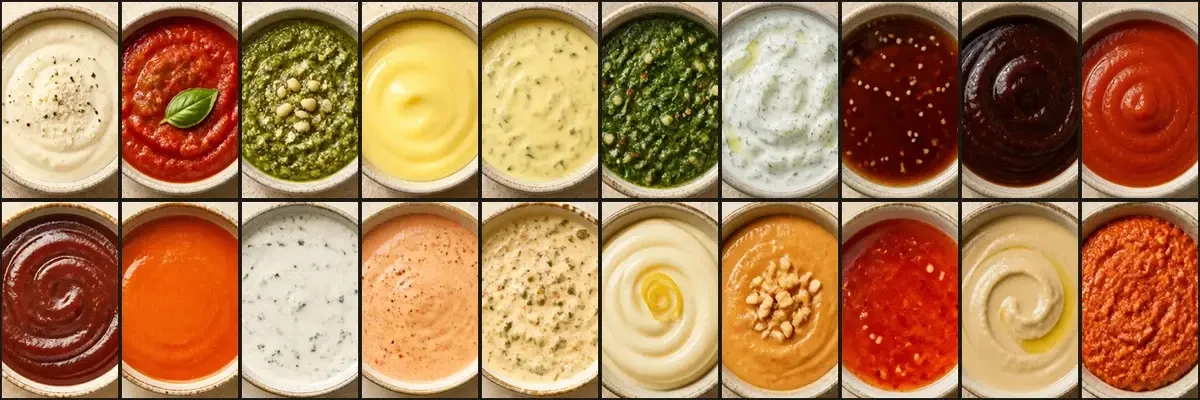
What defines this sauce type?
Texture, flavor, ingredients, technique, and cooking behavior at a glance.
| Characteristic | Typical pattern |
|---|---|
| Consistency | Typically thick enough to cling to food without dripping excessively; thinner broths like au jus are an exception. |
| Serving method | Presented in a separate vessel so diners control the amount applied per bite. |
| Temperature range | Served cold, room temperature, or warm depending on the base and paired food. |
| Base types | Common bases include mayonnaise, tomato, cream, nut paste, citrus juice, and reduced stock. |
| Flavor profile | Spans sweet, savory, tangy, spicy, and umami; often designed to contrast or complement the paired food. |
| Pairing logic | Matched to the protein, starch, or vegetable being dipped; seafood, fried foods, and grilled meats each have established pairings. |
Subtypes
Common branches within this sauce family.
Mayonnaise-based dipping sauces
Creamy sauces built on a mayonnaise or aioli foundation, often blended with mustard, spices, or sweeteners. Commonly paired with fried chicken, burgers, and fries.
Seafood dipping sauces
Tangy, briny, or citrus-forward sauces designed to accompany shrimp, crab, fish, and other seafood.
Nut-based dipping sauces
Sauces centered on ground peanuts or similar pastes, thinned with liquid and seasoned with aromatics. Common in Southeast Asian cuisines.
Fermented and umami dipping sauces
Sauces relying on fermented ingredients such as fish sauce, soy, or Worcestershire for deep savory flavor. Used across Asian and Western cuisines.
Fruit and sweet dipping sauces
Sauces made from cooked or pureed fruit, used as dips for desserts, poultry, or charcuterie.
Dipping sauce index
Every catalog entry assigned to this type, across cuisines and uses.
Brand/Copycat
Cane's Sauce
Signature mayonnaise-based sauce from Raising Cane's, known for its tangy, peppery flavor with chicken tenders.
Seafood/Dipping
Tartar Sauce
Creamy mayonnaise sauce with pickles and capers; a classic pairing for fried fish and seafood.
Seafood/Dipping
Horseradish Sauce
Pungent, sharp sauce made from grated horseradish root; traditionally served with roast beef and prime rib.
Brand/Copycat
Canes Sauce
Mayonnaise-based dipping sauce associated with Raising Cane's chicken finger restaurants.
Brand/Copycat
Big Mac Sauce
McDonald's proprietary thousand island-style sauce; a sweet, tangy mayo blend used on the Big Mac burger.
Other/Global
Cranberry Sauce
Sweet-tart cooked cranberry condiment; a traditional accompaniment to roasted turkey and holiday meals.
Brand/Copycat
In and Out Sauce
Thousand island-style spread associated with In-N-Out Burger; used on burgers and as a fry dip.
Thai/SEAsian
Peanut Sauce
Creamy ground-peanut sauce seasoned with soy, lime, and aromatics; common in Southeast Asian cuisine.
Seafood/Dipping
Cocktail Sauce
Tomato and horseradish-based sauce served cold alongside shrimp and other chilled seafood.
Italian
Vodka Sauce
Tomato cream sauce made with vodka; primarily a pasta sauce that can double as a dipping base.
Brand/Copycat
Chick Fil a Sauce
Honey mustard and barbecue-flavored dipping sauce signature to Chick-fil-A restaurants.
Other/Global
Worcestershire Sauce Substitute
Reference guide covering fermented and pantry-based alternatives to Worcestershire sauce.
Seafood/Dipping
Seafood Boil Sauce
Buttery, spiced sauce served with boiled shellfish; typically includes garlic, Cajun seasoning, and lemon.
Other/Global
Garlic Parmesan Sauce
Butter-based sauce with roasted garlic and Parmesan; used as a dip for bread, wings, and vegetables.
Mexican
Fish Taco Sauce
Creamy, tangy sauce with lime and spices; drizzled over or served alongside fish tacos.
Other/Global
Sauce for Salmon
Category covering dipping and finishing sauces suited to salmon fillets, from dill cream to teriyaki.
Other/Global
Peppercorn Sauce
Cream-based sauce with cracked black or green peppercorns; a classic accompaniment to grilled steak.
Other/Global
Bang Bang Sauce
Sweet chili and mayonnaise blend with a spicy finish; popular with fried shrimp and chicken.
Other/Global
Mushroom Sauce
Savory sauce built from sauteed mushrooms in cream or stock; served with steak, chicken, or pasta.
Other/Global
Crab Cake Sauce
Remoulade or aioli-style sauce served alongside pan-fried or baked crab cakes.
Other/Global
Smash Burger Sauce
Tangy mayonnaise-based condiment spread on smash-style burgers; similar to special sauce blends.
Seafood/Dipping
How to Make Tartar Sauce
Step-by-step guide for preparing homemade tartar sauce from mayonnaise, pickles, and capers.
Other/Global
Poke Sauce
Soy and sesame-based marinade and dipping sauce used in Hawaiian poke bowl preparations.
Other/Global
Linguine with Clam Sauce
Italian-American pasta dish featuring clams in a white wine or tomato-based sauce.
Other/Global
Dill Sauce for Salmon
Creamy sauce with fresh dill and lemon; a classic pairing for baked or poached salmon.
Other/Global
Chocolate Sauce
Pourable cocoa or melted chocolate sauce used as a dessert dip for fruit, churros, and pastries.
Other/Global
Au Jus
Thin beef dripping-based broth served as a dipping liquid for French dip sandwiches and prime rib.
Seafood/Dipping
Shrimp Cocktail Sauce
Horseradish-spiked tomato sauce served cold with chilled shrimp as a classic appetizer.
Thai/SEAsian
Pad Thai Sauce
Tamarind, fish sauce, and palm sugar blend that forms the flavor base of pad thai noodles.
Mexican
Aji Verde
Peruvian green sauce made with aji amarillo peppers, cilantro, and mayonnaise; served as a dip or condiment.
Mexican
Taco Bell Quesadilla Sauce
Creamy, mildly spiced sauce used inside Taco Bell quesadillas; popular as a copycat recipe subject.
Other/Global
Birria Sauce
Chile-based consomme from braised birria; used as a dipping broth for tacos and quesabirria.
American/BBQ
Ranchero Sauce
Tomato, chile, and onion-based Mexican sauce used as a topping or dipping sauce for eggs and meats.
Mexican
Taco Sauce
Smooth, mildly spiced tomato-based sauce used as a condiment or dip with tacos and chips.
Thai/SEAsian
Curry Sauce
Spiced sauce built from aromatics and ground spices; used as a dipping or finishing sauce across South Asian cuisines.
Mexican
Chicken Enchilada
Dish of corn tortillas filled with chicken and baked in chile-based enchilada sauce.
Other/Global
Wing Sauce
Hot sauce and butter blend tossed on or served alongside chicken wings for dipping.
Other/Global
Apple Sauce
Cooked, pureed apple condiment; served as a dip or accompaniment to pork, latkes, and desserts.
Other/Global
Honey Garlic Sauce
Sweet and savory sauce combining honey, garlic, and soy; used as a glaze or dipping sauce for chicken.
Other/Global
Strawberry Sauce
Cooked or fresh strawberry coulis used as a dessert dip or topping for cheesecake and pancakes.
Other/Global
How to Thicken Sauce
Reference guide covering starch slurries, reductions, and emulsification methods for thickening sauces.
Other/Global
Garlic Parmesan Wing Sauce
Butter, garlic, and Parmesan blend used as a non-buffalo alternative for coating or dipping chicken wings.
Thai/SEAsian
Peanut Sauce for Spring Rolls
Hoisin and peanut butter-based dipping sauce traditionally served with fresh Vietnamese spring rolls.
Other/Global
Meat Sauce
Ground meat and tomato sauce used primarily as a pasta topping; occasionally served as a dip with bread.
Indian
Tikka Masala Sauce
Creamy tomato and spice sauce associated with chicken tikka masala; used as a cooking and finishing sauce.
Other/Global
Tempura Sauce
Light Japanese dipping broth made from dashi, soy sauce, and mirin; served with battered tempura.
Thai/SEAsian
Nuoc Cham
Vietnamese dipping sauce of fish sauce, lime juice, sugar, and chiles; used with spring rolls and grilled meats.
Other/Global
Clam Sauce
White wine or tomato-based sauce with clams; primarily a pasta sauce in Italian-American cooking.
Other/Global
Lemon Caper Sauce
Bright, briny sauce of lemon juice, capers, and butter; served with fish, chicken, and seafood.
Other/Global
Piccata Sauce
Lemon, caper, and white wine pan sauce used in chicken and veal piccata preparations.
Other/Global
Burger King Zesty Sauce
Tangy, horseradish-accented dipping sauce offered at Burger King with onion rings and fries.
Other/Global
Burger Sauce
Catch-all term for mayonnaise-based special sauces spread on burgers or served as a dip.
Other/Global
Caramel Sauce
Cooked sugar and cream sauce used as a dessert dip for apples, churros, and ice cream.
Thai/SEAsian
Fish Sauce Substitute
Reference guide listing soy sauce, coconut aminos, and other alternatives to fermented fish sauce.
Other/Global
Mushroom Sauce for Steak
Cream or stock-based mushroom sauce served alongside or over grilled and pan-seared steaks.
French/Classic
Beurre Blanc
French emulsified butter sauce with white wine and shallots; served with fish and delicate vegetables.
French/Classic
Espagnole
Classic French brown mother sauce made from veal stock and mirepoix; base for many derivative sauces.
Other/Global
Worcestershire Sauce
Fermented British condiment of tamarind, anchovies, and vinegar; used as a flavor base and dipping ingredient.
Other/Global
Madeira Sauce
Rich brown sauce made with Madeira wine and demi-glace; served with roasted meats and game.
Other/Global
Raspberry Sauce
Tart fruit coulis made from cooked raspberries; used as a dessert dip or plate sauce.
American/BBQ
Creole Sauce
Tomato, pepper, and celery-based Louisiana sauce used with shrimp, chicken, and rice dishes.
Other/Global
Blueberry Sauce
Cooked blueberry reduction used as a dessert dip or topping for pancakes and cheesecake.
Other/Global
Boom Boom Sauce
Sweet chili and mayonnaise-based sauce similar to bang bang sauce; used with shrimp and fried foods.
Italian
What is Vodka Sauce
Explainer covering the composition, history, and uses of tomato cream sauce made with vodka.
Other/Global
Spring Roll Sauce
Broad category of dipping sauces for spring rolls, including peanut, sweet chili, and nuoc cham.
Other/Global
Marsala Sauce
Italian-American pan sauce made with Marsala wine and mushrooms; served with chicken or veal.
Other/Global
Bread Pudding with Vanilla Sauce
Classic dessert pairing of baked bread pudding with a poured vanilla custard sauce.
Other/Global
Chicken Cordon Bleu Sauce
Creamy Dijon mustard sauce served over or alongside breaded chicken cordon bleu.
Other/Global
Shake Shack Sauce
Proprietary mayonnaise-based ShackSauce used on Shake Shack burgers; tangy with a mild heat.
Other/Global
Shrimp with Lobster Sauce
Chinese-American dish of shrimp in a savory egg and pork-based sauce, despite the name containing no lobster.
Other/Global
Red Robin Campfire Sauce
Smoky, sweet mayonnaise-based dipping sauce served at Red Robin with burgers and fries.
Other/Global
Huancaina Sauce
Peruvian cheese and aji amarillo sauce served over boiled potatoes or as a dip.
Other/Global
Onion Ring Sauce
Tangy, creamy dipping sauce served alongside fried onion rings; often horseradish or ranch-based.
Brand/Copycat
Outback Bloomin Onion Sauce
Spiced mayonnaise dipping sauce served with Outback Steakhouse's Bloomin' Onion appetizer.
Other/Global
Baja Sauce
Creamy, tangy sauce with lime and mild chiles; used on fish tacos and as a general dip.
Other/Global
Coconut Shrimp Sauce
Sweet chili or marmalade-based dipping sauce served alongside breaded coconut shrimp.
Other/Global
Coney Sauce
Spiced ground beef sauce used as a topping for Coney Island-style hot dogs in the Midwest.
Brand/Copycat
What is Mcdonald's Breakfast Sauce
Explainer covering the composition and uses of McDonald's proprietary breakfast condiment.
Other/Global
Steak Au Poivre
French preparation of pepper-crusted steak finished with a cognac and cream pan sauce.
Other/Global
Blooming Onion Sauce
Creamy, spiced dipping sauce served with deep-fried blooming onion appetizers.
Other/Global
Fry Sauce
Simple mayonnaise and ketchup blend popular in the Mountain West as a dip for french fries.
Other/Global
Bordelaise Sauce
French red wine and bone marrow sauce served with grilled and roasted beef cuts.
Other/Global
Meatloaf
Baked ground meat dish typically topped with a ketchup or tomato-based glaze sauce.
Other/Global
White Wine Sauce
Butter and white wine pan sauce used with fish, chicken, and pasta dishes.
Other/Global
Rhubarb Sauce
Tart cooked rhubarb sauce used as a dessert topping or accompaniment to pork.
Other/Global
Chicken
Hub covering sauces and preparations commonly paired with or applied to chicken.
Other/Global
San J
Brand producing tamari and Asian-inspired sauces used for dipping, marinating, and cooking.
Other/Global
Swedish Meatballs
Scandinavian dish of spiced meatballs served in a creamy gravy sauce, often with lingonberry on the side.
Brand/Copycat
Mcdonald's Breakfast Sauce
McDonald's proprietary condiment used on select breakfast sandwiches; creamy with mild tang.
Other/Global
Gyoza Sauce
Soy and rice vinegar dipping sauce served alongside pan-fried Japanese gyoza dumplings.
Thai/SEAsian
Easy Peanut Sauce
Simplified peanut butter, soy, and lime sauce made with pantry staples for quick dipping.
Other/Global
Sunday Gravy
Italian-American slow-cooked tomato and meat sauce traditionally served over pasta on Sundays.
Other/Global
Chinese Brown Sauce
Savory soy and oyster sauce-based stir-fry sauce common in Chinese-American restaurant cooking.
Other/Global
Lobster Sauce
Savory Chinese-American sauce made with pork and egg; used in shrimp with lobster sauce dishes.
Other/Global
Amatriciana Sauce
Italian tomato and guanciale sauce from Amatrice; a classic pasta sauce with a savory, slightly spicy profile.
Other/Global
Cranberry Orange Sauce
Sweet-tart cranberry sauce brightened with orange zest and juice; served with poultry and holiday meals.
Compare dipping sauces
Representative entries across cuisines without user ratings or fabricated scores.
| Sauce | Cuisine | Working type | Content status |
|---|---|---|---|
| Cane's Sauce | Brand/Copycat | dipping | Encyclopedia entry |
| Tartar Sauce | Seafood/Dipping | dipping | Encyclopedia entry |
| Horseradish Sauce | Seafood/Dipping | dipping | Encyclopedia entry |
| Canes Sauce | Brand/Copycat | dipping | Encyclopedia entry |
| Big Mac Sauce | Brand/Copycat | dipping | Encyclopedia entry |
| Cranberry Sauce | Other/Global | dipping | Encyclopedia entry |
| In and Out Sauce | Brand/Copycat | dipping | Encyclopedia entry |
| Peanut Sauce | Thai/SEAsian | dipping | Encyclopedia entry |
Explore by cuisine
Keep technique and culinary context visible when comparing related sauces.
Dipping sauce FAQ
Direct answers about the sauce family and its uses.
What makes a sauce a dipping sauce rather than a cooking sauce?
A dipping sauce is served separately so diners coat individual bites by choice. Cooking sauces are applied during preparation. Some sauces, such as peanut sauce or curry sauce, function in both roles depending on how they are used.
What are the most common bases for dipping sauces?
Mayonnaise, tomato, cream, reduced stock, nut paste, fermented fish sauce, and cooked fruit are the most common bases. The base largely determines texture, flavor profile, and which foods the sauce complements.
How should dipping sauces be stored?
Most homemade dipping sauces should be refrigerated in a sealed container and used within three to five days. Dairy- and egg-based sauces are especially perishable. Always follow label guidance for commercial products, as formulations vary.
Can dipping sauces be served warm or must they be cold?
Temperature depends on the sauce type. Cheese sauces, au jus, and seafood boil sauces are typically served warm. Cocktail sauce, tartar sauce, and most mayonnaise-based sauces are served cold. Peanut sauce and nuoc cham are commonly served at room temperature.