Sauce type · Multi-cuisine
Pasta sauces
Pasta sauces are coatings for cooked pasta that range from tomato-based and cream-based to butter and oil preparations, defined by base ingredient, texture, and pasta pairing.
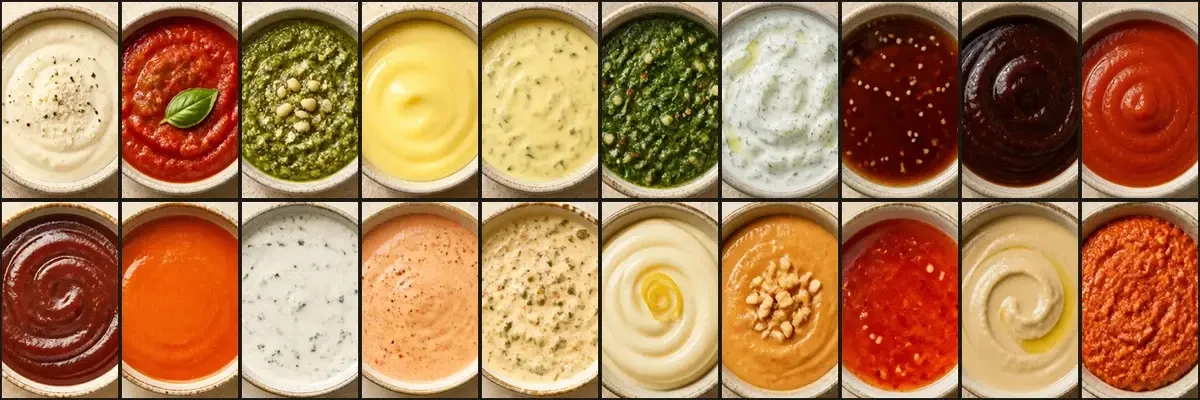
What defines this sauce type?
Texture, flavor, ingredients, technique, and cooking behavior at a glance.
| Characteristic | Typical pattern |
|---|---|
| Base types | Tomato, cream, butter, oil, or cheese form the foundation of most pasta sauces. |
| Texture range | Varies from smooth and pourable to chunky and thick depending on ingredients and cooking method. |
| Thickening methods | Reduction, added starch, cheese emulsification, or blended vegetables are common techniques. |
| Dairy presence | Many classic sauces rely on butter, cream, or cheese; dairy-free and vegan adaptations substitute plant-based alternatives. |
| Pasta pairing | Sauce weight and texture are typically matched to pasta shape—light sauces suit thin pasta, hearty sauces suit ridged or tubular shapes. |
| Preservation | Tomato-based sauces can be home-canned using tested methods; cream-based sauces are not safe for home canning. |
Subtypes
Common branches within this sauce family.
Tomato-based sauces
Sauces built on tomatoes, tomato paste, or crushed tomatoes, cooked down with aromatics. Ranges from simple marinara to long-simmered meat sauces.
Cream and cheese sauces
Sauces emulsified with heavy cream, milk, or melted cheese. Alfredo is the most recognized example; variations substitute lighter dairy or plant-based ingredients.
Butter and oil sauces
Simple sauces using melted butter or olive oil as the primary fat, often finished with garlic, herbs, or white wine.
Specialty and filled-pasta sauces
Sauces formulated to complement filled pasta shapes such as ravioli and gnocchi, where the sauce supports rather than overwhelms the filling.
Guides and reference
How-to articles, comparisons, and recipe collections covering technique, troubleshooting, and sauce selection across pasta types.
Pasta sauce index
Every catalog entry assigned to this type, across cuisines and uses.
Italian
Alfredo Sauce
Classic butter-and-Parmesan emulsion sauce served over fettuccine or similar flat pasta.
Italian
Spaghetti Sauce
Tomato-based sauce, often seasoned with herbs and garlic, paired with spaghetti.
Other/Global
White Sauce Pasta
Béchamel-style cream sauce tossed with pasta; mild and dairy-forward.
Other/Global
How to Thicken Pasta Sauce
Reference guide covering reduction, starch, and cheese methods for thickening any pasta sauce.
Italian
Alfredo Sauce Recipe with Milk
Lighter Alfredo preparation substituting whole milk for heavy cream.
Italian
Alfredo Sauce with Milk
Overview of milk-based Alfredo techniques and texture considerations.
Italian
Can You Use Marinara Sauce for Spaghetti
Explains the differences between marinara and spaghetti sauce and their interchangeability.
Other/Global
Butter Sauce for Pasta
Simple emulsified butter sauce, often finished with pasta water and herbs.
Other/Global
Ravioli Sauce
Sauce options suited to complement filled pasta without masking the filling.
Other/Global
Creamy Pasta Sauce
Broad category of cream-enriched sauces adaptable to multiple pasta shapes.
Other/Global
Cream Sauce for Pasta
Heavy cream-based sauce reduced to a coating consistency for pasta dishes.
Italian
Vegan Alfredo Sauce
Dairy-free Alfredo using cashews, plant milk, or blended vegetables as the base.
Italian
Canning Spaghetti Sauce
Guide to safely preserving tomato-based spaghetti sauce using tested home-canning methods.
Italian
Homemade Spaghetti Sauce with Fresh Tomatoes
Sauce made from raw fresh tomatoes, cooked down with aromatics and herbs.
Other/Global
Best Pasta Sauce
Comparison resource covering top pasta sauce styles and selection criteria.
Other/Global
Gnocchi Sauce
Sauces chosen to pair with potato gnocchi, from brown butter to tomato.
Italian
Alfredo Sauce without Heavy Cream
Alfredo variations using cream cheese, milk, or other substitutes in place of heavy cream.
Other/Global
Pasta Sauce
General reference entry covering the full range of pasta sauce categories and uses.
Other/Global
Lobster Ravioli Sauce
Delicate cream or tomato-cream sauces formulated to complement lobster-filled ravioli.
Italian
Cottage Cheese Alfredo Sauce
High-protein Alfredo alternative using blended cottage cheese as the creamy base.
Italian
Vodka Pasta
Tomato-cream sauce finished with vodka, which helps emulsify fat-soluble flavor compounds.
Italian
Healthy Alfredo Sauce
Lower-calorie Alfredo preparations using reduced-fat dairy or vegetable-based substitutes.
Italian
How to Thicken Alfredo Sauce
Techniques for correcting thin Alfredo sauce, including reduction and cheese addition.
Italian
Chicken Alfredo Sauce
Alfredo sauce prepared or adapted specifically for dishes that include cooked chicken.
Other/Global
White Wine Sauce for Pasta
Light sauce built on white wine, butter, and aromatics; suits seafood or vegetable pasta.
Other/Global
Pink Sauce Pasta
Blended tomato and cream sauce producing a pale pink color and balanced flavor.
Italian
Tomato Paste Pasta Sauce
Concentrated tomato paste cooked with oil and seasonings into a quick, intense sauce.
Other/Global
Cheese Sauce for Pasta
Melted-cheese sauce, often Parmesan or a blend, used to coat pasta dishes.
Italian
Dairy Free Alfredo Sauce
Alfredo-style sauce made without any dairy, using plant-based fats and thickeners.
Italian
Creamy Tomato Pasta
Tomato sauce enriched with cream or cream cheese for a richer, milder finish.
Other/Global
Pasta Recipes
Collection of pasta dish recipes organized by sauce type and preparation method.
Italian
Chicken Alfredo Recipe with Jar Sauce
Weeknight recipe using jarred Alfredo sauce as a base for chicken pasta dishes.
Italian
Pizza Sauce vs Pasta Sauce
Comparison of ingredient ratios, texture, and cooking differences between the two sauce types.
Italian
Crockpot Spaghetti Sauce
Slow-cooker method for developing deep flavor in tomato-based spaghetti sauce.
Compare pasta sauces
Representative entries across cuisines without user ratings or fabricated scores.
| Sauce | Cuisine | Working type | Content status |
|---|---|---|---|
| Alfredo Sauce | Italian | pasta | Encyclopedia entry |
| Spaghetti Sauce | Italian | pasta | Encyclopedia entry |
| White Sauce Pasta | Other/Global | pasta | Encyclopedia entry |
| How to Thicken Pasta Sauce | Other/Global | pasta | Encyclopedia entry |
| Alfredo Sauce Recipe with Milk | Italian | pasta | Encyclopedia entry |
| Alfredo Sauce with Milk | Italian | pasta | Encyclopedia entry |
| Can You Use Marinara Sauce for Spaghetti | Italian | pasta | Encyclopedia entry |
| Butter Sauce for Pasta | Other/Global | pasta | Encyclopedia entry |
Explore by cuisine
Keep technique and culinary context visible when comparing related sauces.
Pasta sauce FAQ
Direct answers about the sauce family and its uses.
What is the difference between marinara sauce and spaghetti sauce?
Marinara is a simple, quick-cooked tomato sauce with garlic, olive oil, and herbs. Spaghetti sauce is a broader term that often includes meat, onions, and longer cooking times, producing a thicker, more complex result. Marinara can substitute for spaghetti sauce in most dishes.
Can cream-based pasta sauces be home-canned?
No. Cream, butter, and cheese sauces cannot be safely home-canned because their low acidity and high fat content prevent adequate heat penetration. Only tested tomato-based sauce recipes from authorities such as the USDA or National Center for Home Food Preservation should be used for canning.
How do you thicken a pasta sauce that is too thin?
Simmer the sauce uncovered to reduce excess liquid. For tomato sauces, stir in tomato paste. For cream sauces, add grated Parmesan or a small amount of cornstarch slurry. Reserved starchy pasta cooking water also helps emulsify and thicken sauce without dulling flavor.
What pasta sauce works best with filled pasta like ravioli?
Light sauces—brown butter, sage butter, or a thin tomato sauce—are generally preferred for filled pasta because they complement rather than overpower the filling. Rich fillings such as lobster pair well with a delicate cream or tomato-cream sauce. Avoid very thick, chunky sauces that compete with the filling.