Sauce type · Multi-cuisine
Hot & spicy sauces
Hot and spicy sauces are condiments and cooking sauces that deliver heat through chili peppers or spice blends, ranging from mildly warm to intensely pungent, with bases spanning vinegar, tomato, butter, and fermented mash.
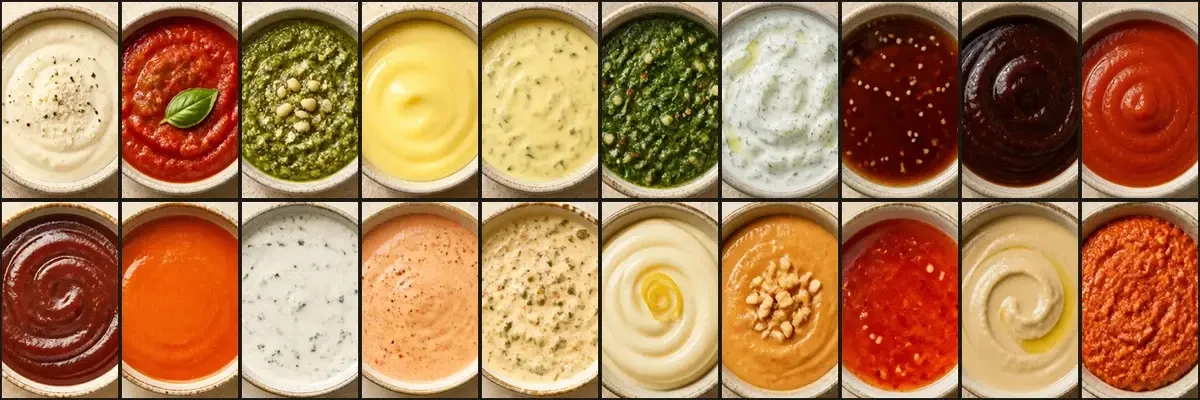
What defines this sauce type?
Texture, flavor, ingredients, technique, and cooking behavior at a glance.
| Characteristic | Typical pattern |
|---|---|
| Primary heat source | Chili peppers in fresh, dried, smoked, or fermented form; capsaicin concentration determines Scoville heat level |
| Common bases | Vinegar, tomato, butter, oil, or fermented pepper mash, often combined with aromatics such as garlic and onion |
| Flavor range | Spans tangy, smoky, sweet-heat, earthy, and complex spiced profiles depending on pepper variety and preparation method |
| Texture | Ranges from thin and pourable to thick and paste-like; emulsified styles such as butter-based sauces have a creamy consistency |
| Culinary role | Used as table condiments, marinades, cooking sauces, dipping sauces, and finishing sauces across many cuisines |
| Heat variability | Mild options such as poblano and sweet chili coexist with high-heat styles such as fermented hot sauce and Nashville-style chicken sauces |
Subtypes
Common branches within this sauce family.
Vinegar-based hot sauces
Thin, pourable sauces built on a vinegar and chili pepper base. Acidity is a defining characteristic alongside heat.
Butter and cream hot sauces
Emulsified sauces that combine fat with chili heat, producing a rich, coating texture suited to wings and seafood.
Smoked and dried chili sauces
Sauces built on smoke-dried or sun-dried peppers such as chipotle, guajillo, or ancho, yielding deep, earthy heat.
Spice-blend and seasoning sauces
Sauces defined by multi-spice blends rather than a single pepper, including allspice-forward jerk and paprika-heavy Cajun styles.
Sweet-heat sauces
Sauces that balance chili heat with sweetness from honey, sugar, or fruit, softening pungency without eliminating it.
Hot & spicy sauce index
Every catalog entry assigned to this type, across cuisines and uses.
Mexican
Chipotle Sauce
Smoky, earthy sauce made from smoke-dried jalapeños; common in Mexican-American cooking as a marinade or condiment.
American/BBQ
Buffalo Sauce
Tangy, buttery hot sauce originating in Buffalo, NY; the standard coating for chicken wings.
American/BBQ
Jerk Sauce
Jamaican spice-forward sauce featuring Scotch bonnet peppers, allspice, and thyme; used as a marinade for grilled meats.
Other/Global
Hot Sauce
Broad category of vinegar-and-chili condiments used as table sauces across American and global cuisines.
Mexican
Adobo Sauce
Thick, smoky sauce made from dried chilies, vinegar, and spices; commonly sold with canned chipotle peppers.
American/BBQ
Buffalo Wild Wings Garlic Parmesan Sauce
Creamy, garlic-forward wing sauce from Buffalo Wild Wings; mild heat with a parmesan finish.
Other/Global
Poblano Sauce
Mild green sauce made from roasted poblano peppers; earthy and lightly spiced, suited to enchiladas and grilled chicken.
Other/Global
Hot Fudge
Warm chocolate dessert sauce; classified here by temperature reference rather than chili heat content.
Other/Global
Honey Hot Sauce
Blends honey sweetness with chili heat; used as a glaze, dipping sauce, or wing coating.
Mexican
Taco Bell Creamy Jalapeno Sauce
Creamy, jalapeno-flavored sauce from Taco Bell's menu; mild heat with a tangy dairy base.
Other/Global
Fermented Hot Sauce
Hot sauce made from lacto-fermented chili peppers; fermentation adds complexity and a mild tang alongside heat.
Thai/SEAsian
Sweet Chili Sauce
Thai-style sauce balancing sugar, vinegar, and red chili; mild heat commonly used as a dipping sauce.
Mexican
Taco Bell Chipotle Sauce
Smoky chipotle-flavored sauce from Taco Bell; used as a spread or dipping sauce in fast-food applications.
Other/Global
Dave's Hot Chicken Sauce
Spice paste-style sauce associated with Nashville hot chicken; delivers intense cayenne-forward heat.
Mexican
Green Chili Chicken Enchiladas
Dish featuring green chili sauce over chicken-filled tortillas; the sauce provides mild to moderate heat.
Mexican
Mole Sauce
Complex Mexican sauce combining dried chilies, chocolate, and spices; heat level varies by regional style.
Other/Global
Guajillo Sauce
Smooth, brick-red sauce from dried guajillo peppers; mild heat with a tangy, slightly fruity character.
American/BBQ
Cajun Sauce
Spiced sauce built on a Cajun seasoning blend of paprika, cayenne, and herbs; used in Louisiana-style cooking.
American/BBQ
Cajun Butter Sauce
Emulsified butter sauce seasoned with Cajun spices; rich and moderately spicy, common with seafood and wings.
Thai/SEAsian
Honey Sriracha Sauce
Combines sriracha chili sauce with honey for a sweet-heat balance; popular as a glaze or dipping sauce.
Other/Global
Fra Diavolo Sauce
Italian-American tomato sauce spiked with red pepper flakes; traditionally served with seafood pasta.
Other/Global
Hot Honey
Honey infused with chili peppers; drizzled on pizza, fried chicken, and charcuterie for sweet-heat contrast.
Mexican
Mole
Traditional Mexican sauce category encompassing many regional styles built on dried chilies and complex spice combinations.
Other/Global
Hot Pot Dipping Sauce
Customizable sauce served alongside hot pot; often includes chili oil, sesame paste, and aromatics for heat and depth.
Compare hot & spicy sauces
Representative entries across cuisines without user ratings or fabricated scores.
| Sauce | Cuisine | Working type | Content status |
|---|---|---|---|
| Chipotle Sauce | Mexican | hot-spicy | Encyclopedia entry |
| Buffalo Sauce | American/BBQ | hot-spicy | Encyclopedia entry |
| Jerk Sauce | American/BBQ | hot-spicy | Encyclopedia entry |
| Hot Sauce | Other/Global | hot-spicy | Encyclopedia entry |
| Adobo Sauce | Mexican | hot-spicy | Encyclopedia entry |
| Buffalo Wild Wings Garlic Parmesan Sauce | American/BBQ | hot-spicy | Encyclopedia entry |
| Poblano Sauce | Other/Global | hot-spicy | Encyclopedia entry |
| Hot Fudge | Other/Global | hot-spicy | Encyclopedia entry |
Explore by cuisine
Keep technique and culinary context visible when comparing related sauces.
Hot & spicy sauce FAQ
Direct answers about the sauce family and its uses.
What makes a sauce 'hot' versus simply spicy?
Heat in a sauce comes from capsaicin, the active compound in chili peppers, measured in Scoville Heat Units. 'Spicy' often describes a broader sensory experience that includes aromatic spice blends. A sauce can be spicy without significant capsaicin if it relies on black pepper, ginger, or mustard.
How is fermented hot sauce different from regular hot sauce?
Fermented hot sauce uses lacto-fermentation to break down chili peppers before blending, developing deeper, more complex flavor alongside acidity. Standard hot sauces typically combine fresh or cooked peppers directly with vinegar. Fermented versions often have a softer heat and a tangy, umami-rich profile.
Can hot and spicy sauces be used in cooking, or are they only condiments?
Most hot and spicy sauces serve both roles. Adobo, guajillo, and mole sauces are primarily cooking sauces used in braises and enchiladas. Buffalo and hot sauces function as condiments and finishing coatings. Jerk sauce is commonly used as a marinade before grilling.
What is the mildest option in the hot and spicy sauce category?
Poblano sauce and sweet chili sauce are among the mildest, as poblano peppers rank low on the Scoville scale and sweet chili sauce dilutes chili heat with sugar and vinegar. Hot honey and honey sriracha also moderate heat with sweetness, making them accessible to heat-sensitive palates.